

You know your dog’s hungry dance and their excited bark for walks. But would you recognize their silent face of discomfort? Dogs are absolute masters of disguise.
Because of deep survival instincts they actively hide discomfort until it becomes unbearable. This leaves loving owners feeling guilty for missing the signs. We will decode the silent indicators of canine pain.
You will learn how to tell if your dog is in pain when they won’t show it. This guide covers micro expressions and subtle routine shifts. You can finally advocate for your best friend.
Why Does Your Dog Hide Their Pain? The Survival Instinct Explained

We must look back at their wild ancestors to find the answer. Wild dogs masked pain to avoid looking vulnerable to predators. This instinct remains strong in our living rooms today.
Masking is a biological reflex rather than a conscious choice. Let us look at Amanda and her Golden Retriever Cooper. She felt terrible when Cooper was diagnosed with severe joint issues because he never cried out.
Dogs rarely whine or cry out unless the pain is sudden and sharp. It is completely normal for a dog hiding pain symptoms to act fine. Do not blame yourself for missing these early clues.
3 Silent Behavioral Shifts Before the Limp Starts
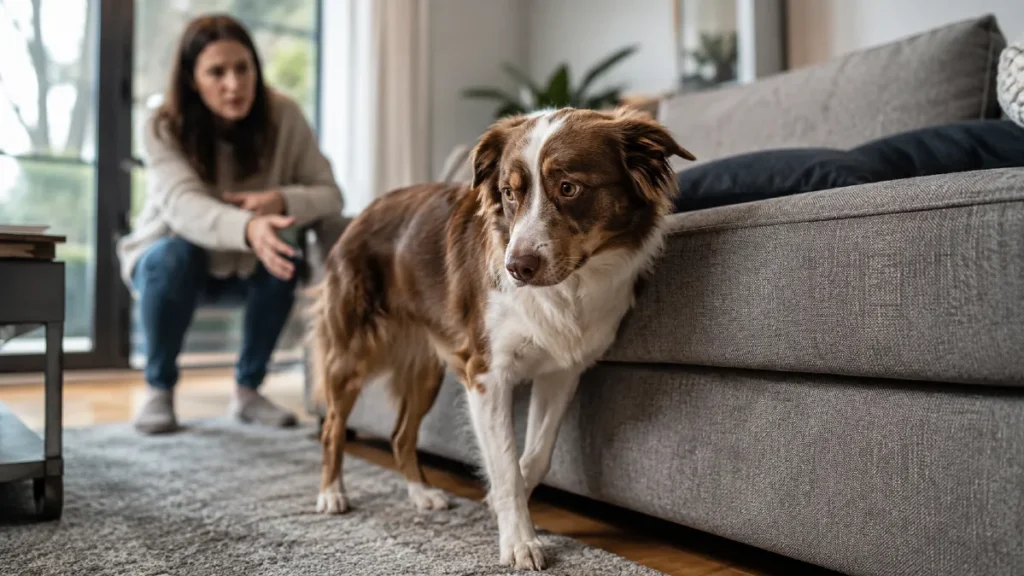
Start by watching for sudden personality changes. Behavior shifts are often the first sign of trouble. These changes happen weeks before you see actual physical limping.
A usually cuddly dog might suddenly hide under the bed. Both social withdrawal and sudden clinginess are clear warning flags. Pay attention to uncharacteristic aggression in usually friendly pets.
Veterinary behaviorists note pain causes sudden dog bites in friendly family pets. Growling when touched in specific areas is a major warning. You might also notice reluctance to perform specific tasks.
Watch for hesitating before jumping on the couch. Walking slower on stairs is another common clue. These are all subtle signs of pain in dogs that require attention.
How to Read the Canine Grimace: Body Language and Posture
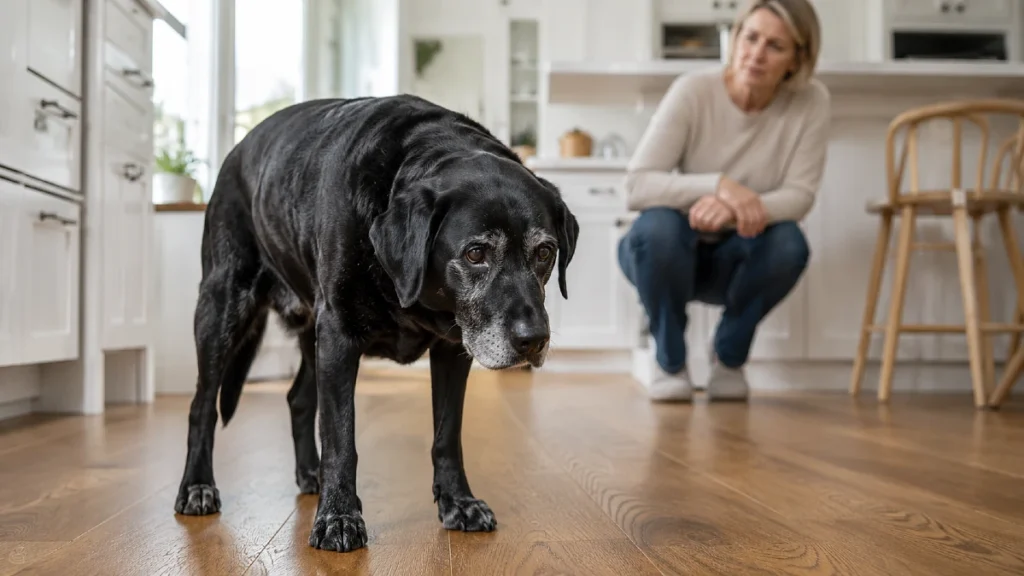
You can learn a lot by checking their face. Look closely at their eyes and ears for tension. A furrowed brow is a key indicator on the veterinary Grimace Scale.
Move down the body to check their overall posture. A hunched back or shaking muscles often mean physical distress. Excessive panting while resting in a cool room is another major red flag.
The prayer posture is a very specific warning sign. Your dog will place their front end down with their hindquarters up in the air. This often signals severe abdominal distress rather than a desire to play.
| Posture Type | Front Legs | Hind Legs | Meaning |
| Play Bow | Flat on ground | Up and wiggly | Happy and ready to play |
| Prayer Posture | Rigidly flat | Stiff and elevated | Severe stomach or back pain |
| Normal Rest | Tucked under | Relaxed to the side | Comfortable and resting |
3 Daily Routine Red Flags: Sleep, Eating, and Grooming
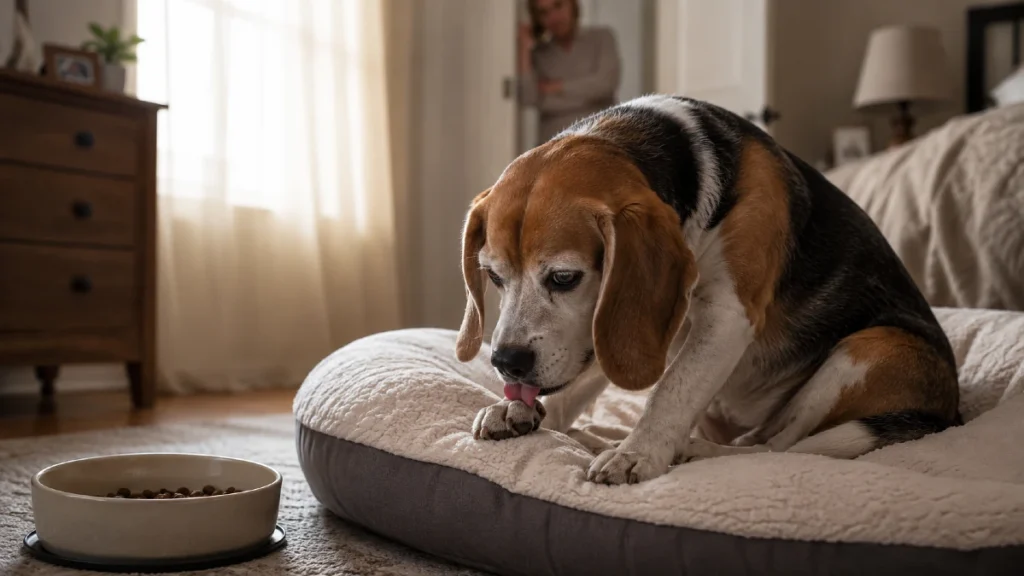
Sleep disruptions often point to hidden health issues. A dog pacing at night might be too uncomfortable to rest. Sleeping significantly more is simply a way to conserve energy.
Excessive grooming is another massive clue. Licking a specific joint excessively is a natural attempt to soothe internal joint pain. Marija thought her dog had allergies until the vet diagnosed arthritis.
Changes in eating habits happen because pain suppresses appetite. Tracking these daily routines in a notebook helps your vet find the root cause. Spotting these subtle signs of pain in dogs early makes treatment much easier.
Why Do We Miss These Signs? The Owner Blind Spot

A recent Utrecht University study found surprising results about owner perception. Dog owners are no better than people without pets at spotting subtle behavioral shifts caused by pain. This proves exactly how tricky these signs are to catch.
Osteoarthritis affects up to 80 percent of dogs over age eight. This staggering statistic makes chronic pain highly likely in senior pets. You must look closely for a dog hiding pain symptoms.
We often mistake signs of aging for signs of pain. Slowing down is not just a normal part of getting older. It usually indicates an underlying medical issue that needs attention.
| What You See | What You Might Think | What It Actually Means |
| Slower on walks | Just getting old | Joint discomfort |
| Flattened ears | Feeling guilty | Facial tension and pain |
| Hiding in a closet | Wants quiet time | Seeking safety while vulnerable |
What to Do Next: 4 Steps for Modern Veterinary Pain Management

Never give dogs human pain medications like ibuprofen or Tylenol. These drugs are highly toxic to pets and can cause fatal organ failure. A modern vet visit uses a much safer approach.
Chronic pain is highly treatable today with the right medical guidance. Vets now use specific AAHA pain management guidelines dogs to assess them. They treat pain assessment as a fourth vital sign alongside pulse and temperature.
- Record a video: Film the behavior at home to show your vet. Dogs often hide symptoms via adrenaline when at the clinic.
- Book an appointment: Tell the office you suspect discomfort. Mention the specific behavioral shifts you noticed at home.
- Ask about the fourth vital sign: Ensure your vet checks for physical tenderness. They will look closely at their joints and muscles.
- Explore treatments: Ask about multimodal analgesia. This simply means using a combination of therapies like medication and laser treatments.
| Treatment Type | How It Works | Good For |
| NSAIDs | Reduces inflammation and blocks pain signals | Arthritis and surgery recovery |
| Laser Therapy | Uses light to speed up cell repair | Joint issues and muscle sprains |
| Orthopedic Beds | Relieves pressure on sore joints | Senior dogs and daily comfort |
Physical discomfort does not always look like crying or limping. It often looks like a change in routine or a shift in personality. Spotting these early changes can drastically improve their quality of life.
Schedule a wellness exam if you notice any of these subtle clues. You now know how to tell if your dog is in pain when they won’t show it. Please share this article with fellow dog owners to spread awareness.