
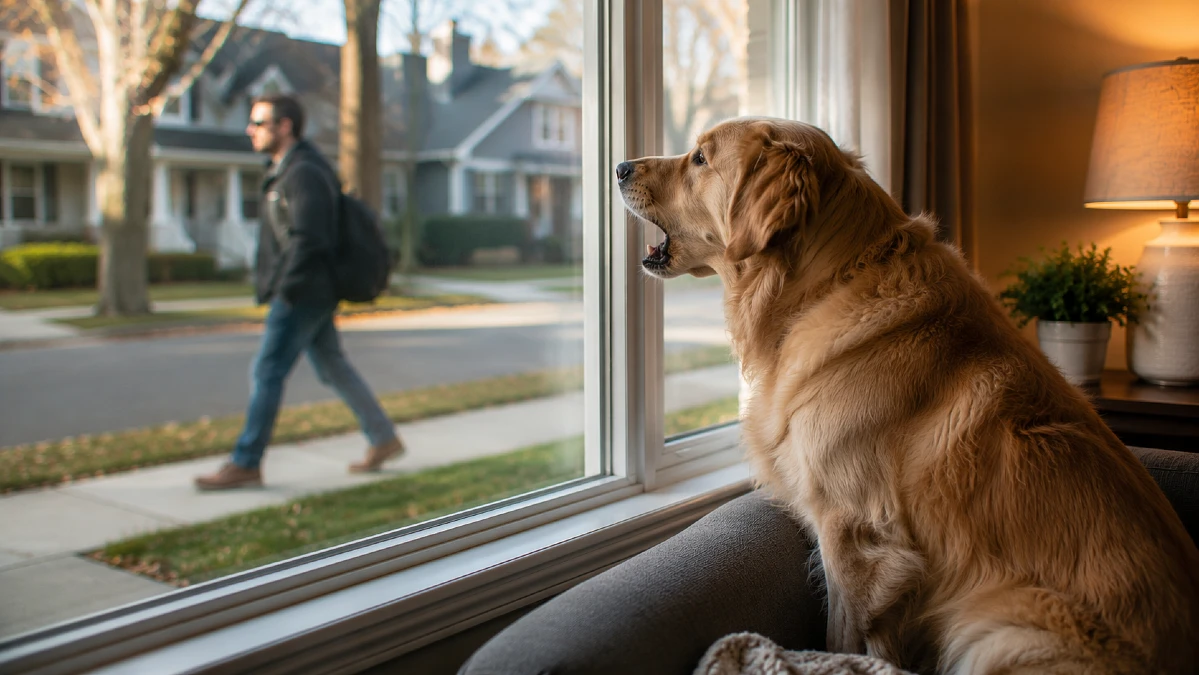
If your dog treats every passing pedestrian like a major emergency, you are not alone. The constant barking gives you a terrible headache. It is also a clear sign that your dog is stuck in a stressful cycle of panic.
Yelling at them is definitely not fixing the problem. You need a proven plan. This guide provides a clear strategy to manage their environment and change their emotional response.
You will learn to teach them what to do instead of barking. Here is exactly how to stop a dog from barking at people walking past and restore peace.
Why Does Your Dog Bark at Every Passerby?
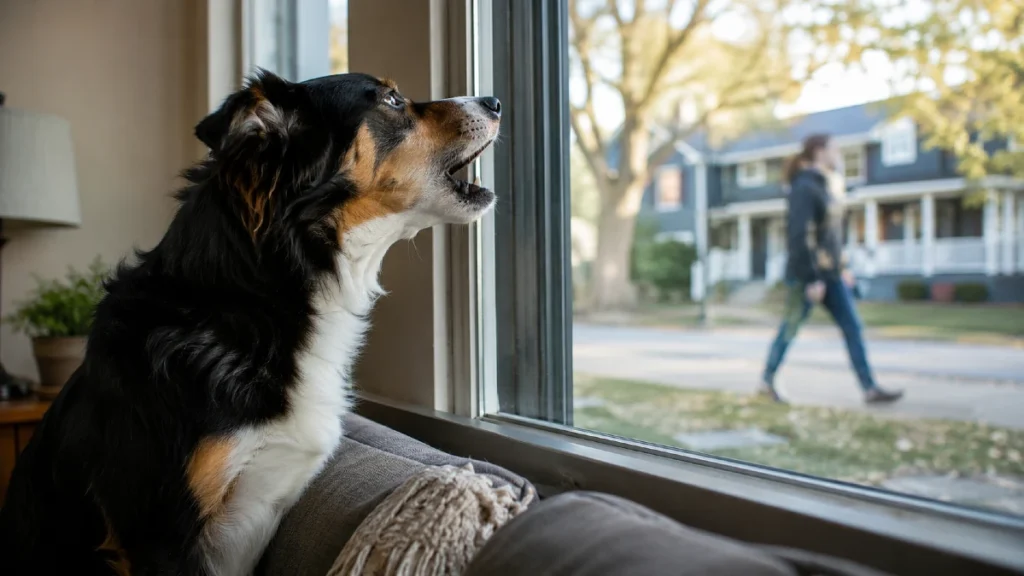
Your dog is not barking to be bad. They are simply acting on pure instinct.
The ASPCA Behavior Guidelines clearly define territorial barking. Dogs are highly motivated to guard their perceived territory from strangers. This differs from simple alarm barking at a sudden noise.
Modern homes often trap this guarding instinct. Tall fences and big glass panes create physical barriers. This causes barrier frustration in dogs. Natural curiosity quickly turns into severe stress.
Certified Behavior Consultant Rachel Lane notes that barking out the window stems directly from this barrier frustration. It leaves the dog completely overstimulated.
Then the Mail Carrier Illusion takes over. Your dog barks loudly at the window. The mail carrier eventually leaves to finish their route. Your dog firmly believes they successfully chased the intruder away.
This makes the behavior highly self rewarding. Dogs who sit at the window all day practice this behavior up to 200 times a month. This repetition cements a hardwired habit. You must step in and intervene.
Step 1: Manage the Environment and Stop Dog Barking Out Window
You cannot train a dog while they are actively reacting. Management must always happen before training starts. If your dog can still see their triggers, the training will fail.
Leaving the blinds open for a reactive dog is like putting a recovering addict in front of a casino game. You have to remove the temptation completely.
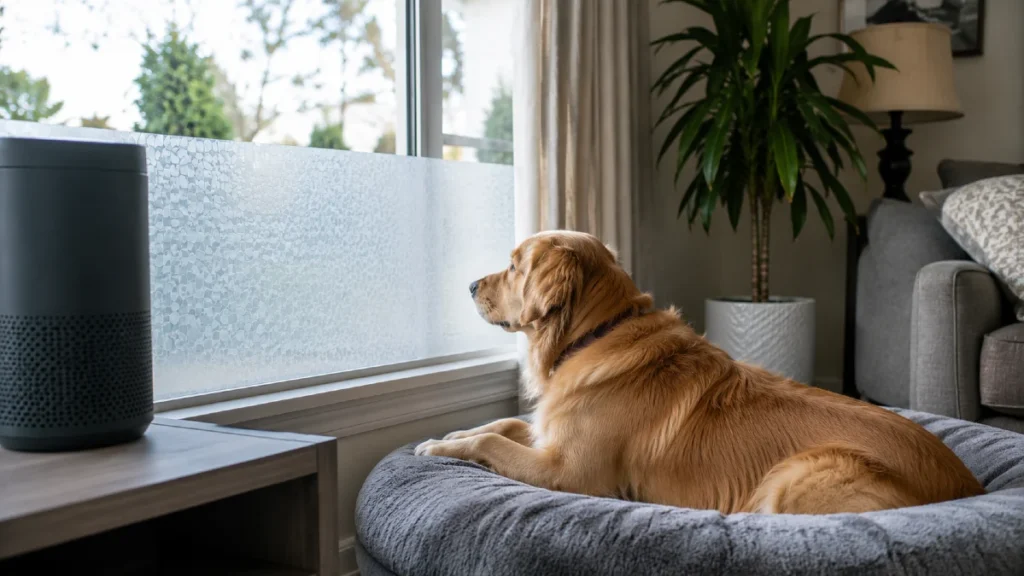
Use opaque privacy window film on the lower half of your windows. It lets the sunlight in but completely blocks the view outside. You should also close the curtains during peak pedestrian hours.
Use white noise machines near the front door. These muffle the sound of footsteps and voices outside.
Every time your dog successfully barks at a trigger, the habit strengthens. Consider the basic repetition equation. If a dog is home alone eight hours a day, they might practice window barking 50 or more times a week.
Prevention is mathematically faster than correction. Blocking the window can reduce barking frequency by 80 percent almost immediately. This helps stop dog barking out window right away.
This is not a permanent punishment. It is just a temporary training necessity.
| Management Tool | Main Purpose | Cost and Effort |
| Privacy Window Film | Blocks visual triggers from outside | Low cost and easy setup |
| White Noise Machine | Muffles footsteps and street sounds | Medium cost and plug in |
| Closed Curtains | Prevents scanning the neighborhood | Free and immediate |
Step 2: The 3 Minute Solution to Acknowledge and Dismiss
Dogs often bark because they think you missed the obvious threat. They believe they must handle guard duty alone.
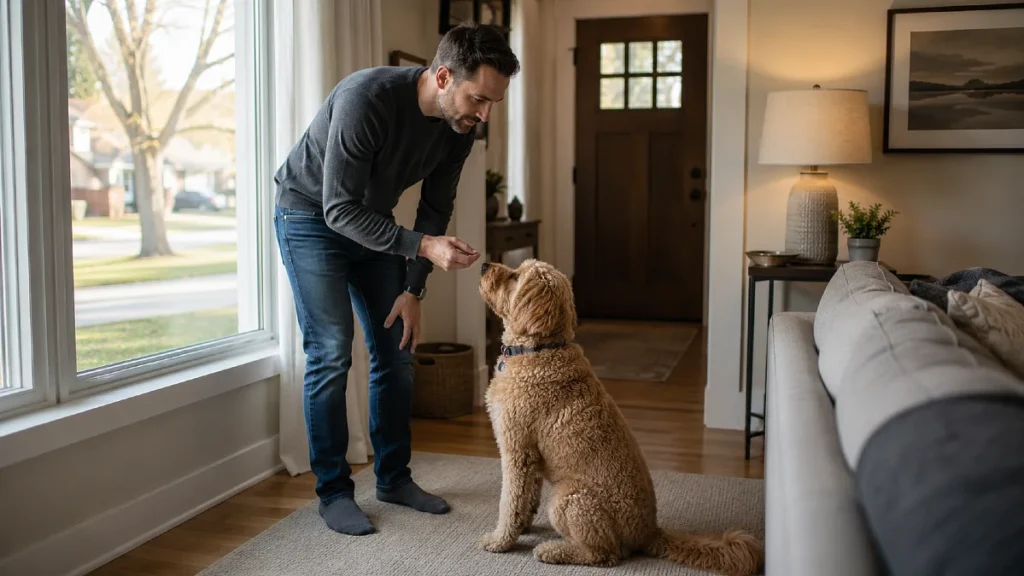
You can easily change this dynamic. Instead of yelling from the couch, calmly walk over to the window. Look outside at exactly what they are seeing.
Say a calm cue like “Thank you, I see it.” This tells your dog that you have assessed the situation.
Next, call the dog away from the glass. Reward them immediately for leaving the window. You are officially relieving them of their stressful job.
This method builds immense trust over time. Your dog learns that you are in control of the house. They realize they do not need to panic.
Sometimes your dog will refuse to listen. If they stay at the window and keep barking, gently guide them away by their collar or harness.
Escort them to a quiet room or a playpen. Give them a three minute decompression timeout.
This timeout is not a punishment. It simply removes them from the trigger and lowers their arousal level back to normal.
Once they calm down, let them back out. Consistency is the secret here. You want to stop a dog from barking at people walking past by proving that you are handling the security.
Step 3: How to Fix the Fear with Reactive Dog Training
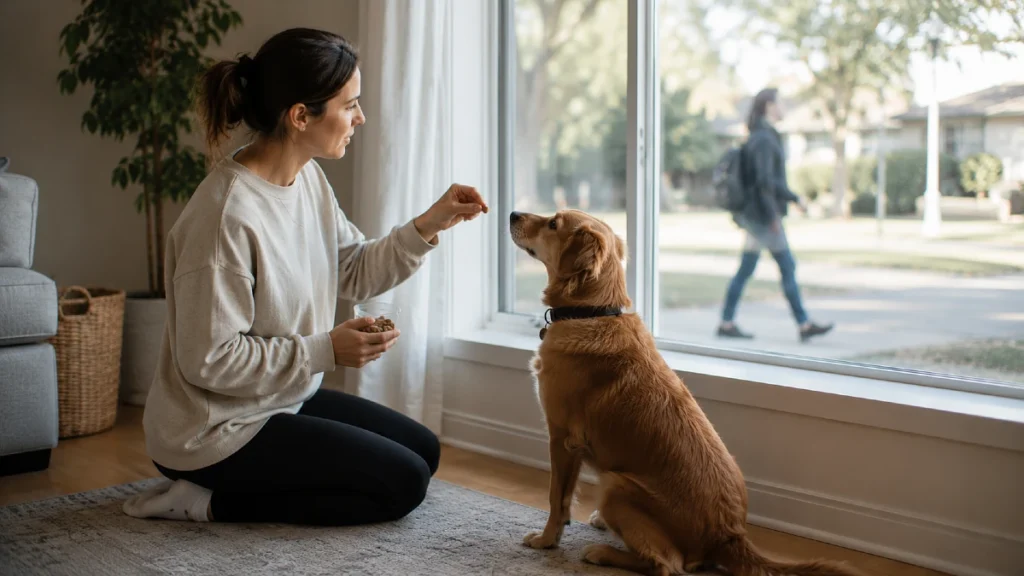
Classical conditioning involves pairing two different things together. Think of Pavlov and his famous dogs.
You want to shift your dog’s emotion from stranger equals danger to stranger equals treats. This process is called counter conditioning. It means actively changing how they feel about a specific trigger.
Effective behavioral modification always requires high value reinforcement. Dry kibble will absolutely not work for this. You must use real cheese or boiled chicken.
Here is the exact reactive dog training sequence to follow:
How to Desensitize Your Dog to People Outside
1. Find the threshold
Set up a training session from a distance. Find a spot in the house where the dog notices the person outside but is not barking yet.
2. Start feeding treats
As soon as a person appears in view, feed high value treats continuously.
3. Stop feeding treats
Stop giving the treats the exact moment the person passes completely out of sight.
4. Repeat the process
Keep practicing this every single day during busy walking hours.
Eventually, the magic happens. Your dog will see a person outside. Instead of barking, they will immediately look at you expecting a delicious treat.
You have successfully changed their emotional response. The scary stranger is now a predictor of very good things.
| Treat Type | Value Level | When to Use It |
| Dry Kibble | Low | Basic obedience indoors |
| Dog Biscuits | Medium | Easy tricks with no distractions |
| Boiled Chicken | High | Window reactivity and triggers |
Step 4: Teach an Alternative Action to Stop the Barking
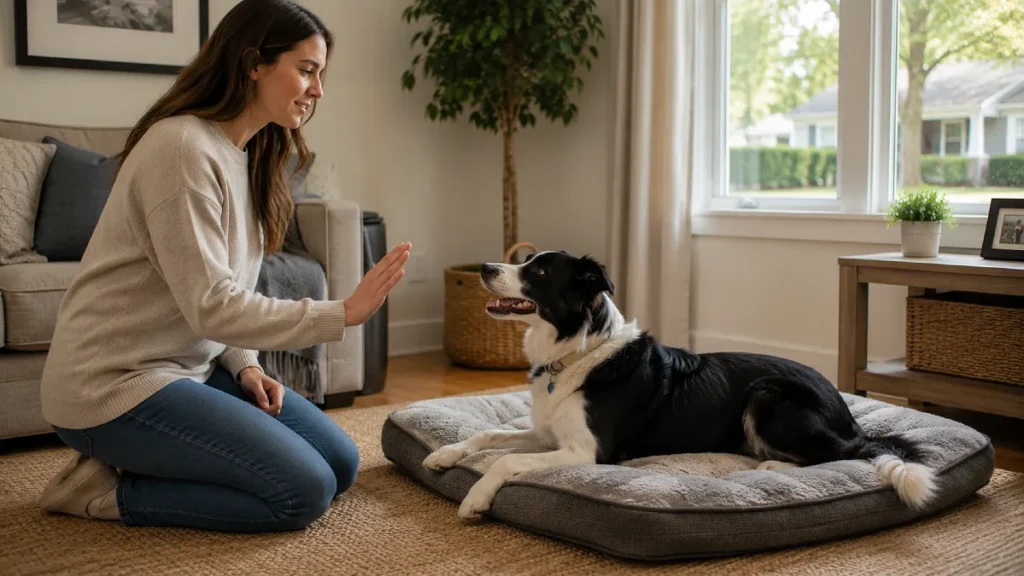
It is always easier to tell a dog what to do than what not to do. A dog cannot aggressively bark at the window if they are busy doing something else.
Teach your dog the “Place” command. This sends your dog to a specific bed placed far away from the window.
Practice this command when the house is completely quiet first. Reward them heavily for staying on their bed for long periods.
Once they master it, ask for the place command the second they hear a noise outside. They will learn to run to their bed instead of the window.
Alternatively, you can teach them to grab a specific toy. Keep a favorite stuffed animal near the front door.
When someone walks by, encourage them to pick it up. Dogs cannot easily bark with a large toy stuck in their mouth.
This simple trick redirects their nervous energy into something positive and completely quiet.
3 Things to Avoid When Your Dog Barks
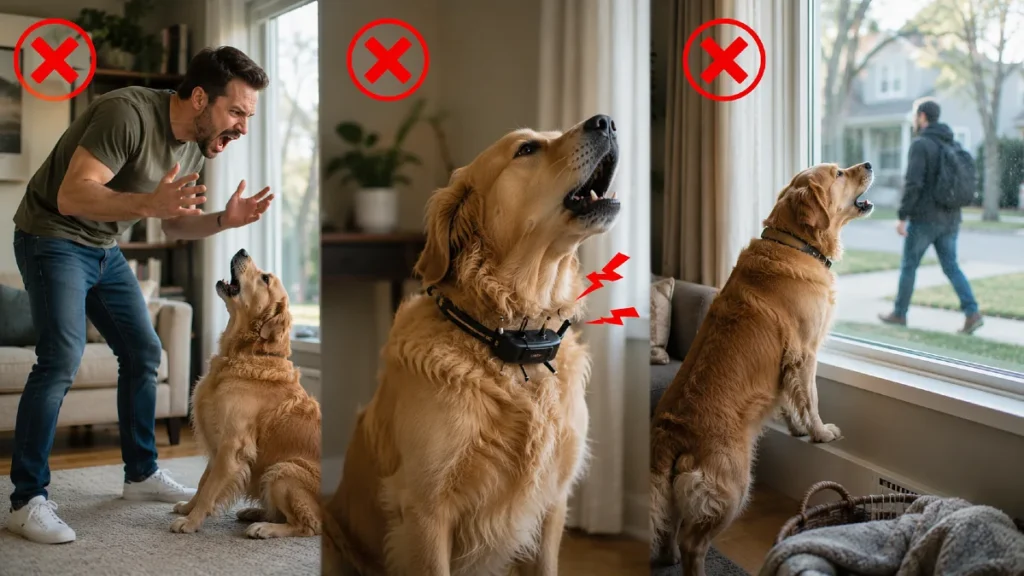
Human reactions often make window reactivity much worse. You must avoid these common mistakes to see real progress.
Do not yell at your dog. To a dog, yelling sounds like you are just barking right along with them. This completely validates their panic.
Avoid punishment tools at all costs. Skip the shock collars and automatic bark collars entirely.
Multiple studies show these tools drastically increase fear. They can easily lead to redirected aggression toward you or other pets in the home.
Never leave them unsupervised by the window. Free access to the glass while you are gone ruins all your hard work.
| Human Reaction | Dog’s Perspective | Better Choice |
| Yelling loudly | “We are barking together!” | Walk over and say thank you |
| Shock collar | “Strangers cause me pain.” | Use high value treats |
| Ignoring it completely | “I must handle this myself.” | Guide them to a quiet room |
Conclusion
Stopping the barking requires a solid plan. You must manage the window view first. Then you need to acknowledge their alerts and consistently pay them for quiet behavior.
Order some privacy window film today as your very first step. Managing the environment is more than half the battle.