
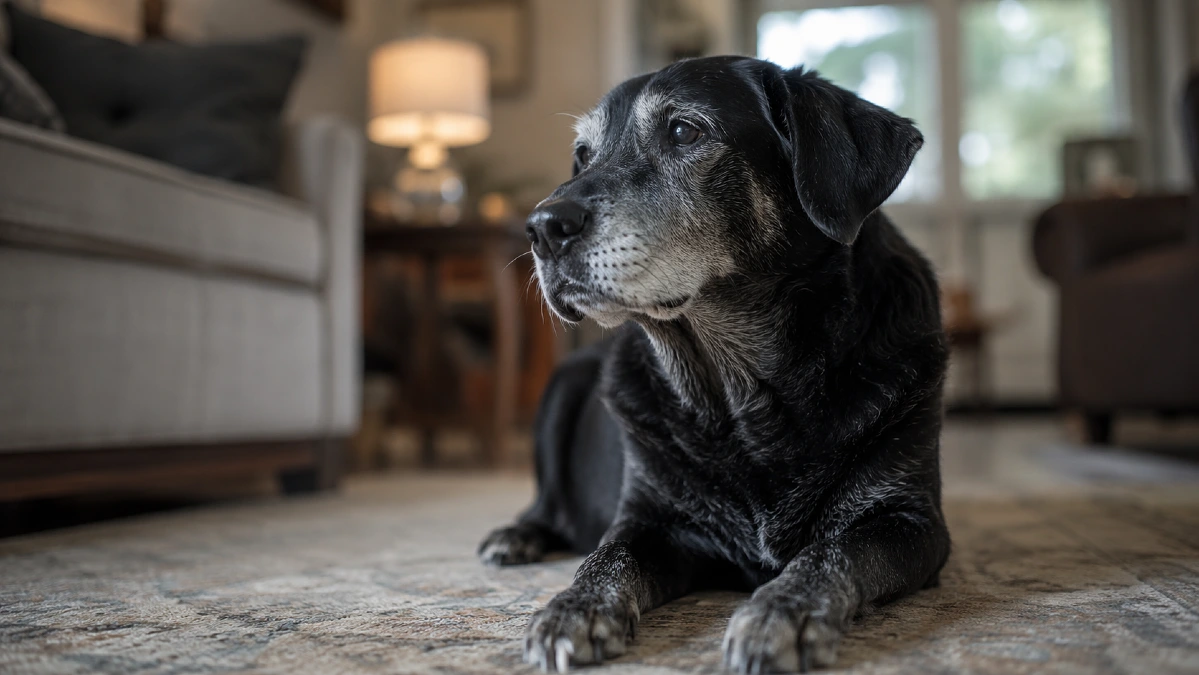
Finding your once sharp senior dog staring blankly into a corner or pacing the halls at 2 AM is a heartbreaking experience for any pet parent.
Many owners write off these older dog behavior changes as just getting old. This mistake delays treatment and leaves your dog feeling lost in their own home.
They might forget their training or become scared of familiar faces without proper help. You can step in and help them right now. This article breaks down the exact signs of dog dementia using the newly standardized 2026 veterinary guidelines so you know what to do next.
What is Canine Cognitive Dysfunction Syndrome (CCDS)?
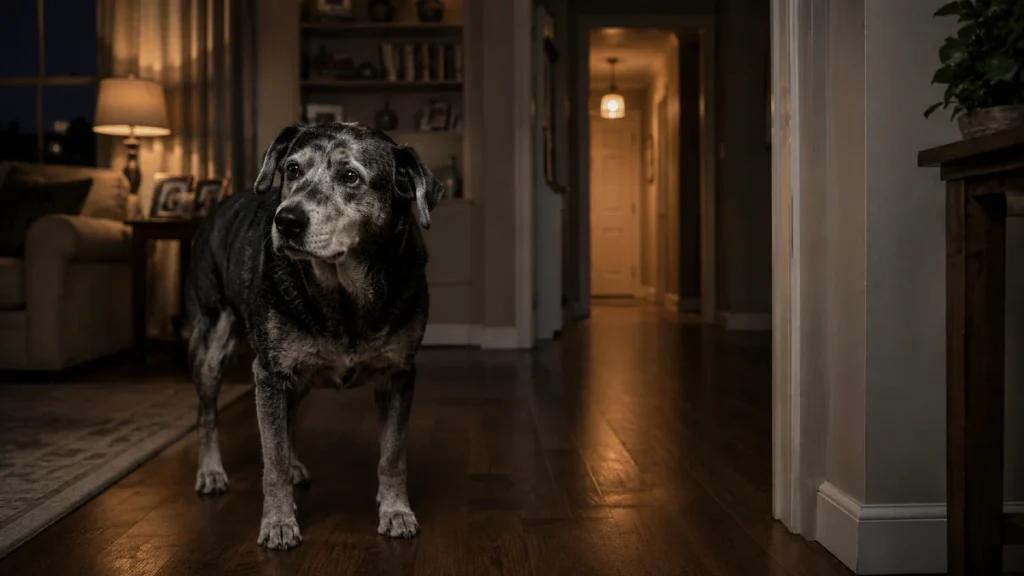
Canine Cognitive Dysfunction Syndrome (CCDS) is the veterinary term for dog dementia. Much like Alzheimer’s disease in humans, this condition is caused by amyloid plaques building up in the brain. These plaques damage brain cells and cause severe memory loss.
This disease is highly common and heavily underdiagnosed in senior pets. If your dog is showing signs, you are definitely not alone. Studies show that CCDS affects 14 percent to 35 percent of dogs over 8 years old, and the numbers skyrocket to 68 percent in dogs aged 15 to 16.
Sadly, only about 1.9 percent of cases are formally diagnosed early because owners assume the changes are normal aging.
The CCDS Working Group published new international diagnostic guidelines in late 2025 and 2026 to help standardize diagnosis. Because CCDS develops gradually, the veterinary community relies on a specific framework to catch it early.
The 6 Key Signs of Dog Dementia: The DISHAA Framework
Veterinarians use a gold standard acronym to track cognitive decline. This tool is called DISHAA and it helps track specific symptoms. You can use this tool at home today to spot the signs of dog dementia early.
Disorientation
Dogs with dementia often get lost in familiar places. You might find your dog stuck behind a sofa or staring at the hinge side of a door instead of the opening. They simply forget how to walk around their own home.
Interactions
Watch how your dog interacts with family members and other pets. A dog with DISHAA in dogs might withdraw from you or lose interest in the mailman. Sometimes a previously sweet dog might even show sudden aggression.
Sleep and Wake Cycle
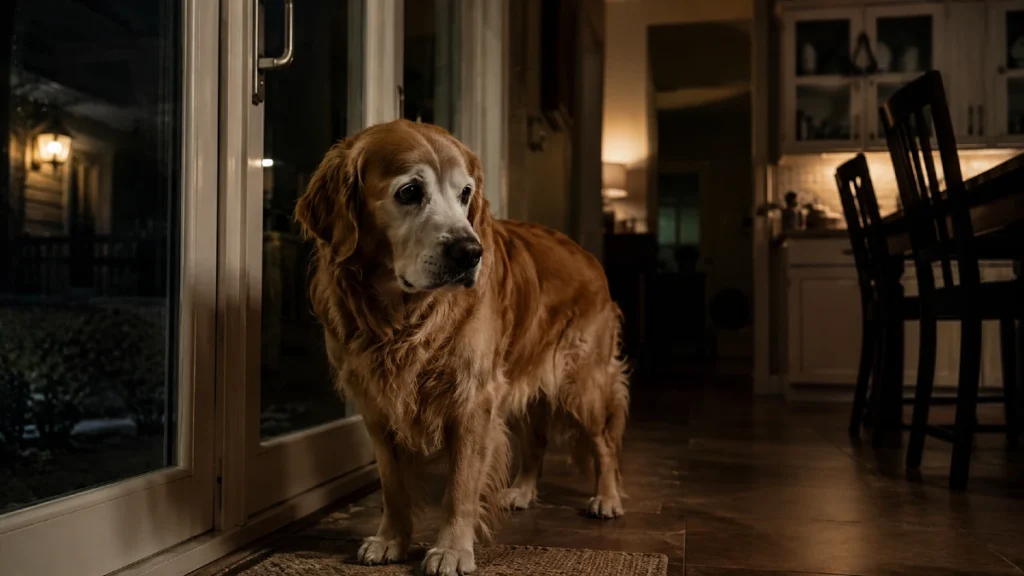
A healthy dog sleeps mostly at night, but CCDS disrupts their circadian rhythm. This means their internal body clock gets confused and leads to sundowning syndrome where agitation peaks in the evening. Your dog might take midnight walks where they roam the house aimlessly and then sleep all day.
House Soiling
Your dog is not being spiteful when they have an accident indoors. They are forgetting their potty training and might pee right in front of you. They simply forget how to ask to go outside.
Activity Levels
Look for extreme changes in your dog’s daily activity. Your dog might become very restless and pace endlessly in circles. On the other hand, they might become completely apathetic and stare at the wall.
Anxiety
New fears often pop up with dog dementia. Your dog might suddenly fear loud noises that never bothered them before. They might also develop extreme separation anxiety when you leave the room.
| Letter | Category | Common Example |
| D | Disorientation | Getting stuck behind furniture |
| I | Interactions | Withdrawing from family members |
| S | Sleep Cycle | Pacing the halls all night |
| H | House Soiling | Forgetting to ask to go outside |
| A | Activity | Endless pacing or staring |
| A | Anxiety | Sudden fear of familiar noises |
A dog does not need to show all six signs to have dementia. Even one or two symptoms warrant a vet visit. Early detection gives you the best chance to help them.
Physical Changes vs Cognitive Decline: Ruling Out Other Issues
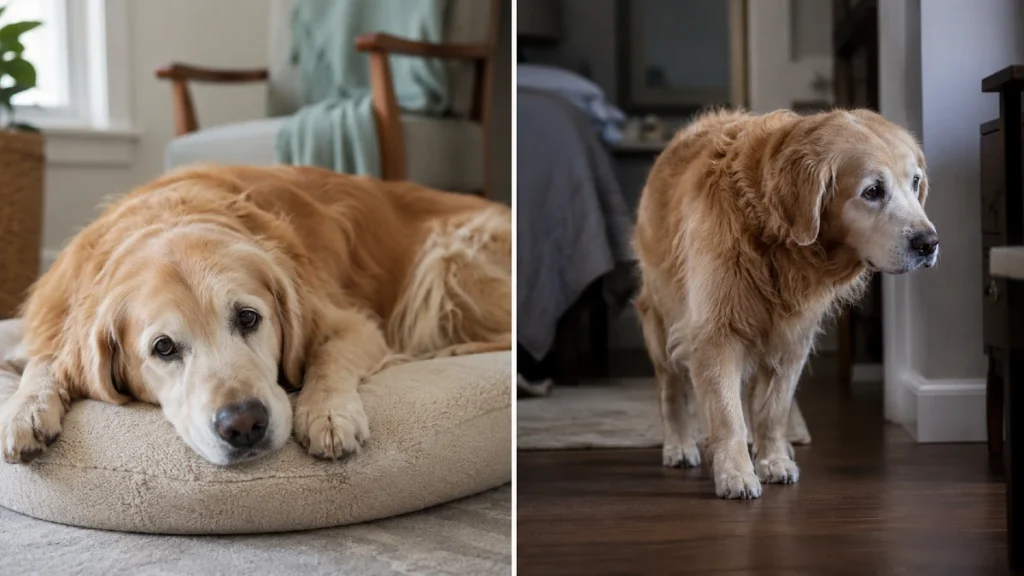
Is your dog pacing because they are confused, or because their hips hurt? CCDS is a diagnosis of exclusion, which means vets must rule out physical ailments first. Many older dog behavior changes come from physical pain rather than cognitive decline.
Dogs with CCDS often have concurrent vision or hearing loss. This makes them even more reliant on household routines to feel safe. Vets follow a strict rule to always rule out the physical before treating the mental.
Your vet will run blood work and examine your dog physically. They will make sure bad joints or failing kidneys are not the actual cause. Here is a quick look at how physical issues mimic cognitive decline.
| Symptom | Possible Physical Cause | Possible Cognitive Cause |
| Indoor Accidents | Urinary tract infection or kidney disease | Forgot potty training |
| Pacing or Restlessness | Osteoarthritis pain | General confusion and anxiety |
| Disorientation | Cataracts or hearing loss | Forgetting room layouts |
Actionable Steps: What to Do if You Suspect Dog Dementia
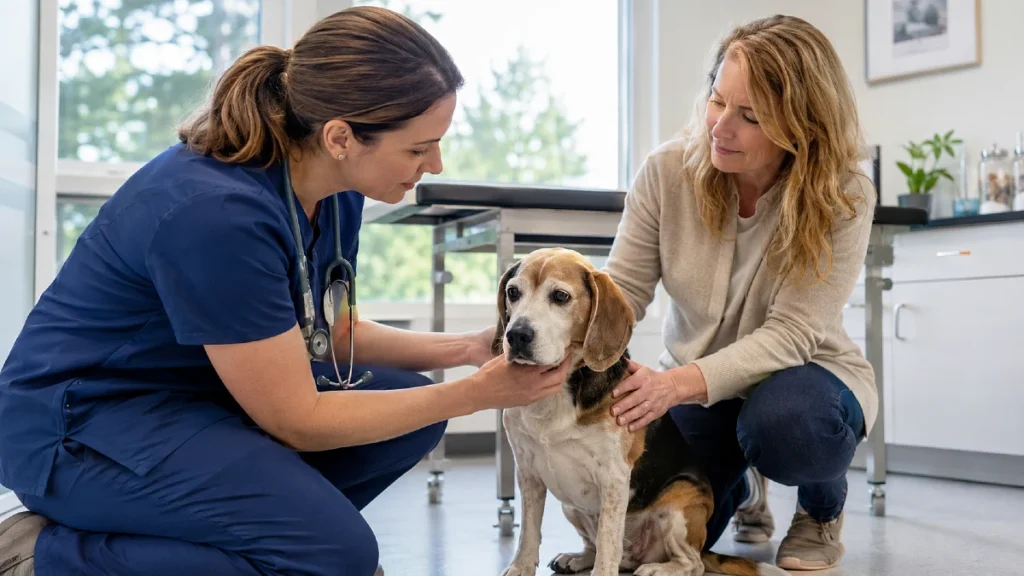
While there is currently no cure for CCDS, recent advancements offer multiple ways to slow the progression. You can take specific steps to help your dog right now. The 2026 AVMA working group recommends all dogs have an annual behavioral screening starting at age 7.
Action Plan for Cognitive Health
Track & Consult
View Details ⟡
Track symptoms and visit the vet. Keep a symptom log using the DISHAA criteria for one week. Bring this log to show your vet during a senior wellness exam. They might prescribe FDA approved medications to increase dopamine in the brain.
Ex: Selegiline (Anipryl)
Dietary Adjustments
View Details ⟡
Adjust their diet. Discuss dietary interventions with your vet during your visit. Prescription neuro diets can help support brain health. You can also ask about adding Omega 3 fatty acid supplements to their meals.
Ex: Purina NeuroCare
Modify the Home
View Details ⟡Change your environment to keep your dog safe and comfortable. Add nightlights to help them see in the dark and put down yoga mats for better traction. Block off stairs with baby gates and stick to a strict daily routine to reduce their anxiety.
| Home Area | Action to Take | Benefit for Your Dog |
| Floors | Add non slip mats | Prevents slipping and anxiety |
| Hallways | Plug in nightlights | Helps with sundowning vision |
| Stairs | Install baby gates | Prevents dangerous falls |
| Routine | Feed at exact same times | Creates comforting predictability |
Conclusion
Canine Cognitive Dysfunction Syndrome is a progressive condition. Spotting the signs early using the DISHAA framework allows for fast action. These early interventions drastically improve your dog’s quality of life.
Your next step is simple. Download a DISHAA questionnaire online and fill it out at home. Then book a senior wellness exam with your veterinarian and hand them your symptom log.