
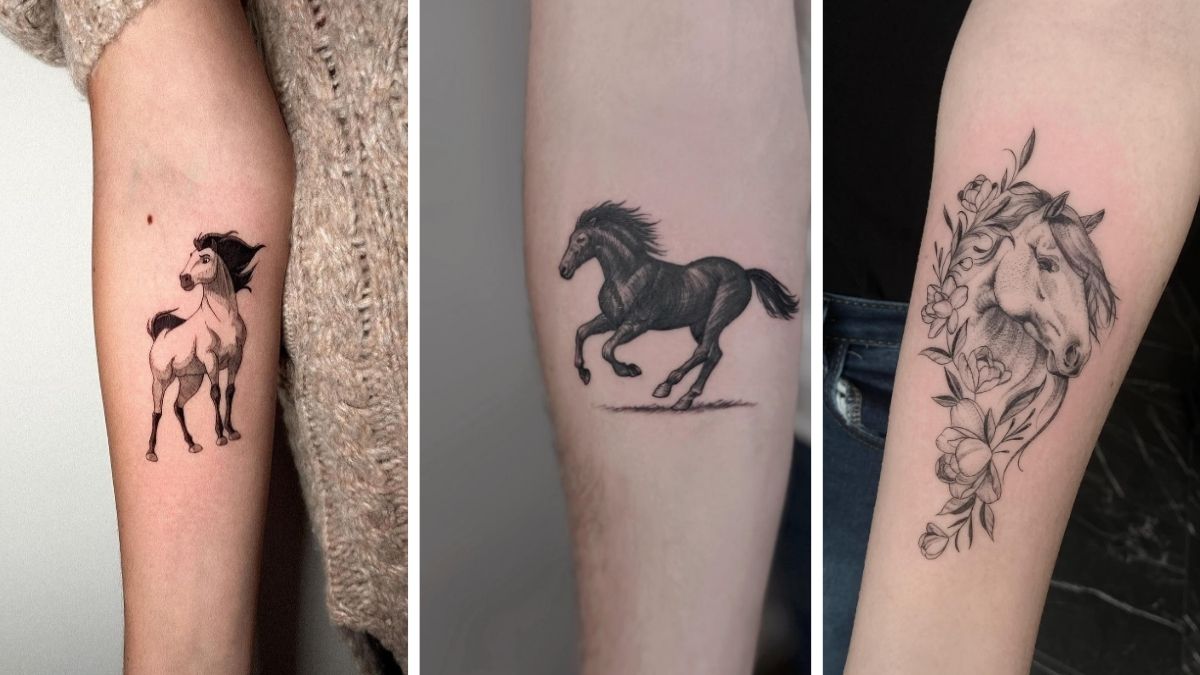
Most equestrian-themed rooms end up looking like a dusty antique mall instead of a sophisticated sanctuary. You buy a few horse prints hoping for grace, but the space instantly feels cluttered and dated.
Forcing a powerful theme into a modern home is incredibly tricky. A misstep makes your walls feel juvenile rather than intentional and deeply personal.
This guide delivers seventeen sophisticated equestrian art and gallery concepts for your bedroom or study, ranging from bold accent walls to subtle line drawings. Discover how to balance powerful animal motifs with refined modern styling.
Styling Equestrian Art: Concepts That Feel Refined
Balancing powerful animal imagery requires careful scaling. Instead of overwhelming the room with literal interpretations, focus on the flowing lines and raw textures of the artwork.
Incorporate rich textures like weathered leather and crisp linen to ground the space. This approach makes the horse motifs feel integrated rather than forced.
- Color Anchor: Use deep charcoal or rich forest green to give the delicate sketches a moody, grounded backdrop.
- Texture: Pair smooth ceramic frames with rough woven textiles to create a tactile contrast.
- Scale: Hang one oversized statement sketch above the bed to establish an immediate focal point.
- Lighting: Direct a soft, warm picture light over the artwork to highlight the fine line details.
1. Fine-Line Shaded Horse Portrait with Soft Pink Lily and Pastel Florals
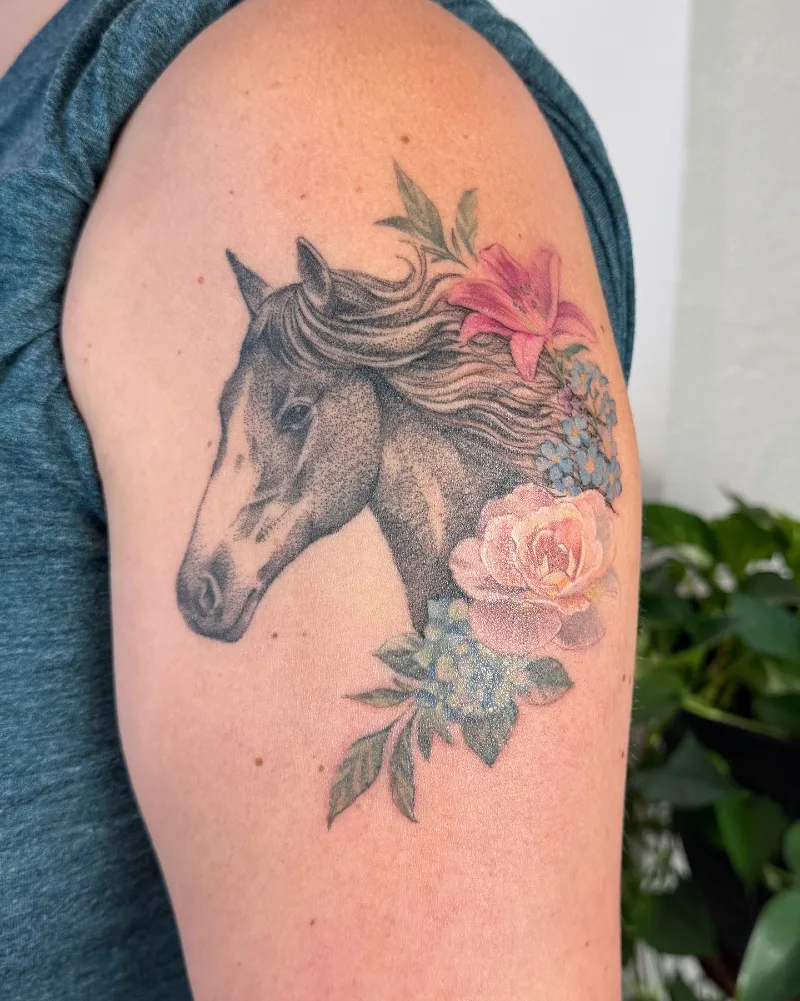
A detailed black-and-grey stipple-shaded horse head profile sits on the upper arm, framed by delicate pastel blossoms.
The mane flows softly into a cluster of muted pink lilies, light blue forget-me-nots, and a peach-toned rose with sage green leaves. Soft diffused light catches the fine-dot texture of the shading, contrasting cleanly with the smooth skin background.
Pairing monochrome animal shading with soft botanical colors prevents a large portrait piece from feeling overly heavy.
Integrating organic floral shapes breaks up the strong, linear profile of the horse’s neck and head. Placing the brightest pop of color near the top draws the eye upward, mirroring the natural movement of the flowing mane. This composition softens the overall structure while retaining the striking detail of the central portrait.
2. Whimsical Dual-Horse Illustration with Arching Wildflowers and Starbursts
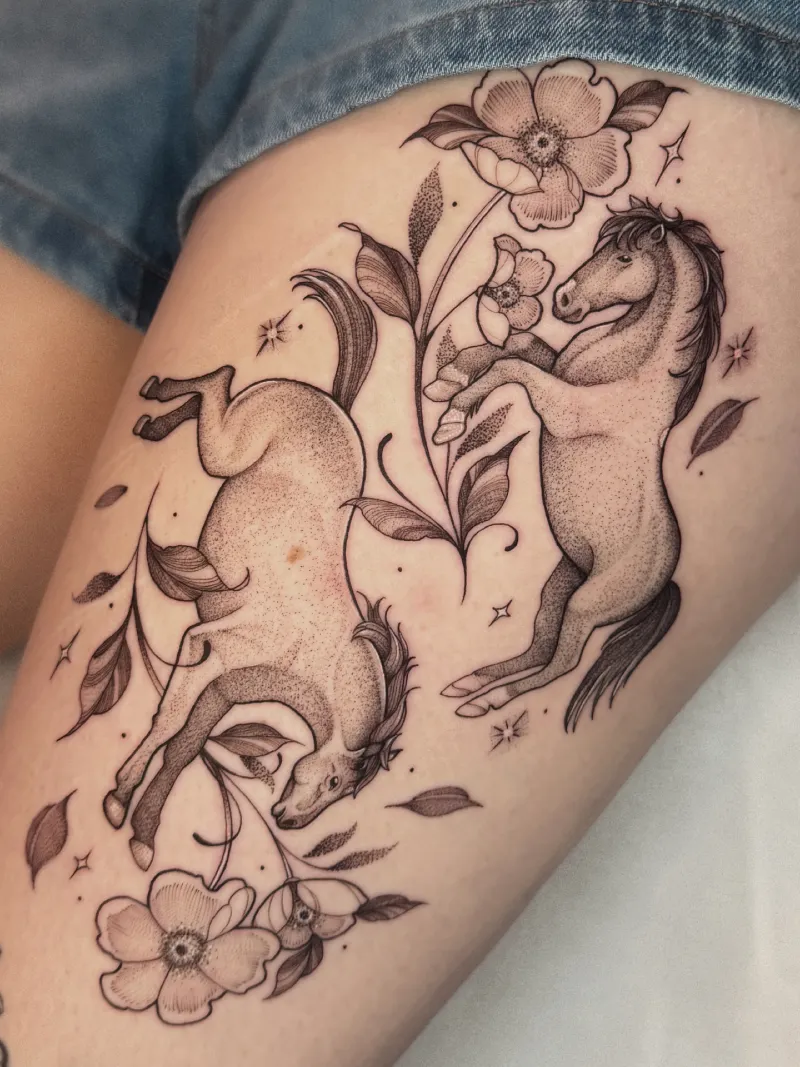
Two dynamic, stipple-shaded horses curve gracefully across the thigh, mirroring each other in a fluid, circular motion. Outlined wildflowers with delicate line-work petals arch between the animals, punctuated by tiny, crisp starburst accents and drifting leaves.
The soft, moody black-and-grey ink tones create a velvety texture against the skin under even, diffused light.
Varying the direction and pose of multiple figures creates a natural sense of rhythm and energy.
Using mirrored curves allows a large, multi-element design to follow the natural contours of the body without feeling stiff. Fine dotwork shading keeps the central figures feeling light and spacious rather than dense or heavy. The scattered botanical elements bridge the gap between the two horses, tying the entire narrative together beautifully.
3. Micro-Realism Bridled Horse Portrait with Fine Geometric Diamond and Florals
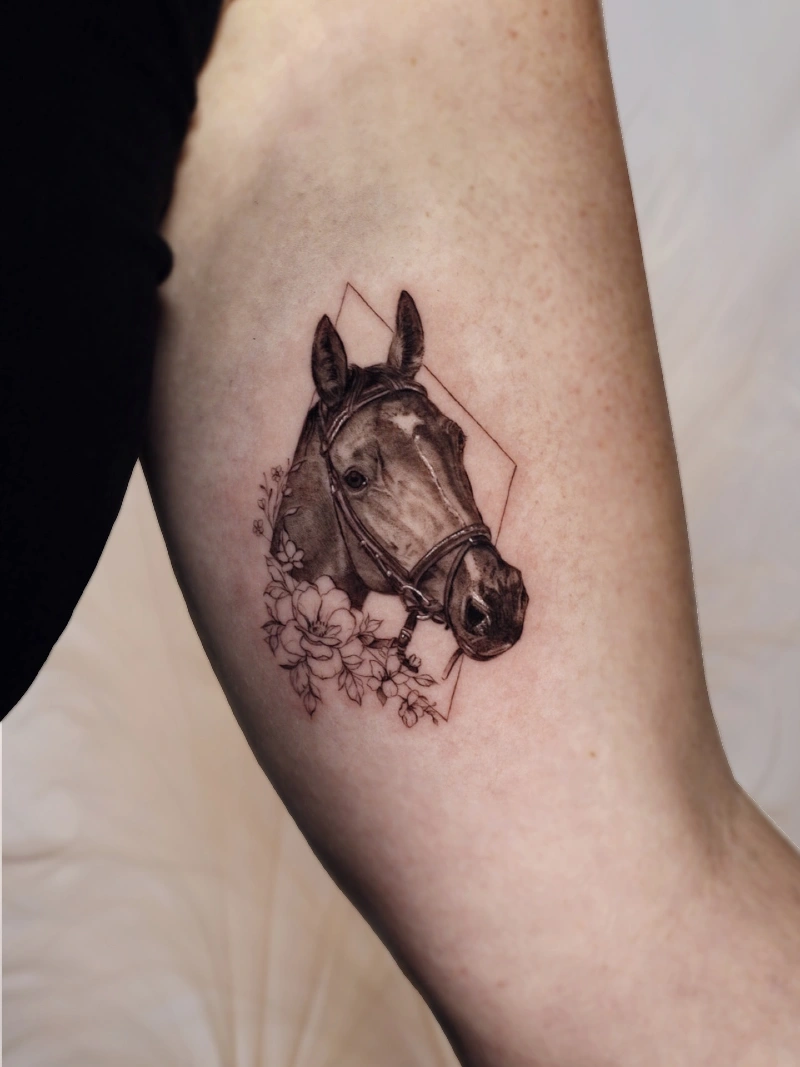
An incredibly crisp, micro-realism horse head wearing a detailed bridle rests inside a sharp, fine-line geometric diamond frame on the inner arm.
Delicate, unshaded floral linework clusters at the bottom left of the portrait, softening the strict linear borders. The moody black-and-grey shading on the horse’s coat mimics a rich, glazed ceramic texture under soft, filtered light.
Framing a highly detailed portrait with sharp geometric lines provides an instant structural anchor.
Using a minimalist border stops a complex piece from looking like it is floating aimlessly on the skin. The stark contrast between the dense, realistic shading of the horse and the airy, open linework of the flowers creates an intentional balance. This clever composition ensures the focal point stays centered while adding a layer of modern sophistication.
Why This Works
- Negative Space: Leaving the geometric frame and surrounding blossoms unshaded ensures the piece feels incredibly spacious and clean.
- Scale: Keeping the overall footprint compact allows the intricate details of the bridle and coat texture to pop with maximum clarity.
- Statement Piece: Concentrating high-contrast, moody dark tones solely within the horse profile creates a powerful, immediate focal point.
4. Minimalist Fine-Line Running Herd Armband Silhouette
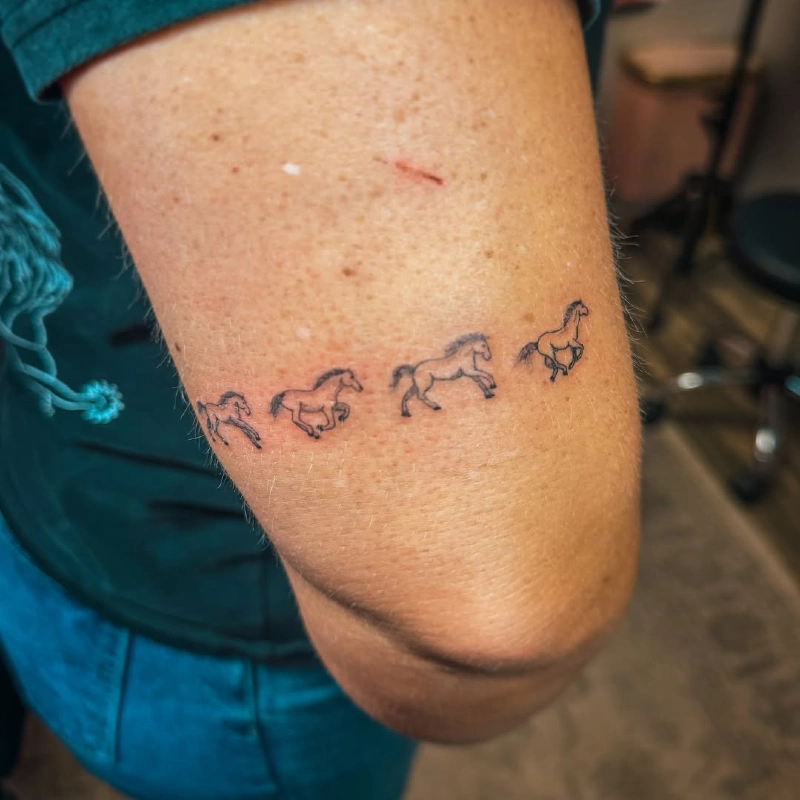
Four tiny, minimalist horses are tattooed in a crisp horizontal row above the elbow, capturing the progressive motion of a wild herd in mid-gallop.
Each individual figure features clean, unshaded outlines with subtle mane details, creating a light and airy sequence along the curve of the skin. Warm, natural studio light illuminates the precise line work, showcasing the deliberate spacing between each moving shape.
Arranging small, identical motifs in a linear sequence mimics a beautiful cinematic stop-motion effect.
Placing the figures horizontally along a natural muscle line gives the illusion of continuous movement across the arm. Keeping the silhouettes entirely free of heavy shading ensures the delicate, micro-scale design remains sharp and highly legible over time. This approach delivers a subtle equestrian nod without relying on an oversized or dense statement piece.
5. Micro-Realistic Rearing Stallion Shoulder Blade Portrait
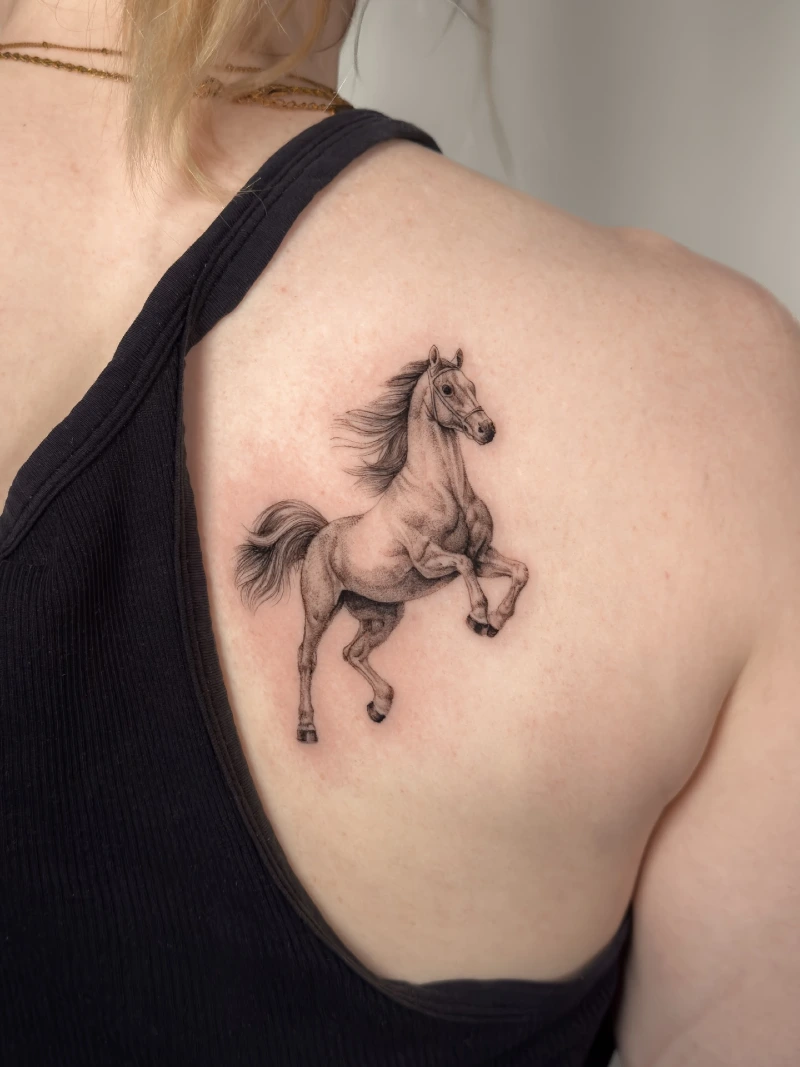
A small, micro-realistic horse sits beautifully on the left shoulder blade, capturing a stallion in a dynamic rearing pose. Incredible fine-line detailing defines the textures of the muscular chest, flowing mane, and swept-back tail using ultra-subtle black and grey ink tones.
Soft, filtered overhead light reveals the hyper-precise gradients, making the small animal portrait look like a masterpiece sketch.
Concentrating high-contrast shading in a compact space creates a jewel-box effect that catches the eye instantly.
Placing a single, highly detailed figure against an entirely open background emphasizes its fluid silhouette and motion. The fine lines mimic classic graphite illustrations, adding an undeniable air of timeless sophistication to the skin. This placement works wonderfully because it can be displayed prominently or easily concealed.
Quick Decorating Tips
- Budget version: Achieve a similar classic look using affordable, high-fidelity temporary transfer tattoos before committing to permanent ink.
- Renter tip: Keep your silhouette sharp by avoiding body areas prone to rapid stretching or frequent sun exposure.
- Pro move: Add a tiny hint of white ink highlights to the mane and eyes to make the realism pop off the skin.
6. Realism Horse Portrait with Red Moon Phases and Abstract Geometric Accents
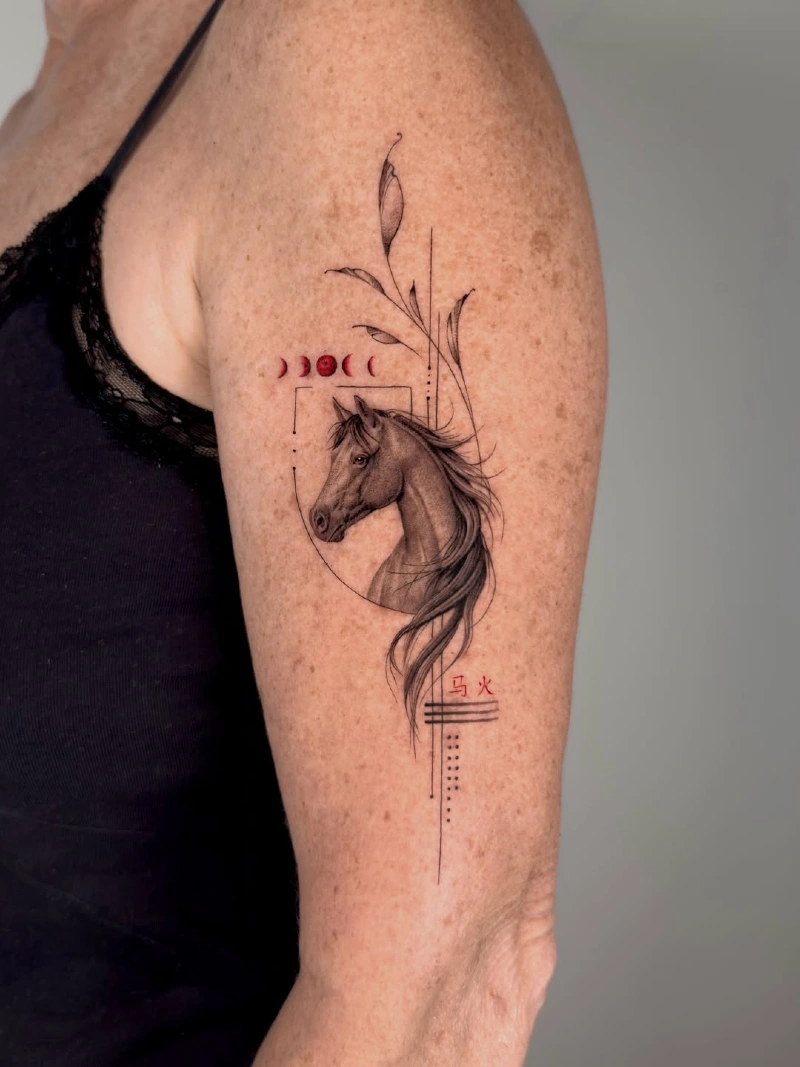
An intricate, realistically shaded horse head profile sits on the upper arm, flanked by crisp vertical lines and a delicate, reaching botanical branch.
Directly above the horse frame, five tiny moon phases are inked in a striking rust-red shade, balanced by red Asian characters at the bottom right. Crisp studio light defines the incredible texture of the flowing mane, which breaks past the geometric framing lines.
Introducing a secondary accent color like crimson or rust breaks up a monochrome design and adds immediate warmth.
Juxtaposing fine, rigid geometry with the soft, organic lines of an animal portrait provides structural depth. The long vertical lines lengthen the design, drawing the eye along the natural curve of the arm. This clever combination of abstract symbols and realistic shading creates a complex narrative without cluttering the canvas.
7. High-Contrast Realism Pegasus with Dramatic Feathered Wings and Sweeping Mane
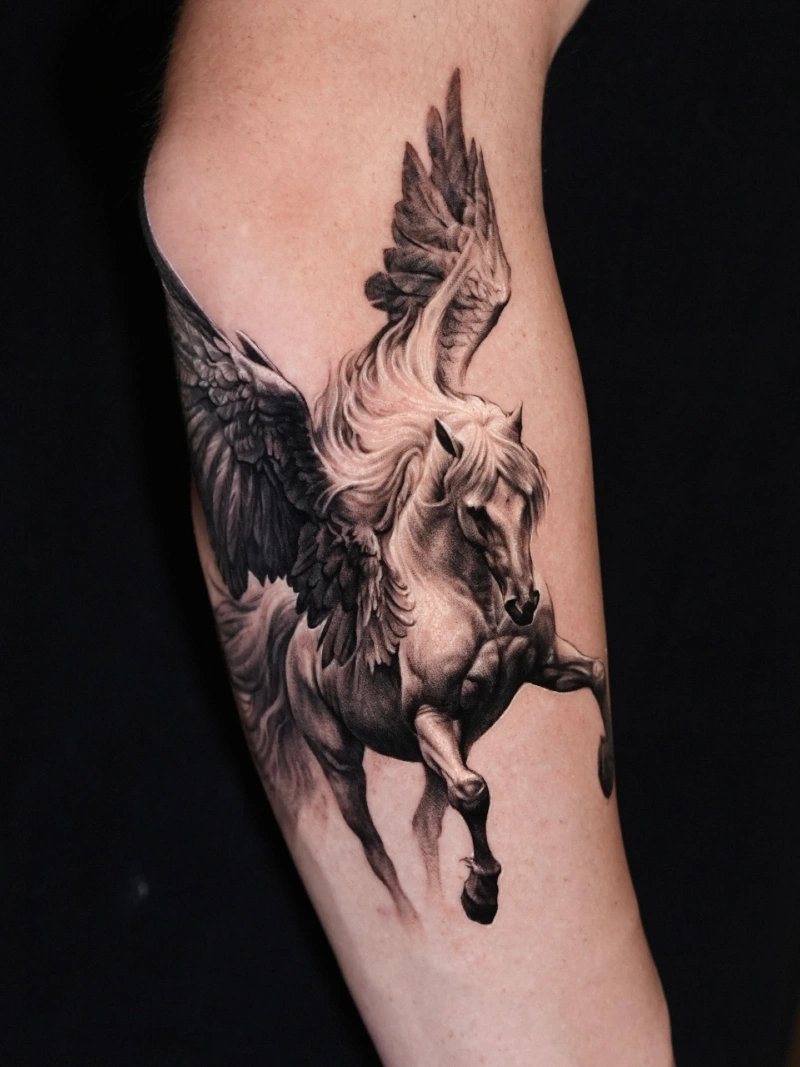
A powerful Pegasus leaps forward in a striking display of high-contrast realism on the forearm. Deep, moody black ink defines the dense feathers of the massive arched wings, while crisp highlights make the muscular chest gleam. The long, silky mane sweeps wildly backward, catching the dramatic, shadowy studio light.
Utilizing deeply saturated black ink values allows the lighter skin highlights to pop with dramatic, three-dimensional depth.
Placing a high-motion figure near a joint utilizes natural body movement to animate the artwork dynamically. Heavy, dark shading requires ample open skin around it so the composition can breathe easily. This intentional layout mimics classic baroque oil paintings, creating a rich and grounded focal point.
8. Fine-Line Illustrative Horse Head with Interwoven Wildflower Stem Split
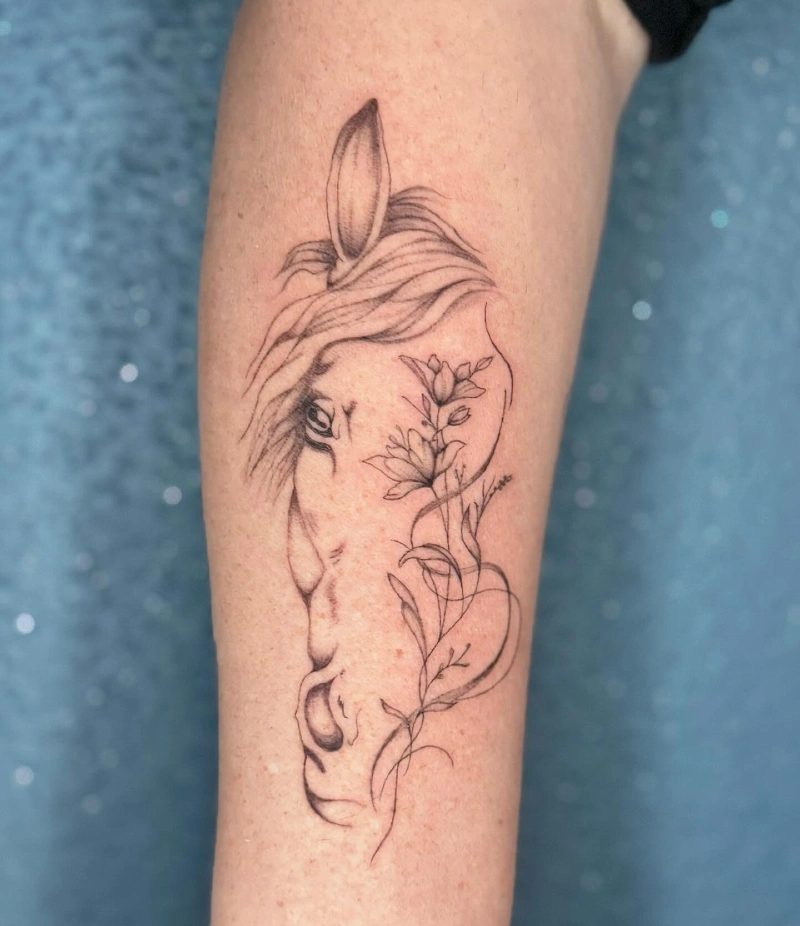
A delicate fine-line horse head is inked vertically on the arm, showing half the face beautifully detailed with a crisp eye and soft shading. The other half of the profile seamlessly blends into an airy, unshaded stem of blooming lilies and twisting leaves. Soft, diffused light accentuates the sketchy, illustrative quality of the black ink strokes.
Merging realistic features with open linework allows a large face portrait to feel beautifully lightweight.
Dividing a central subject down the middle with organic botanical elements creates a striking balance of texture. Leaving half the face open avoids a dense patch of dark ink while keeping the illustration looking fresh and spacious.
This design logic ensures the detailed eye remains the primary focal point without overwhelming the layout.
Why This Works
- Negative Space: Keeping the right side of the horse’s face entirely open gives the delicate wildflower stem room to breathe.
- Texture: The contrast between the shaded, velvety muzzle and the sharp, clean lines of the leaves creates excellent visual variety.
- Scale: Extending the long, twisting stems vertically maximizes the placement along the arm, making the entire piece look highly intentional.
9. Triple Realistic Horse Portrait Half-Sleeve with Fine-Line Wildflower Accents
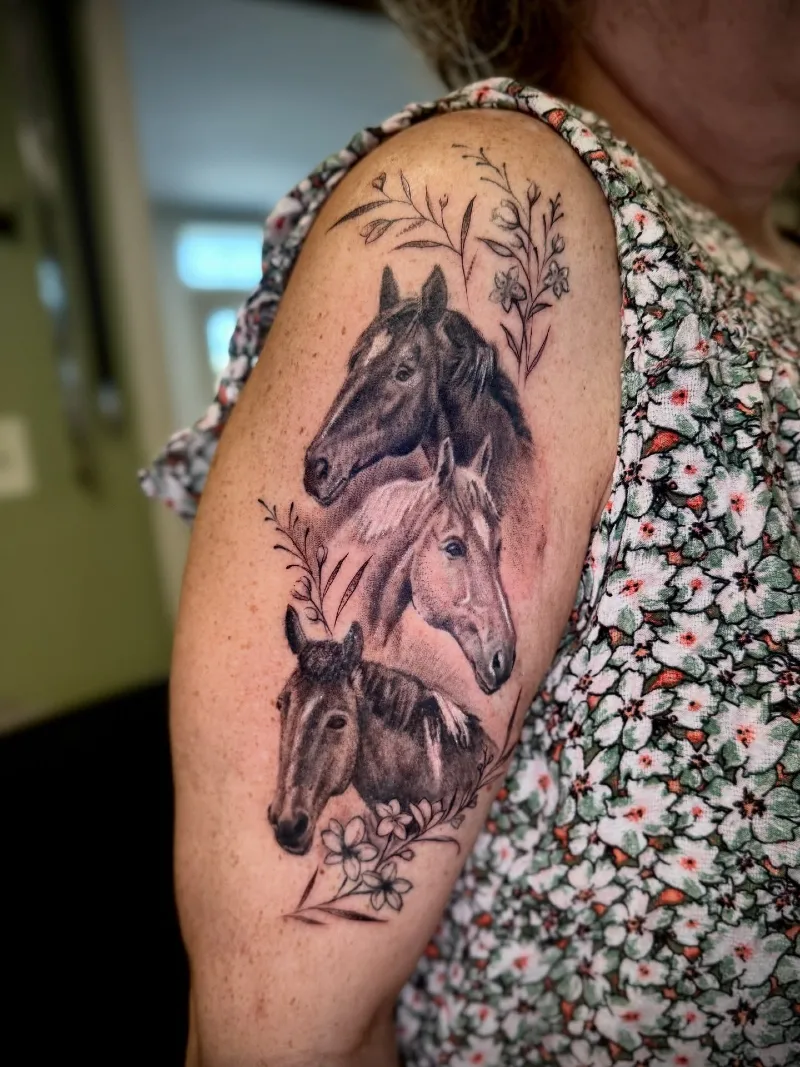
Three beautifully distinct horse heads are stacked vertically on the upper arm, showcasing a detailed gradient from deep black to soft grey tones.
Delicate, unshaded wildflower branches frame the portraits at the top and bottom, softening the edges of the realistic animal shading. Crisp studio light catches the fine white highlights along the noses and manes, making each portrait look incredibly lifelike.
Stacking multiple profiles vertically utilizes the natural length of the arm to tell a cohesive story.
Varying the coat shades from dark to light creates excellent depth and prevents the portraits from blending into a single mass. Placing light, airy floral outlines around densely shaded realism pieces gives the overall layout a balanced, spacious feeling. This intentional structure guides the eye smoothly down the arm, celebrating each distinct animal character beautifully.
10. Micro-Realism Western Cowboy Riding Galloping Horse with Ground Dust Detail
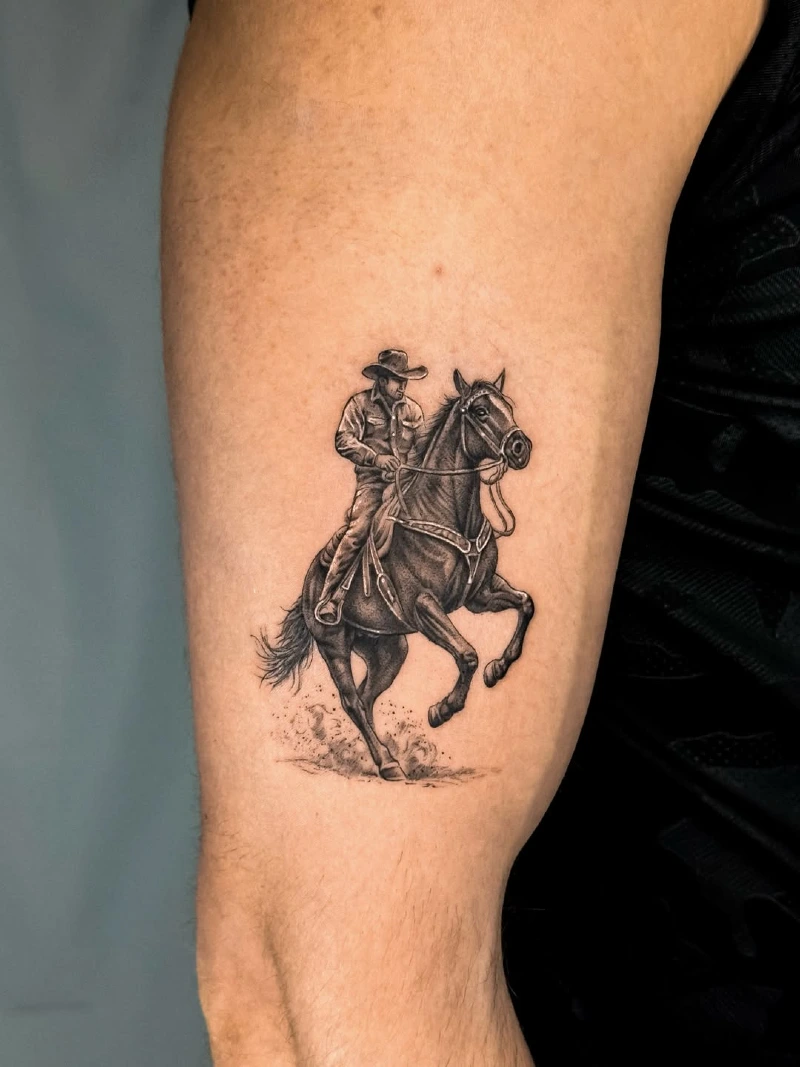
A highly detailed micro-realism cowboy wearing a classic western hat rides a dark, muscular galloping horse on the upper arm. Finely stippled dust clouds kick up from beneath the horse’s hooves, grounding the dynamic figures in an active scene. Soft, natural studio light illuminates the precise shading of the leather saddle and the ripples in the horse’s coat.
Capturing contextual environmental elements like dust or dirt anchors an action pose, preventing it from appearing suspended in midair.
Placing a high-action narrative scene on an expansive area of skin allows the intricate details of the rider’s gear to remain clear.
Grounding the subject with fine textural stippling beneath the hooves establishes a stable baseline for the eye. This technique provides structural weight, giving a small illustrative vignette the commanding presence of a full-scale painting.
Quick Decorating Tips
- Budget version: Keep your initial consultation focused on a single key figure if you want to lower the artist’s design time.
- Renter tip: Select a flat body surface like the inner bicep or forearm to minimize image distortion from natural muscle movement.
- Pro move: Frame the action scene with a very light geometric gradient or horizon line to deepen the perspective.
11. Stipple-Shaded Micro Running Wild Herd Vignette on Inner Arm
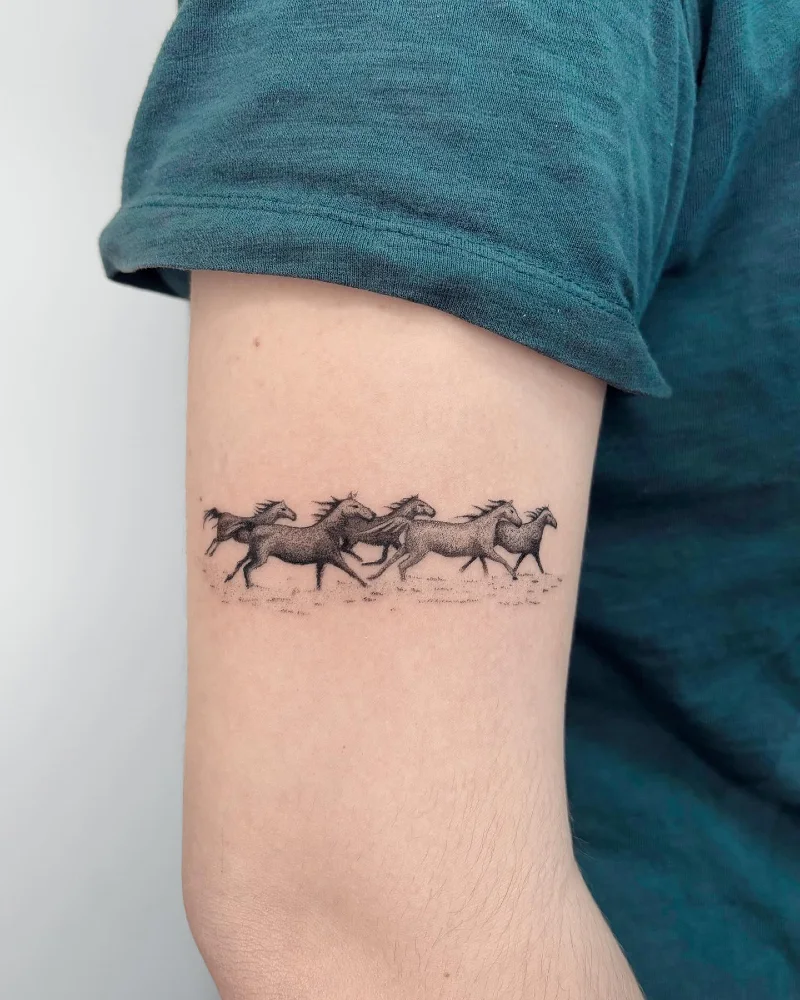
Five miniature, textured horses are inked in a dense horizontal pack above the inner elbow, capturing a wild herd charging forward together.
Fine stippling and cross-hatching define their muscular shapes, windswept manes, and flying hooves above a subtly dotted ground line. Warm, soft daylight showcases the crisp contrast between the deeply shaded bodies and the completely open skin.
Grouping miniature figures tightly together creates a powerful sense of mass and collective energy.
Using a subtle stippled line beneath the hooves anchors the movement horizontally along the arm. The rich textural shading prevents the micro-scale shapes from washing out, ensuring the individual outlines remain clean. This compact composition delivers a narrative that feels grounded and full of momentum.
12. Minimalist Sketchy Fine-Line Horse Head Profile with Loose Mane
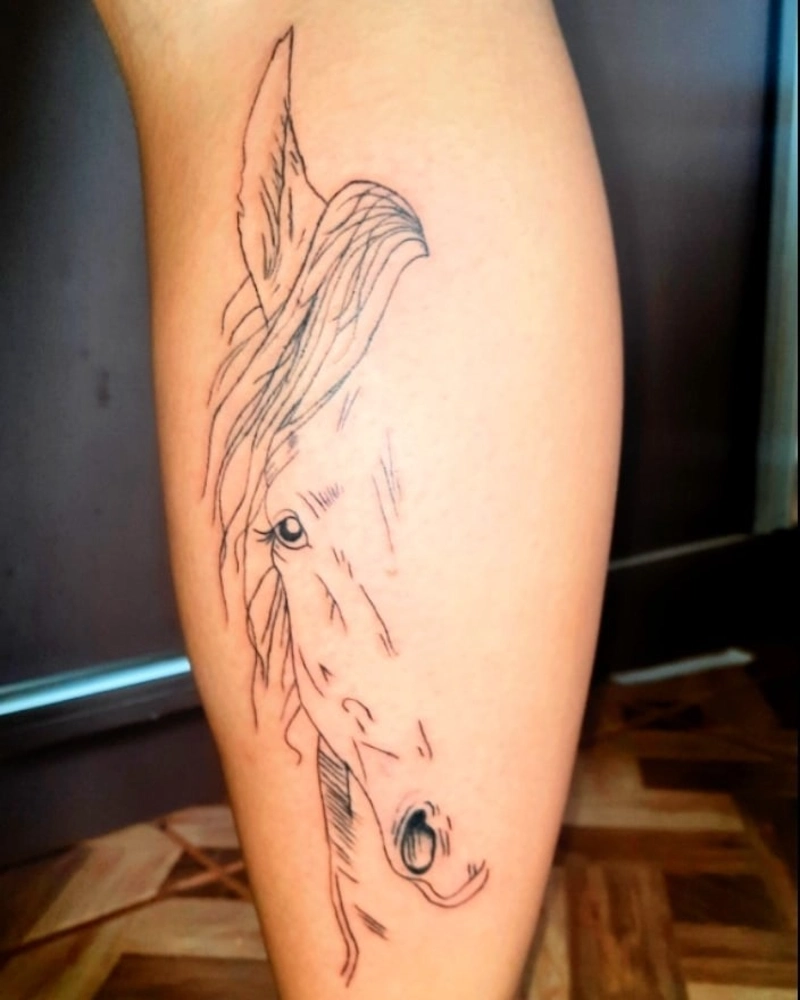
A minimalist, sketchy fine-line horse head portrait is inked vertically along the calf muscle. The design uses loose, expressive black outlines to capture a single detailed eye, a soft muzzle, and an upward-pointing ear. Warm indoor lighting illuminates the open skin, highlighting the fluid, unshaded strands of the mane cascading down the side of the face.
Emphasizing empty space through loose, broken linework gives an illustration an effortless, hand-drawn character.
Placing a long, vertical sketch along the lower leg flatters the body’s natural contours without constricting them.
Leaving the interior of the portrait entirely unshaded ensures the piece looks airy, breezy, and completely integrated into the skin. This minimal approach works beautifully for anyone seeking an elegant equestrian nod that feels modern rather than traditional.
13. Cross-Hatched Dark Stallion Silhouette with Ground Shadow Accent
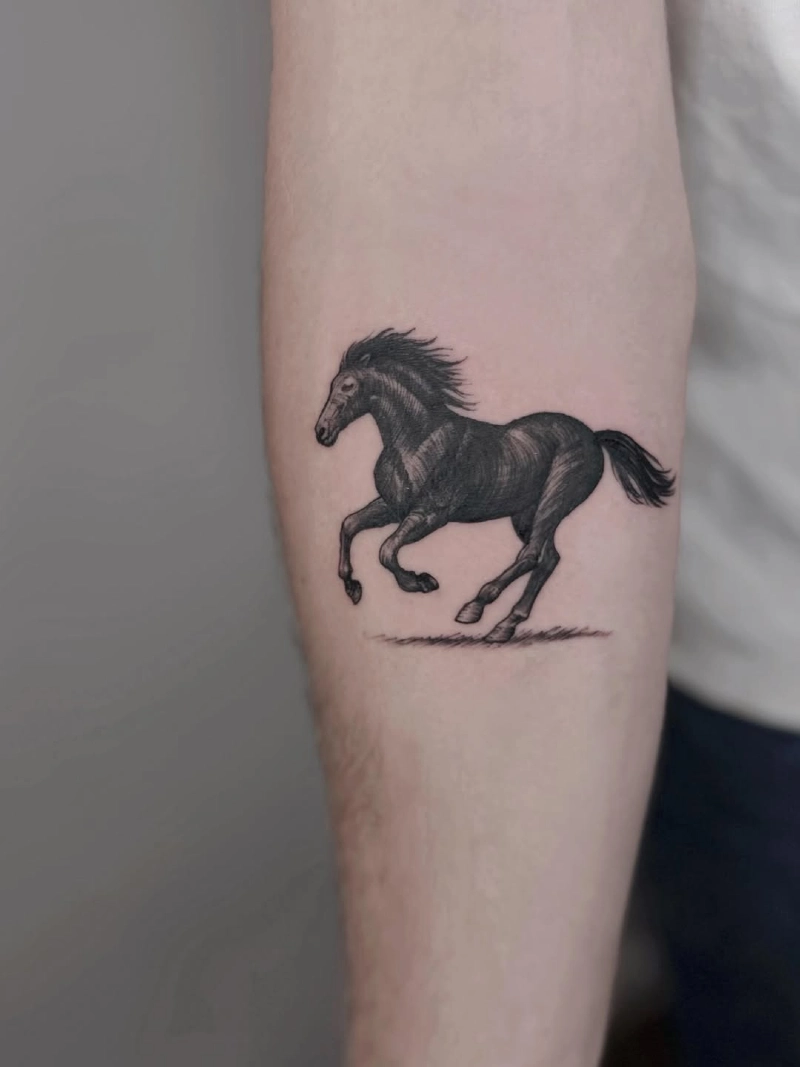
A dark, powerfully built horse gallops horizontally across the inner arm, captured in deep black and charcoal ink tones. Finely etched cross-hatching lines define the dense muscles, windswept mane, and flowing tail. Soft, moody light emphasizes a thin, textured shadow directly underneath the hovering hooves.
Using dense, woodcut-style shading anchors an athletic figure with an organic, vintage illustrative weight.
Traditional equestrian art often relies on soft gradients or light outlines to convey motion. Choosing heavily saturated, fine-lined textures instead lends a striking graphic look reminiscent of classical book plates. This technique ensures a single running animal retains its deep contrast even from a distance.
Why This Works
- Texture: Woodcut-inspired hatching lines add a raw, tactile feeling that contrasts crisply with smooth skin backgrounds.
- Focal Point: Saturating the body with dark ink pulls immediate attention to the center of the design layout.
- Scale: Balancing the compact length along the forearm ensures the fast-moving silhouette keeps its shape beautifully.
14. Fine-Line Soft-Shaded Horse Portrait Wrapped in Peony and Lily Cascades
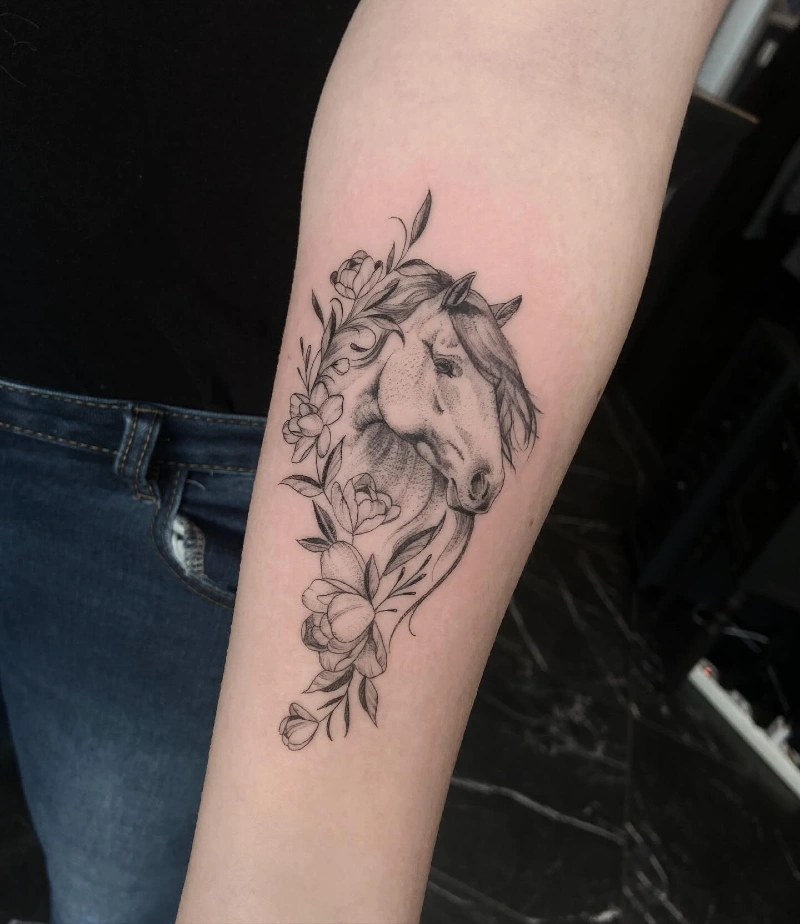
A beautifully textured horse head profile rests on the forearm, partially framed by a vertical cascade of delicate line-work peonies and lilies.
The horse features subtle stipple shading along its neck and face, catching soft, diffused indoor light that accentuates its gentle expression. Crisp, unshaded botanical leaves wrap gently around the left side, extending downward toward the wrist.
Wrapping a realistic portrait in a flowing floral vine creates a soft, natural frame that moves beautifully with the body.
Integrating open botanical outlines around a lightly shaded central figure keeps the layout from appearing like a solid block of dark ink. The varying line weights between the detailed horse profile and the airy blossoms provide elegant depth. This layout logic guides the eye vertically, complementing the long proportions of the arm.
15. Animated-Style Light Stallion with Bold Dark Mane and Tail Accent
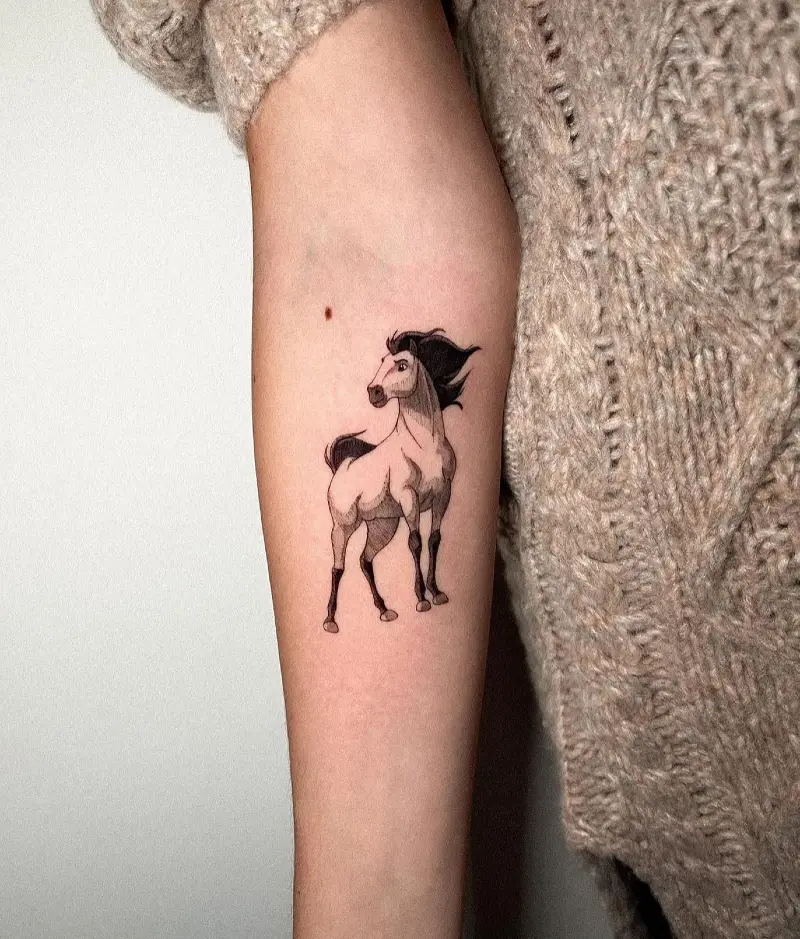
An expressive, animated-style horse stands beautifully on the inner forearm, looking backward with a bold, windswept dark mane and tail. Light, precise shading outlines the muscular body, creating clean dimensions against the open skin backdrop.
Crisp studio lighting illuminates the illustrative black ink linework, highlighting the stark contrast between the pale coat and the deeply saturated hair details.
Saturating select features with solid black ink gives an illustrative piece an instant graphic punch.
Choosing a stylized, animated approach injects a sense of personality and nostalgia into a design without relying on complex realism. Keeping the central body mostly open allows the bold contours of the mane to stand out as a powerful focal point. This clever layout logic keeps the design feeling incredibly fresh, lightweight, and vibrant.
Quick Decorating Tips
- Budget version: Opting for a clean, two-tone illustrative style instead of hyper-realism often reduces the total sitting time in the studio chair.
- Renter tip: Select a flat, highly visible placement like the forearm if you want a daily reminder of your design that stays sharp during movement.
- Pro move: Keep the solid black sections deeply saturated by using specialized aftercare balm to maintain the crisp contrast over time.
16. Minimalist Line-Art Horse Silhouette Hidden Behind Detailed Gladiolus Stems
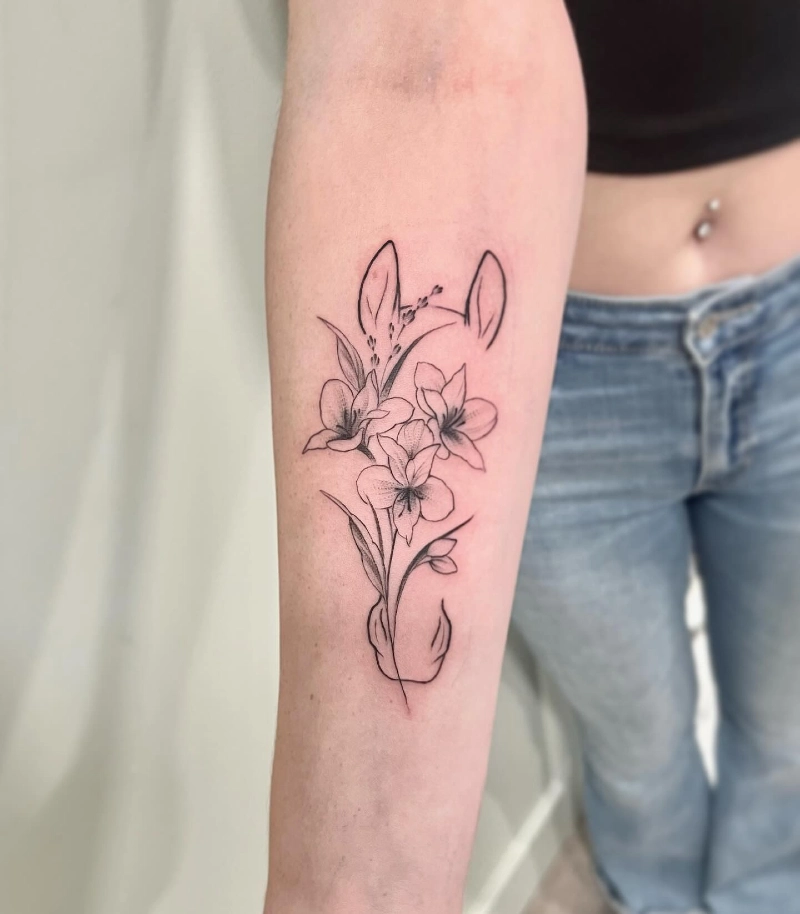
A minimalist, abstract horse head silhouette is inked on the forearm, defined only by simple black outlines of the ears and muzzle.
A detailed stem of blooming gladiolus flowers dominates the center, featuring soft stipple shading in the petals and rich dark centers. Clear studio light illuminates the open design, emphasizing how the botanical lines merge directly into the animal contour.
Hiding a familiar silhouette behind a highly detailed botanical focal point builds a beautiful sense of mystery.
Using abstract negative space allows the mind to fill in the missing pieces of the horse’s face effortlessly. The contrast between the shaded, textural lily petals and the crisp, unshaded animal border keeps the design looking light and airy. This structural layout delivers an incredibly subtle, modern equestrian nod that focuses primarily on nature.
17. Abstract Fine-Line Gesture Sketch of a Downward Bucking Horse
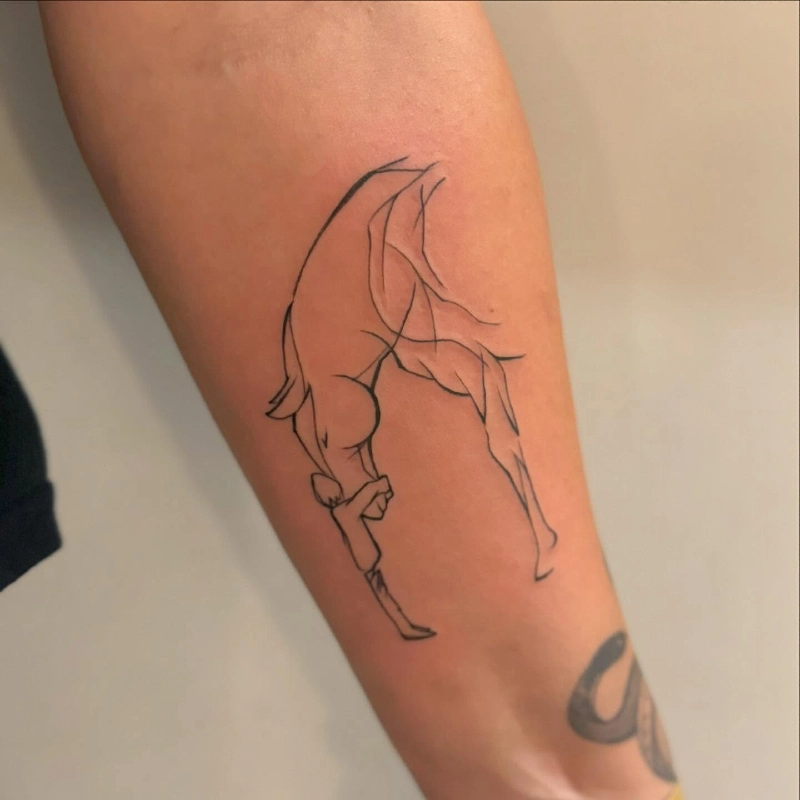
A striking abstract fine-line horse is inked vertically on the inner arm, capturing a raw gesture of a bucking stallion dipping its head low.
The entire piece relies on loose, overlapping black outlines that suggest muscle and movement without standard internal shading. Soft, ambient studio lighting emphasizes the airy texture of the open space inside the minimalist animal contours.
Isolating a fast, energetic gesture with overlapping contour lines conveys intense momentum with absolute minimal ink.
Relying on a fluid, sketchy line weight allows an athletic silhouette to float weightlessly along the curve of the skin.
Avoiding dark fills or heavy gradients ensures the high-motion artwork retains a clean, sophisticated architectural look over time. This design logic functions as a modern gallery sketch, honoring animal power through an elegant, distilled format.