
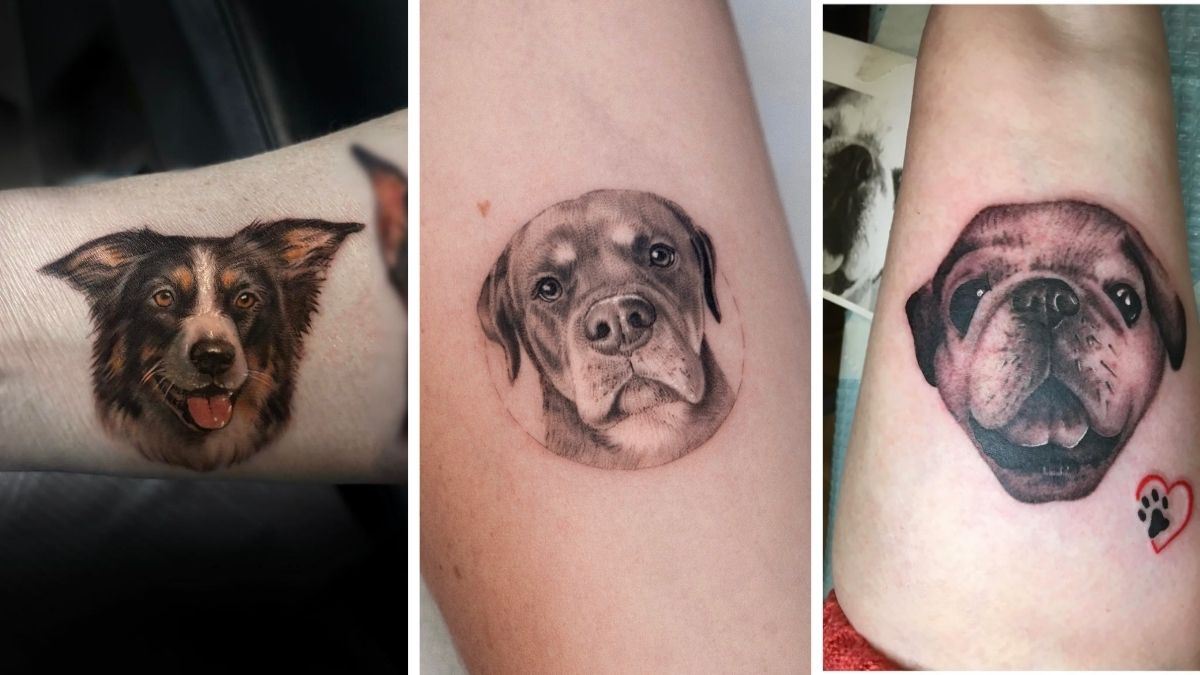
There is a version of your pet memorial that feels exactly like them. Most people never find it. You scroll through hundreds of ink concepts but still feel nothing when looking at the flash art.
Settling for a generic design means permanently losing the unique quirks of your best friend on your skin. A rushed decision leaves you with a flat cartoon instead of a meaningful tribute.
This guide breaks down dog head tattoos, moving from crisp line work to rich portraiture. Discover the exact styling approach that honors your loyal companion properly.
1. Micro-Realism Border Collie Portrait with Soft Shading and Detailed White Highlights
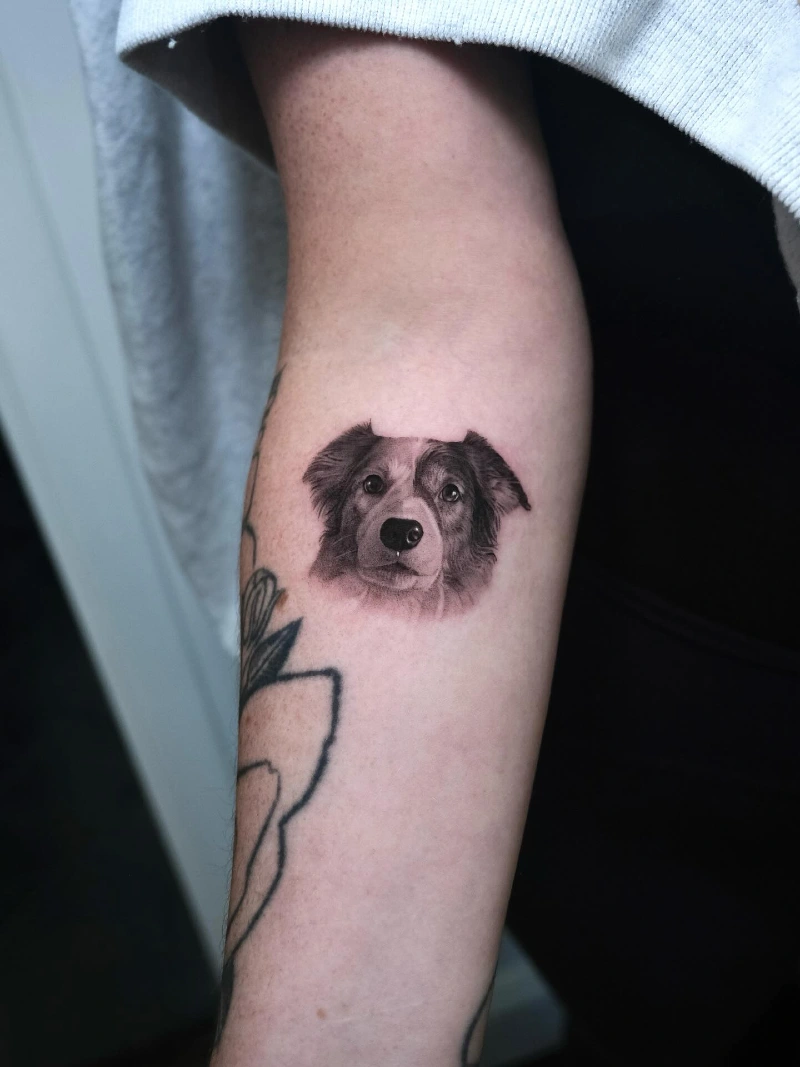
A highly detailed black and grey dog head portrait sits centered on the inner forearm. The artwork showcases rich tonal variations in the fur texture, blending smooth dark gradients with soft, raw edges. Subtle white ink catchlights in the pupils give the eyes a glassy, lifelike quality against the muted skin tone.
Prioritizing high-contrast light reflections within the eyes prevents micro-realism tattoos from looking flat or lifeless.
Soft, diffused transitions around the neck base eliminate the need for a harsh framing border. This technique allows the fluffy coat texture to blend out naturally into the surrounding negative space. Work closely with your artist to map the hair growth direction accurately for a truly grounded resemblance.
2. Wide-Angle Pit Bull Portrait with High-Contrast Shading and Defined Short-Coat Details
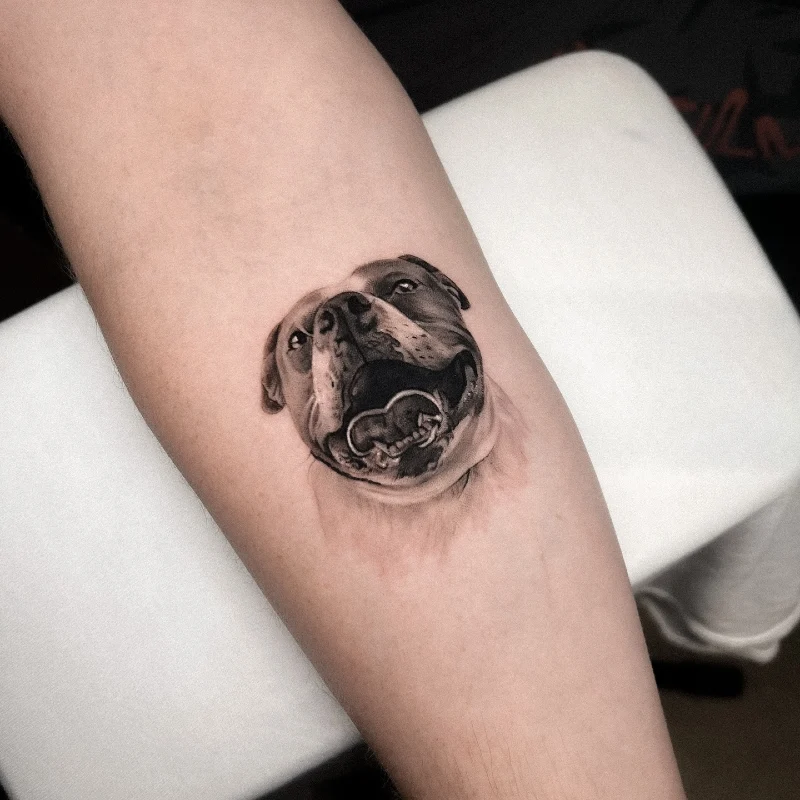
Deep black saturation inside the mouth creates intense depth, making the finely detailed teeth and tongue stand out sharply. Delicate stipple work and smooth gradients capture the distinct short-coat textures around the snout and brow.
Utilizing dynamic, low-angle perspectives creates an instantly recognizable sense of personality in short-haired breed tattoos.
Recreating smooth coat structures requires a masterful balance of skin tone mapping and gentle grey washes. Heavy outlines should be skipped entirely to preserve the soft, velvety texture characteristic of these breeds. Focus instead on shifting values near the jawline to build natural dimension.
3. Textured Long-Eared Spaniel Portrait with Rich Black-and-Grey Fur Details
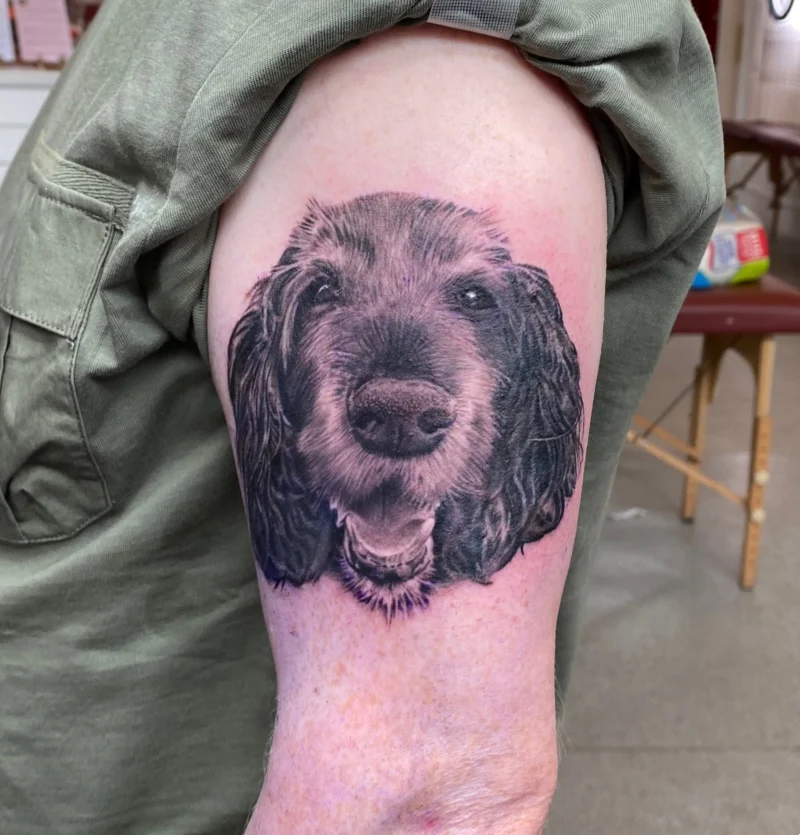
Dense black saturation anchors the deep folds of the floppy ears, contrasting against the softly lit crown of the head. Subtle stippling across the nose leather adds a tangible, wet texture to the central face.
Layering distinct direction shifts in curly or wavy coats prevents long-haired breed portraits from turning into heavy, solid shapes.
Honoring a pet with a larger placement on the deltoid provides a flat canvas that minimizes muscle distortion. This scaling allows the intricate variations of a wavy coat to breathe naturally across the skin surface. Gentle grey washes underneath the jaw build subtle separation from the neck area without requiring sharp borders.
Why This Works
- Texture: Grouping small, curved strokes replicates the natural weight and flow of wavy canine ears.
- Contrast: Deep ink pooling inside the mouth and pupils balances out the soft, diffused grey tones on the forehead.
- Scale: Utilizing a larger canvas size ensures that individual hair strands remain crisp and readable over time.
4. Fine-Line French Bulldog Neck Tattoo with Decorative Chain and Sparkle Accents
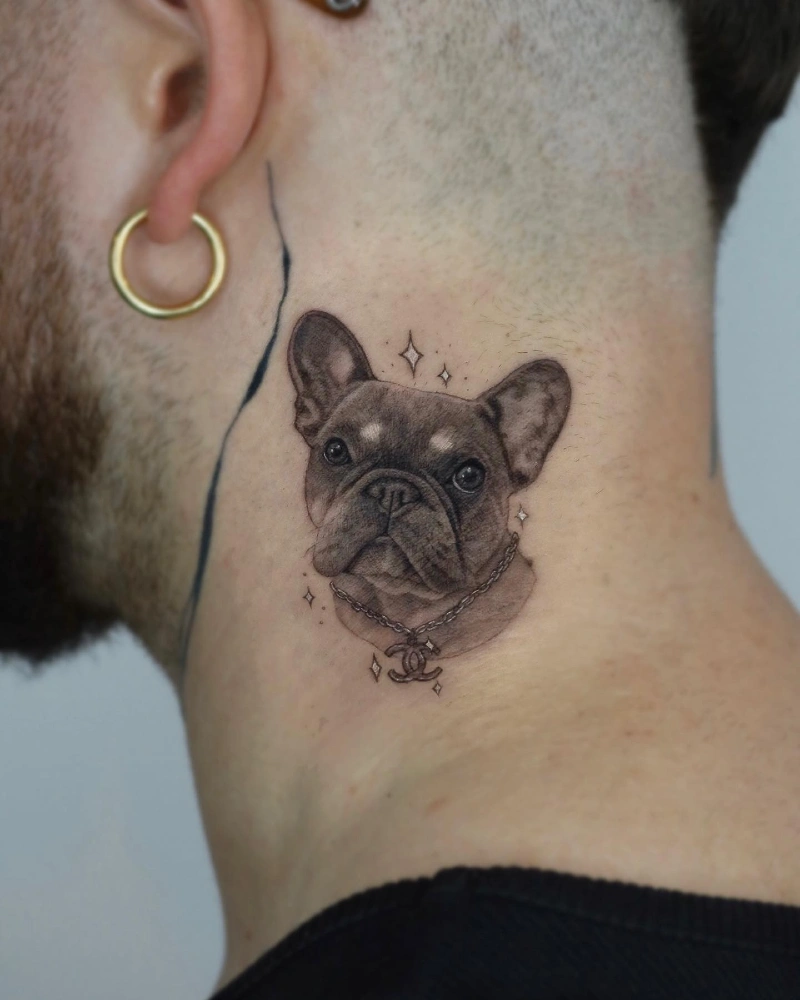
Delicate four-point star sparkles float softly around the ears and neck, giving the composition a playful, stylized feel. Gentle stippling creates smooth, velvety shading across the signature large ears and wrinkled snout.
Adding small illustrative elements like jewelry or sparkles injects a unique sense of whimsy into classic black-and-grey portraits.
Placing art on the sensitive neck skin requires careful scaling to ensure the fine details do not bleed or blur prematurely. Keeping the lines crisp and the shading light helps the piece heal cleanly on high-movement areas. Choosing soft tan and grey transitions rather than heavy solid black blocks keeps the portrait looking airy and modern.
5. Illustrated Fine-Line Pointer Portrait with Stippled Shading and Distinct Whisker Details
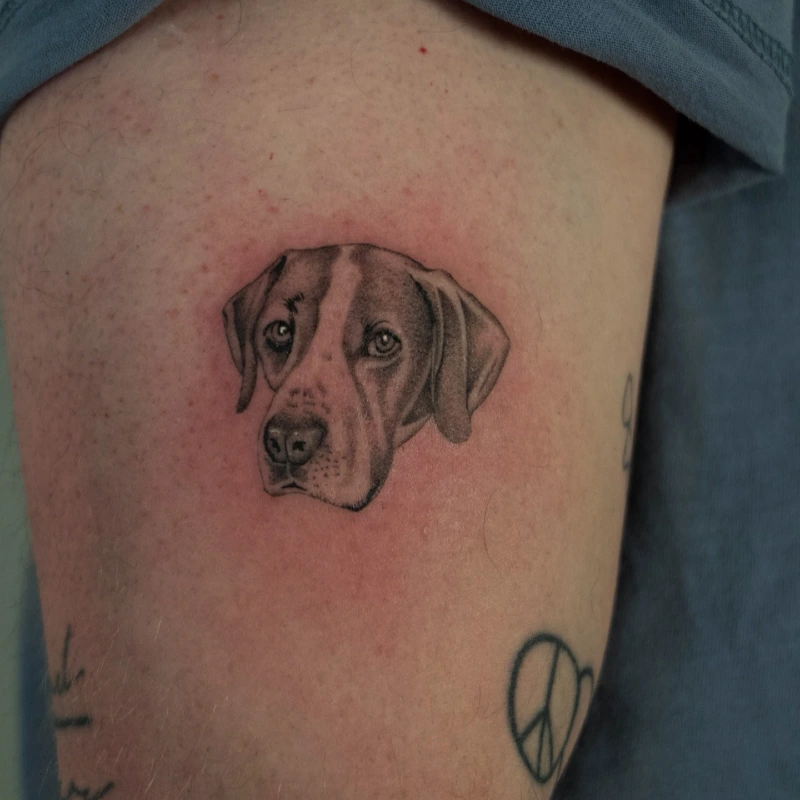
Tiny, precise dot work replicates the natural whisker spots on the light-toned snout, giving the face realistic character.
Combining a crisp outer outline with grainy interior stippling ensures a clean design that maintains its readability for decades.
Using fine-line techniques on short-haired hunting breeds helps capture their sleek, muscular facial structures without relying on heavy solid black blocks. Leaving the central blaze across the nose completely unshaded utilizes the natural skin tone as a bright highlight. This clever use of negative space gives the portrait a balanced, luminous quality.
Quick Decorating Tips
- Budget version: Focus strictly on the clean linework outline and minimal dot shading to cut down on the artist’s chair time.
- Renter tip: Select a flat, smooth area of skin like the outer thigh or upper bicep so the artwork stays undistorted when moving around.
- Pro move: Add tiny, subtle white ink accents right inside the pupils to give the eyes an instantly realistic glint.
6. Large Realism Golden Retriever Portrait with Fluffy Coat Textures and Detailed Open-Mouth Composition
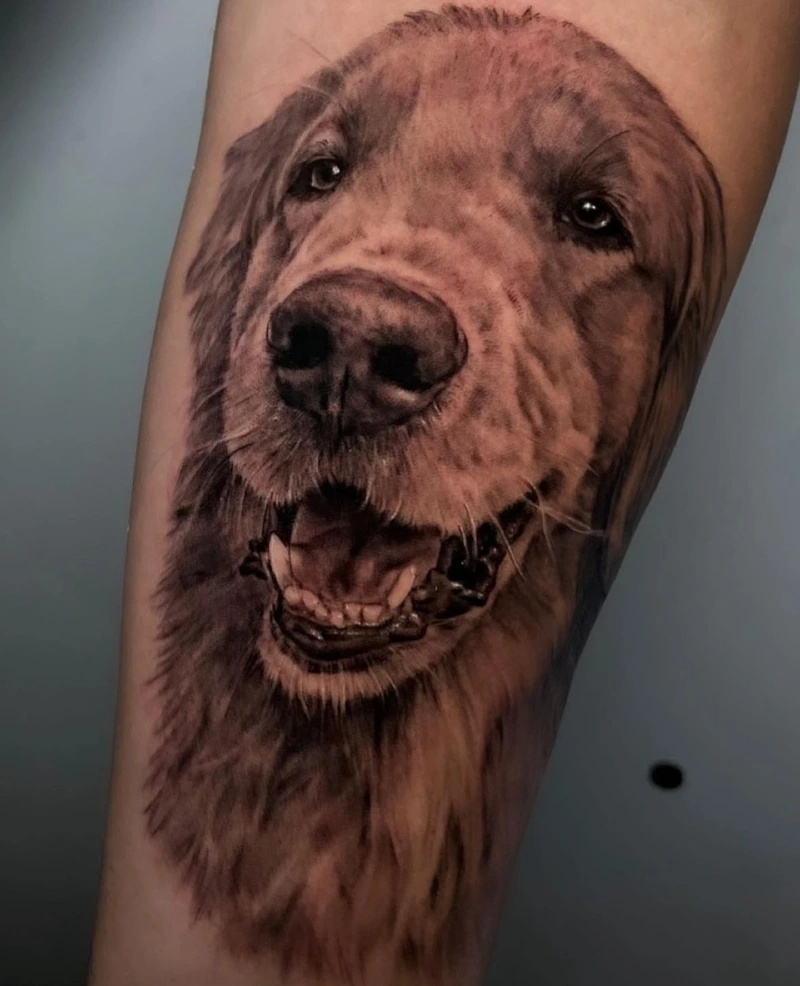
Masterful fine lines build up the long, wispy hair textures along the neck and ears, mimicking a soft, layered coat. Deep black shading within the mouth forces the individual teeth and glistening tongue to pop forward into the visual foreground.
Capturing the natural variations of a thick, dual-coat breed requires layering multiple diluted grey ink washes.
Recreating a happy, panting expression requires an artist who understands complex anatomical shadows. Leaving thin lines of untouched skin around the lips and teeth creates a wet, lifelike shine that gives the portrait genuine warmth. Placing this style of art on a wider canvas like the thigh or bicep provides the necessary space for the complex fur strands to spread naturally.
7. Geometric Diamond Framed German Shepherd Portrait with Fine Dotwork
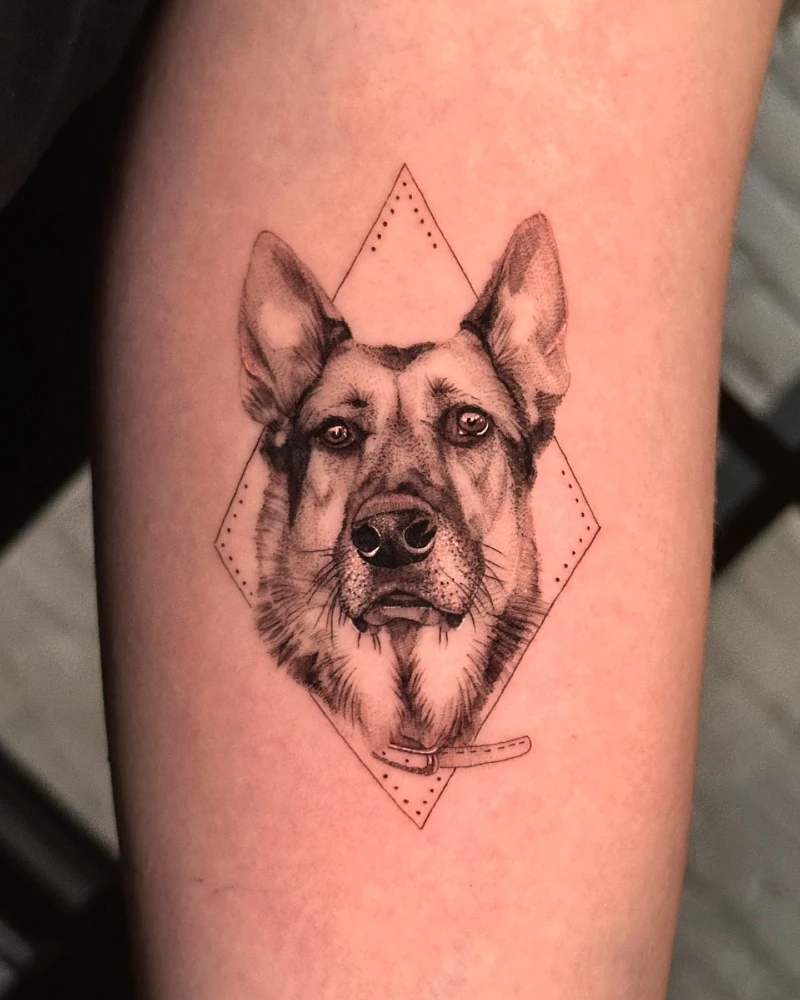
Delicate stipple dots track along the interior borders of the geometric shape, adding a light visual texture. Rich, dark ink values map out the classic black-and-tan coat patterns around the muzzle, eyes, and alert ears.
Framing a realistic animal portrait with clean geometric lines anchors the organic shapes and gives the design a modern, structured look.
This composition utilizes the diamond points to naturally draw the eye toward the large ears and down toward the collar detail. The fine dotwork within the frame acts as a subtle transitional element, preventing the hard borders from overwhelming the soft fur shading. Choosing a flat canvas like the forearm or calf helps keep the straight lines perfectly aligned during movement.
Why This Works
- Negative Space: Keeping the background inside the diamond completely bare allows the central dog portrait to stand out clearly.
- Scale: Sizing the frame to slightly overlap the outer edges of the ears creates an engaging sense of layered depth.
- Texture: Pairing grainy, stippled dots with ultra-smooth fur gradients balances the illustrative and realistic design styles beautifully.
8. Circular Constellation Framed Fluffy White Samoyed Portrait with Delicate Axis Lines
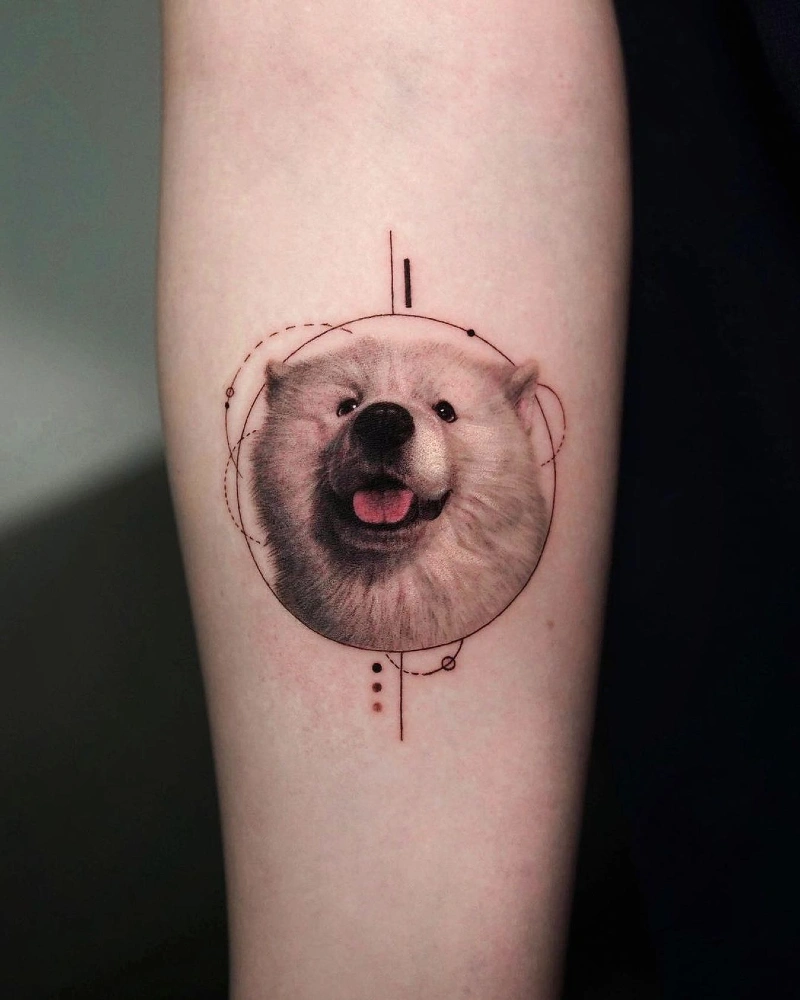
Fine geometric orbits, dashed curves, and vertical alignment marks extend past the boundary. The vibrant pink tongue pops sharply against the soft, cream-colored fur shading and dense black nose.
Surrounding a bright white coat with a sharp, ink-saturated circular frame creates an immediate focal point on pale skin tones.
Recreating dense white fur requires an artist to rely heavily on negative space and soft grey shadows. Heavy solid white pigment can change color or turn patchy over time if overused. Using clean astronomical lines anchors the soft, cloud-like texture of the breed elegantly.
9. Illustrative Creation of Adam Boop Meme Tattoo with Minimalist Hand and Shaded Rottweiler Profile
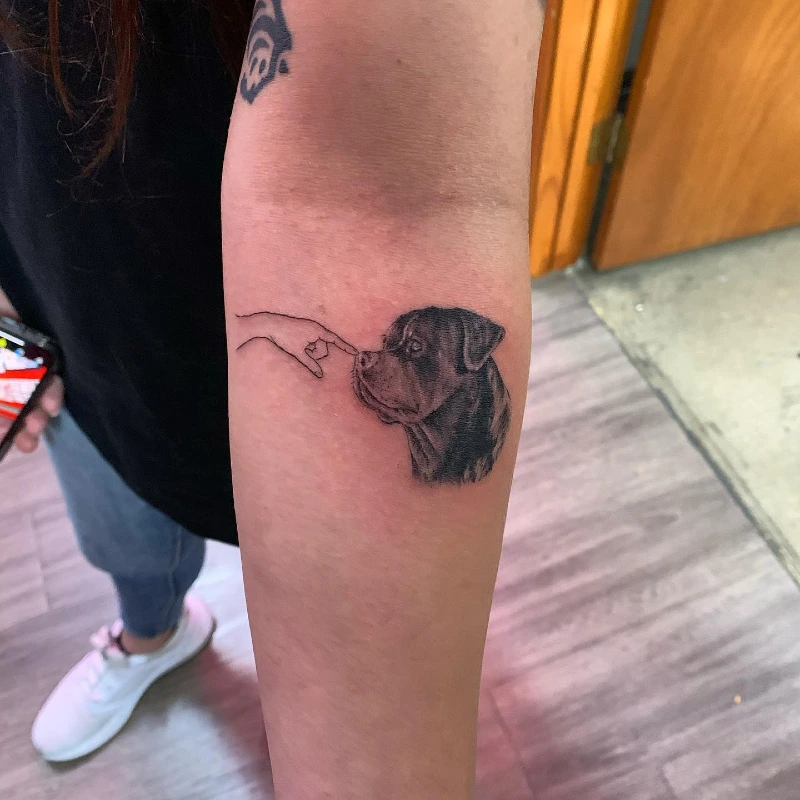
The human finger gently touches the dog’s nose, referencing a famous classic painting layout. Rich, dense black ink creates the dark coat texture, while fine negative lines define the brow and ears.
Pairing a highly realistic portrait with a minimalist line art element creates an intriguing narrative contrast.
Balancing two distinct artistic styles keeps the composition light and prevents the dark coat from feeling too heavy on the arm. The open skin around the simple hand illustration provides excellent breathing room for the saturated portrait shadows. This layout ensures the sentimental interaction remains the true centerpiece.
Quick Decorating Tips
- Budget version: Substitute the fully shaded portrait with a clean outline style for the dog’s profile to reduce cost.
- Renter tip: Place this horizontal narrative design along a straight, long area like the inner forearm or side of the calf.
- Pro move: Use thin, white ink detailing right on the fingertip contact point to highlight the playful touch.
10. Split-Face Geometric and Realism Rottweiler Diamond Portrait with Stippled Low-Poly Details
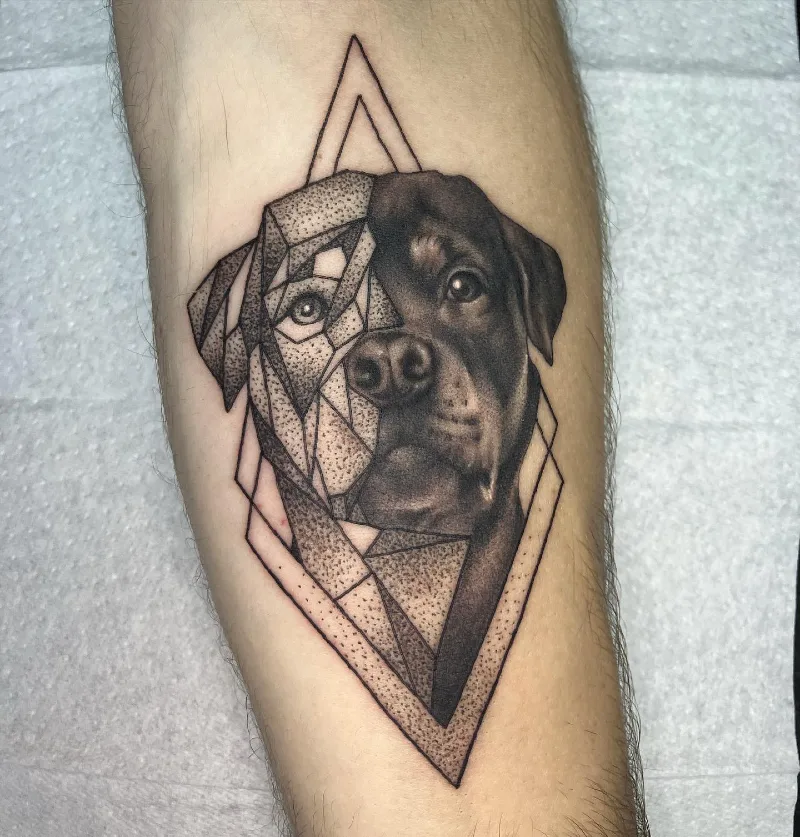
The left half of the dog’s head is rendered in a low-poly geometric style packed with grainy stipple dotwork, while the right half features smooth black-and-grey realism. Heavy black ink saturates the realistic side, contrasting deeply with the bright negative space facets on the illustrative side.
Splitting a portrait into equal halves of geometry and realism offers a striking visual balance between abstract structure and lifelike detail.
Achieving this style requires precise mathematical alignment where the geometric facets meet the soft shading of the realistic nose and brow.
The stippled texture on the left mimics the natural values of the dark fur without making the overall piece look overwhelmingly heavy on the skin. Placing this piece on a flat, broad surface like the forearm ensures that neither the straight lines nor the round pupil distort when muscles twist.
11. Peeking Corgi Portrait in a Shaded Cinematic Frame with Elegant Cursive Script
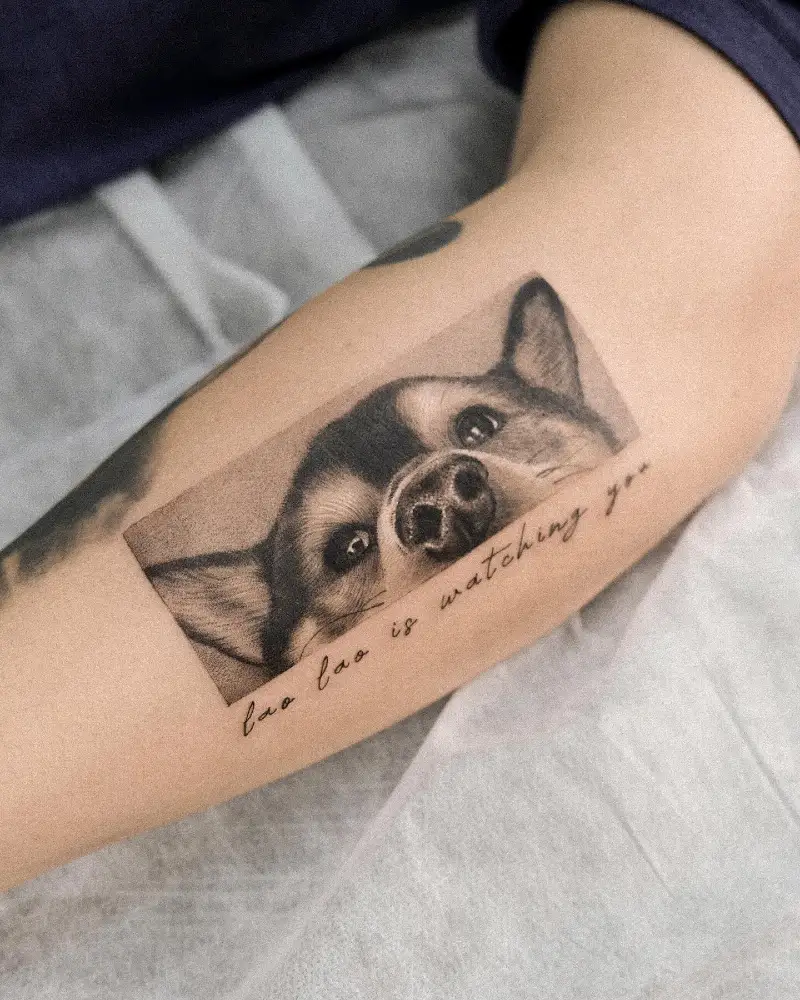
Soft, grainy stippling fills the background inside the border, making the prominent ears and tilted snout pop forward. Delicate cursive script runs directly beneath the bottom edge of the box, spelling out a personalized, sentimental phrase.
Cropping a pet portrait into a tight rectangular frame mimics a cinematic lens, focusing all the attention onto their expressive eyes.
Using a shaded background inside the frame prevents the light-colored fur from washing out against the skin. This framing trick gives the illustration a polished, standalone quality that sits beautifully near existing ink. Keep the surrounding skin completely bare to let the delicate line work of the script text remain legible.
12. Micro-Realism Schnauzer Portrait Layered Over a Minimalist Faceless Owner Outline
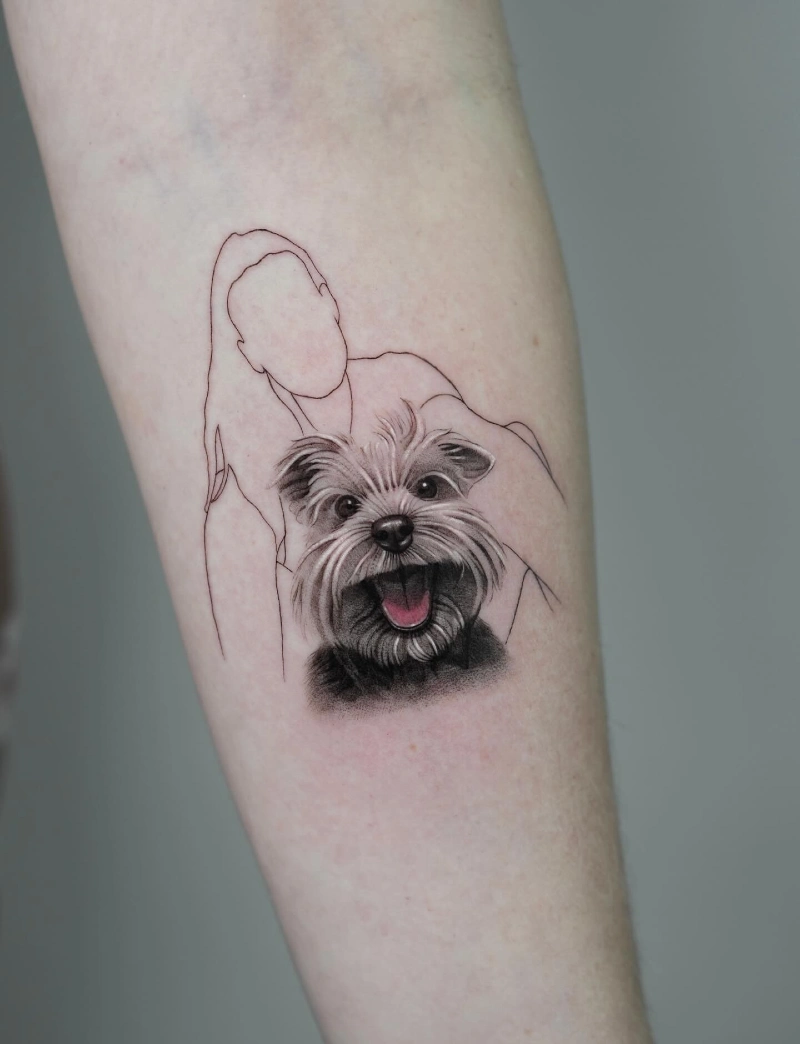
The fur texture is rendered with meticulous micro-realism, featuring fine white whiskers and a glossy pink tongue. In total contrast, the human figure in the background remains completely blank and faceless, formed by a single continuous line.
Placing a highly textured animal portrait in front of a flat line-art silhouette establishes an incredible sense of visual depth.
This mixed-media design strategy prevents a combined portrait from feeling too cluttered or heavy on a smaller canvas like the forearm.
The empty negative space inside the owner’s outline provides a clean, open backdrop that helps the intricate details of the dog’s coat pop. It creates a beautiful narrative of companionship without overwhelming the skin with dark shading.
13. High-Contrast Woodblock Style Cane Corso Portrait with Heavy Black Saturation
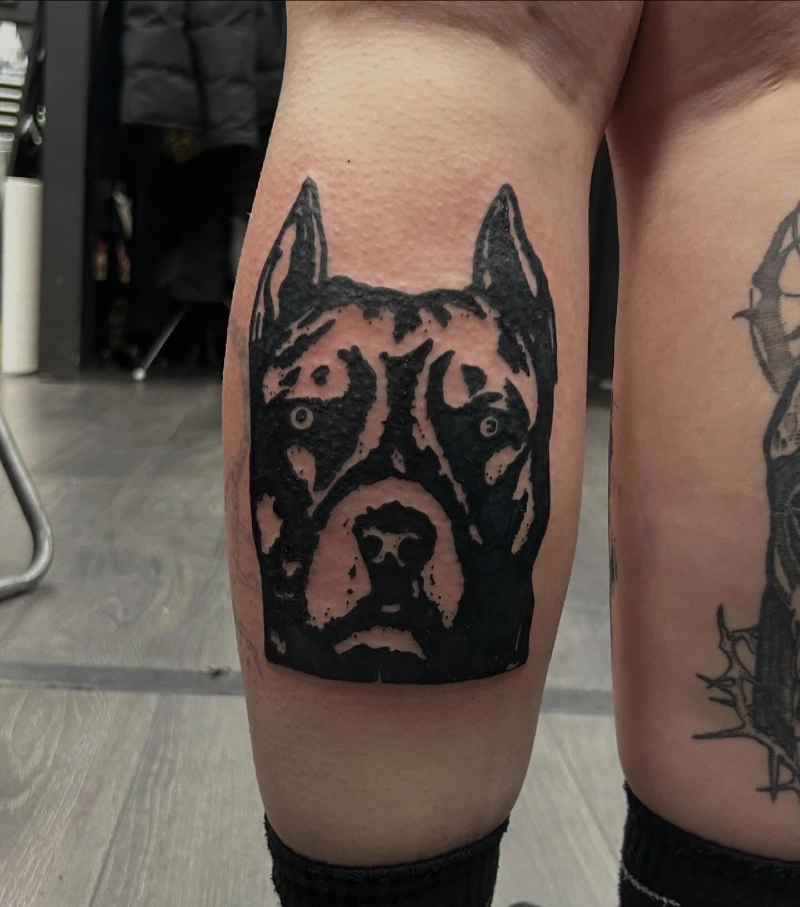
Heavy patches of solid black ink form the muscular shadows of the face and alert, cropped ears. Tiny unshaded circles serve as piercing eyes, contrasting sharply with the dense surrounding pigment.
Using a graphic, high-contrast print style turns a traditional pet portrait into a powerful, abstract statement piece.
This artistic approach abandons soft gradients entirely in favor of raw, blocky shapes that mimic hand-carved stamps. The negative space of the natural skin tone functions as the mid-tones, defining the brow, snout, and jawline. Placing such a heavy piece on a sturdy muscle group like the lower leg ensures the solid black fields retain their deep saturation over time.
Why This Works
- Contrast: Piercing unshaded eyes cut straight through the dense black ink patches to anchor the expression.
- Negative Space: Broad channels of bare skin prevent the heavy black blocks from merging into an unrecognizable shape.
- Scale: Bold, thick linework ensures the graphic details remain clean and readable from a distance.
14. Circular Framed Micro-Realism Rottweiler Portrait with Soft Velvet Shading
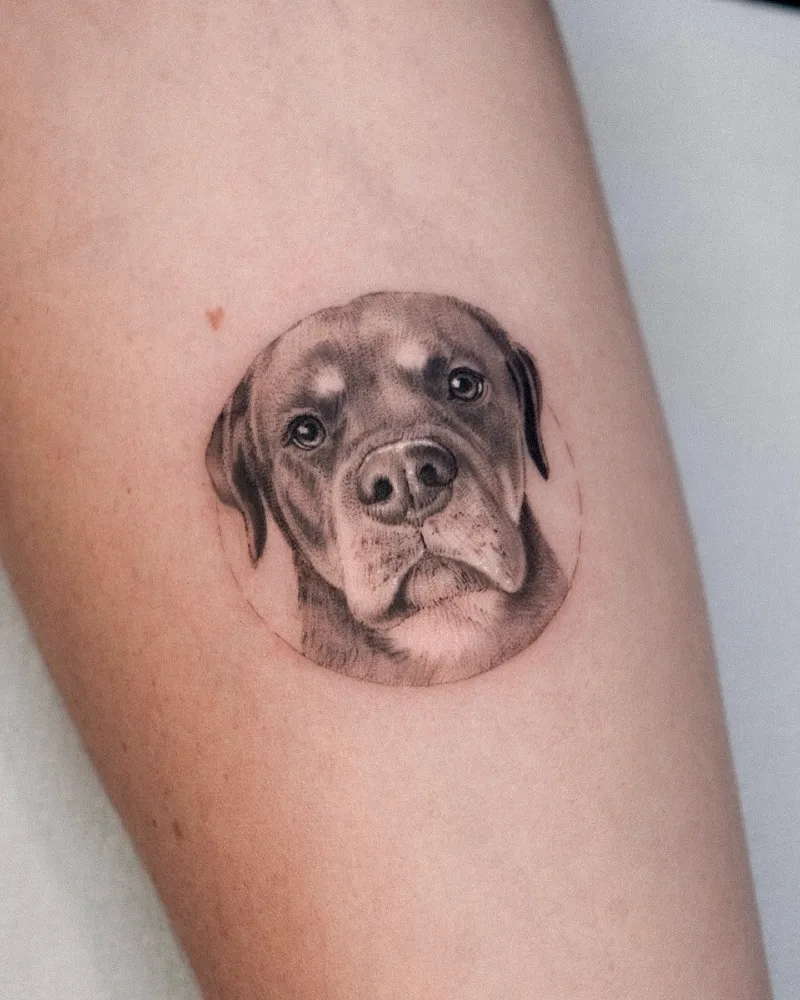
The short, dense coat of the Rottweiler features smooth gradients of charcoal and light grey ink. Tiny white highlights glint inside the eyes, bringing a soulful, alert expression to life against the clean skin canvas.
Encasing a soft realism portrait within a barely-there geometric outline provides structural balance without distracting from the pet’s expression.
Recreating the texture of a sleek, short-haired breed requires an artist to use highly diluted grey washes. Gentle stippling around the muzzle maps out the delicate whisker pores without creating harsh, heavy patches. Leaving the bottom of the neck to fade softly into the frame maintains a light, airy feel for an inner arm placement.
15. Full-Color Micro-Realism Australian Shepherd Portrait with Rich Tan and Pink Ink Highlights
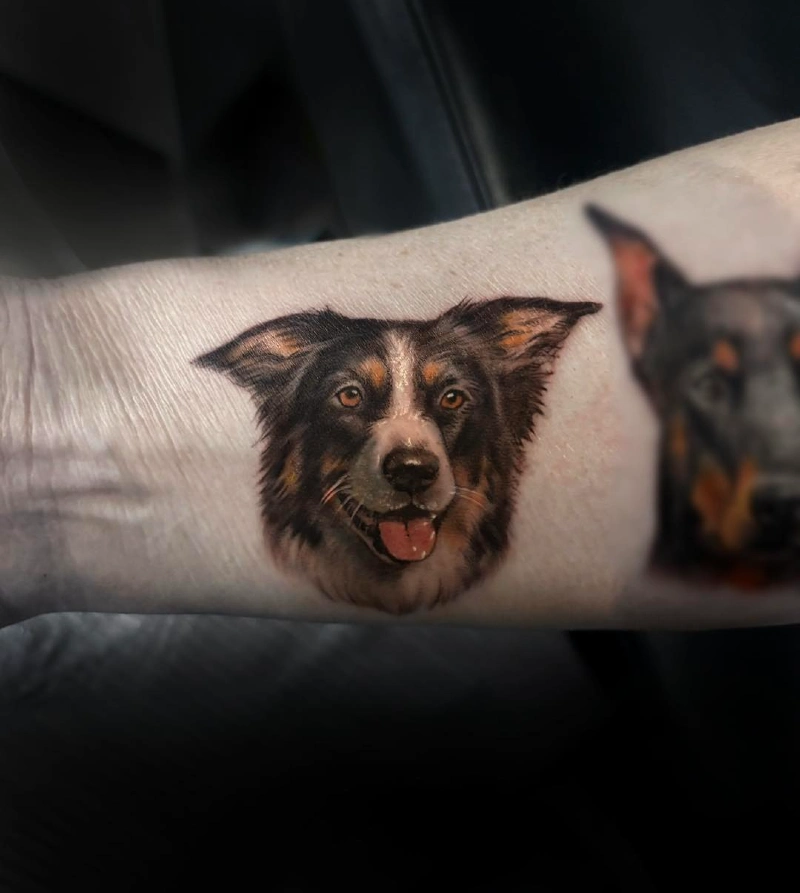
Brilliant amber tones fill the eyes, while a soft pink tongue peeks playfully from the open mouth. Warm tan highlights and crisp white fur details contrast against the deep black coat textures.
Incorporating a full color palette captures the exact coat variations and lively spirit of tri-color breeds.
Recreating realistic fur tones demands a careful layering of custom-blended pigments to prevent the colors from looking muddy over time. Placing the brightly saturated portrait next to a blurred companion piece builds a soft depth-of-field effect across the skin. This placement choice works beautifully on long, flat areas like the forearm.
Quick Decorating Tips
- Budget version: Opt for a black-and-grey version with just one single pop of color in the eyes or tongue to save time.
- Renter tip: Stick to flat skin areas like the outer arm or calf to prevent muscle flexing from warping the round shapes of the face.
- Pro move: Ask your artist to use diluted white ink highlights along the whiskers to create a glassy, light-catching sheen.
16. Minimalist Line-Art Fluffy Dog Ears Outline Above the Inner Elbow Crease
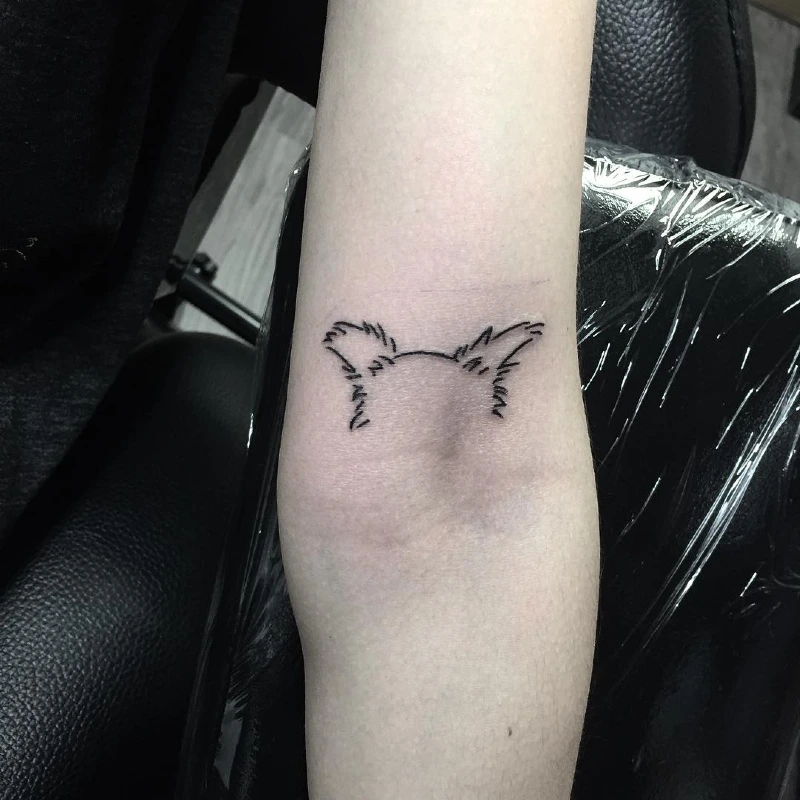
The design utilizes thick, solid black strokes to capture the jagged, furry silhouette of the upright ears. No interior shading or facial features are included, leaving the shape completely open and abstract against the bare skin.
Choosing an ears-only silhouette captures a pet’s distinct character using the absolute minimum amount of ink.
Placing a clean outline near joint creases requires careful positioning so the shape does not distort when bending the arm. This style relies entirely on strong line weight rather than complex shading to remain readable over time. It offers a subtle, lighthearted alternative for those wanting a meaningful tribute without committing to a full portrait.
17. Dual Half-Face Border Collie Portraits Separated by Central Fine-Line Arrow and Name Script
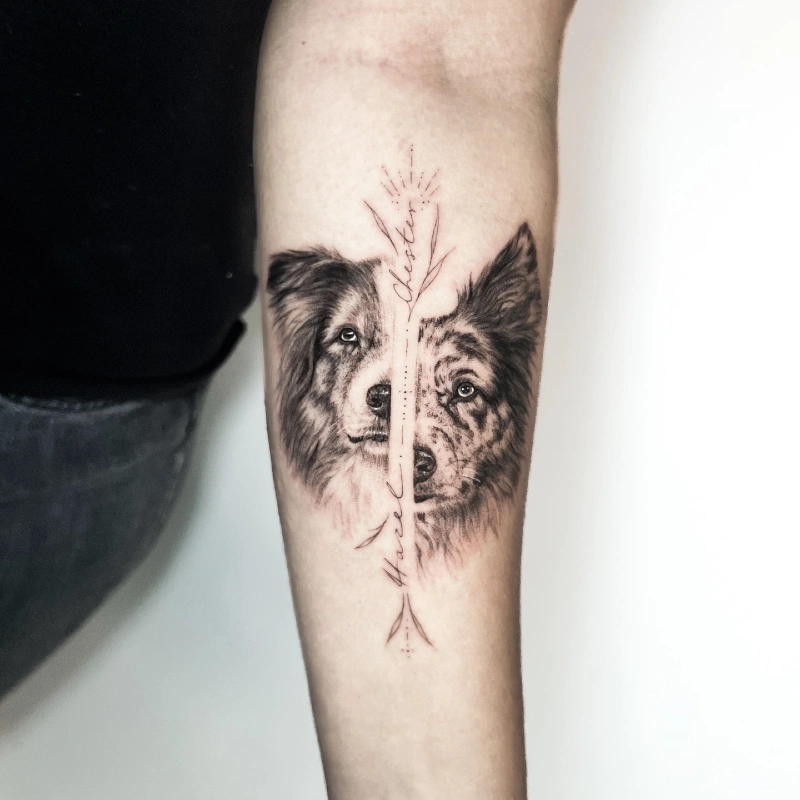
The fine-line arrow features elegant cursive script naming each pet, flanked by delicate leaf stems and celestial dots. Intricate black-and-grey micro-realism maps out the unique merle patterns, fluffy ear fringes, and glassy eyes of both animals.
Splitting two separate portraits down a shared central axis creates a balanced, unified tribute for multi-pet owners.
This layout relies on a clean, empty line dividing the faces to give each complex coat pattern room to breathe. Using a vertical composition works beautifully on the long canvas of the inner arm, aligning naturally with muscle movement. Make sure the fine script lettering is spaced comfortably along the arrow stem to ensure it remains legible over the years.
18. Micro-Realism Chihuahua Portrait with Wide Set Ears and Soft Vignette Backing
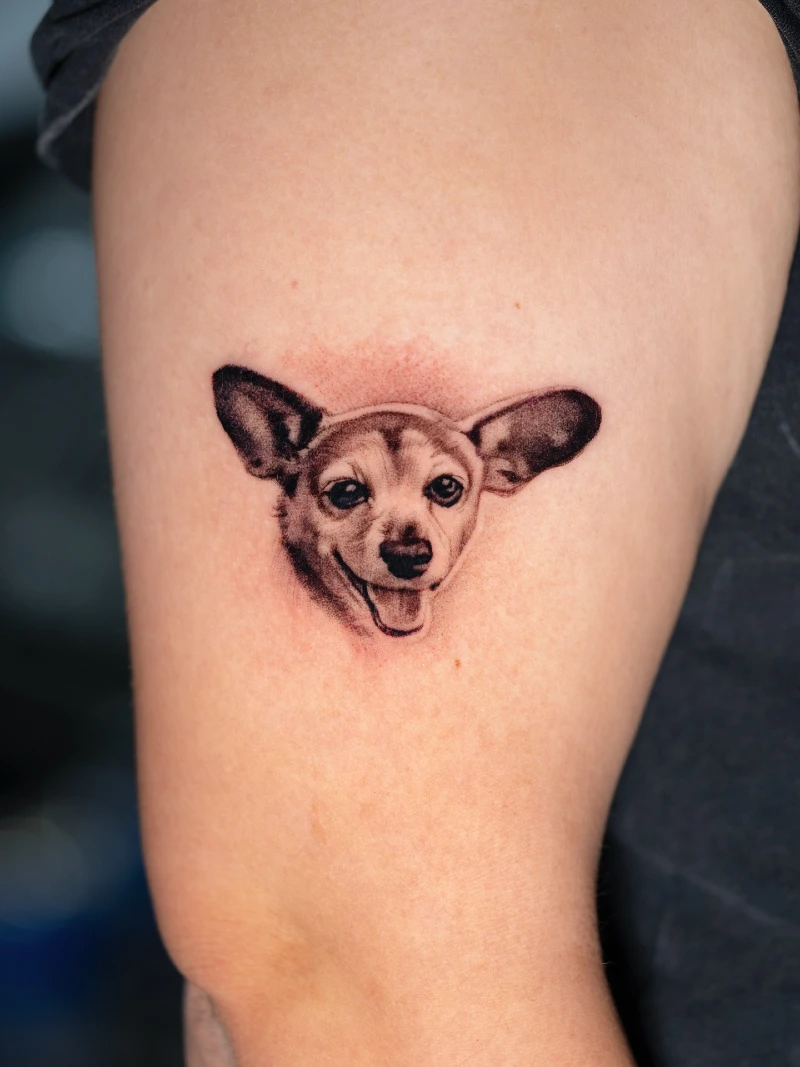
Large, wide-set ears feature dark, saturated gradients that contrast sharply against the lighter skin tones of the central face. A subtle, smoky ink halo encircles the head structure, helping the open-mouthed expression stand out.
Applying a soft, hazy background wash behind fine-line ears anchors the portrait without requiring hard geometric boundaries.
Capturing a wide, joyous smile requires precise shading around the jaw and open tongue. Keeping the inner ear structures softly stippled rather than solidly packed ensures the delicate skin tissue looks natural. Choosing a flat, spacious canvas like the outer bicep allows the horizontal ears to stretch fully without warping during daily movement.
Quick Decorating Tips
- Budget version: Focus heavily on the central face outlines and skip the soft background halo to save session time.
- Renter tip: Select a stable, muscular placement like the upper arm or flat calf so muscle contractions won’t distort the wide ear profile.
- Pro move: Leave the very edges of the nose and lower lip completely unshaded to mimic a realistic, wet sheen.