
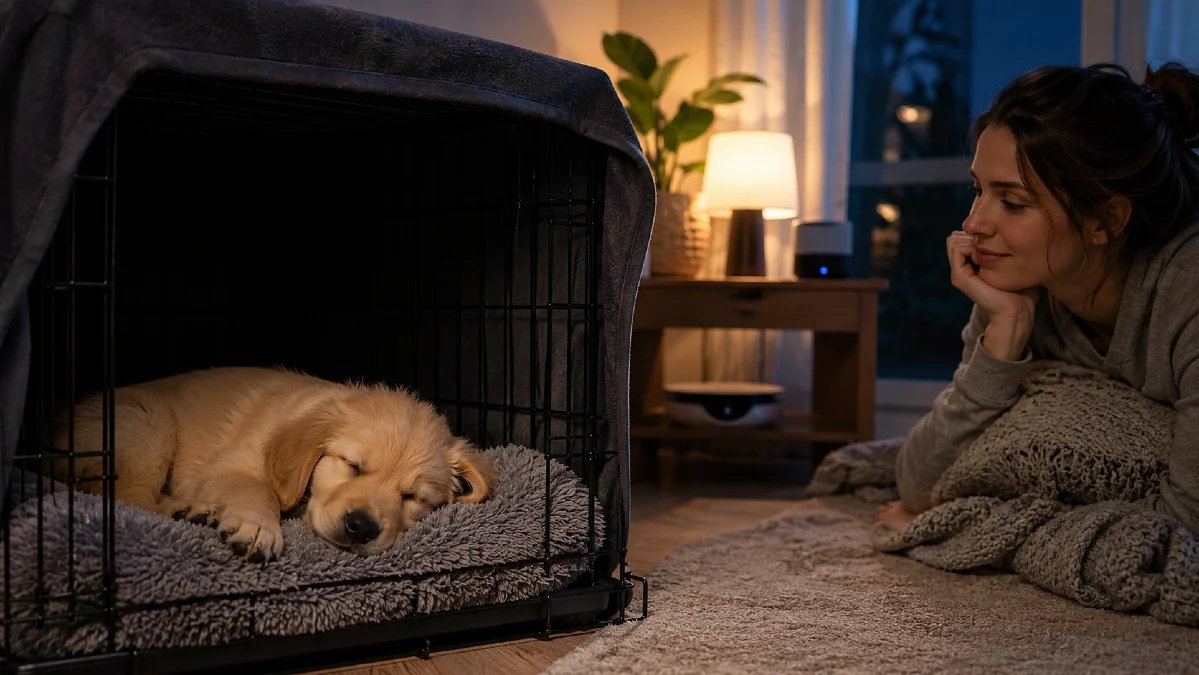
Nothing shatters the joy of bringing a new puppy home quite like 3:00 AM whining. You are exhausted, your eyes are heavy, and you might even wonder if you made a mistake getting a dog.
Most owners accidentally reinforce this nighttime anxiety because they misunderstand what their dog actually needs. They try to comfort the crying puppy by picking them up, which only leads to weeks of restless nights and deep frustration.
You need a proven plan. Here is how to get a dog to sleep through the night, combining biological facts, modern crate setups, and behavioral science. You will master your puppy sleep schedule and get your rest back by following these exact steps from day one.
1. Understand Your Dog’s Biological Sleep Needs
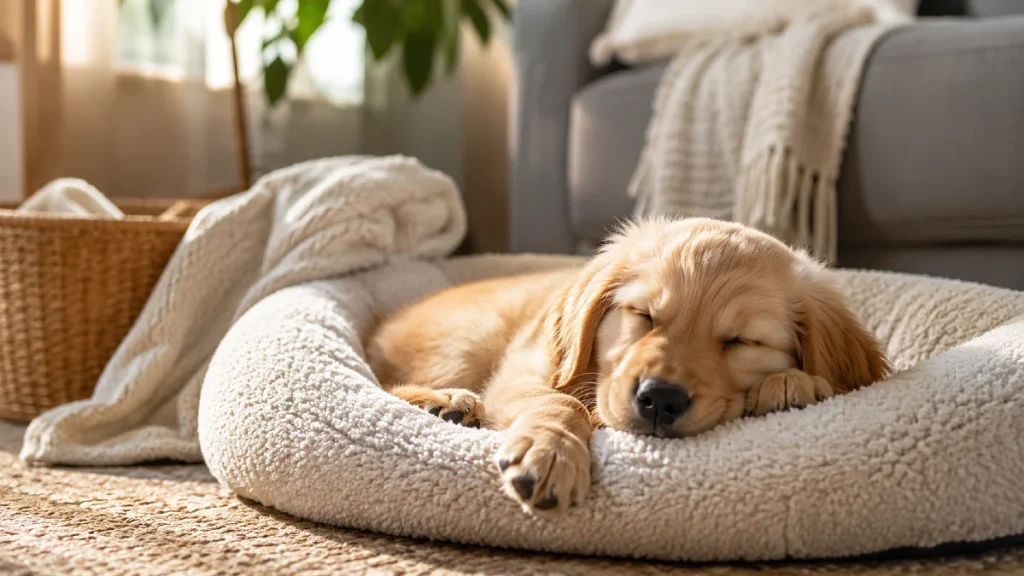
Before you blame yourself for your dog’s sleepless nights, you need to look at their biology. Puppies are polyphasic sleepers, meaning they sleep in multiple short bursts throughout the day and night. While humans sleep in one long block, dogs do not.
An 8-week-old puppy actually needs 18 to 20 hours of sleep per day, and they should only be awake for 30 to 45 minutes at a time.
Nighttime sleep only begins to fully consolidate meaning sleeping 6 to 8 straight hours around 12 to 16 weeks of age. For comparison, adult dogs average 11 hours of daily sleep.
Many owners panic when their new puppy wakes up every two hours, but this is completely normal. Their tiny bodies cannot hold a meal or water for very long, and their brains are rapidly wiring new connections.
Sleep is when this brain growth happens, so missing sleep directly harms their physical development.
| Age | Daily Sleep Needed | Continuous Night Sleep |
| 8 weeks | 18 to 20 hours | 3 to 4 hours |
| 16 weeks | 14 to 16 hours | 6 to 8 hours |
| Adult | 11 to 14 hours | 8 to 10 hours |
Because they sleep in bursts, expecting an 8-week-old puppy to sleep 8 uninterrupted hours on day one is biologically impossible. But you can control their schedule to make nights manageable for everyone.
2. Prevent the “Overtired” Trap With Enforced Naps
It sounds logical to keep your puppy awake all evening so they are exhausted by bedtime. In reality, this is the worst thing you can do for their sleep schedule.
Here is the truth: an overtired dog loses impulse control, and their brain cannot settle down. This leads to nighttime pacing, biting, and meltdowns that people often call the witching hour.
It happens when puppies bite your ankles and run frantically around the house, which is a symptom of sleep deprivation rather than excess energy.
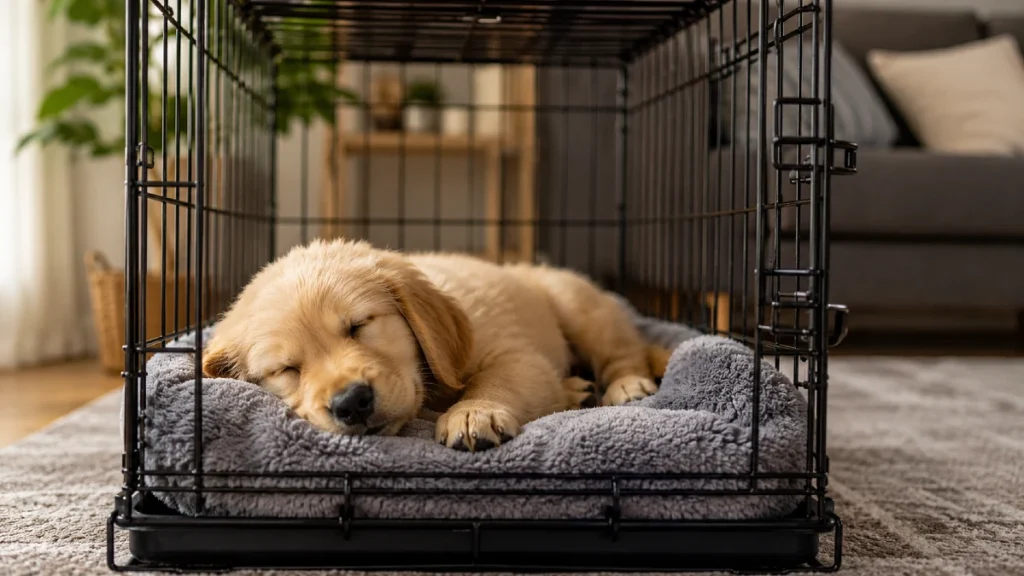
You must step in and enforce rest by instituting enforced naps in the crate during the day. This prevents the evening zoomies and builds a strong foundation for crate training a puppy at night.
When a puppy plays, they do not know when to stop and will play until they collapse. This is why you must act as their parent and tell them when it is time to rest. Place them in their quiet spot after 45 minutes of activity.
They might whine for a few minutes, but then they will fall fast asleep. Recommend 2 hours of crate sleep for every 1 hour awake during the day.
3. Set Up a Blackout, Tech-Assisted Sleep Environment
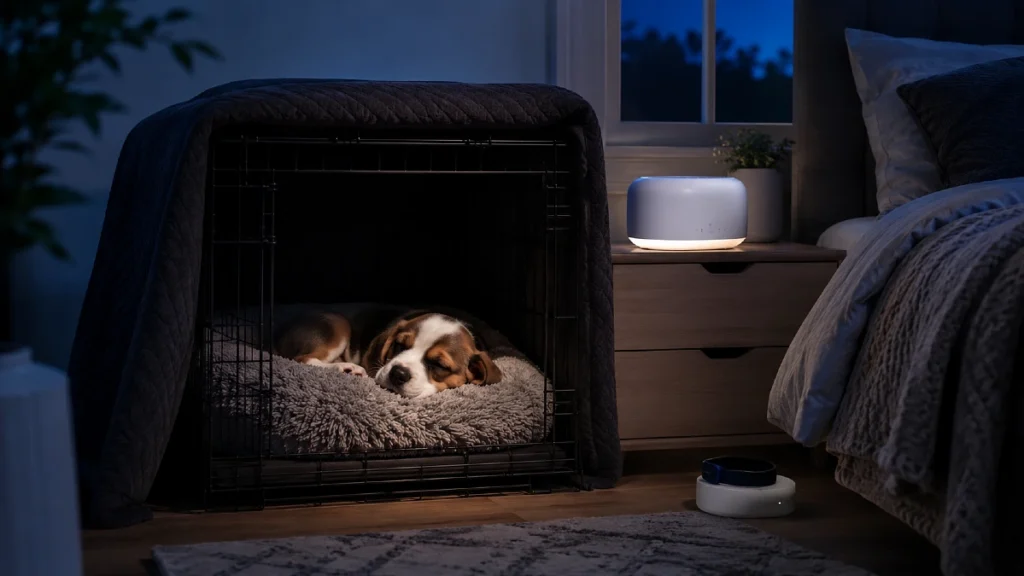
Your dog’s crate shouldn’t feel like a jail cell. It should feel like a luxury cave designed for deep rest.
The Lighting
Dogs have circadian rhythms dictated by light, so the room must be pitch black. Even a small street light can wake them up, so cover the wire crate with a breathable cover to create a den.
Dogs are den animals by nature, and a dark, enclosed space makes them feel safe from predators while signaling it is time to rest.
Smart Pet Tech
Consider modern calming tools like white noise machines or a ticking clock to block out house sounds and mimic a mother’s heartbeat. You can also use advanced tech like the 2026 CES winning Satellai AI Collar, which tracks sleep patterns to catch health anomalies early and ensure deep sleep.
A smart dog crate like ZenCrate features motion-activated fans and soothing music that automatically turn on when the dog enters.
These tools soothe anxiety without you lifting a finger, while high-anxiety heavy-duty options like Impact Crates work well for dogs that panic by blocking out light completely.
The Bedding
Make the crate a positive place by using the Diggs Groov lick mat attachment. You can freeze it with dog-safe peanut butter and attach it to the crate door to build positive crate association. It helps the pup self-soothe to sleep because licking releases calming endorphins in the brain.
Knowing how to get a dog to sleep through the night depends heavily on this setup. They learn that the crate brings good things, and a calm environment does the heavy lifting for you.
4. The 2-Hour Evening Wind-Down Routine
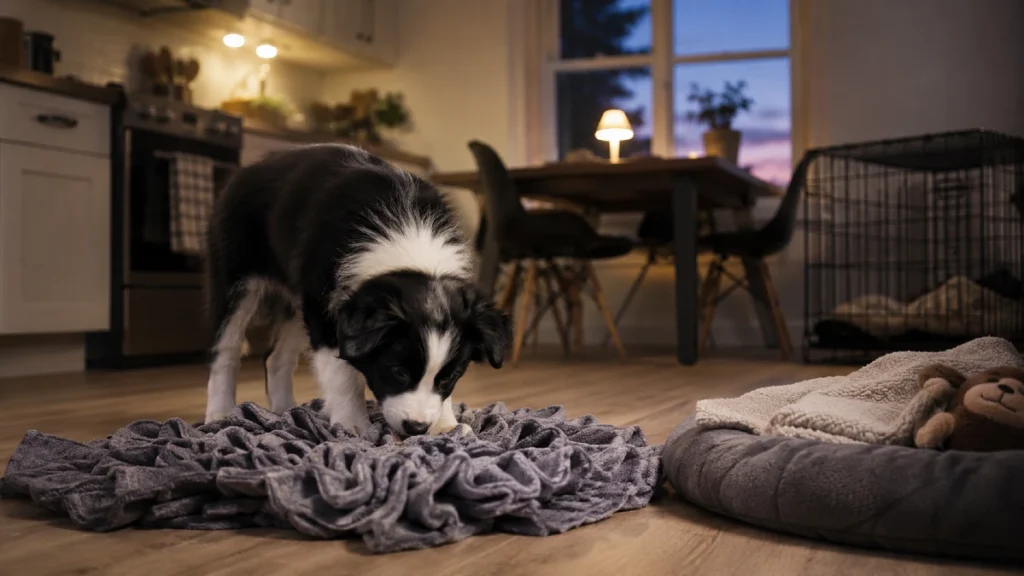
A peaceful night starts exactly two hours before you turn off the lights. A structured puppy sleep schedule makes bedtime easy because dogs thrive on predictability. When they know what happens next, they stop worrying and their bodies naturally begin to wind down.
Cut off food and water 2 hours before bed to prevent midnight bladder emergencies. A full stomach also makes it harder for them to sleep deeply because digestion keeps their internal body active.
| Time Before Bed | Action | Reason |
| 2 Hours | Remove water and food bowls | Empties the bladder before sleep |
| 1 Hour | Start mental games | Lowers the heart rate |
| 10 Minutes | Final potty trip | Ensures they are completely empty |
Replace high-energy fetch with mental enrichment exactly 1 hour before bed to lower their heart rate.
Running around the yard spikes their adrenaline, but sniffing games and lick mats work perfectly to tire out their brain. Hide treats in a rolled towel and let them sniff them out, as mental work exhausts a dog faster than physical running.
The final action of the night is a quiet, boring potty break at their designated spot. Stand still, do not talk much, wait for them to finish, and bring them right back inside. By the time they step into their crate, their bladder is empty and their heart rate is low.
5. How to Handle Midnight Potty Breaks
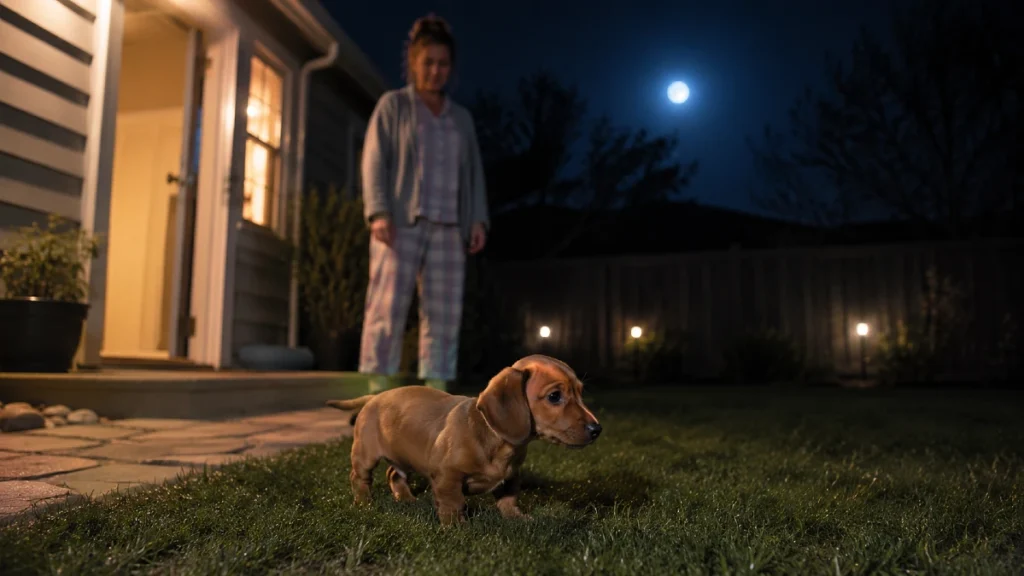
Even with the perfect routine, young puppies will still need to relieve themselves at 2 AM. When the puppy whines at 2 AM, it is strictly business, so you need to know the difference between bathroom whining and lonely whining.
Bathroom whining sounds urgent and escalating, while lonely whining sounds like a soft whimper or pacing.
Keep the lights dim, do not use a happy playtime voice, and carry them directly to the potty spot. Carrying them prevents them from stopping to pee on the rug and keeps them half asleep. This is a crucial part of crate training a puppy at night because it prevents them from waking up fully.
| Whine Type | How It Sounds | Your Action |
| Potty Whine | Urgent, escalating pitch | Take outside immediately |
| Lonely Whine | Soft whimpering, pacing | Ignore briefly, wait for quiet |
| Panic Whine | Frantic scratching, howling | Soothe briefly, assess setup |
Once they go, offer calm praise with a simple phrase like “good dog,” and put them directly back into the crate. Do not stop for cuddles on the couch and do not grab a toy; just close the door and walk away. If you make middle-of-the-night trips fun, your dog will wake you up just to play.