

Few things are as stressful as waking up at 2 AM to the relentless thump thump thump of your dog scratching their irritated skin.
You have probably tried changing their food. You bought special shampoos. But the constant itching, paw licking, and redness just keep coming back. Your dog is miserable. You feel completely stuck.
In this guide, we break down the specific dog allergies symptoms you need to look for. We clear up the biggest myths about food allergies. You will get a clear roadmap to finally give your dog some relief.
Spotting Common Dog Allergies: The “Big Three”

Allergy signs often look exactly the same. But the triggers fall into three distinct buckets.
- Flea Allergy Dermatitis (FAD): It takes exactly one flea bite to cause intense itching for up to two weeks [1.1.3].
- Environmental Allergies: Vets call this Atopic Dermatitis. Airborne things like pollen, dust mites, and mold spores cause this reaction.
- Food Allergies: This is an immune response to a specific protein in your dog’s diet.
People love to blame food first. Here is the truth. Environmental allergies account for roughly 80% of canine allergy cases. Food allergies make up only 10% to 20% [1.1.1, 1.2.1]. To figure out which bucket your dog is in, you need to know exactly what physical signs to look for.
Tell Tale Dog Allergies Symptoms You Should Not Ignore
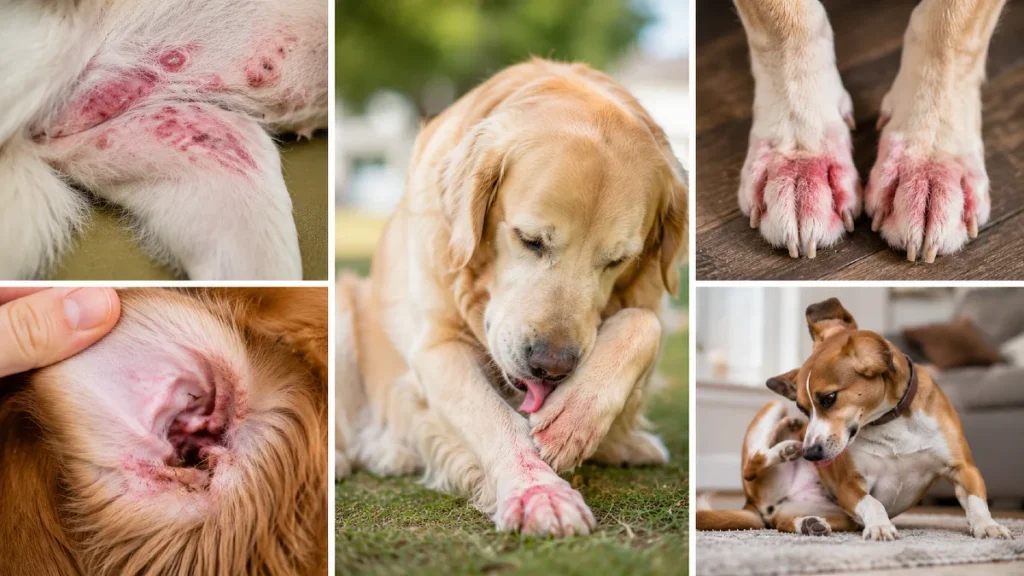
Look at your dog from nose to tail. The physical signs tell a story.
- Paw licking and chewing: This is often the top sign of environmental allergies.
- Chronic ear infections: Look out for red, stinky ears [1.2.4].
- Red, inflamed skin: Check the belly, armpits, and groin for hot spots or hair loss.
- Stomach issues: Watch for frequent bowel movements, vomiting, or diarrhea.
Constant licking leads to secondary yeast and bacterial infections. That creates a distinct “stinky corn chip” smell on their paws. Up to 20% of dogs with food allergies also experience stomach issues like vomiting or soft stools [1.2.2].
Skin is the main battlefield. But the gut can be too. This brings us to the big debate between food and environment.
Environmental vs Food Allergies in Dogs: Spotting the Difference

So, how do you know if it is the grass they roll in or the chicken they eat?
| Feature | Environmental Allergies | Food Allergies |
| Timing | Often seasonal (spring and summer) | Consistent and year round |
| Itch Location | Paws, face, and belly | Ears, paws, and rear end |
| Age Factor | Usually starts between 1 to 3 years old | Often develops in dogs under 1 year old [1.2.2] |
Let us look at a real example. If your dog only gets itchy in April and May, it is likely pollen. If they have year round ear infections and soft stool, look at their food bowl.
Keep in mind that dogs can have both types at the same time. This makes a proper vet visit crucial.
The Truth About Food Allergies (Hint: It Is Rarely the Grain)

Let us clear up a massive myth right now. Grain free marketing has confused many pet owners.
Dogs are rarely allergic to grain or gluten. The culprits are almost always animal proteins. Do not fall for boutique, grain free diets unless a vet specifically prescribes one. Clinical dermatology studies show clear data on the top food allergens.
| Top Dog Food Allergens | Percentage of Allergy Cases [1.2.2] |
| Beef | 34% |
| Dairy | 17% |
| Chicken | 15% |
| Wheat | 13% |
Do not just switch from chicken and rice to beef and rice. You need a strategic approach to fix the problem.
How to Get a Proper Diagnosis and Stop the Itch

Skip the trendy at home saliva or hair allergy test kits. Board certified veterinary dermatologists warn that these tests are notoriously inaccurate.
The Allergy Investigation Protocol
Flea Prevention
Reveal Detail ⟡Use vet-approved flea control first. It is crucial to rule out those hidden pests entirely before moving on to more complex diagnostic testing.
The Diet Trial
Reveal Detail ⟡Skin Testing
Reveal Detail ⟡Intradermal skin testing is the gold standard for environmental allergies. It accurately pinpoints the specific outdoor or indoor allergens triggering your dog’s immune response.
This process takes time. But fast acting veterinary medications like biological injections or daily pills exist. They stop the itch while you play detective. Try using a digital pet health tracker app.
You can log “itch levels,” bowel movements, and local pollen counts to give your vet accurate data. You have modern relief options to keep your dog comfortable while you find the true cause.
Conclusion
Chronic itching is a sign of an overactive immune system. It is not a behavioral quirk. Whether it is beef, pollen, or a single flea, identifying the root cause takes patience.
Book an appointment with your veterinarian or a board certified veterinary dermatologist. Start an “itch journal” today to track flare ups.