
A diabetes diagnosis for your dog is terrifying. You want to fix the problem fast. But you search online and find confusing fad diets and raw food trends.
This bad advice can actually fight against the very insulin your veterinarian just prescribed. The food bowl suddenly feels like the enemy. It does not have to be this way.
You will learn the exact biological rules of a safe diabetic dog diet. We will cover what to feed a diabetic dog safely. You will also learn which everyday foods to ban forever.
Why a Diabetic Dog Diet is Different (And Why Consistency is King)
Dogs process diabetes differently than humans and cats. Cats often get Type 2 diabetes. Dogs almost exclusively get Type 1 diabetes.
This means they are completely reliant on injected insulin. Think of glucose as the fuel. Insulin is the key that opens your dog’s cells to let the fuel inside.
Because they rely on these injections, their food directly impacts how safely that insulin works. Canine diabetes nutrition comes down to one golden rule. Consistency is king.
Your veterinarian calculates the insulin dosage based on your dog eating the exact same nutrient profile every single day. Changing food brands unpredictably causes wild blood sugar swings. Changing feeding times or volumes does the exact same thing.
You must view their food as a medical tool. The wrong food or the wrong schedule makes that tool fail.
The Golden Rules: What to Feed a Diabetic Dog
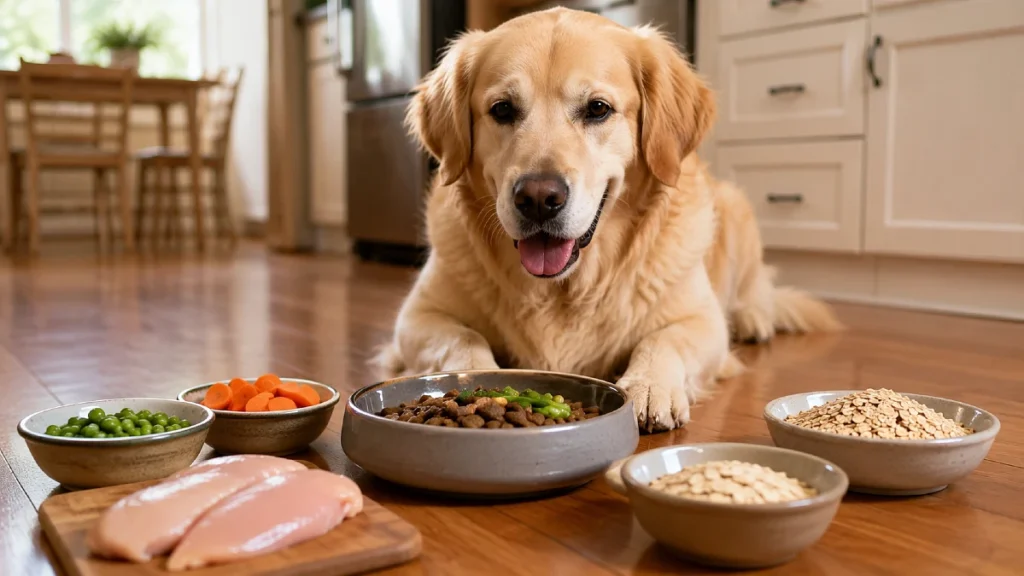
Your dog needs a very specific mix of nutrients to stay stable. High fiber is your best friend. Fiber slows down the absorption of glucose to prevent sugar spikes after meals.
For an overweight diabetic dog, dry food should contain 10% to 20% fiber on a dry matter basis. Both soluble fiber and insoluble fiber play vital roles. Soluble fiber like beet pulp absorbs water and slows digestion.
Insoluble fiber like cellulose adds bulk to the stool. Complex carbohydrates are also required. You want low glycemic carbs that provide steady energy rather than rapid spikes.
Compare a high glycemic carb like white rice to a low glycemic carb like soybeans or barley. Soybeans win every time. You also need moderate lean protein.
This helps maintain muscle mass without spiking blood sugar. Finally, keep the fat low. This is critical.
Up to 30% of diabetic dogs get the disease secondary to pancreatitis. Pancreatitis is a dangerous pancreatic condition triggered by high fat foods. The pancreas is already sick.
High fat forces it to work harder. Finding the best diabetic dog food means checking the label for these exact ratios.
| Nutrient | What to Look For | Why It Matters |
| Fiber | 10% to 20% dry matter | Slows down glucose absorption |
| Carbohydrates | Complex and low glycemic | Provides steady energy |
| Protein | Lean and moderate amounts | Maintains muscle mass safely |
| Fat | Very low amounts | Prevents deadly pancreatitis |
Meal Timing: The 12 Hour Sync with Insulin
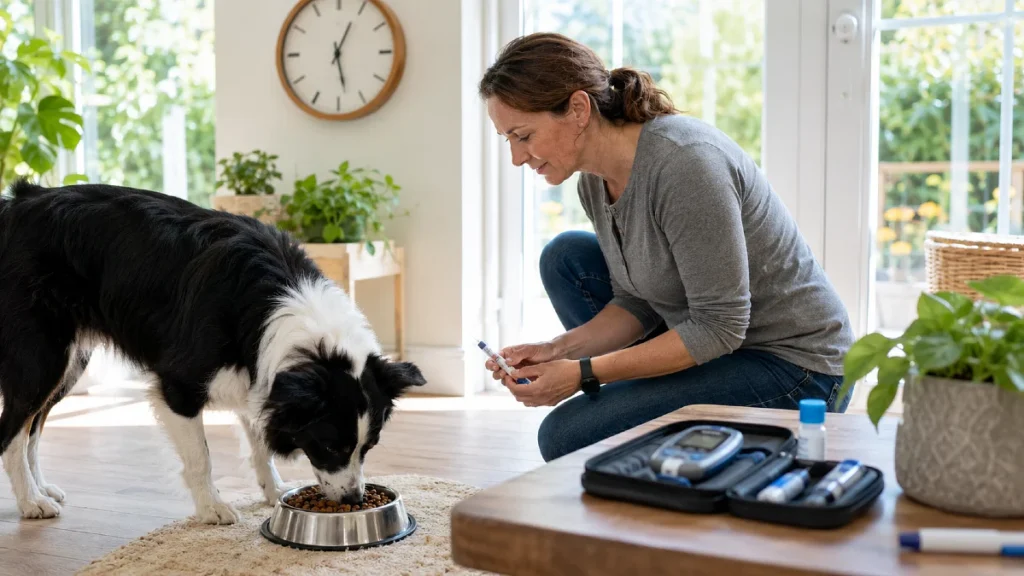
Feeding times must perfectly match insulin action times. The American Animal Hospital Association guidelines are very clear. They recommend two equal sized meals spaced exactly 12 hours apart.
A proper diabetic dog diet plan revolves around the clock. Here is an example feeding schedule. 7:00 AM is breakfast and the first injection.
7:00 PM is dinner and the second injection. Stick to this routine every day.
Here is your daily routine:
- Prepare the exact measured portion of food using a digital kitchen scale.
- Feed your dog first and watch them closely.
- Ensure they eat their full portion before doing anything else.
- Give the insulin injection immediately after they finish swallowing.
Never inject insulin on an empty stomach. This is an unbreakable rule. Injecting insulin into a dog that just skipped a meal will trigger fatal hypoglycemia.
Hypoglycemia means dangerously low blood sugar. If they refuse to eat, call your vet immediately before giving any insulin. If they only eat half their food, ask your vet for instructions.
They will usually advise a reduced insulin dose for that specific meal. Keep their schedule totally predictable.
Prescription vs Commercial Dog Foods: Which is Better?
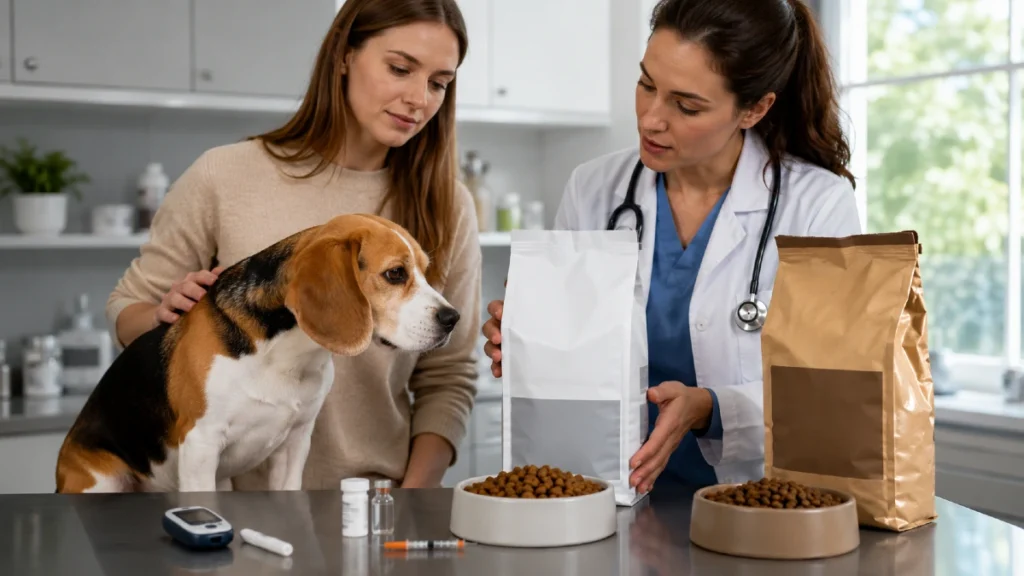
Veterinary prescription diets are the gold standard for a reason. Brands like Royal Canin Glycobalance or Hill’s Prescription Diet w/d cost more. But that money pays for safety.
Their exact glycemic index and fiber ratios are rigorously tested. Prescription diets also often include L carnitine. This supplement aids in fat metabolism and weight management.
Over the counter foods can work. However, they must meet strict criteria. They need low glycemic carbs and highly consistent batches.
Avoid semi moist foods entirely. These soft foods often contain fructose or corn syrup to maintain their texture. Those sugars will ruin your hard work.
Homemade diets are incredibly dangerous for diabetic dogs unless formulated by a board certified veterinary nutritionist. Nutrient levels vary too wildly per batch when you cook at home. The best diabetic dog food is the one that keeps their blood sugar flat and predictable.
| Food Type | Safety Level | Important Notes |
| Vet Prescription | Highest | Rigorously tested for glycemic control |
| Dry Kibble | Moderate | Must have high fiber and low fat |
| Semi Moist | Danger | Hides sugars and syrups |
| Homemade | Danger | Nutrient levels vary too much per batch |
Safe Treats for Diabetic Dogs (Yes, They Can Have Them)

Dogs can still enjoy treats. You just have to follow strict limits. Treats should never exceed 10% of a diabetic dog’s daily caloric intake.
You must choose the right ingredients. Safe options include single ingredient freeze dried meats like chicken or beef. Low starch vegetables like green beans and broccoli are also excellent diabetic dog treats.
You must avoid standard dog biscuits. Jerky treats made with glycerin or honey are also terrible choices. High fat treats like peanut butter will cause major problems.
Be very careful with any treats labeled as soft or chewy. These almost always hide sugars or syrups. The best strategy is to pair a safe low glycemic treat with the insulin injection.
This builds a positive association with the needle. You can also use the Pet Diabetes Tracker app by Caninsulin to log these treats alongside meals and glucose curves.
| Treat Category | Examples | Verdict |
| Lean Proteins | Freeze dried chicken or liver | Safe in moderation |
| Low Starch Veggies | Green beans or zucchini | Safe and healthy |
| Standard Biscuits | Milk Bone style treats | Unsafe |
| High Fat Spreads | Peanut butter | Unsafe |
Conclusion
Successfully managing canine diabetes comes down to a strict routine. You need the right fiber rich food. You must measure it perfectly.
You must give it at the exact same times every single day. The food bowl is no longer the enemy. It is a tool that helps the insulin do its job.