
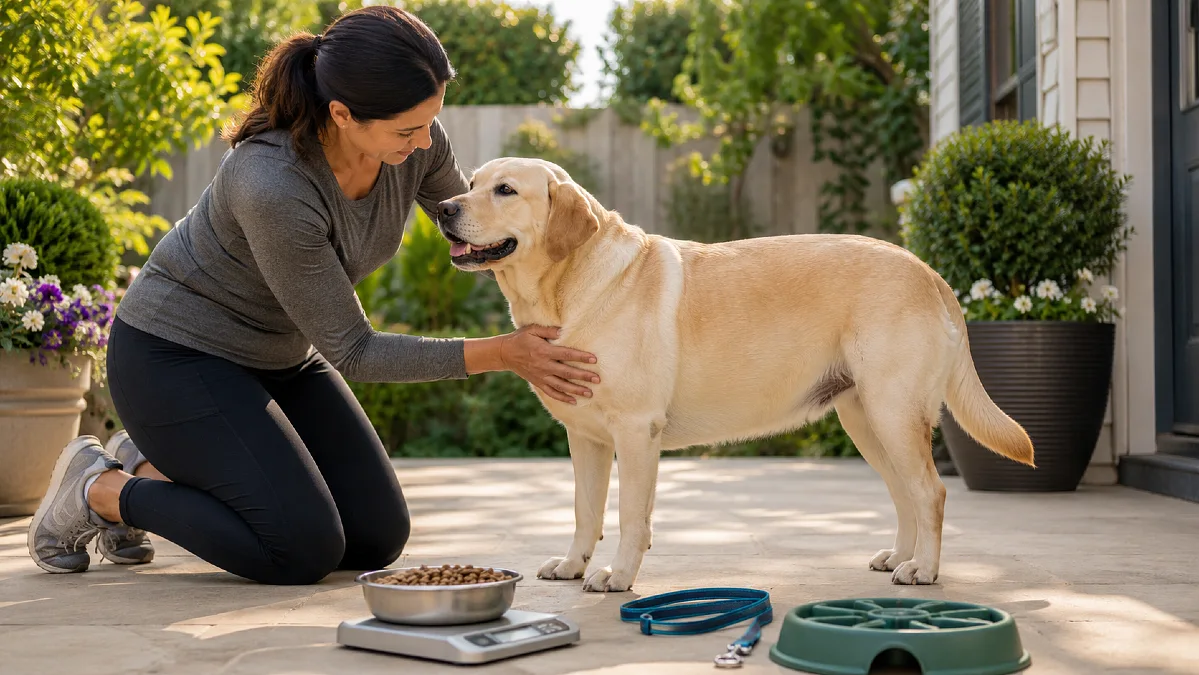
Does your dog look a little heavier lately? Most owners of overweight dogs do not even realize their pet is carrying too much weight. This blind spot is dangerous.
Extra weight causes severe joint pain and significantly reduces a dog’s lifespan. You want your best friend to live a long and happy life.
By the end of this guide, you will know exactly how to tell if your dog is overweight at home. We will look at shocking dog obesity statistics and give you the first steps to safely shed the extra weight.
Why Does Extra Weight Hurt Your Dog?
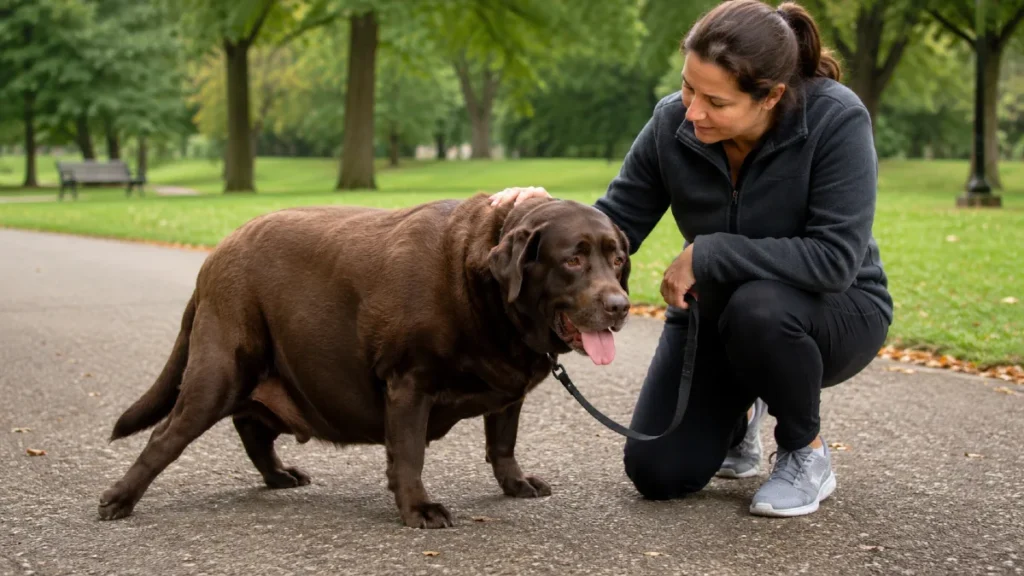
The truth about pet health might surprise you. According to the Association for Pet Obesity Prevention, 54 percent of U.S. dogs are overweight or clinically obese.
This means more than half of the dogs we see every day are at risk for serious health problems. These are alarming dog obesity statistics that require immediate attention.
Carrying extra weight physically damages your dog over time. The landmark 14 year Purina Lifespan Study proved a heartbreaking fact. Dogs kept at an ideal weight live up to two years longer than their overweight counterparts. Here are the most common health risks for heavy dogs:
- Osteoarthritis and severe joint pain.
- Type 2 diabetes.
- Heart disease and high blood pressure.
- Cranial cruciate ligament injuries in their knees.
3 Quick Checks to Test Your Dog at Home
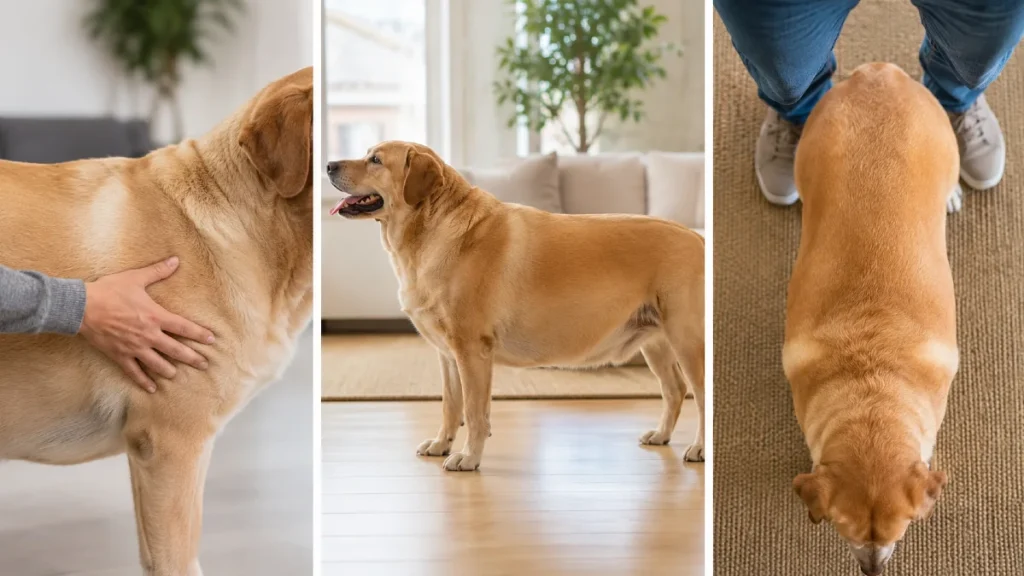
You do not need a scale to figure out if your pet is too heavy. You can perform three physical checks right now to evaluate their body shape. Knowing how to tell if your dog is overweight comes down to feeling their ribs and looking at their waist.
It is very easy to do this at home. Follow these three simple steps to test your dog:
- The Rib Test: Run your hands gently over their ribcage. You should be able to feel the ribs without pressing hard, feeling similar to the back of your hand. If they feel like your fleshy palm, there is too much fat covering them.
- The Profile View: Look at your dog from the side while they stand. The chest should be notably wider than the abdomen, creating a visible Abdominal tuck where the stomach goes up.
- The Overhead View: Look down at your dog from above. They should have a clear hourglass shape at their waistline. A broad, flat, or oval shape means they are holding onto excess fat.
Keep these visual cues in mind when examining your pet. Here is a quick summary of what you should look for during these checks.
| Body Part | Ideal Weight Shape | Overweight Shape |
| Ribs | Feel like the back of your hand. | Feel like the palm of your hand. |
| Side Profile | Clear Abdominal tuck going up. | Flat belly hanging down. |
| Top View | Hourglass shape behind ribs. | Broad and oval shape. |
What Is the Dog Body Condition Score?
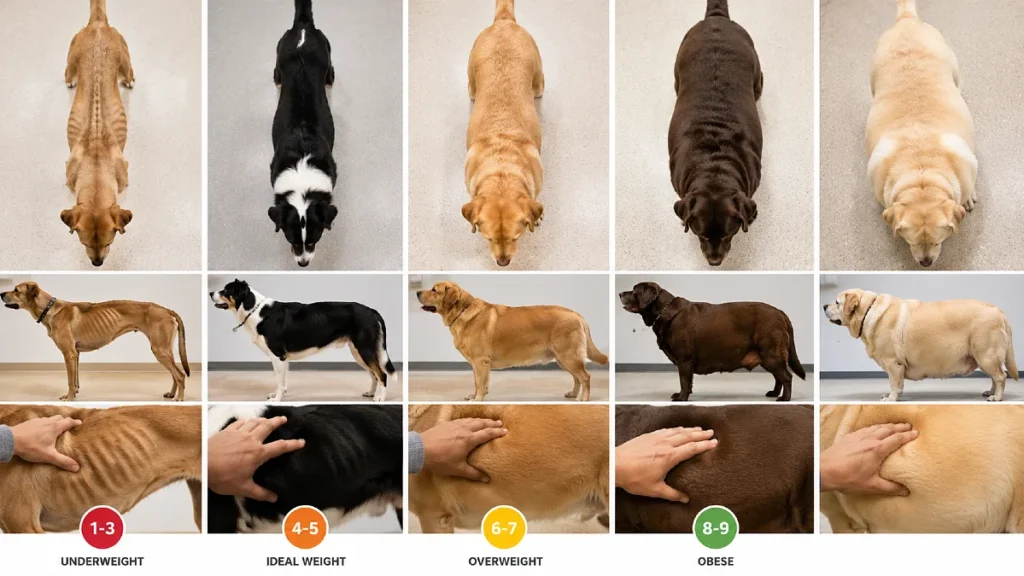
Veterinarians do not just look at a number on a scale to judge health. They use the World Small Animal Veterinary Association 1 to 9 Body Condition Score to assess body fat. This scale provides a standard way to measure pets across all breeds and sizes.
Numbers four and five represent the ideal weight for a healthy dog. Anything above a five means your pet has too much body fat. You can use the table below to see where your dog currently falls on the official scale.
| Score Range | Classification | Physical Characteristics |
| 1 to 3 | Underweight | Ribs, lumbar vertebrae, and pelvic bones easily visible. No palpable fat. |
| 4 to 5 | Ideal Weight | Ribs easily palpable with minimal fat. Waist easily noted from above. Abdominal tuck evident. |
| 6 to 7 | Overweight | Ribs palpable with difficulty due to heavy fat cover. Waist absent. Noticeable fat over lower back. |
| 8 to 9 | Obese | Ribs not palpable. Massive fat deposits over thorax, spine, and base of tail. Obvious abdominal distention. |
The 4 Step Dog Weight Loss Plan
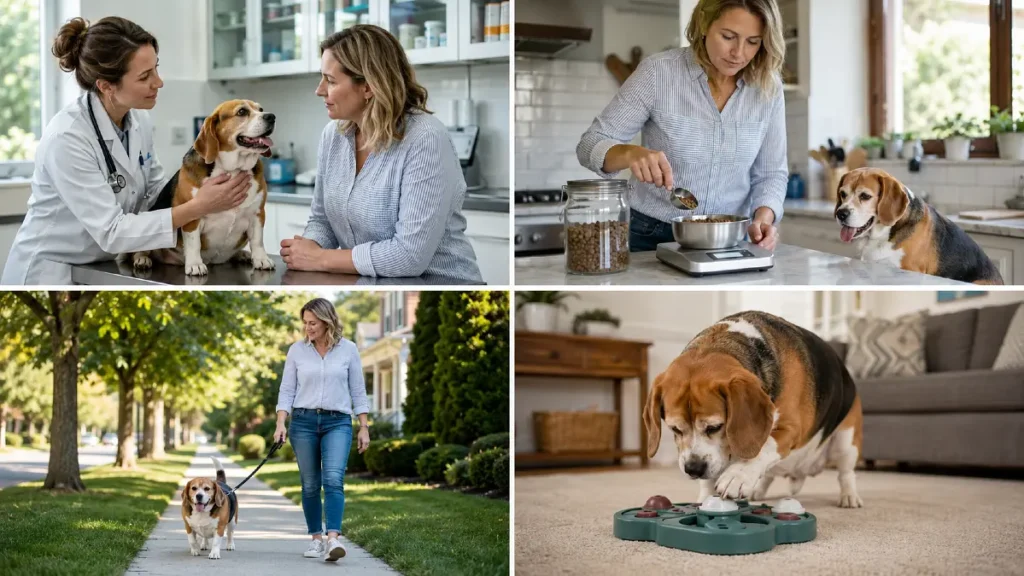
Finding out your dog is heavy is the first step to helping them. Now you need a safe dog weight loss plan to get them back to a healthy size.
You should always consult your vet first to rule out medical problems. Conditions like hypothyroidism can cause unexplained weight gain even if they eat normally.
Once your vet gives the green light, focus on fixing their daily habits. Most weight problems happen because owners guess how much food they give.
Stop using measuring cups and start using a digital kitchen scale. Weighing the food prevents accidental overfeeding and keeps their calorie intake exact.
You have to make changes slowly so your dog stays comfortable. Here is how to safely change their routine:
4 Steps for Safe Canine Weight Loss
Aim for Safe Weight Loss
View Plan ⟡Measure Meals Properly
View Plan ⟡Weigh every single meal on a scale to ensure precise portion control. Eliminate high calorie table scraps completely from their diet.
Modify Activity Gradually
View Plan ⟡Increase the length of their daily walks very slowly to protect their joints. Sudden bursts of intense exercise can cause injuries in overweight dogs.
Use Puzzle Feeders
View Plan ⟡Give them their meals in puzzle toys rather than a standard bowl. This slows down their eating and provides mental stimulation without adding extra calories.
Small adjustments make a huge difference over time. Here is a quick guide on what feeding habits to change.
| Old Habit | Better Choice | Why It Helps |
| Using a plastic scoop | Using a digital scale | Provides exact calorie control. |
| Feeding table scraps | Feeding crunchy vegetables | Cuts out hidden daily calories. |
| Fast bowl feeding | Using a puzzle feeder | Slows down eating and exercises the brain. |
Conclusion
Accepting that your pet needs to lose weight is the hardest part. If your dog failed the rib or waist test today, it is time to take immediate action.
Letting the weight stay on will only lead to more pain and expensive vet bills later. Now that you know how to tell if your dog is overweight, you have the power to fix it.