
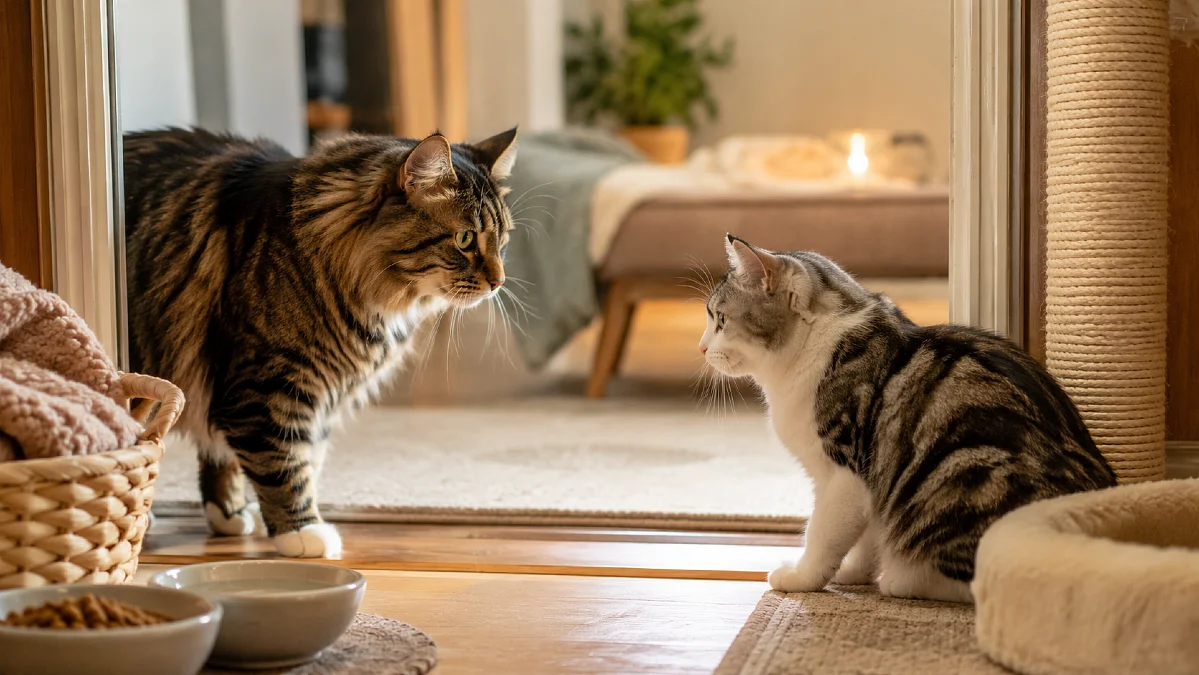
Bringing home a new cat should be exciting. But hearing your normally sweet resident cat hiss and growl turns that joy into pure panic. Rushing a feline introduction often leads to violent territorial fights.
This causes chronic stress and a broken bond that can take months to repair. You worry they will never get along. But there is a proven way to fix this.
This guide shows you exactly how to introduce two cats. You will learn behaviorist approved steps to safely merge territories. You can move from safe isolation to peaceful living without the stress.
Why a Slow Introduction is Crucial for Feline Harmony
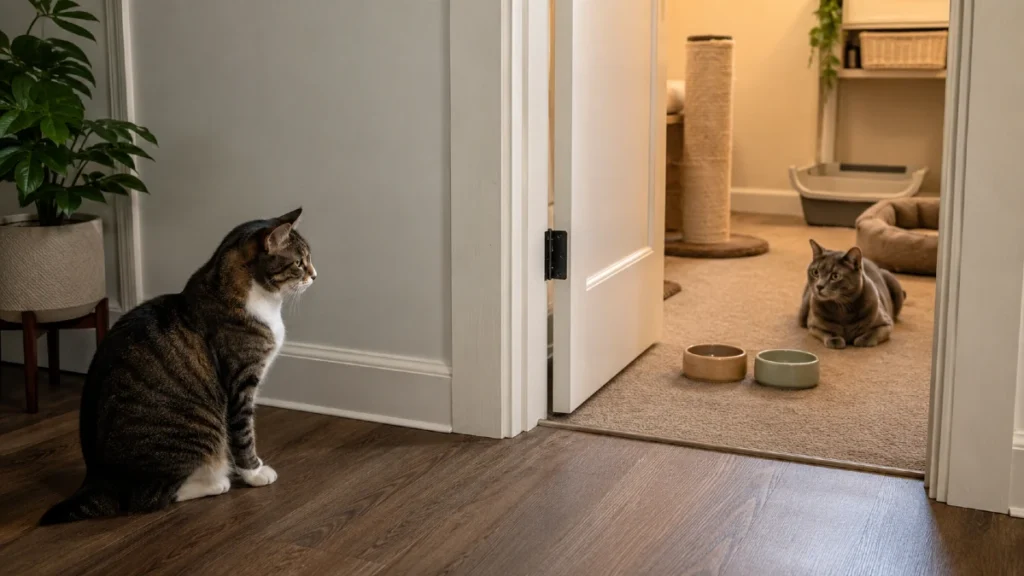
A common mistake is letting cats figure it out on their own. This never works. Cats are highly territorial creatures. They rely heavily on scent rather than sight. Rushing an introduction triggers a massive fight or flight response.
You must always move at the pace of the most stressed cat. Let’s look at the numbers. The 2024 American Association of Feline Practitioners (AAFP) data shows that 87.7% of multi cat households experience tension. Even worse, 73.3% of the time, this tension starts during a poor initial introduction.
You need a solid plan. Follow these exact cat introduction steps to keep the peace.
Move to the next step when you have completely committed to a slow process.
Step 1: Set Up a “Base Camp” for the New Cat
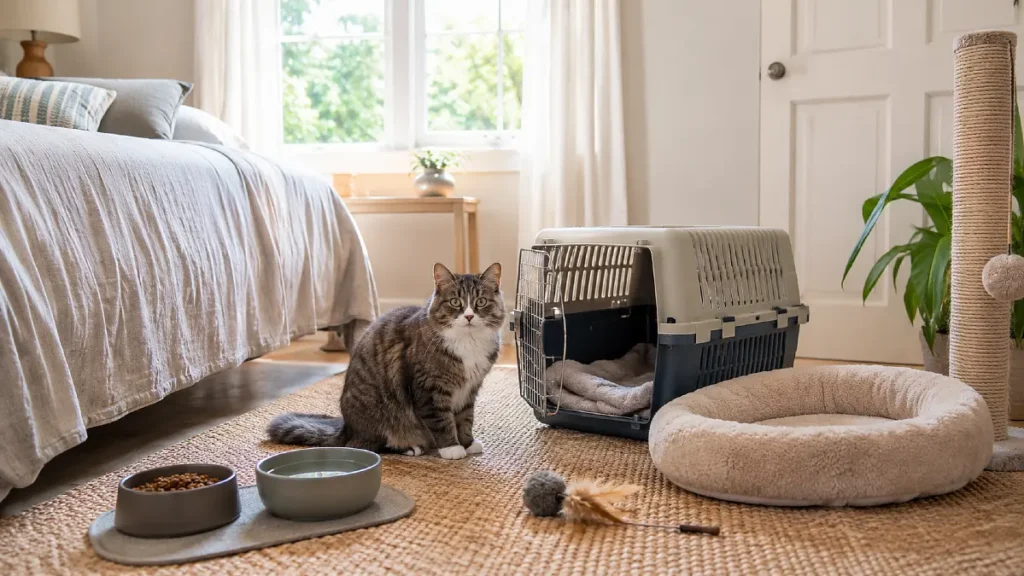
Never just open the carrier in the living room. You need a safe zone. Dedicate a specific, closed off room for the new cat. A spare bedroom or bathroom works perfectly.
This prevents visual contact. It allows the new cat to decompress in peace. Feline behaviorist Jackson Galaxy calls this the “Base Camp.” You must equip this room with the essentials.
- Their own clean litter box
- Fresh food and water bowls
- A tall scratching post
- Comfortable bedding
Keep them completely separate for at least 3 to 7 days. Give the resident cat full reign of the rest of the house. Never force them to interact yet. This is the foundation of how to introduce two cats.
Move to the next step when the new cat is eating normally and using the litter box without fear.
Step 2: Scent Swapping and Site Swapping
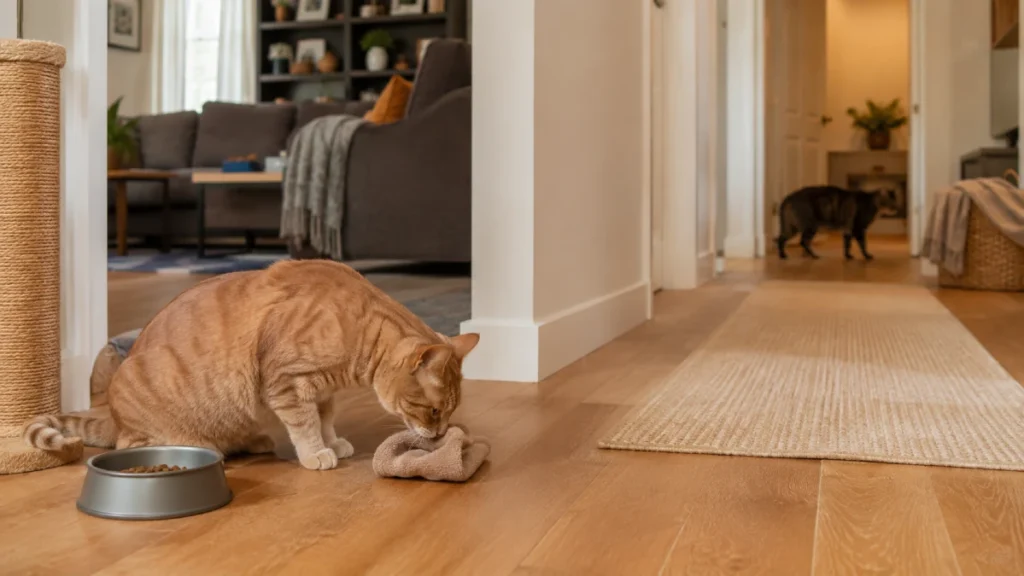
Cats experience the world through their noses first. If they see a strange cat before they smell them, you have already lost the upper hand. Cats shake hands with their noses.
Take a clean sock or towel. Gently rub the new cat’s cheeks with it. Place that item near the resident cat’s food. Do the exact same thing in reverse. This is a crucial part of introducing a new cat to a resident cat.
Once they ignore the scented items, try a physical swap. Jackson Galaxy champions this “site swap” technique. Let the resident cat explore the base camp. Let the new cat explore the main house. Do this for an hour without letting them see each other.
| Scent Reaction | What It Means | What To Do |
| Sniffing and walking away | Normal acceptance | Proceed to site swapping |
| Hissing at the towel | Fear or territory threat | Keep swapping items slowly |
| Peeing on the item | Extreme stress | Stop and give them a few days |
Move to the next step when both cats can smell the other’s scent without hissing or hiding.
Step 3: The “Other Side of the Door” Feeding Ritual
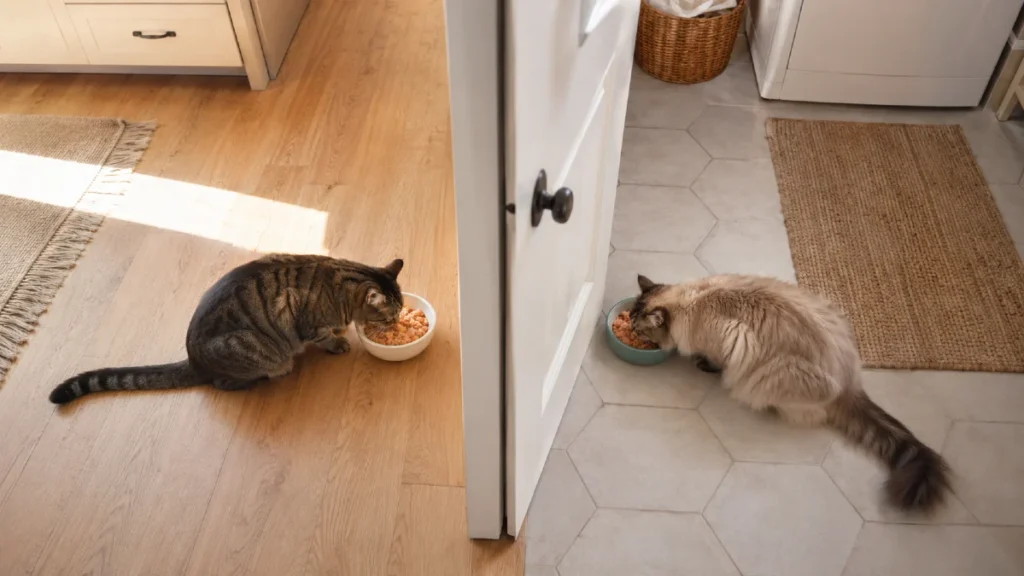
Food builds fast friendships. But only if you use it correctly. You need to build positive associations.
Do this by feeding both cats highly desirable food. Place the bowls on opposite sides of the closed base camp door. Start far apart. Move the bowls an inch closer each meal. Use high value treats for this exact moment.
Churu treats or wet food work best. They should only get these treats during this door ritual. This makes the cat introduction steps highly rewarding. What happens next? They start looking forward to the other cat being near.
Move to the next step when both cats eat calmly right up against the closed door.
Step 4: Visual Introductions via the Barrier Method
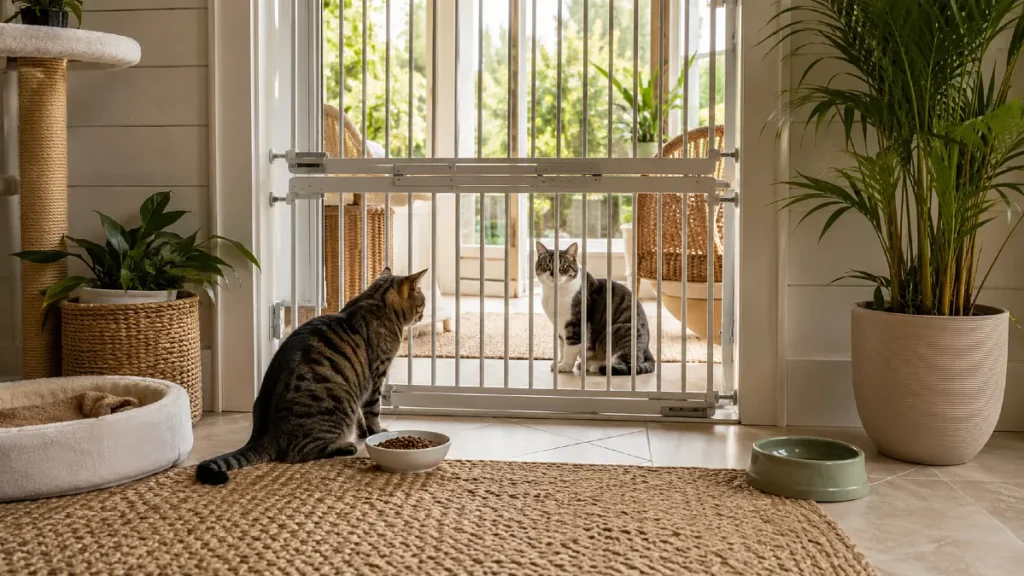
Once your cats can eat on opposite sides of a solid door without hissing, it is time to give them a sneak peek. Open the base camp door just a crack.
Or better yet, install a physical barrier. Stacked baby gates or a temporary screen door work perfectly. Allow them to eat and see each other. But they cannot touch. A single baby gate is often too short for cats.
Always stack two gates vertically. This prevents a sudden jump over the top. You can also plug in Feliway pheromone diffusers near the barrier to keep them calm. This is the secret to how to introduce cats without a fight.
Move to the next step when they can eat and groom in front of the barrier while staying completely relaxed.
Step 5: The “Eat, Play, Love” Supervised Meeting
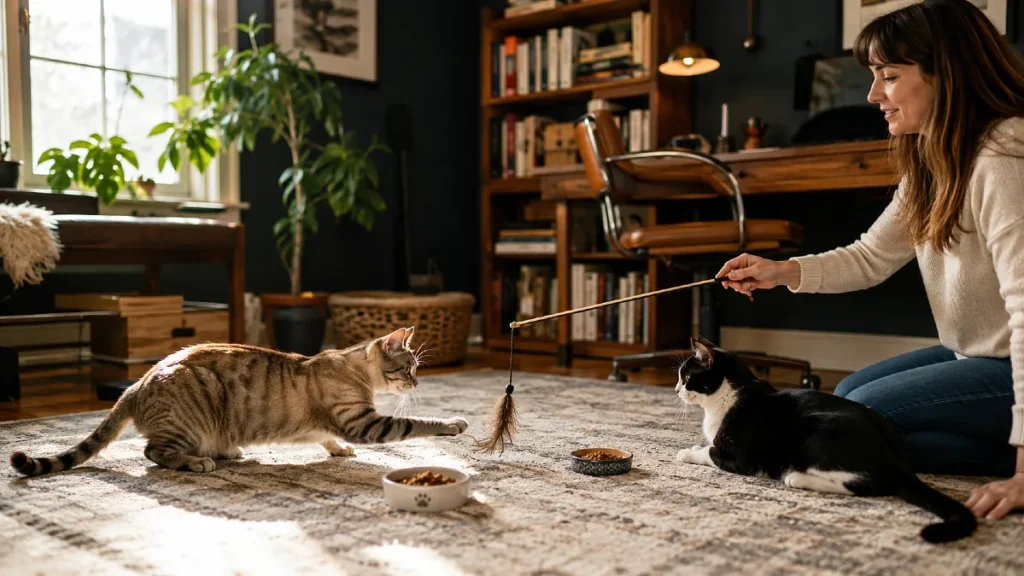
Now comes the big moment. But you still need to stay in control. Remove the barrier for short, supervised interactions.
Use wand toys and laser pointers. These tools distract them from staring at each other. Keep these sessions to 10 or 15 minutes. End on a positive note before tension builds. A resident cat swatting under a door earlier was normal.
But now, a hard stare down means trouble. If they stare, distract them and separate them. The American Humane Society recommends keeping these first visits very brief. This wraps up how to introduce two cats.
| Body Language | Meaning | Action Required |
| Blinking slowly | Relaxed and happy | Let them keep playing |
| Ears pinned flat | Scared or aggressive | Distract and separate |
| Yowling loudly | Imminent attack | Separate immediately |
Move to full cohabitation when they can sleep in the same room without staring or chasing.
What to Do If Your Cats Start Fighting
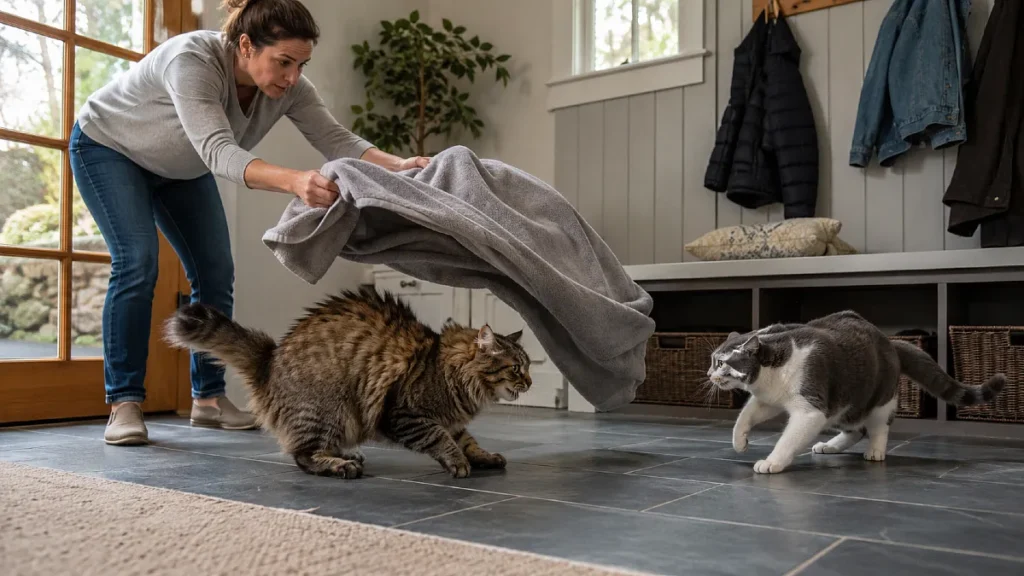
Sometimes things go wrong. You need to know exactly how to react. Never use your hands to break up a cat fight. You will get badly hurt.
Throw a thick blanket or towel over them to break their focus. You can also make a loud noise to startle them. If a real fight happens, you must regress back to Step 3.
Moving backward in the steps is not a failure. It is a necessary reset for their safety. This is how you learn how to introduce cats without a fight.
| Behavior | Play | Fight |
| Claws | Sheathed and soft | Fully extended |
| Vocal | Quiet chirps | Screaming or yowling |
| Turns | Taking turns chasing | One cat always trapped |
Move back a step immediately if a fight occurs and wait for them to calm down completely.