
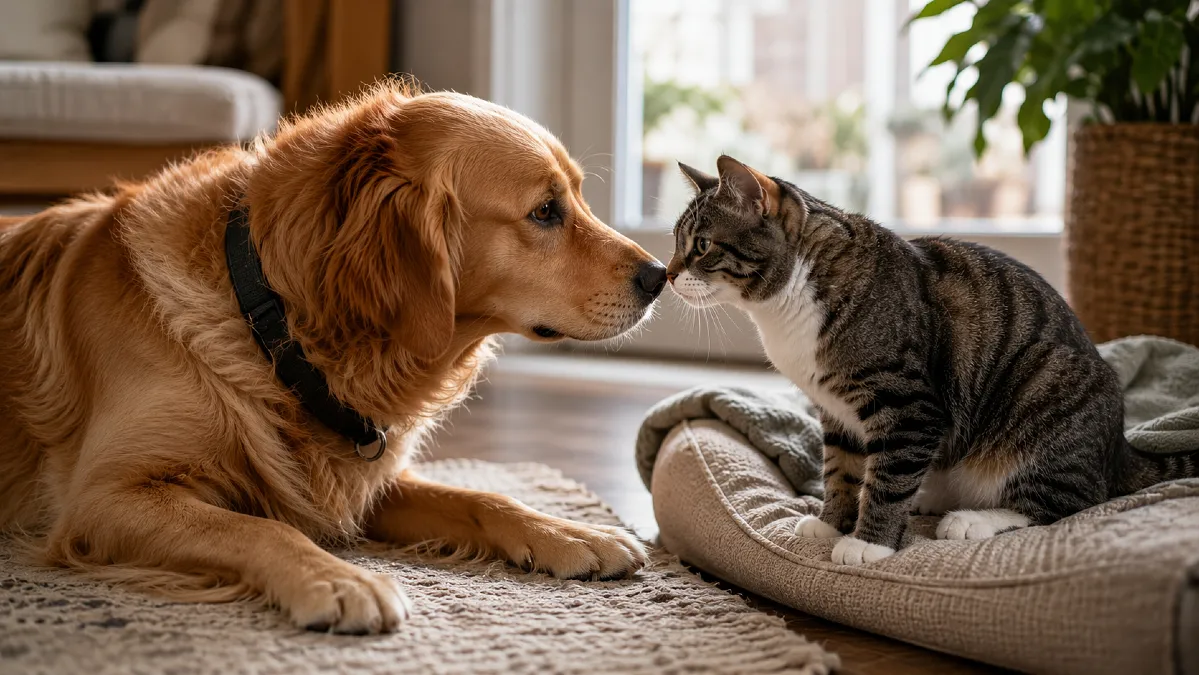
Bringing a new dog into a home with a resident cat should never feel like setting the stage for a turf war. You feel excited about your new pet. But that excitement quickly turns into anxiety.
You worry about prey drives and territory disputes. You fear potential injuries if the meeting goes wrong. We have a proven step by step desensitization process used by animal behaviorists.
You will learn exactly how to introduce a new dog to your cat safely. These multiple pet household tips ensure a peaceful integration.
Why “Letting Them Work It Out” Fails (and What to Do Instead)
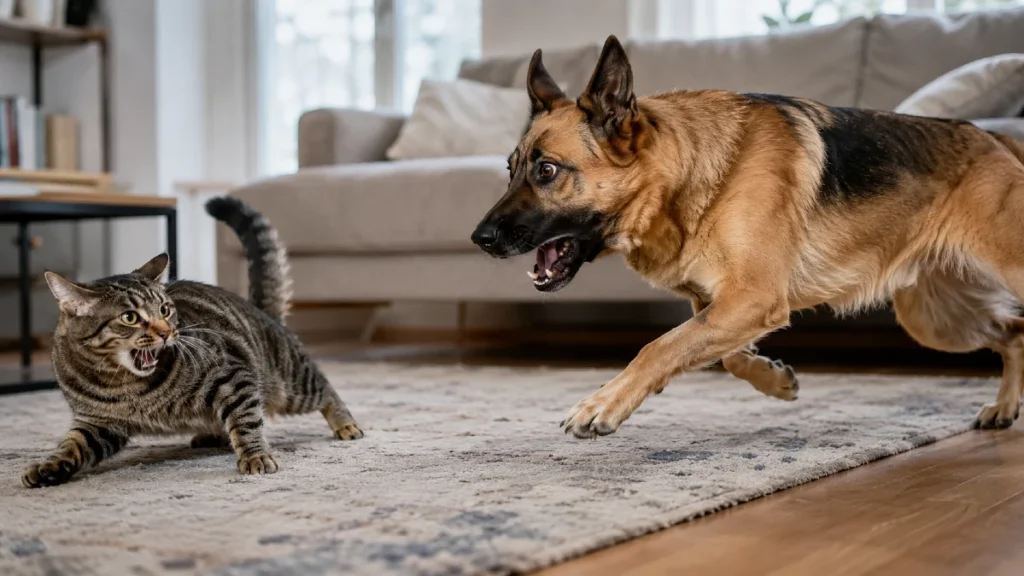
The worst advice you will ever receive is to throw them in a room and let them figure it out. Many people falsely believe pets will naturally sort out their own hierarchy. You are actually dealing with biological prey drives. A fleeing cat instantly triggers a dog to chase.
One bad fight can create permanent trauma for a cat. Prevention is always easier than behavior correction. You must manage their first interactions carefully.
The 2026 American Pet Products Association report states that 57% of pet owners live with two or more animals. Gen Z and Millennials drive this massive shift. This makes introducing dog to cat correctly a required skill for modern pet parents.
Step 1: Total Separation and the “Safe Zone” Setup
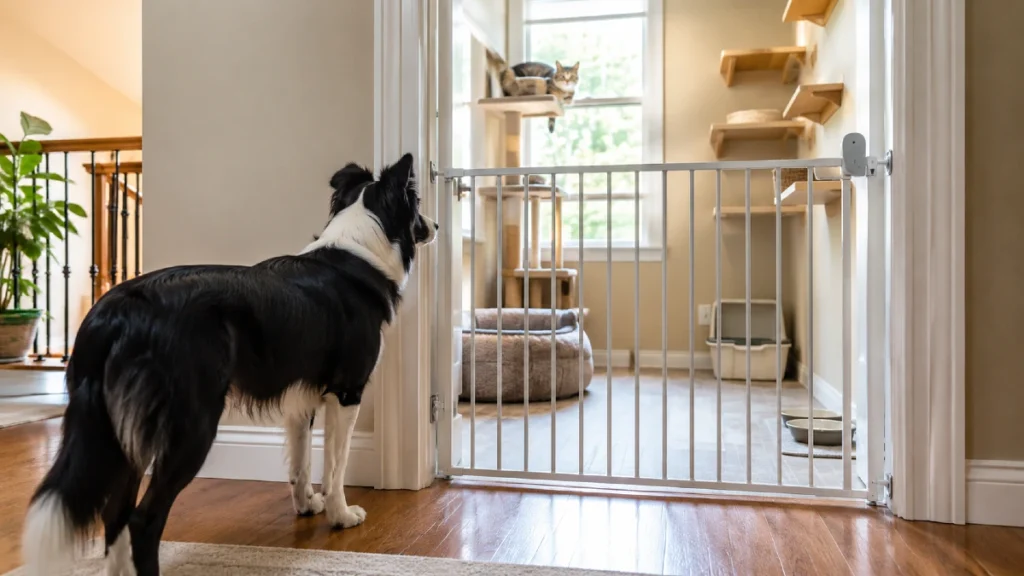
Patience starts on day one. You must keep your pets in completely separate rooms for three to seven days. They should have zero visual contact.
Start by building a Safe Zone for your cat. Cats require vertical territory to feel secure. A cornered cat will trigger a defensive fight response.
Provide cat trees or clear high shelves so they can observe safely. Ensure the cat food, water, and litter box remain completely inaccessible to the dog. Do not use a room the dog considers theirs for this safe zone.
Here is what you need for a successful setup:
| Item | Purpose | Importance |
| Extra tall baby gate | Blocks physical access while allowing sight later | Critical |
| Cat tree | Provides vertical territory for safety | Critical |
| Feliway diffuser | Lowers feline baseline stress using pheromones | Helpful |
Following these dog and cat introduction steps builds a foundation of trust. Your cat must feel secure in their own territory first.
Step 2: The Scent Swapping Technique
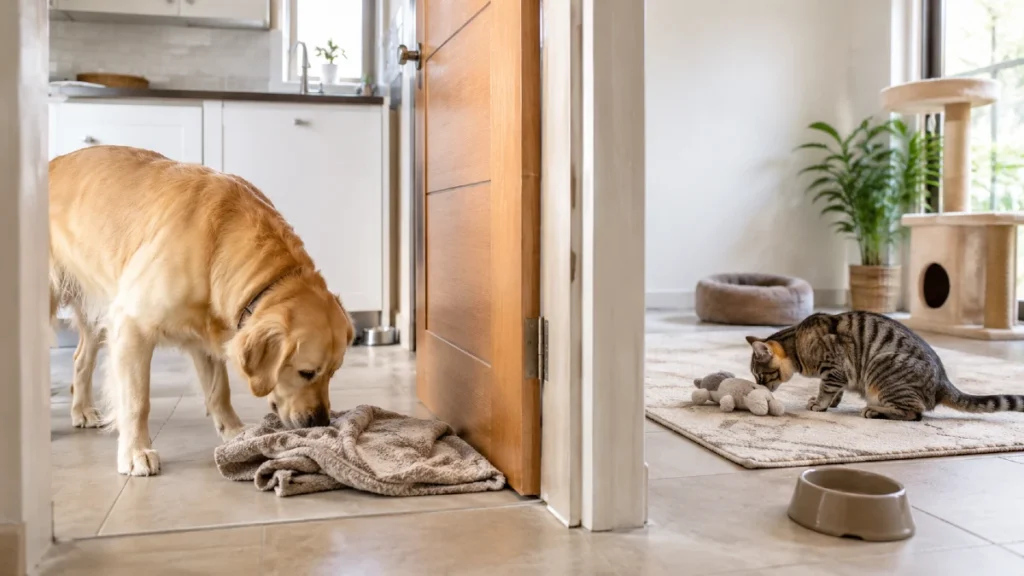
Animals see the world with their noses first. Think of scent swapping as letting them read each other’s resumes before the big job interview. Swap bedding, towels, or toys between the pets daily.
Do not place the scented item directly in your cat’s bed. Place it in the middle of the room so they can investigate it by choice. Next, feed both animals on opposite sides of a closed door.
This builds a positive association where food equals the smell of the other pet. Pay attention to the threshold distance where your pet notices the other but stays calm. If a dog whines or a cat hisses at the door, move the food bowls further back.
Wait until they eat calmly without growling or pausing. That is your clear indicator to move to the next phase of introducing dog to cat. These multiple pet household tips prevent rushed mistakes.
Step 3: Controlled Visual Introductions
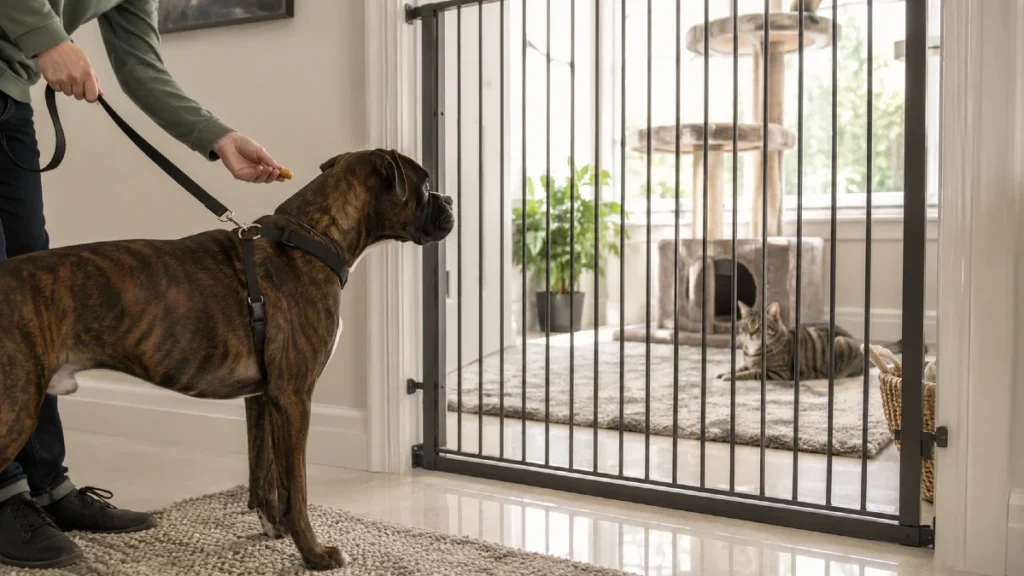
Once they accept the smell, it is time to add sight. The Humane Society emphasizes the strict necessity of baby gates for this phase. Place a sturdy clear barrier between them.
Keep the dog on a leash even with the barrier in place. Keep these sessions strictly under ten minutes. Feed both pets high value treats like boiled chicken.
We highly recommend the Look at That game endorsed by Best Friends Animal Society. You reward the dog the exact moment they break eye contact with the cat. This teaches the dog that looking away from the cat brings rewards.
| Action | Reaction | Result |
| Dog stares at cat | You call their name | Dog breaks focus |
| Dog looks at you | You give chicken | Dog learns cat brings treats |
| Dog ignores cat | You give jackpot treats | Dog builds great habits |
If either animal panics or fixates, close the door immediately. Try again tomorrow. This patience defines how to introduce a new dog to your cat safely.
Step 4: The First Face to Face Leashed Meeting
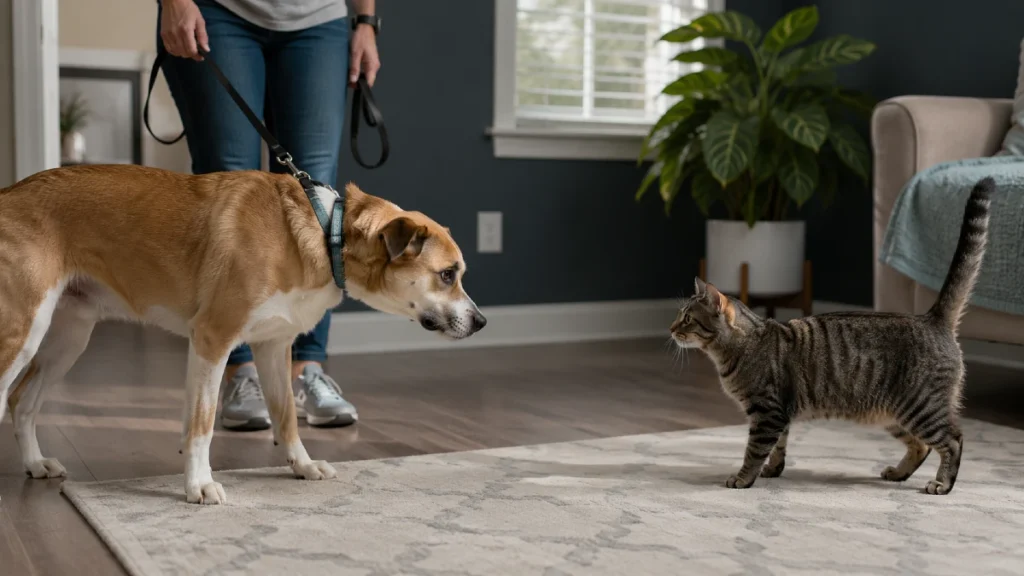
A tired dog is a well behaved dog. Take your dog on a long run before this step. You want to drain all their excess energy.
Conduct the meeting in a neutral large room. The cat must have an easy escape route up high. Hold a slack leash during this meeting.
A tight leash communicates tension to the dog and causes barrier frustration. Never force the cat to approach. Let the cat dictate the entire pace of the meeting.
Never hold the cat in your arms because a scared cat will scratch your face. You must learn to read their body language.
Watch for These Signs
Reading Animal Body Language
Dog Red Flags
Tap to view signs ⟳- Stiff, rigid posture
- Hard, unwavering staring
- Unusual whining or vocalization
- Visible trembling
Cat Red Flags
Tap to view signs ⟳- Flattened or pinned back ears
- Rapidly thrashing or twitching tail
- A tense, low crouch
Healthy Curiosity
Tap to view signs ⟳- Casual, relaxed sniffing
- Soft and relaxed muscle tone
- Easy distraction when offered a treat
If you see red flags, calmly end the session. Introducing dog to cat requires you to stop before things escalate.
Step 5: Supervised Coexistence to Full Freedom
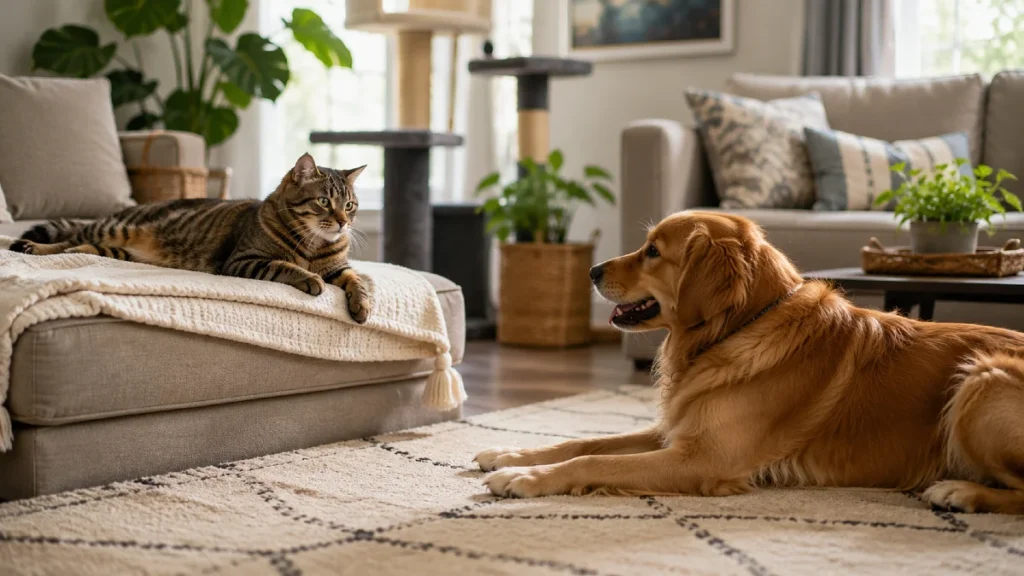
Boring is the goal. You want them to completely ignore each other. Gradually increase the time they spend together in the same room.
Allow the dog to drag the leash at first. This lets you step on it quickly if they lunge. Do not leave them alone unsupervised for months.
You must wait until they reach complete mutual indifference. Full integration takes time. Do not feel like a failure if this process takes two months.
| Phase | Average Time | Goal |
| Total Separation | 3 to 7 days | Zero stress eating |
| Visual Only | 1 to 2 weeks | Calm through barrier |
| Supervised Freedom | 1 to 3 months | Mutual indifference |
Keep the litter box permanently out of the dog’s reach. This prevents resource guarding and keeps the cat feeling secure. These multiple pet household tips guarantee a peaceful home for years to come.
Conclusion
Pacing is everything when blending your furry family. Total separation, daily scent swapping, secure visual barriers, and slack leashed meetings build the foundation of safety. You must move at the speed of your most fearful pet.