

Adopting a pet is deeply rewarding. But bringing home a traumatized animal who cowers in the corner leaves you feeling helpless and overwhelmed.
You desperately want to show affection and love right now. But your new companion exhibits fear and defensive behaviors instead of warmth.
This guide offers a clear blueprint for traumatized dog decompression. You will learn how to bond with a rescue dog using structured routines.
We will show you exactly how to start building trust at their natural pace. These steps ensure your new pet feels completely safe.
3 Ways the 3 3 3 Rule Helps Rescue Dogs

Adjustment is entirely a biological process and not just a simple behavioral choice. Your dog needs time to flush stress chemicals out of their system completely.
We use the 3 3 3 rule rescue dogs system to set realistic expectations for everyone. This timeline maps out exactly what your dog experiences during their transition.
The 3-3-3 Adjustment Rule
Your pet experiences massive overwhelm and high cortisol levels. They require a quiet space to simply exist without any pressure or expectation.
The dog starts learning your daily routines and testing boundaries. They slowly begin settling in and figuring out the rules of their new environment.
True personality finally emerges as deep bonding begins. The dog realizes they are finally safe, secure, and home for good.
Amanda adopted a fearful mixed breed who hid constantly during the first month. Her dog completely transformed into a playful companion after three months of patience.
Shelters often recommend a two week shutdown protocol to keep stimulation deliberately low. This extended quiet time regulates the nervous system and lowers canine cortisol levels significantly.
Building trust with a shelter dog requires giving them space to process changes. Rushing the relationship during these critical early days always backfires.
How to Fix Fear by Creating a Secure Decompression Zone
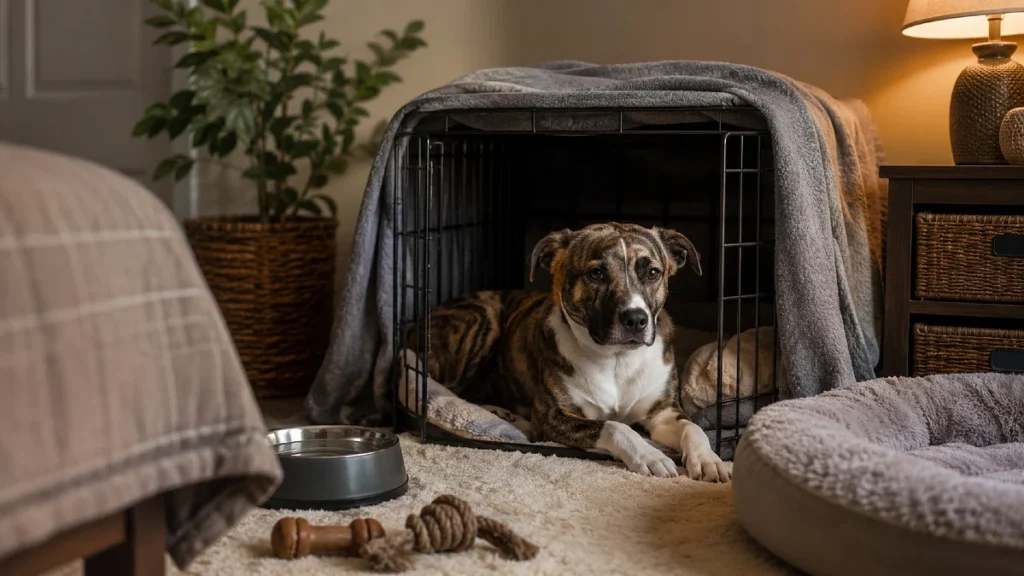
The physical environment heavily dictates the emotional response of your frightened animal. A physical space must signal complete safety before any emotional connection takes root.
You must designate a quiet and low traffic corner for your new pet. Equip this area with a comfortable crate, soft bedding, and fresh water.
Never force the animal out of their safe space for any reason. You must also never use this designated area for punishment or scolding.
Marija sat quietly and read books silently next to the crate every evening. This passive presence built initial trust without forcing any direct interaction.
High pitched voices and looming physical postures trigger immediate defensive reactions. A traumatized brain interprets these common human behaviors as direct physical threats.
A covered crate mimics a natural den environment for your new pet. This enclosed space significantly lowers physiological stress markers for successful traumatized dog decompression.
Learning how to bond with a rescue dog starts with giving them control. Here is a list of supplies you need for their safe zone.
- Wire crate with a dark breathable cover.
- Orthopedic dog bed for joint support.
- Spill proof water bowl kept completely full.
- Safe chew toys to relieve anxiety.
| Safe Zone Action | Why It Works |
| Dimming the room lights | Reduces heavy visual stimulation |
| Playing soft white noise | Blocks scary outside sounds |
| Dropping treats nearby | Builds early positive associations |
The 5 Minute Solution for Establishing Predictable Daily Routines
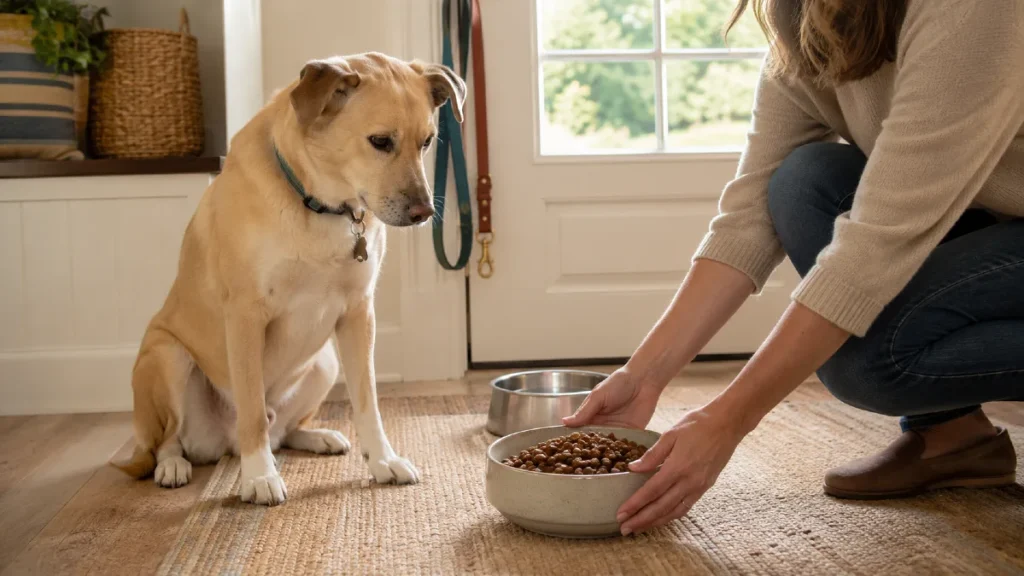
Predictability offers immense psychological comfort for a highly stressed nervous system. Consistent schedules remove the heavy cognitive load of constantly anticipating danger.
You must feed meals at the exact same time every single day. This quickly establishes you as a reliable provider in their eyes.
Linda Marry struggled with a dog who paced anxiously around the house all night. A strict morning and evening feeding schedule stopped her pet’s pacing behavior entirely.
You should also implement quiet decompression walks outside in nature. These walks prioritize natural sniffing over strict obedience or forced heeling.
Studies show that a predictable routine lowers canine cortisol levels dramatically. Decompression walks prove highly effective for anxiety reduction because sniffing naturally calms dogs.
Keep visitors away and strictly avoid crowded dog parks for at least the first month. Building trust with a shelter dog means protecting them from overwhelming situations.
Following the 3 3 3 rule rescue dogs system requires a solid daily plan. Here is a sample daily routine you can implement immediately.
- 7:00 AM: Quiet bathroom break in the yard.
- 7:30 AM: Breakfast served in the safe zone.
- 12:00 PM: Short decompression walk focusing on sniffing.
- 6:00 PM: Dinner served in the safe zone.
- 8:00 PM: Passive bonding time reading near the crate.
Why Does Positive Reinforcement Work Effectively?
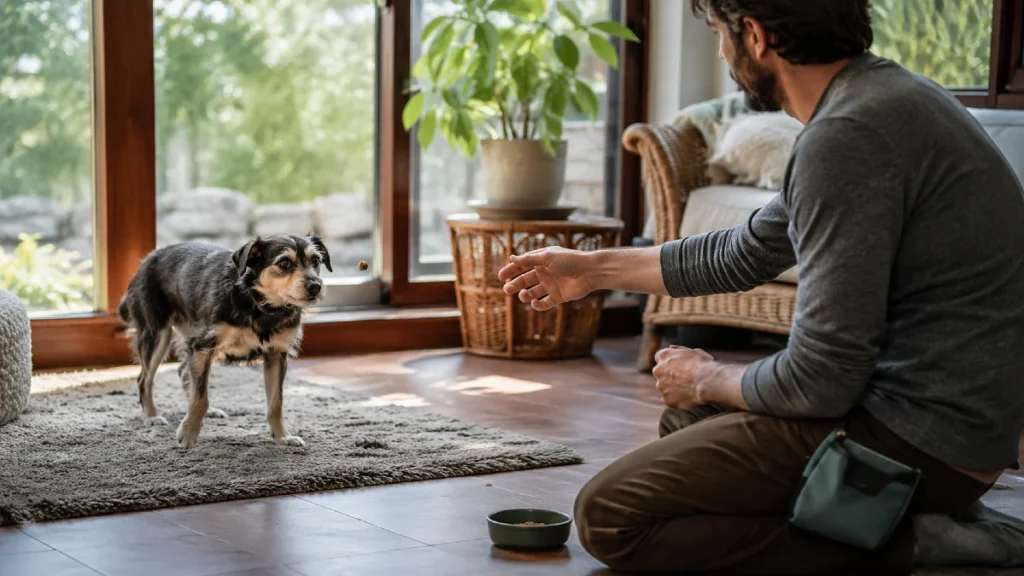
Positive reinforcement means creating safe boundaries when interacting with fearful animals. Reward based interactions rewire a traumatized brain to associate human presence with good things.
You must do this vital training without adding pressure or demanding immediate compliance. Toss high value treats near the animal without requiring them to approach your hand directly.
Avoid punishing fear based behaviors like growling or hiding. Punishment only serves to reinforce the original trauma and break their trust completely.
Sara achieved a massive breakthrough by using small vet approved homemade treats. She gently coaxed her dog out of hiding without ever forcing physical contact.
Dr. Sheila Segurson strongly advocates for a trauma informed approach to animal care. She notes that animals require emotional safety rather than repeated exposure to scary stimuli.
You must wait for relaxed body language before ever attempting physical touch. Stepping back is quite often the most powerful forward progress you can make.
How to bond with a rescue dog requires reading their physical signals accurately. Watch for these clear signs of relaxation before moving closer to them.
- A loose sweeping tail wag.
- Soft eyes with normal blinking.
- Relaxed ears pinned slightly back.
- An open mouth with a loose tongue.
| Body Language | What It Means | Your Next Step |
| Stiff body and lip licking | Highly anxious and overwhelmed | Step back and give them space |
| Yawning and looking away | Mildly stressed but calming down | Toss a treat and look away |
| Soft eyes and loose body | Relaxed and feeling secure | Offer gentle praise quietly |
Proper traumatized dog decompression relies entirely on patience and positive rewards. Rushing physical affection will only delay their true recovery process.
How to Fix Trust Setbacks Quickly
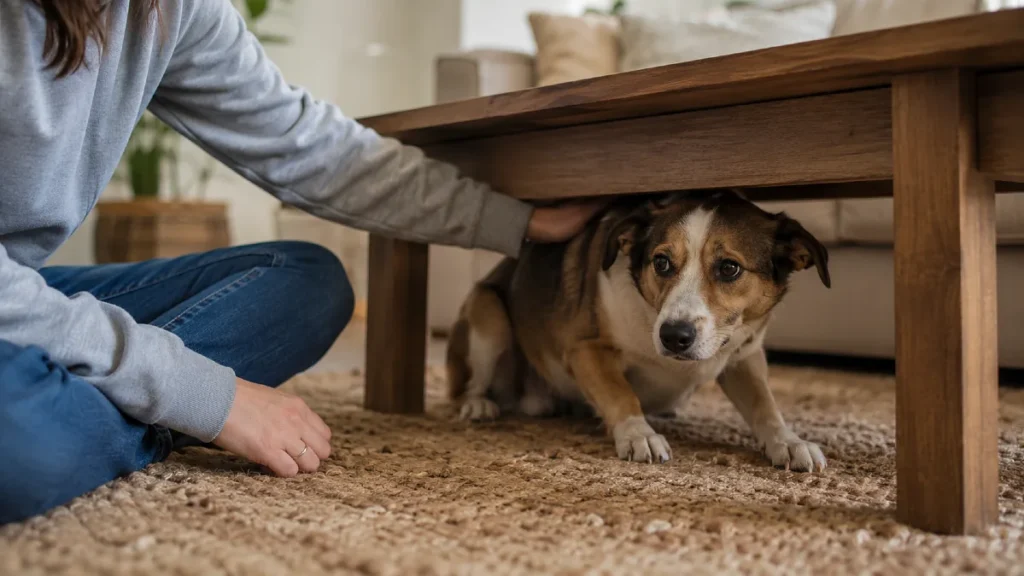
Sometimes your dog takes two steps forward and one step back. A sudden loud noise or a change in routine causes them to hide again.
Do not panic when this frustrating regression happens. Trust building is a slow process that requires consistent daily effort from you.
You must return to the basics of their safe zone immediately. Lower all expectations and give them complete quiet time for a full day.
Sara noticed her dog regressed after a neighbor slammed a heavy door. She stopped all training and simply read a book near the crate again.
This gentle reset showed her dog that she remained a totally safe person. You can easily fix these setbacks by removing any new pressure completely.
Setbacks happen to every single rescue pet owner at some point. Here are common triggers and exactly how you handle them safely.
| Common Setback | Why It Happens | How to Fix It |
| Hiding under furniture | Loud noises outside | Close blinds and play white noise |
| Refusing to eat food | Too much eye contact | Leave the bowl and exit the room |
| Growling at strangers | Feeling completely trapped | Ask guests to ignore the dog entirely |
Your pet relies heavily on your calm reaction when they feel scared. A quiet and steady response rebuilds their lost confidence very fast.