
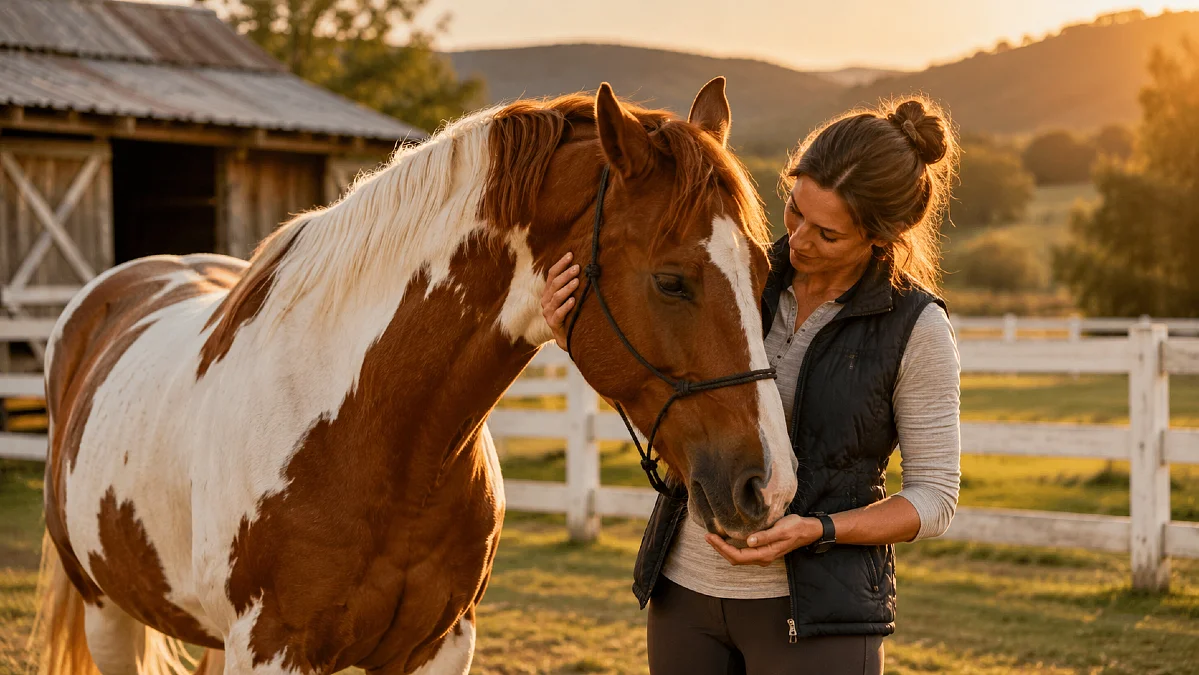
You finally have your new horse. It feels great. But soon, you notice your horse pacing, sweating, or ignoring you in a new stall. The reality is scary.
Many owners rush into training sessions. They want to ride right away. This often breaks trust before it starts. The horse feels unsafe and confused. You need a slow, fair plan.
This guide gives you a clear path to bond with a new horse. Follow these steps to build a strong base during your first 30 days with a new horse.
Week 1: Creating a Safe Haven
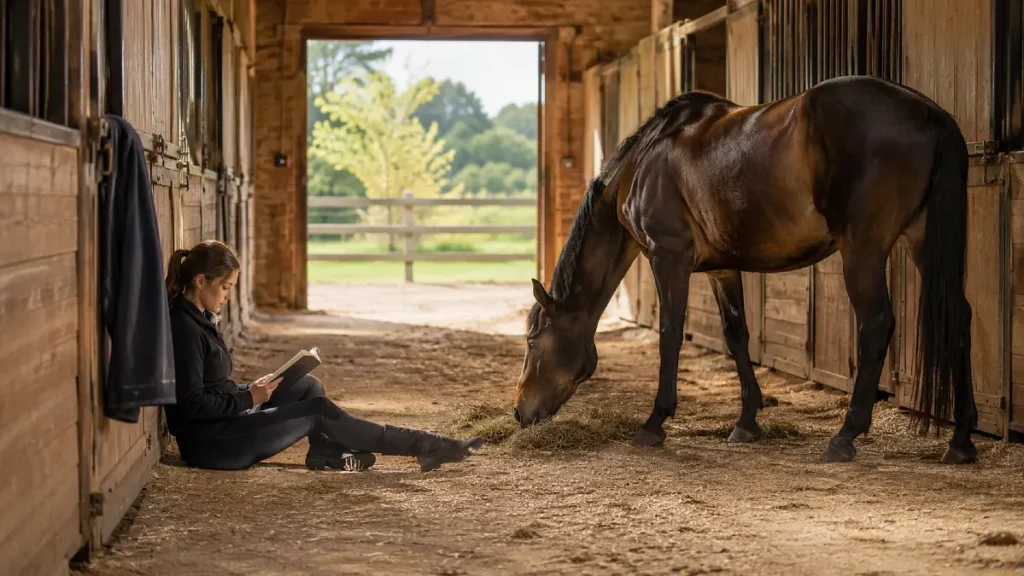
In the first 7 days, do less. Your goal is simple. You want your horse to feel safe. New horses have high cortisol, which is a stress hormone. They need to feel calm before they can learn.
Prioritize being with the horse over doing work. Spend time just sitting near them. Bring a book and read quietly. When you feed or clean, move slowly. This helps the horse see you as a source of calm, not pressure.
The Week 1 Routine
| Time | Activity | Goal |
| Morning | Feed and groom | Create routine |
| Afternoon | 20 minutes of quiet time | Reduce stress |
| Evening | Check water and stall | Build safety |
Look for signs of calm. Does the horse lower its head? Does it lick or chew? These are signs that the horse is relaxing. If the horse paces or stares, keep your distance. Give the horse space to learn its new area.
Week 2: Building Your Communication Foundation
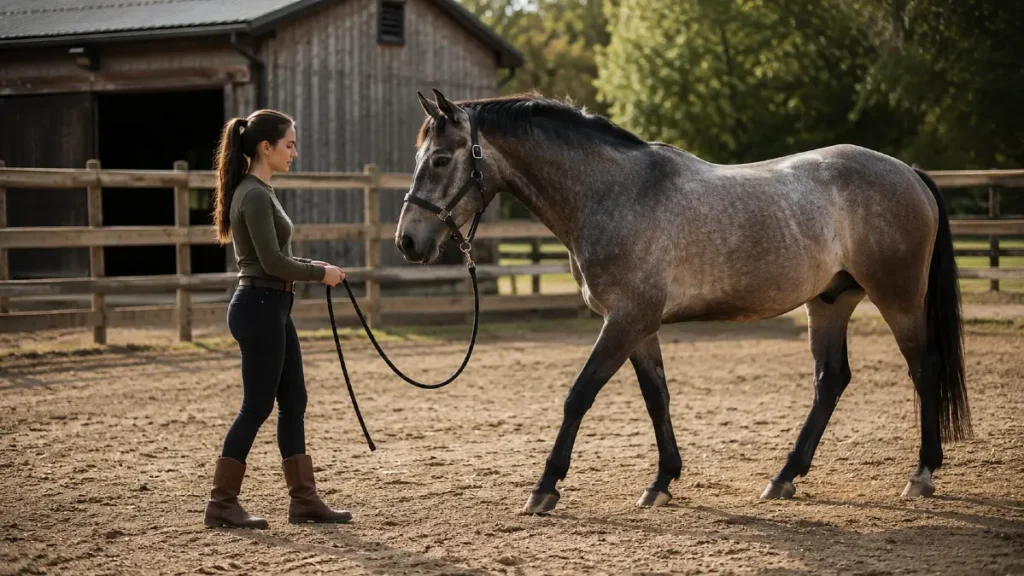
Now that the horse is calm, start asking for small things. This is when you start horse trust exercises. Focus on leading and respecting your space. Do not use force. Use clear, small signals.
If you want the horse to move, touch the lead rope gently. Reward the horse with a scratch or a treat when they move with you. This is positive reinforcement. You want the horse to see you as a leader who is fair and kind.
Signs to Watch For
| Sign | Meaning |
| Ears pinned back | The horse feels defensive or upset |
| Soft eye | The horse is relaxed and willing |
| Tail swishing | The horse feels annoyed or distracted |
Keep your voice low. Use the same words every time. If you say “walk” today, use that same word tomorrow. Consistency helps the horse learn the rules faster.
Week 3: Deepening the Bond Through Shared Experience
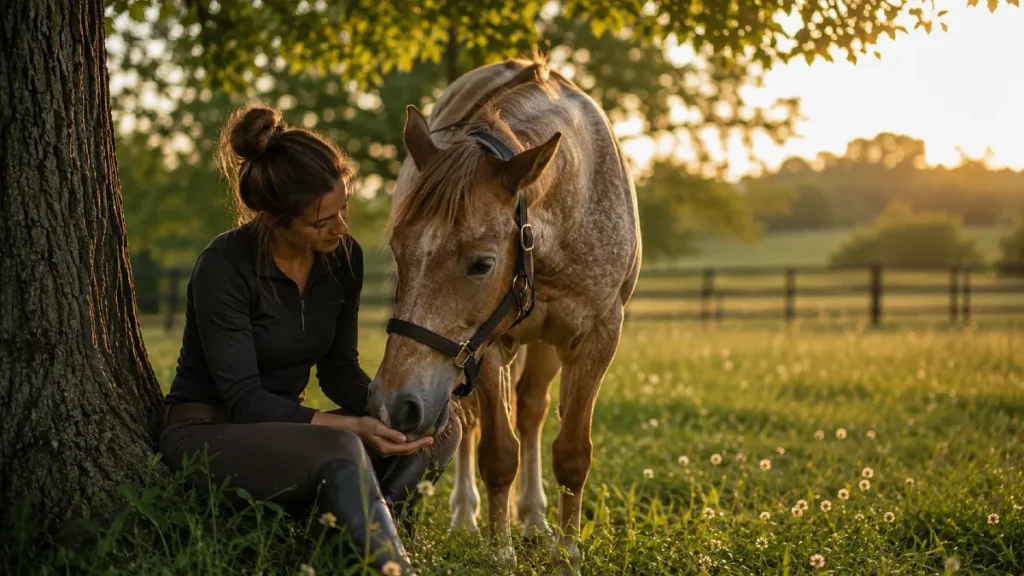
By week 3, your horse should know your routine. Now, you can do more together. Grooming is a great way to bond. Horses groom each other to lower heart rates. When you brush your horse, pay attention to the spots they enjoy.
Hand grazing is another powerful tool. Walk the horse to a patch of grass. Let them eat. Sit with them. This mimics natural social bonding.
You can also start low pressure desensitization. Bring a safe object like a soft towel near the horse. Let them sniff it. If they stay calm, reward them. This teaches the horse that new things are not scary.
The Myth of Dominance
Many people feel pressure to act like an alpha. They think they must push the horse around to get respect. Modern science shows this causes fear, not trust. A good leader provides safety and clear rules. Be kind, be fair, and be consistent. That is how you earn real respect.
Week 4: Establishing Your New Normal
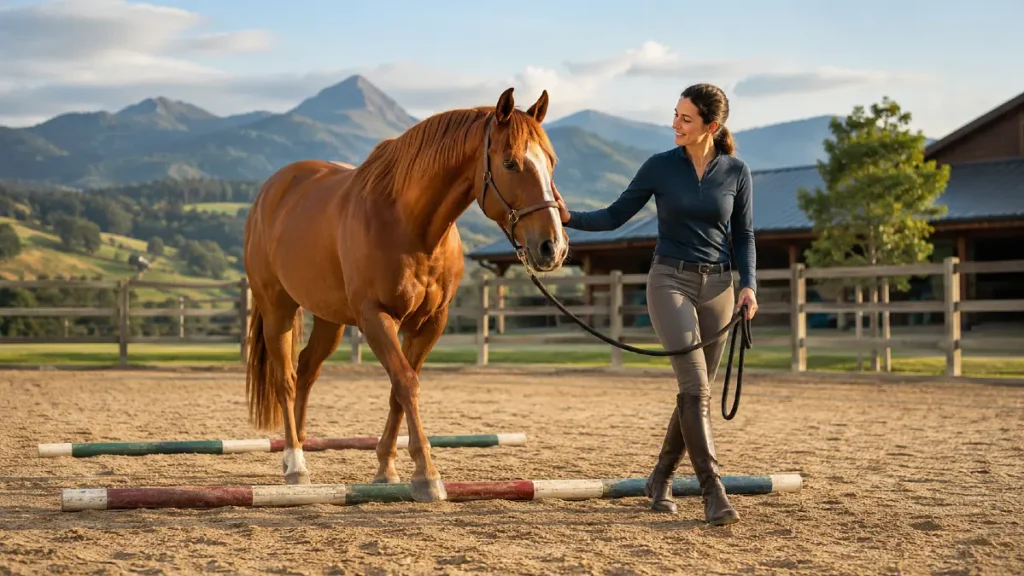
In the final 4, bring everything together. Combine your groundwork with short, low pressure sessions. You might lunge the horse or practice walking over poles. Keep these sessions short.
Focus on positive reinforcement horse training. If the horse does a good job, reward them right away. This builds a “trust bank account.” Every positive interaction adds a deposit. Every scary or aggressive interaction makes a withdrawal. You want a full account.
If you feel stuck, call a professional. There is no shame in asking for help. It is better to get help early than to struggle for months.
The Trust Bank Account
| Action | Result |
| Consistent routine | Deposit |
| Calm praise | Deposit |
| Yelling or force | Withdrawal |
| Ignoring boundaries | Withdrawal |
Signs Your Horse Trusts You
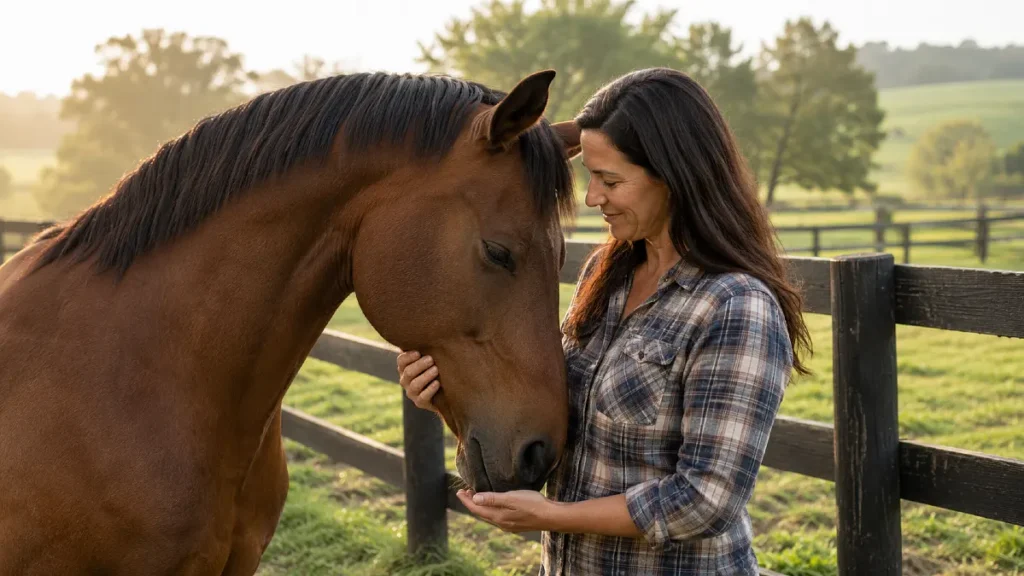
After a full month of work, you want to know if it is paying off. You do not need to guess how your horse feels. Watch for these clear signs. They tell you more than any training drill ever could.
When you walk into the stall, does your horse move toward you? That is a huge win. A horse that seeks your presence is a horse that feels safe with you.
Look at their eyes. A soft, blinking eye is a sign of peace. If your horse lowers their head or licks and chews while you are near, they are letting their guard down.
These moments are your proof. They show that your “trust bank account” is growing. Keep a small notebook to log these wins. It keeps you motivated when progress feels slow.
Key Indicators of Trust
| Behavior | What It Means |
| Soft eye | The horse feels safe and calm |
| Seeking contact | The horse views you as a friend |
| Licking and chewing | The horse is processing and relaxing |
| Staying still during grooming | The horse feels comfortable and secure |
If you do not see these signs yet, do not worry. Every horse learns at a different speed. Some horses take longer to open up than others.
Stick to the routine. Consistency is the fastest way to build that bond. Keep being the calm, fair leader your horse needs, and the trust will follow.