
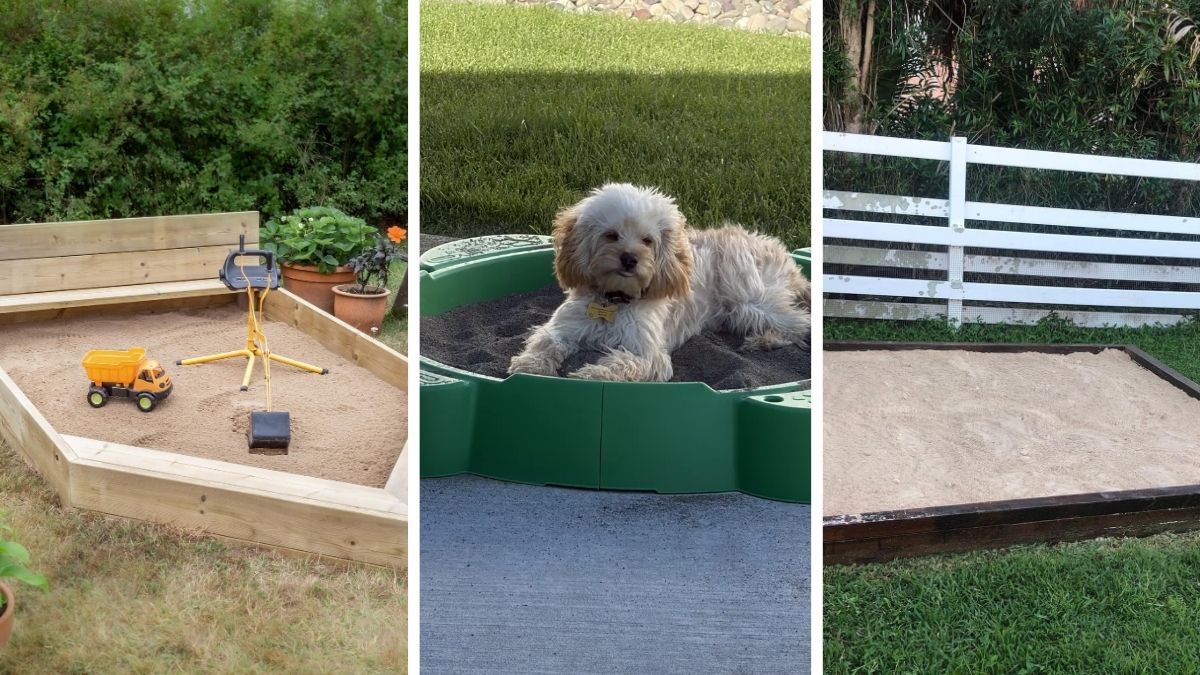
Your beautiful green lawn faces a silent, muddy enemy. Lawn damage from a digging pup turns a peaceful backyard into a frustrating minefield of dirt piles and ruined turf. You try everything to stop the behavior, yet the craters keep appearing every time you look away.
This constant destruction ruins the outdoor oasis you worked so hard to build. A messy yard limits how you entertain guests and deeply stains your home pride.
A dedicated canine play zone offers the ultimate solution for your modern backyard. These stylish sandbox designs protect your landscaping while keeping your pet active and happy.
Outdoor Pet Zones
Scale
Match the border height to your dog’s size so they can comfortably leap inside the zone easily.
Focal Point
Soften hard corners with pet-safe ornamental grasses to naturally camouflage the wooden structure framework.
Texture
Mix smooth river rocks around the perimeter to cleanly catch stray flying sand particles during digging sessions.
Budget Tip
Repurpose an old, sturdy wooden shipping crate or plastic pool to maximize functional workspace savings.
1. Faux-Wood Plastic Sandbox on a Brick Paver Patio

A lightweight, molded plastic sandbox in a muted tan shade sits directly on a weathered stone paver patio. Golden, fine-grained play sand fills the molded container, providing a soft texture next to the hard brick ground. In the background, a circular fire pit built from stacked charcoal grey retaining wall blocks grounds the rustic backyard setting.
Placing a mobile sandbox on hard hardscaping completely eliminates the risk of hidden lawn digging.
Utilizing a durable resin box on pavers or concrete ensures that stray sand stays off your grass and is easy to sweep up.
Choosing a container with a built-in lid or a neutral, earthy tone helps the structure blend seamlessly into stone patios without clashing against your outdoor furniture. This setup creates a dedicated play zone that protects your landscaping investment while keeping your pet close to family gathering spaces.
2. Blue Plastic Wading Pool Repurposed as a Garden Dig Zone

A bright blue plastic kiddie pool holds a deep layer of warm, golden sand right at the edge of a gravel garden bed. Dark burgundy ornamental grasses and smooth river rocks border the makeshift play area. The matching blue cutout lantern hanging above a nearby side table ties the vibrant pool color into the broader patio decor.
Repeating a bold accent color makes an inexpensive plastic container feel like a deliberate design choice.
Using a basic wading pool offers an instant, low-cost solution for heavy diggers. You can easily polish this casual setup by echoing the tub’s bright hue elsewhere in your yard accessories. Placing the zone near existing hardscaping, like these smooth garden stones, creates a natural transition area that catches kicked-up dirt before it reaches your grass.
3. Weathered Wood Sleeper Sandbox on Open Grass
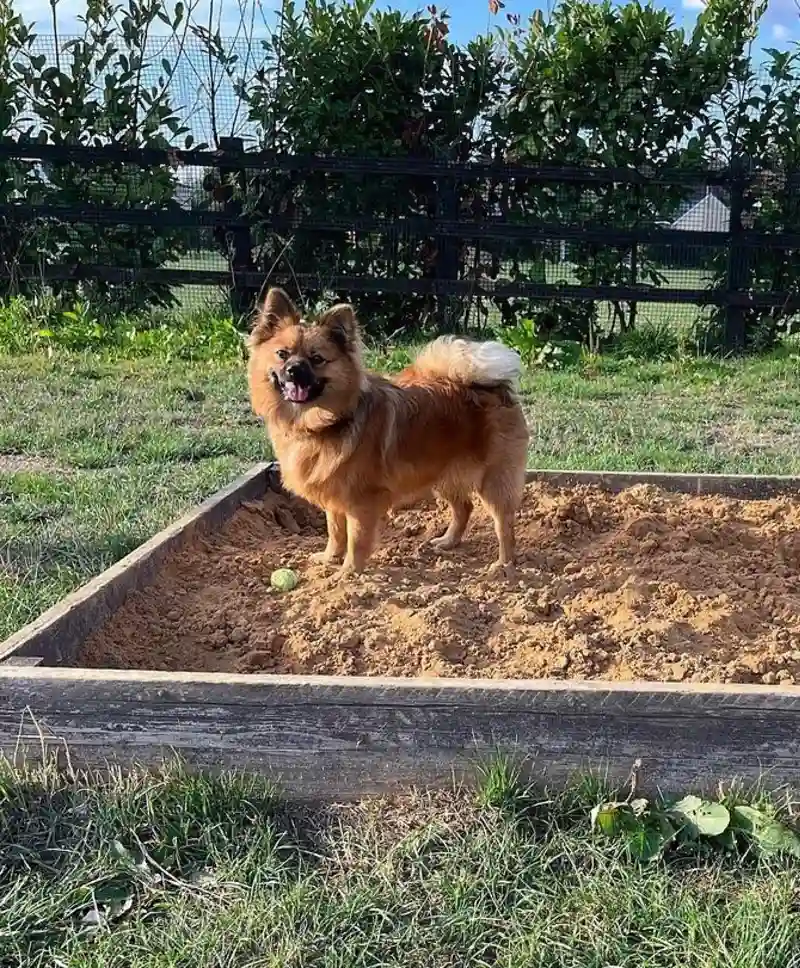
Rough, weathered wooden planks form a sturdy square border directly on a patchy green lawn. Thick, damp soil fills the frame, holding its shape in deep mounds and craters. A black post-and-rail fence backed by dense green hedges borders the spacious backyard play area.
Building a dig frame from chunky timber instantly grounds the structure into your natural landscape.
Raised beds usually hold vegetable gardens, but the same construction logic applies to canine play zones. Sinking heavy timber directly into the dirt ensures the box withstands daily roughhouse sessions. You do not even need a bottom panel when placing this frame over natural earth.
Why This Works
- Raw Timber Frame: Chunky wood softens the hard geometric edges and matches the rustic fence line.
- Damp Earth Fill: Moist topsoil holds its shape better than fine sand for dogs who love excavating deep holes.
- Open Placement: Setting the box away from the house keeps kicked-up dirt far from your clean indoor rugs.
4. Hexagonal Wooden Sandbox Tucked Behind a Stone Retaining Wall
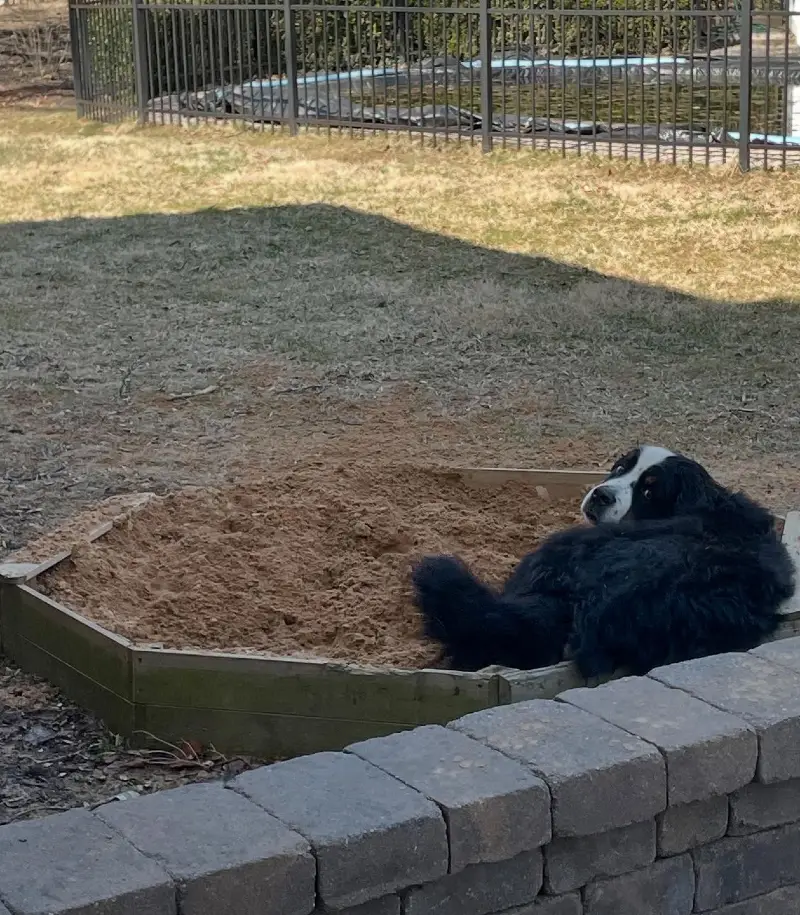
A shallow, geometric wooden frame holds loose brown sand on a stretch of dry winter grass. A low retaining wall built from charcoal brick pavers borders the foreground, creating a natural physical barrier. Deep shadows stretch across the yard toward a black metal pool fence in the background.
Tucking a play zone behind existing hardscaping hides visual clutter from your main patio view.
Using the natural tiers of your yard keeps messy activities out of direct sight lines. Low masonry walls separate human dining spaces from pet zones without blocking the view entirely. The six-sided wooden shape breaks up the harsh linear lines of the metal pool fence behind it.
5. Raw Wood Sandbox Bordered by Rough Gravel and Black Privacy Fencing
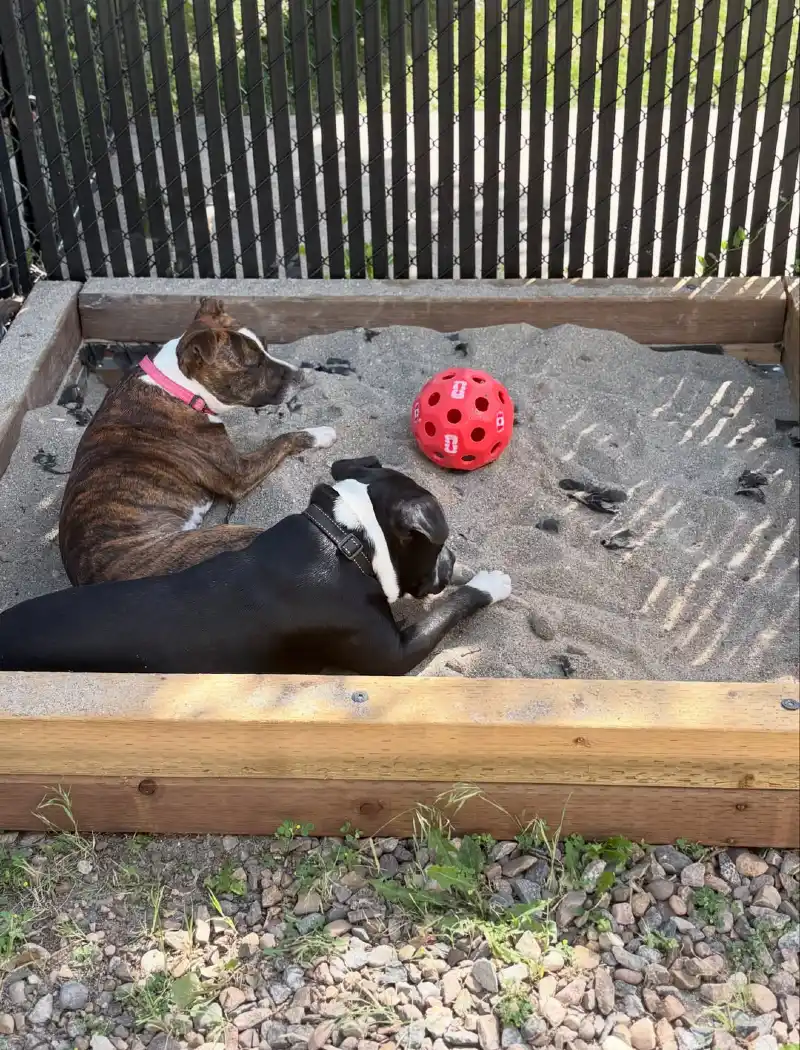
Light gray sand fills a square frame built from thick, raw lumber. Dappled sunlight casts crisp, linear shadows across the dig space through a black slatted fence. Rough gravel surrounds the wooden perimeter, creating a distinct textural boundary against the smooth sand inside.
Surrounding a wooden dig frame with a thick border of gravel traps flying dirt before it ruins your yard.
Adding a transition zone between the play area and your main landscaping prevents a massive mess. Coarse rocks naturally scrape off dusty paws as your pet steps out of the box. You can match the stone color to your existing pathways for a cohesive, intentional outdoor design.
Quick Decorating Tips
- Budget version: Repurpose leftover construction lumber for the walls and secure the corners with cheap metal brackets.
- Renter tip: Assemble a freestanding frame over a heavy rubber mat so you never have to dig into the property’s soil.
- Pro move: Install commercial grade landscaping fabric underneath the gravel moat to stop invasive weeds from sprouting through the stones.
6. Interlocking Charcoal Composite Border with Wood Mulch Surround
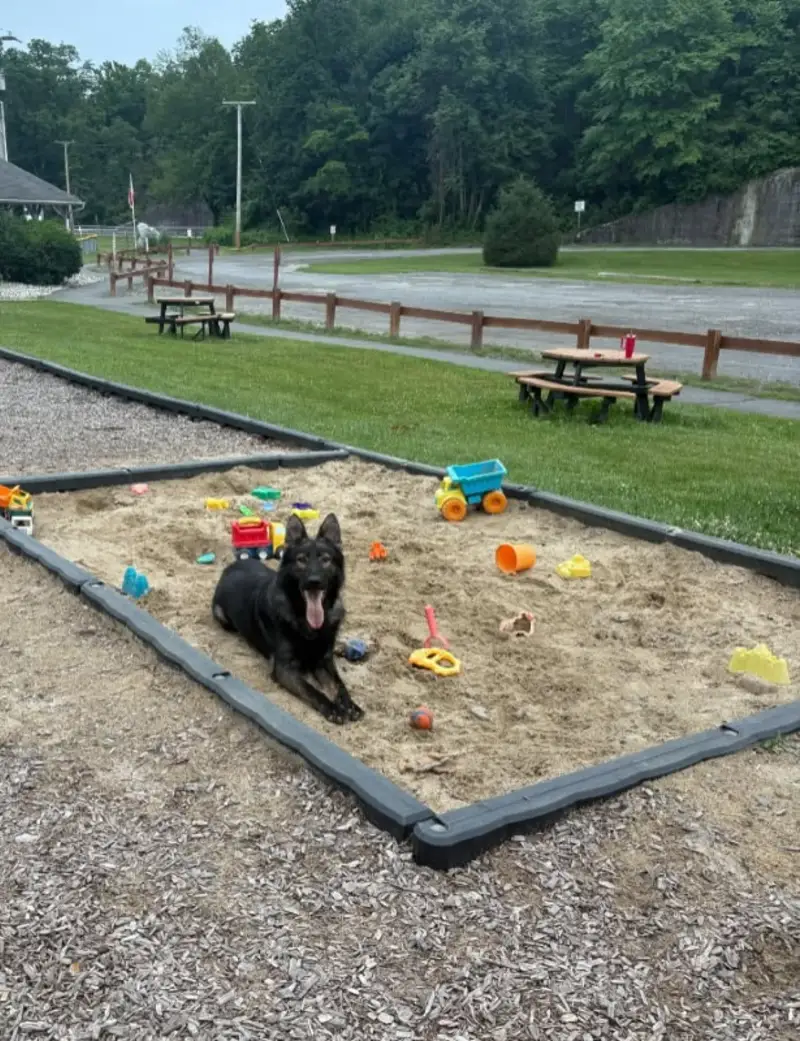
A large rectangular play zone features a dark charcoal composite border that locks together tightly to hold deep tan sand. Bright blue, yellow, and orange plastic trucks scatter across the soft surface under crisp, diffused daylight.
Rough wood mulch packs tightly around the outer edges, transitioning into a vibrant green lawn with wooden picnic tables.
Opting for heavy composite landscape timbers creates a durable, weather-resistant boundary that handles large breed energy.
Siting a spacious sandbox within a larger mulched bed isolates flying sand from your pristine grass. These modular plastic borders lock into place securely with heavy ground stakes, offering a flexible layout that you can expand over time. Adding colorful outdoor toys encourages focused play, keeping your dog mentally stimulated while preserving the rest of your yard.
7. Deep-Sided Raw Lumber Sandbox in an Open Grassy Yard

Thick, light-colored wooden planks form a deep rectangular sandbox filled with soft, golden sand. Several fluffy dogs stand inside the tall timber walls under a soft, overcast sky. Vibrant green grass grows right against the raw wood base, while a long brown privacy fence lines the distant property boundary.
Building tall, deep wooden walls keeps sand firmly contained even during high-energy multi-dog play sessions.
Deep-sided boxes prevent enthusiastic diggers from kicking material onto the surrounding lawn. Stacking two or three rows of rot-resistant timber creates a sturdy retaining edge that doubles as a built-in boundary. This approach maintains a clean yard profile while giving heavy diggers plenty of depth to explore safely.
Why This Works
- Double-Stacked Timber: Tall wooden walls create a deep trench that traps flying sand inside the play zone.
- Unfinished Wood: The raw, light-toned lumber ages naturally outdoors and blends beautifully with green lawns.
- Reinforced Corners: Sturdy internal corner posts provide structural support to handle the weight of shifting sand and active pets.
8. Large Square Plywood Sandbox Filled with White Sand in a Garden Border
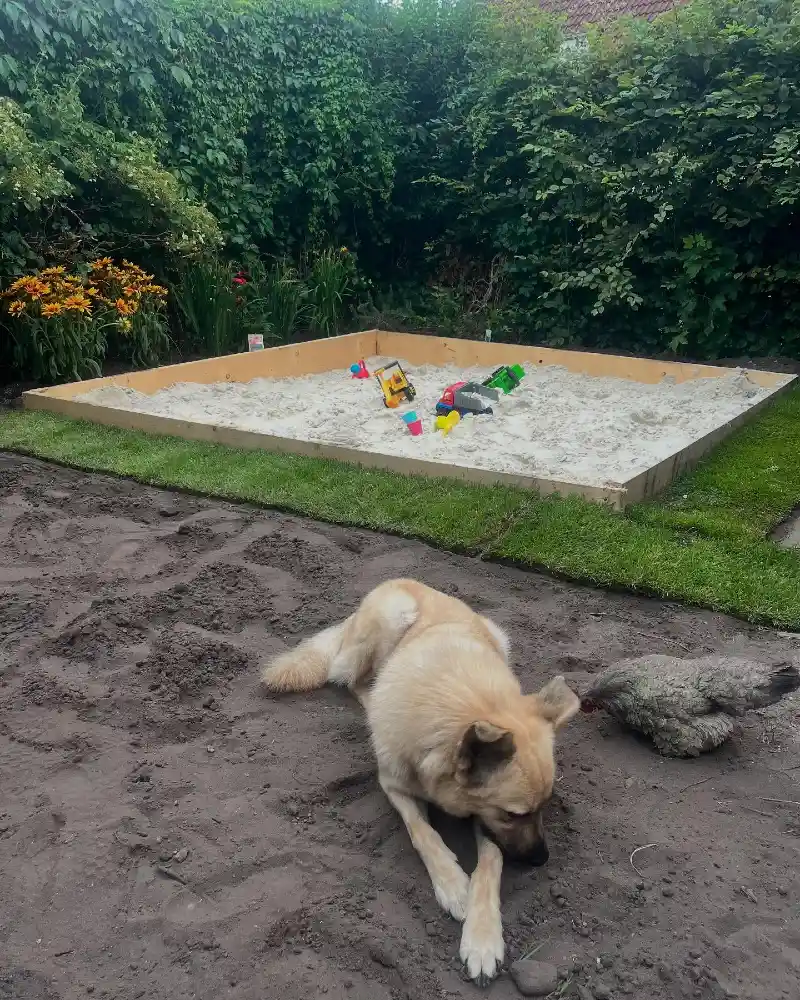
A spacious square sandbox built from light plywood planks sits right against a dense, towering green privacy hedge. Fine, bright white play sand fills the enclosure, dotted with colorful toy dump trucks under soft, even daylight. Fresh green sod borders the wooden structure, transitioning into a large foreground patch of dark, turned earth.
Contrasting ultra-white play sand against rich garden greenery makes a canine play zone feel crisp and intentional.
Choosing high-contrast white sand instantly brightens a shaded backyard corner. Framing the box with clean strips of turf creates a tidy transition zone before the rest of the open yard begins. This layout successfully isolates the digging activity to a designated spot while keeping the surrounding garden beds immaculate.
9. Wooden Sandbox with Adjustable Blue Canopy and White Protective Liner
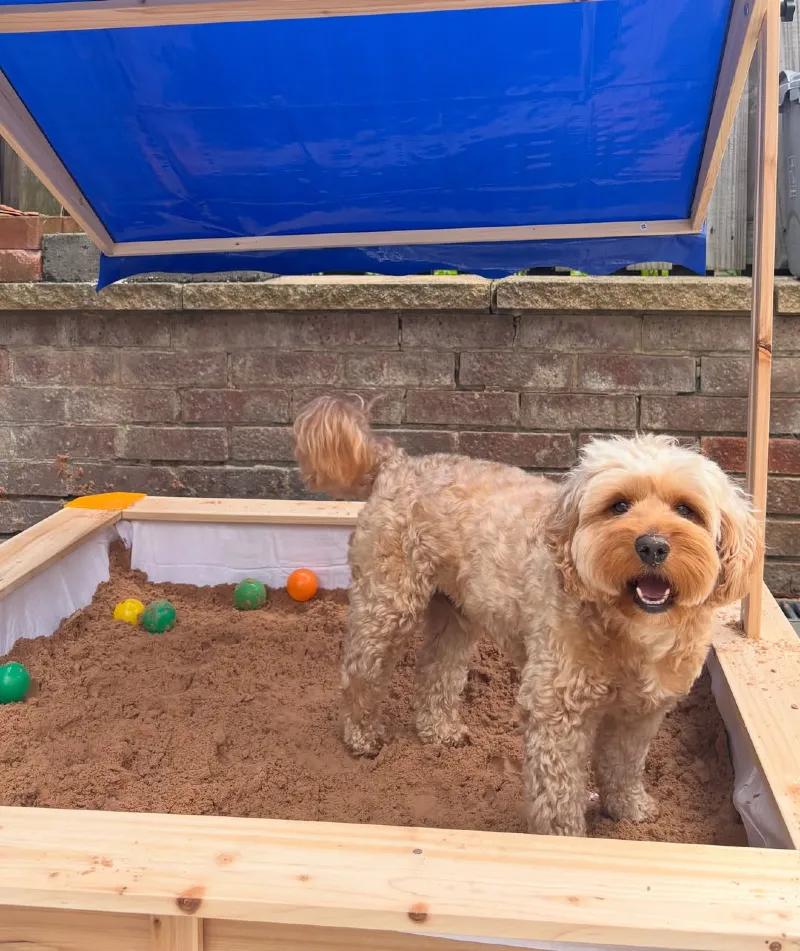
A light-toned wooden sandbox features a vibrant blue vinyl canopy overhead, casting a soft shadow across the play area. Inside the clean timber frame, a white fabric liner holds a deep bed of damp, rich brown sand. Several colorful plastic play balls in shades of green, yellow, and orange lie scattered across the floor.
Adding a built-in overhead canopy shields your pet from harsh afternoon sun while keeping rain from turning the sand into a muddy mess.
Positioning this covered station against a weathered brick wall provides extra wind protection and structural grounding. The bright blue fabric introduces a cheerful splash of color that enlivens traditional masonry backdrops. Choosing a model with a fabric liner prevents the sand from washing away into the soil below during heavy downpours.
Quick Decorating Tips
- Budget version: Fasten a waterproof blue tarp over a standard wooden frame using basic PVC pipes.
- Renter tip: Select a freestanding canopy model that disassembles completely so you can pack it up easily when moving.
- Pro move: Install an adjustable awning crank to lower the fabric roof completely as a protective cover when the box is not in use.
10. Built-In Timber Sandbox Against a Concrete Foundation Wall
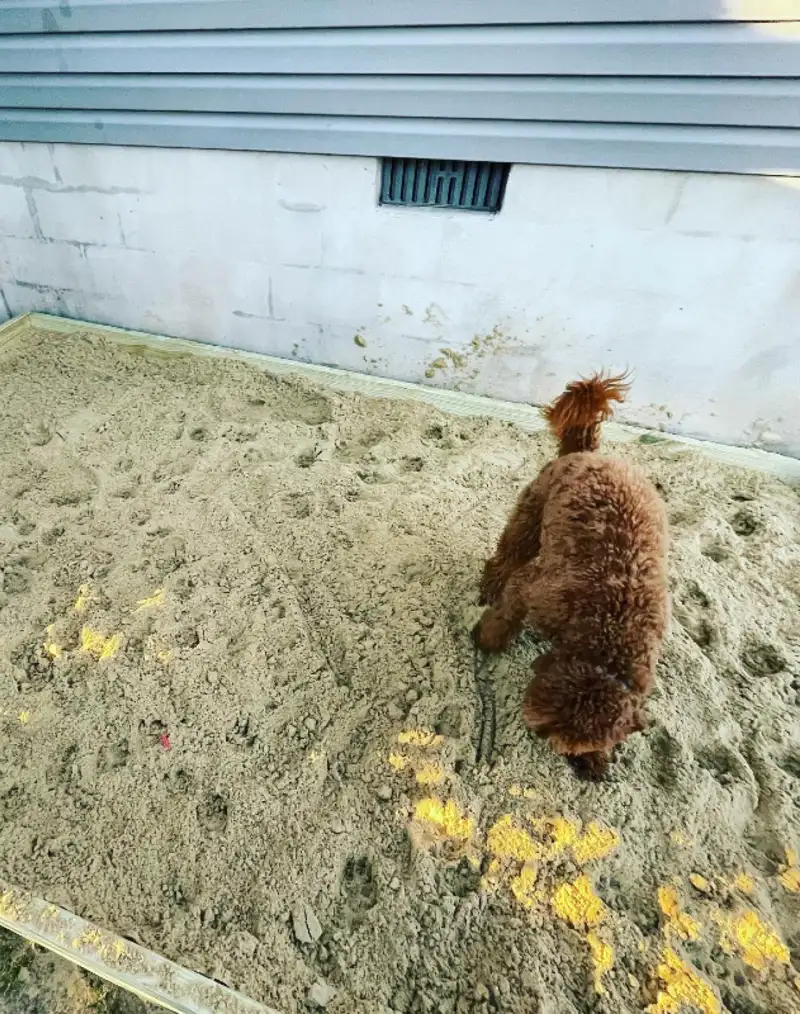
A massive rectangular play area features clean, light-colored wood framing tightly hugging a white concrete block foundation. Textured, tan play sand fills the wide enclosure, capturing warm patches of golden afternoon sunlight. Above the sturdy masonry wall, clean lines of horizontal slate-gray vinyl siding border the entire backyard space.
Building a dig zone against an unused foundation wall repurposes dead yard space while preserving your main lawn.
Siting the sandbox in a side yard or along the back wall keeps the central grass completely open for entertaining.
The existing home structure acts as an automatic structural anchor, framing one side of the play area automatically. Just ensure you build around any low-level foundation vents to maintain proper airflow to the crawlspace beneath.
11. Classic Green Resin Turtle Sandbox on a Smooth Concrete Patio
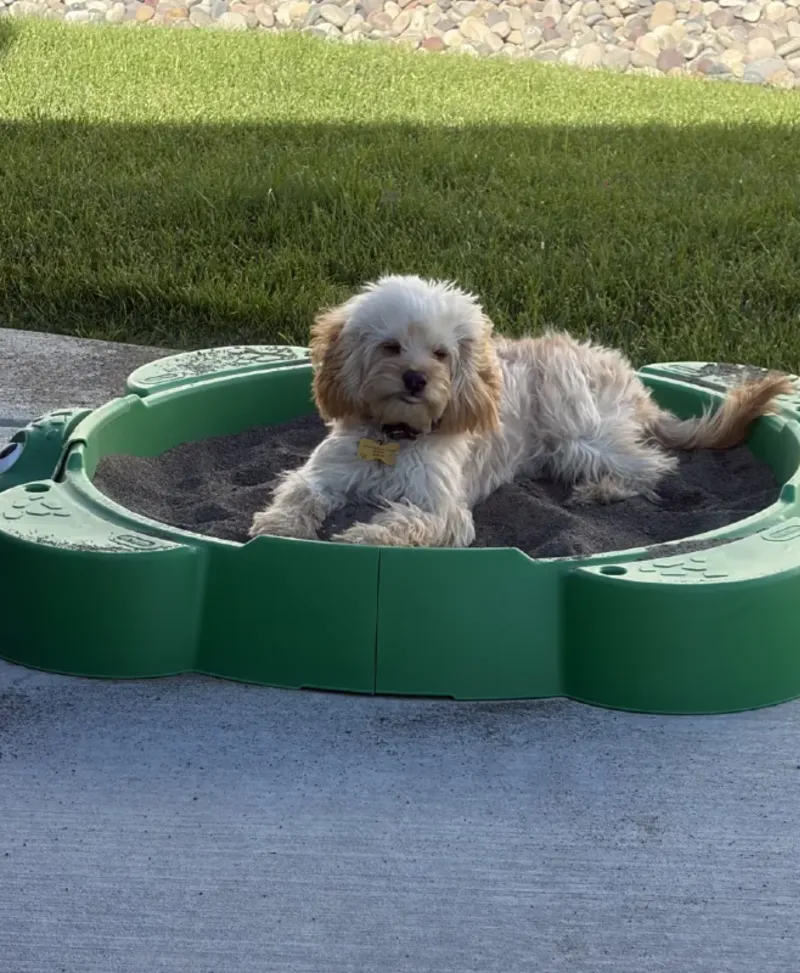
A classic emerald green plastic turtle sandbox sits on a smooth gray concrete patio. Dark, moody sand fills the scalloped resin shell, creating a snug resting spot for a fluffy cream pup. Crisp afternoon shadows stretch across the lawn, while a border of smooth river stones lines the bright green turf background.
Repurposing a nostalgic childhood toy creates an instant, low-cost digging solution that keeps your lawn intact.
Utilizing pre-molded children’s play structures eliminates the need for complex backyard construction projects. The hard resin frame blocks sharp claws from scratching the underlying concrete path completely. Placing this vibrant green piece near a stone border softens the transition between structural patio zones and open grass.
Why This Works
- Molded Resin Body: Thick, weather-resistant plastic stands up to heavy scratching and is incredibly easy to hose down.
- Concrete Base: Sitting the heavy tub on solid masonry prevents your dog from tipping the container or digging underneath the frame.
- Playful Color Choice: The bright garden-green hue echoes the natural lawn tones while adding a nostalgic touch to outdoor spaces.
12. Dark-Stained Timber Sandbox in Front of a White Rail Fence
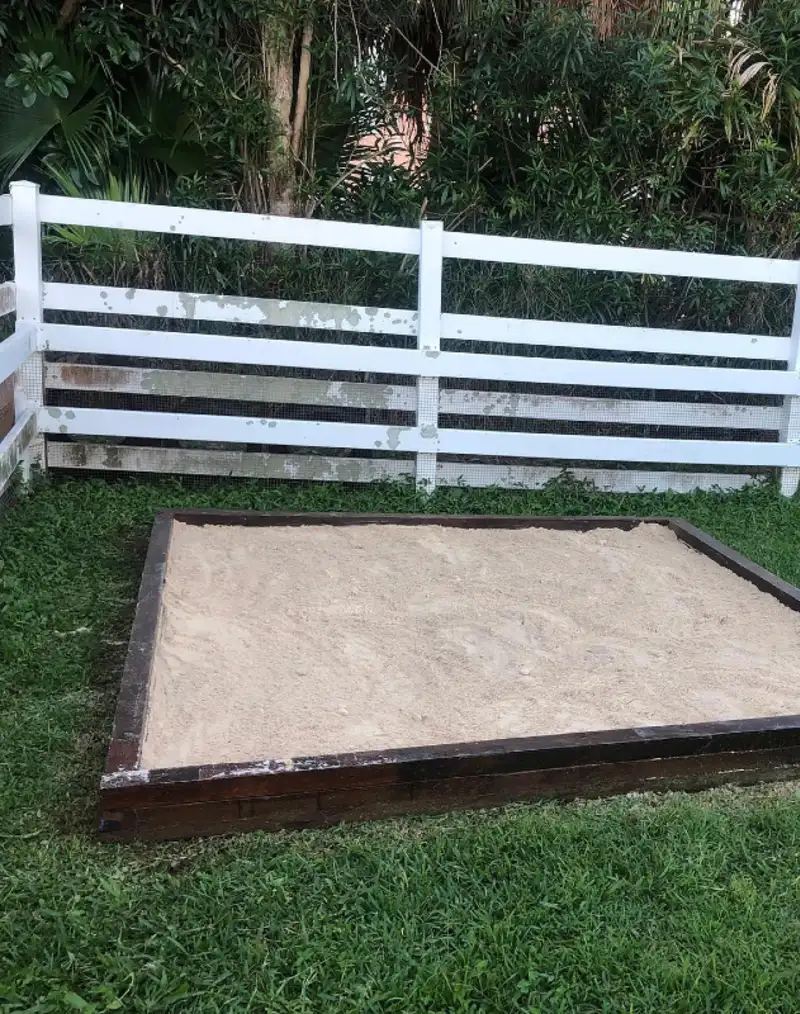
A low square sandbox built from dark timber holds smooth, pale sand on a lush lawn. Behind the frame, a white three-rail ranch fence creates a bold graphic contrast. Dense green tropical foliage rises directly behind the clean boundary under soft, diffused daylight.
Coating your wooden sandbox frame in a deep espresso or charcoal hue turns basic backyard materials into high-contrast landscape architecture.
Contrast helps anchor casual pet zones within a beautifully manicured garden. Placing the square box flat against your property fence grounds the structure so it feels intentional rather than randomly dropped onto your turf. This dark finish effortlessly masks muddy splashes and grass stains from active backyard play.
13. High-Sided Retaining Wall Timber Sandbox on an Open Lawn

Three tiers of thick, light-brown retaining wall timbers create a deep, high-walled square sandbox. Fine, beige sand unevenly fills the tall enclosure under bright, direct sunlight. A slender tan dog wearing a black harness stands inside, while mature green trees line the open yard behind the structure.
Stacking multiple rows of heavy retaining wall timbers creates a completely secure containment zone that withstands aggressive digging.
Utilizing proper interlocking landscaping timbers gives the structure the necessary weight to stay safely anchored without extra braces. The tall perimeter acts as a clear visual boundary that separates the active play space from the rest of your manicured turf. This deep design allows you to add substantial sand volume, satisfying dogs that naturally love to burrow deep underground.
Quick Decorating Tips
- Budget version: Substitute brand-new landscaping timbers with thick, untreated construction lumber scraps to form the high borders.
- Renter tip: Avoid pinning the frame into the turf with rebar; instead, use heavy internal corner brackets to keep the structure freestanding.
- Pro move: Line the interior wood walls with heavy-duty landscape fabric to stop sand from leaking through the timber seams over time.
14. Cream Modular Plastic Playpen with a Paw-Print Mat on Light Wood Floors
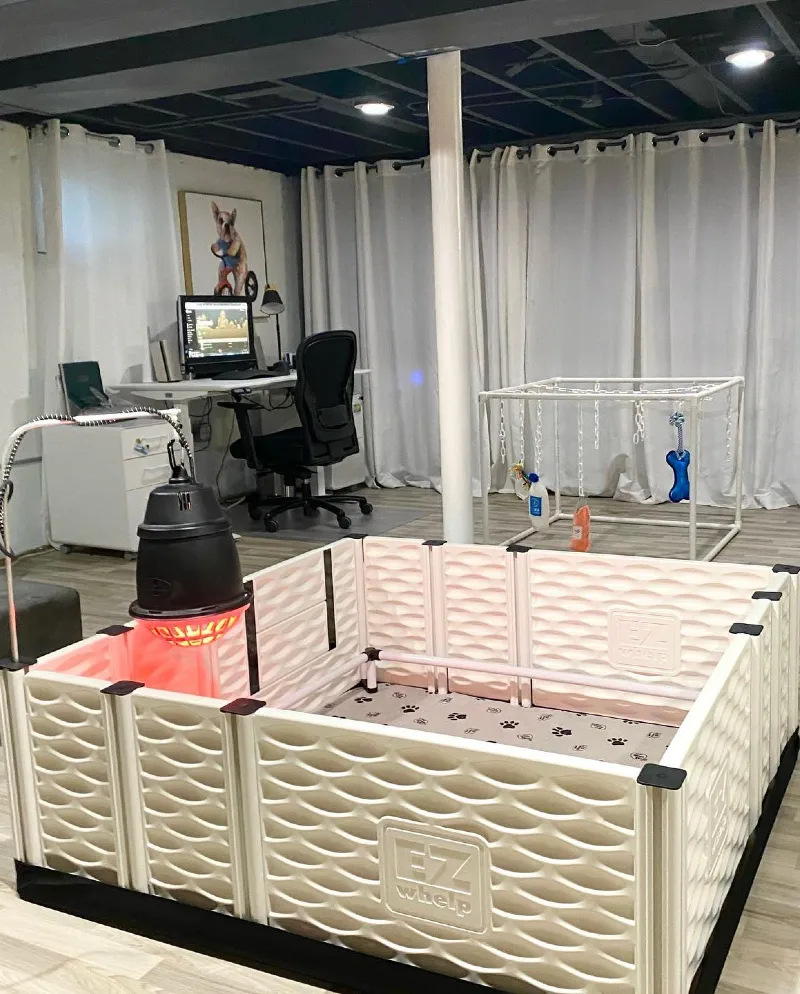
A textured, cream-colored modular plastic pen stands centered on a light-toned faux-wood floor. A glossy black heat lamp hangs over one corner, casting a warm red glow onto a gray paw-print floor mat inside. In the background, long white grommet curtains drape down from a dark, exposed ceiling with recessed spotlights.
Moving pet zones indoors with modular plastic walls allows you to manage digging tendencies during bad weather.
Utilizing lightweight resin panels protects your interior walls while offering a customizable footprint for active puppies. Bright white curtains hung along the perimeter soften the clinical look of plastic gear and hide storage clutter. This indoor setup keeps vulnerable young pets cozy, secure, and completely separated from delicate outdoor landscaping.
15. Dusty Pink Painted Wooden Sandbox Positioned Against a Tan Brick Exterior Wall
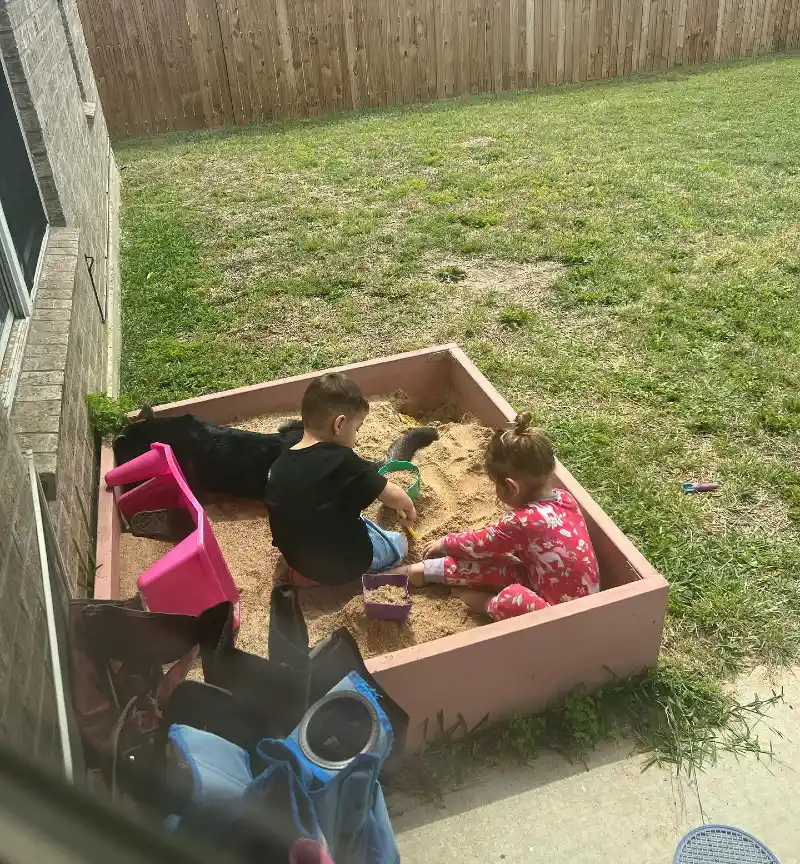
A square wooden sandbox painted a soft, matte dusty pink sits flush against a light tan brick home foundation. Fine golden sand fills the enclosure, where a dark-furred dog relaxes alongside children playing with colorful plastic buckets under bright daylight. A wide green lawn stretches out toward a weathered wood privacy fence in the background.
Coating a simple wooden play frame in a muted pastel hue turns a basic backyard utility into a playful design feature.
Placing the structure right at the intersection of a concrete patio walkway and the lawn maximizes stable ground while keeping the grass clear.
The unexpected choice of a dusty rose paint finish softens the hard angles of the brick masonry. This clever placement keeps outdoor playtime visible from indoor windows while establishing a dedicated, lived-in family zone.
Quick Decorating Tips
- Budget version: Coat an inexpensive pine frame with leftover exterior trim paint or outdoor sample pots to achieve a custom color without extra cost.
- Renter tip: Keep the heavy wooden box free-floating on the lawn edge rather than pinning it down to ensure zero permanent property damage.
- Pro move: Coordinate the sandbox paint color with your home’s window shutters or patio throw pillows to create an intentional, integrated color palette.
16. Dark-Stained Wooden Sandbox with Striped Canopy Against a Rustic Stone Wall
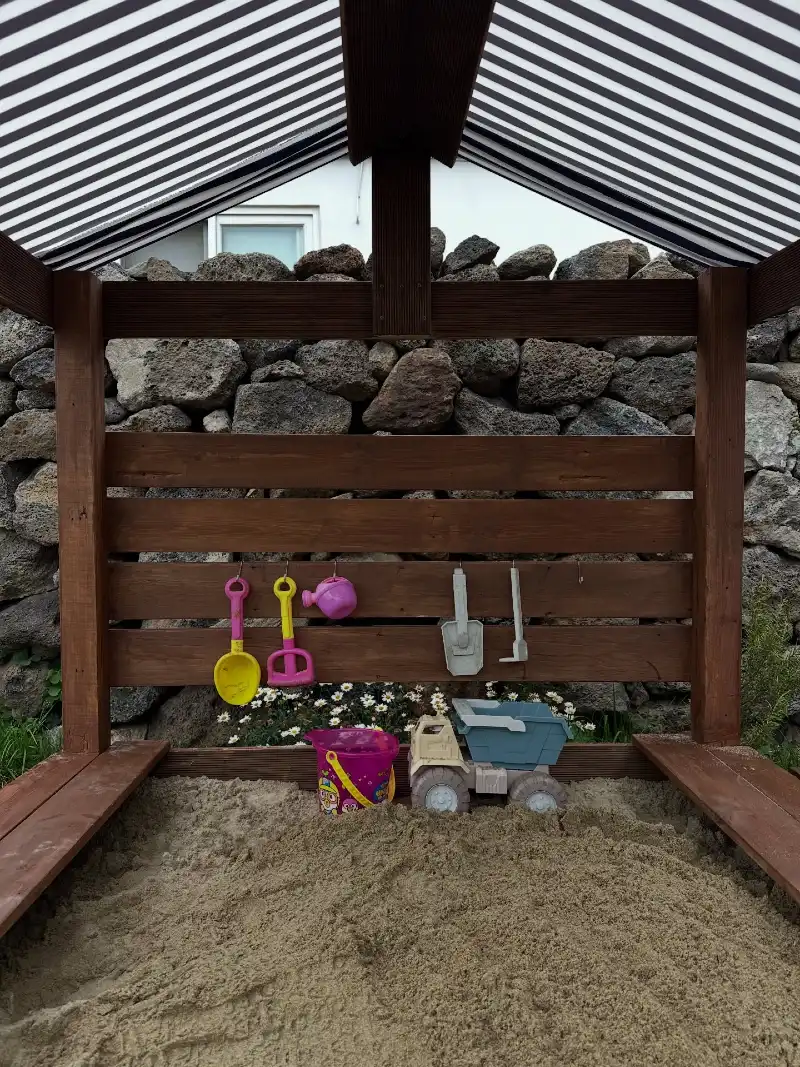
A rich, dark-stained wooden frame features a classic charcoal-and-white striped fabric roof pitched over a deep bed of textured tan sand. Bright plastic shovels, a small watering can, and toy scoops hang neatly from hooks along the horizontal back slats. In the background, a heavy retaining wall built from rugged, stacked grey volcanic rocks frames a cluster of delicate white daisies.
Utilizing vertical back slats to hang pet toys keeps the digging area organized and prevents items from getting lost in the sand.
Building a covered station directly against a stone retaining wall provides excellent wind shelter and anchors the structure within a rustic garden landscape.
The bold pattern of the striped canopy injects a graphic, playful element that contrasts sharply with the raw, heavy textures of the rock backdrop. Incorporating wide side ledges offers a clean, stable place for you to sit and relax while interacting with your pet.
17. Boat-Shaped Timber Sandbox with Built-In Bench and Toy Excavator
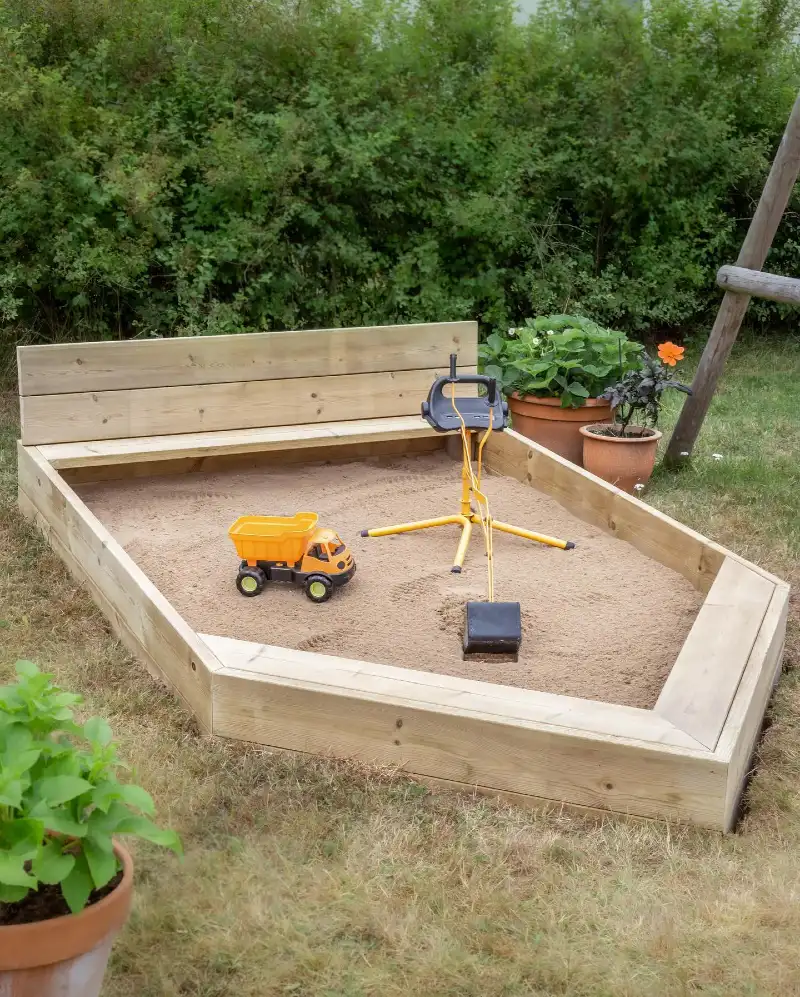
Clean, light-toned wooden planks form an elongated boat-shaped sandbox set into a patchy garden lawn. Fine, smooth tan sand fills the geometric enclosure, which features a bright orange toy dump truck and a yellow metal sit-on digger. In the background, lush green shrubs and rustic terracotta pots holding vibrant flowers soften the structured timber edges.
Building an elongated, boat-shaped frame turns a functional backyard dig zone into an architectural focal point.
Choosing an unexpected ship-inspired silhouette breaks up the predictable square lines of standard outdoor play gear. An integrated high wooden backrest creates a comfortable bench for sitting while supervising your puppy’s digging adventures. Surrounding the structural wood with warm clay planters establishes a lived-in, styled garden border that blends organically with natural hedges.
Why This Works
- Geometric Pointed Bow: The tapered timber front maximizes the internal digging runway while minimizing the structure’s footprint on your grass.
- Integrated Wood Bench: Sturdy horizontal backing boards provide built-in seating and help block kicked sand from flying into background bushes.
- Terracotta Accents: Earthy clay pots anchor the wooden frame into the landscape and introduce pops of living color right at the edge.
18. Raised Plastic Sand Table Placed Against a Brick Wall on a Covered Patio

A durable molded plastic sand table features a bright red rectangular basin supported by thick, tan plastic legs. Smooth, fine sand fills the elevated play tray, creating a cozy and comfortable nesting spot for a spotted dog. In the shadowy background, a textured red brick exterior wall and coiled black garden hoses establish a practical, utilitarian patio storage zone.
Elevating the digging surface onto a sturdy play table prevents your dog from tracking mud and grass into your home.
Utilizing a raised sand table is an exceptional strategy for small or senior dogs who prefer digging while standing comfortably.
The elevated design completely isolates the sand from your lawn, ensuring zero turf damage from aggressive scratching or burrowing. Tucking this compact structure into a covered patio corner shields the sand from unexpected downpours while keeping your pet close to the family.