
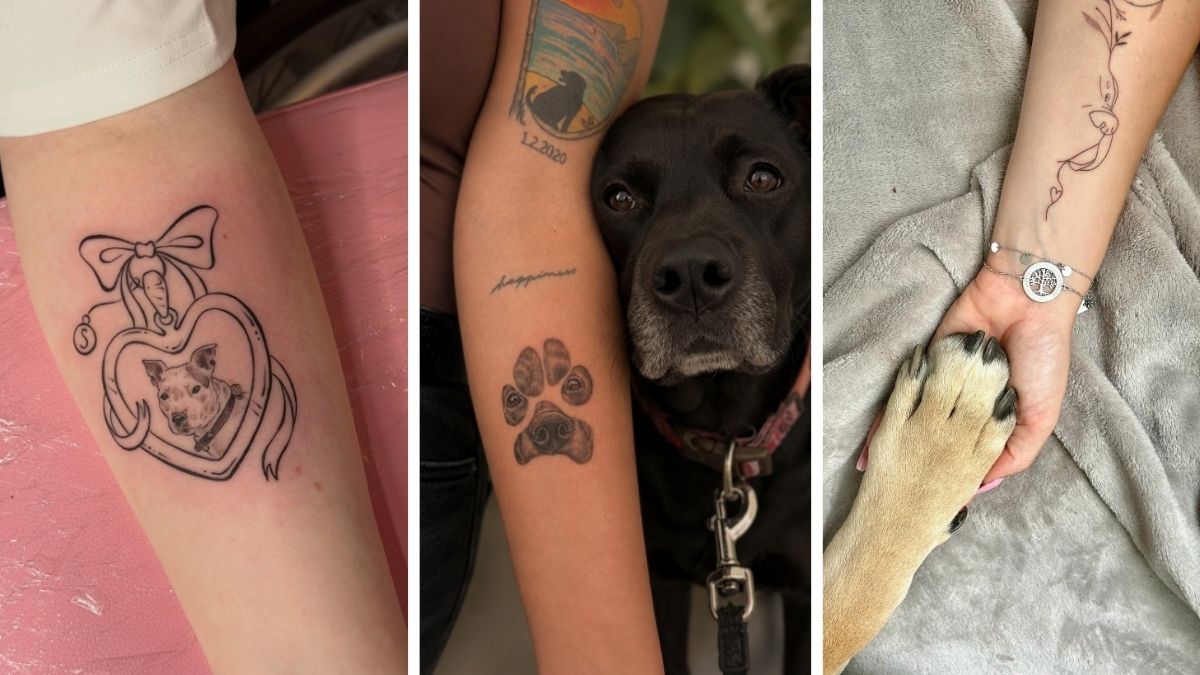
A paw print can hold love, but it rarely captures the whole dog. Many dog moms want ink that feels personal, yet most search results repeat the same tiny symbols and vague silhouettes. That can make a lasting choice feel oddly forgettable.
Your tattoo should carry the quirks, routines, and memories that made your bond yours. A generic design may miss the story you want to keep close.
Mom tattoo ideas explore portraits, names, florals, outlines, and meaningful objects. Each one offers a richer way to honor your dog in ink.
Choosing meaningful ink: details that tell your dog’s story
Start with the detail you remember first. A crooked ear, favorite toy, collar tag, or sleeping pose can say more about your dog than a common symbol.
Bring several clear photos to your tattoo artist. Include front, side, and relaxed views so they can capture markings, proportions, and expression with care.
- Portrait detail: Choose one clear facial feature that makes your dog easy to recognize.
- Placement tip: Match the design size to an area where fine details will remain readable.
- Ink safety: Book a licensed artist who follows proper hygiene and aftercare practices.
- Memorial touch: Add a date, flower, phrase, or object tied to a shared memory.
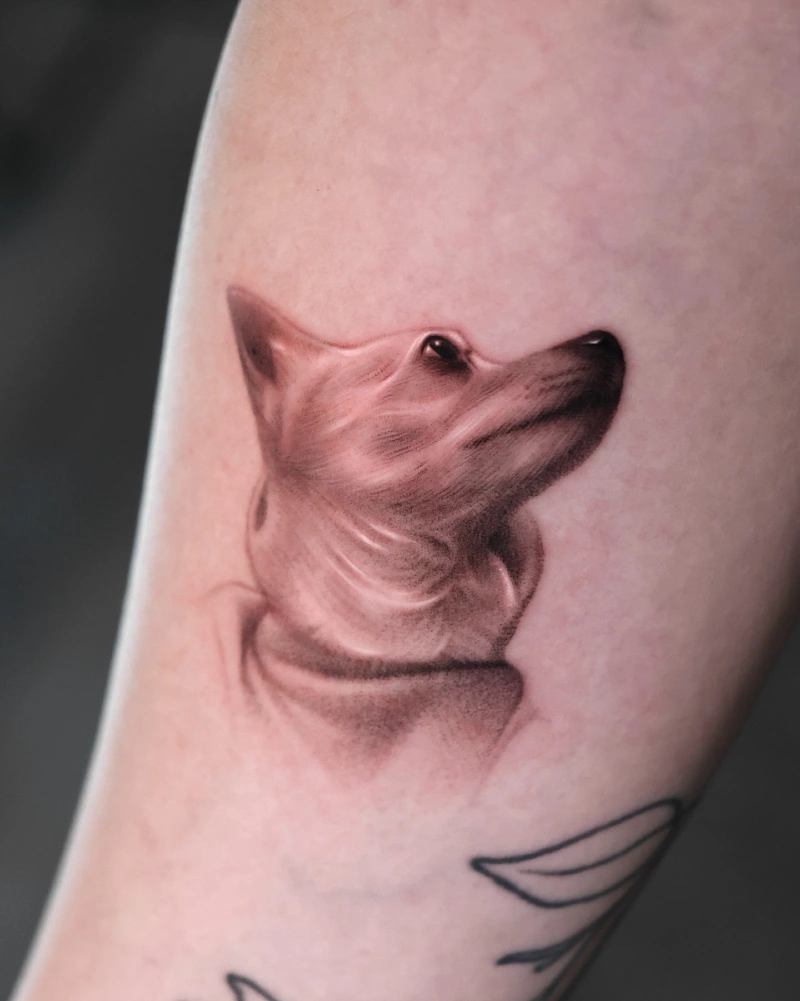
1. Fine line dog portrait looking upward
Perspective captures a fluffy brown dog peering directly through a heart shape carved into the sand, with a bright blue sky filling the negative space. The texture of the damp sand edges contrasts beautifully with the soft, ringlet-like fur of the pup.
Framing your subject through natural elements adds an immediate artistic narrative to your pet photos.
Try sculpting a shape like this near the shoreline where the sand packs firmly enough to hold an edge. Once the heart is ready, position your camera low to capture your pet looking through it for that perfect, intimate shot.
2. One Line Dog and Owner Portrait With a Tiny Heart
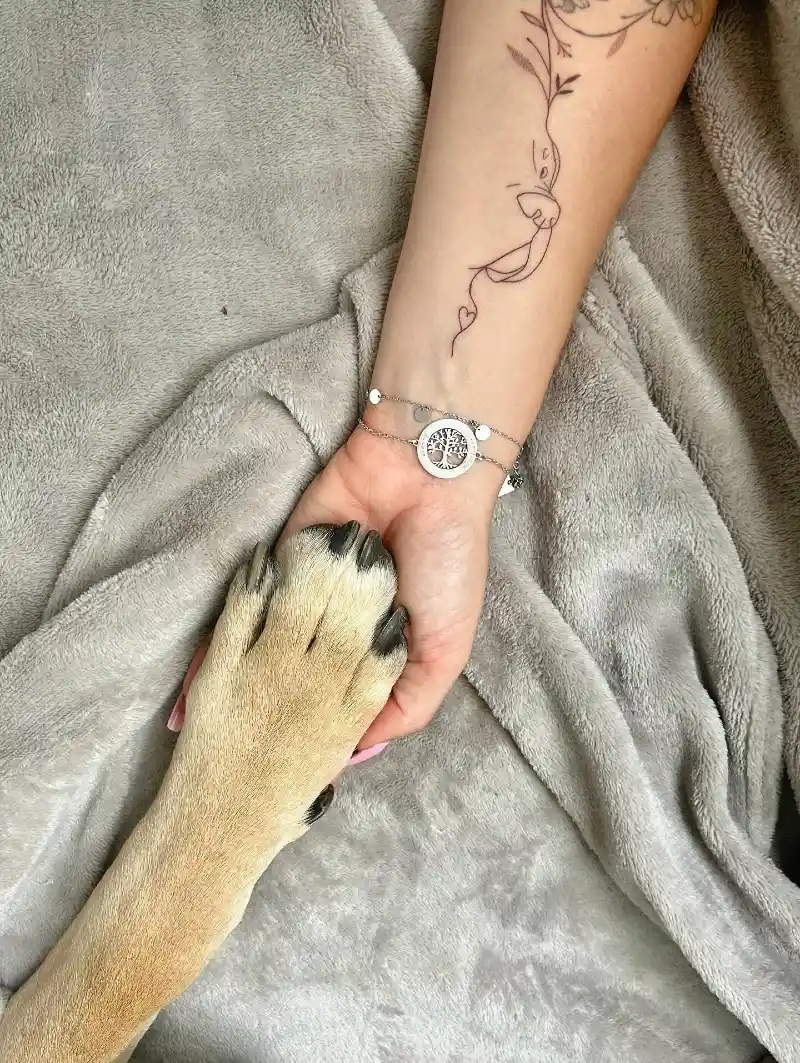
Fine line tattoo runs down the inner forearm, joining a woman’s profile with a dog’s face in one continuous black outline. A small heart finishes the lower curve, while the real dog’s tan paw rests in the owner’s hand against a soft grey blanket.
The hand and paw pose turns a simple line drawing into a clear symbol of trust.
Ask your artist to build the design from a photo where both profiles are easy to read. Keep the line weight light and leave open space around the faces so the shapes stay clear as the tattoo settles.
3. Tiny Realistic Paw Impression On The Inner Arm
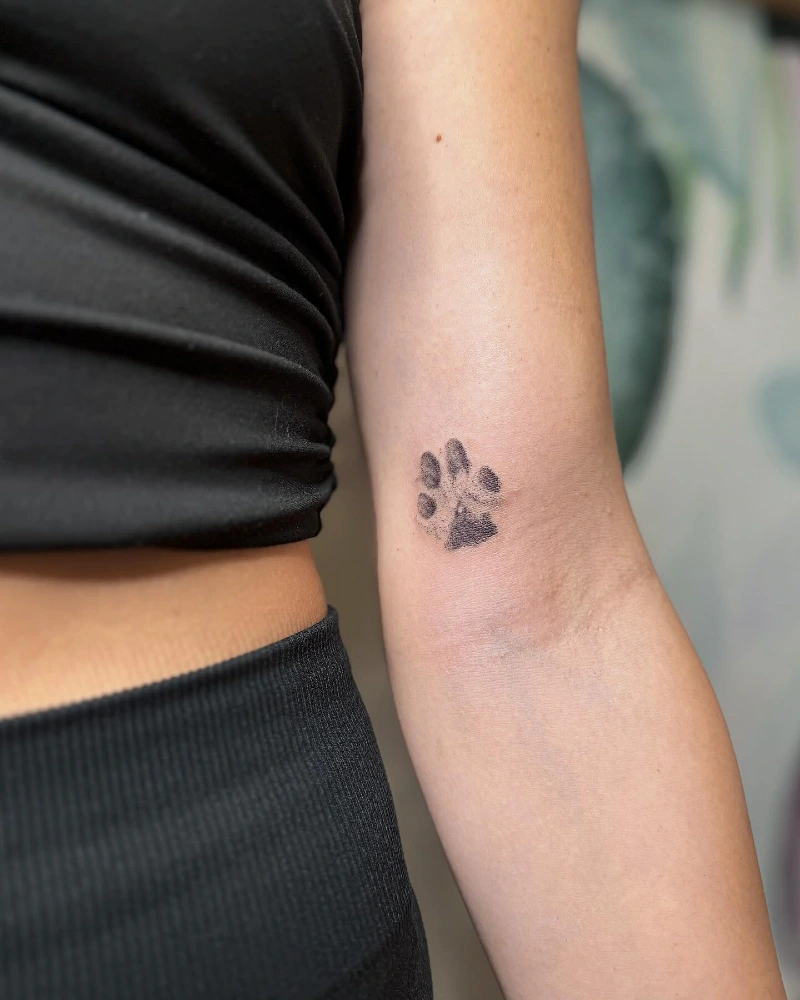
Small black and grey paw impression sits just above the inner elbow, with four uneven toe pads and a softly textured central pad. The broken edges and faint marks make it look pressed from a real dog’s paw rather than drawn as a clean symbol.
Tiny flaws give this paw print its personal, lived in character.
Use a clear scan, ink print, or sharp photo of your dog’s actual paw impression as the reference. Keep enough space between the pads so the shape remains readable after healing, especially at this compact size.
Why this works
- Natural texture: Uneven pigment copies the soft ridges and pressure marks of a real paw.
- Small scale: The compact design feels private and easy to place without losing its meaning.
- Inner arm placement: A flat, visible area lets the print sit clearly while remaining easy to cover.
4. Minimal Dog Face Outline With a Textured Nose Print
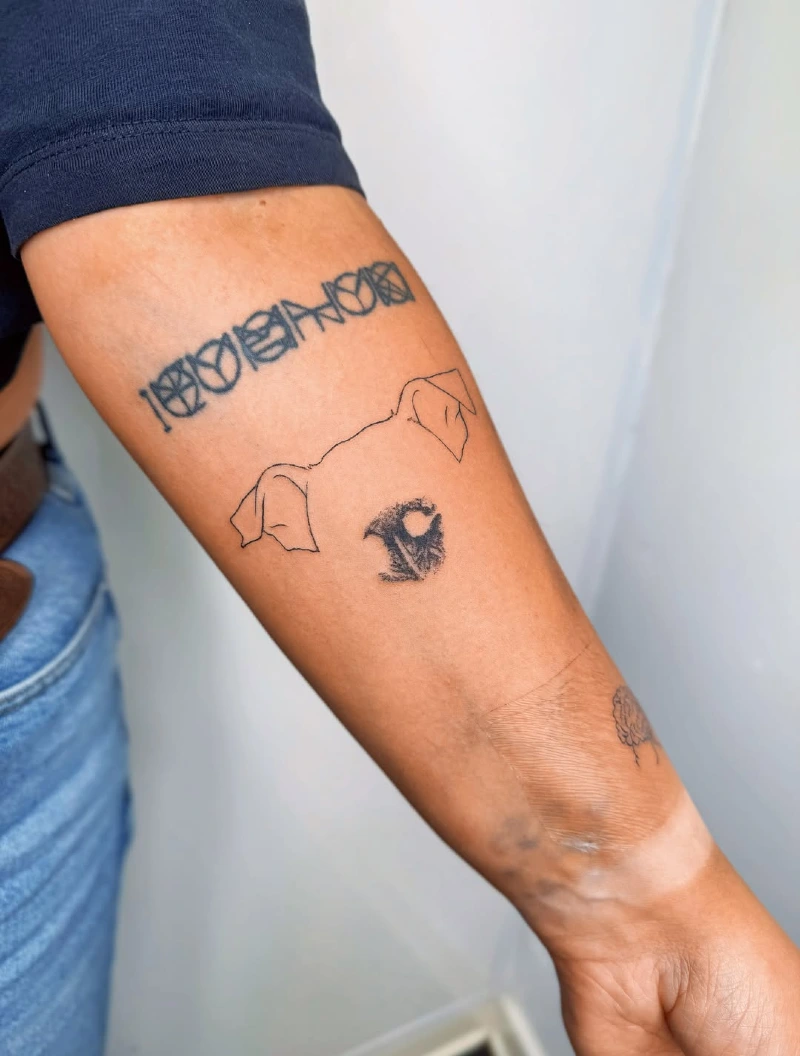
Black outline captures the dog through its floppy ears and the soft curve of its head, leaving the face mostly open. Beneath it, a dark textured nose print adds a rough, personal mark that contrasts with the clean linework.
Pairing one clear feature with a real print makes the design feel specific without adding clutter.
Use a front facing photo to map the ear shape and head width, then provide a sharp scan of your dog’s nose impression for the lower detail. Give both elements breathing room so the outline stays crisp and the textured print does not merge into nearby ink.
5. Three Tiny Color Portraits Celebrating a Dog Family
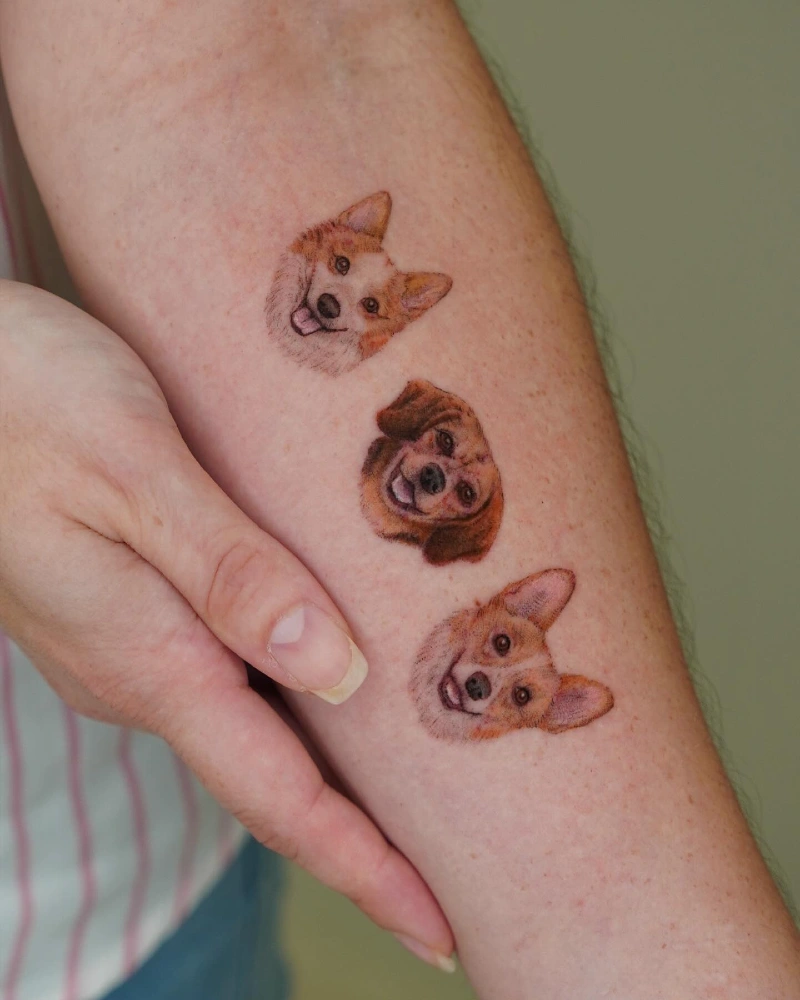
Three miniature dog faces run down the arm in a neat vertical row. Warm rust, cream, brown, and black tones bring out each dog’s different ears, markings, and bright expression, while the soft edges keep the portraits light on the skin.
A shared layout celebrates the whole pack without making every portrait compete for space.
Choose front facing photos taken in similar light so the scale and expressions feel balanced. Keep each face large enough for the eyes, nose, and coat markings to remain clear once the fine details settle.
Quick execution tips
- Budget version: Start with one portrait and leave measured space for the others later.
- Safety note: Ask how the artist expects tiny color details to age before choosing a very small size.
- Pro move: Use photos with matching head angles to make the group feel connected.
6. Tarot Card Portrait Of a Dog Mom and Her Companion
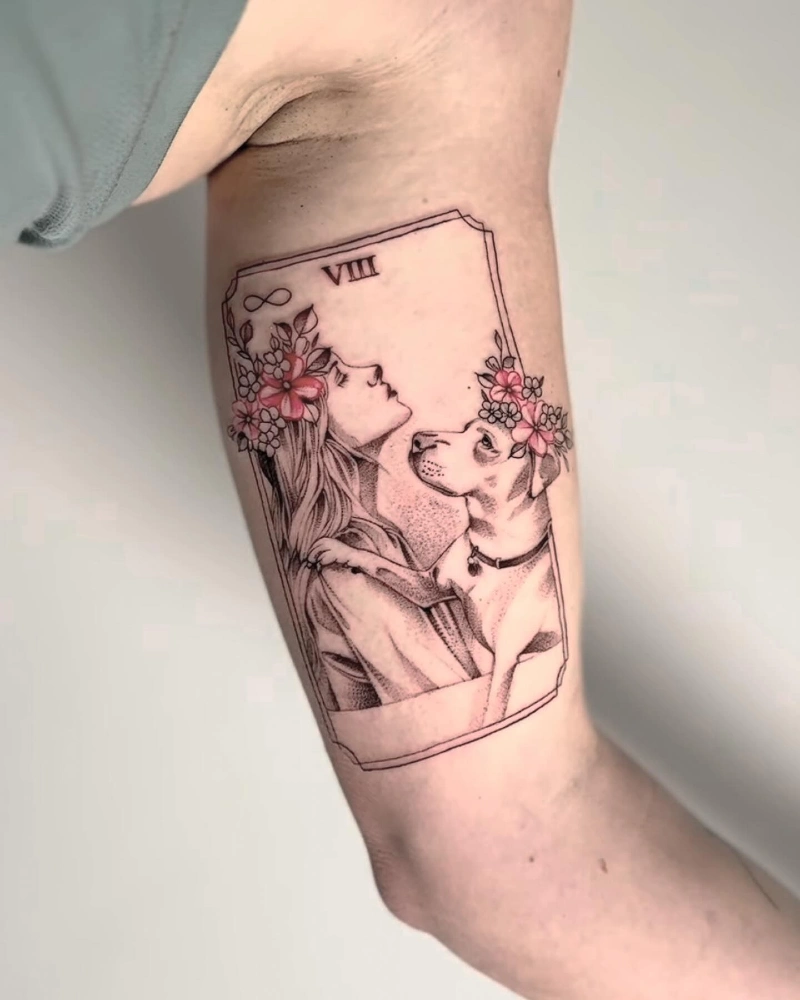
Detailed black line tattoo frames a woman and her dog inside a tarot card shape. Floral crowns, soft dot shading, a Roman numeral, and an infinity symbol add a mystical mood, while pale pink flowers bring gentle color to the scene.
The card format turns a shared portrait into a full story about loyalty and connection.
Choose one strong photo that shows how you naturally interact with your dog, then let the artist simplify clothing and background details. Keep symbolic elements limited so the faces remain the main focus and the design does not feel crowded.
Why this works
- Tarot frame: The border gives the portrait structure and makes the scene feel complete.
- Floral crowns: Matching flowers visually connect the dog mom and her companion.
- Soft color accents: Small pink details add warmth without overpowering the fine black linework.
7. Tiny Pug Rear View With a Red Heart
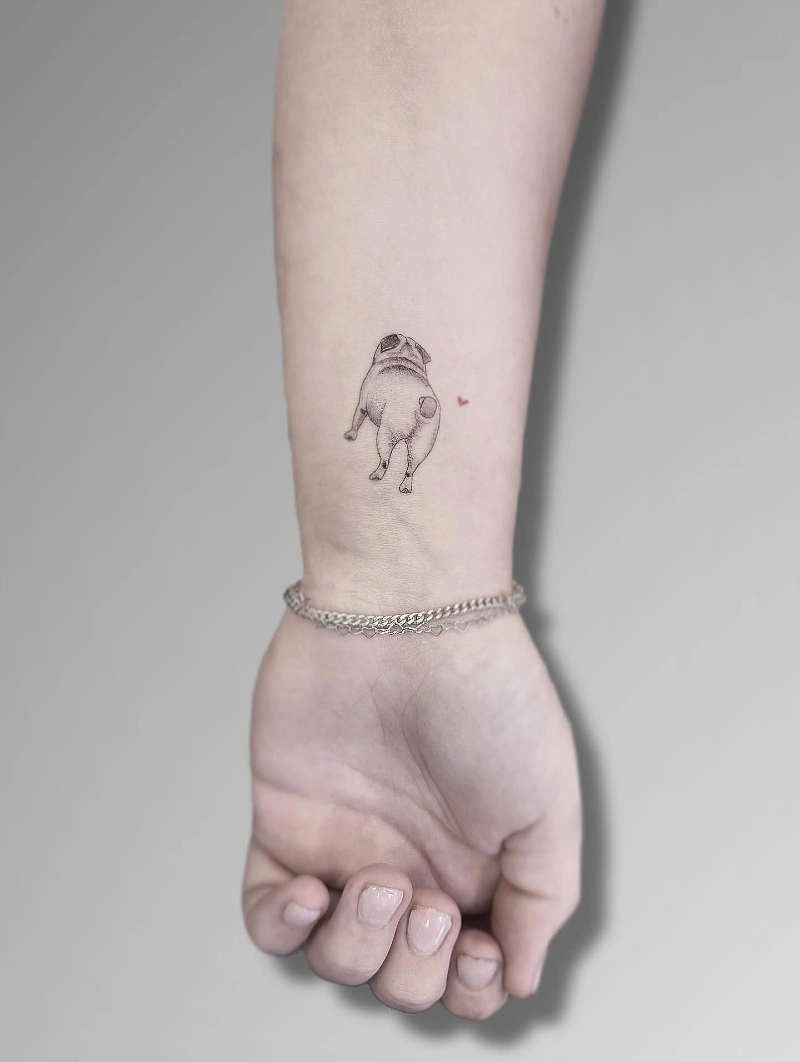
Miniature black and grey pug faces away on the inner wrist, showing its curled tail, soft wrinkles, and sturdy little stance. Beside it, a tiny muted red heart adds a warm point of color without pulling attention from the playful pose.
A familiar habit or funny angle can feel more personal than a formal face portrait.
Use a clear photo taken at your dog’s natural standing height so the body shape and tail curl stay true. Fine dot shading works well for short fur and folds, but the design needs enough size for those small marks to remain clear as it heals.
8. Paw Shaped Portrait With The Dog’s Eyes and Nose
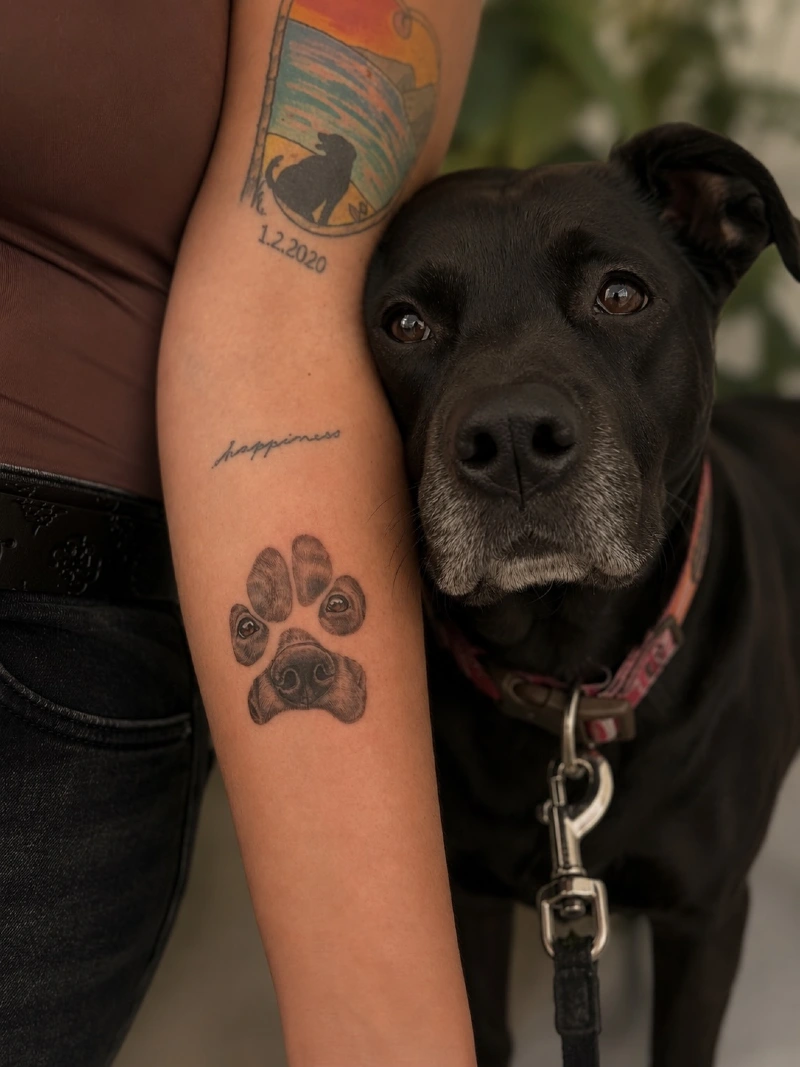
Black and grey tattoo turns the dog’s face into a paw shaped design on the forearm. Each upper pad holds one expressive eye, while the larger center pad frames the broad nose and muzzle, creating a clever portrait that still feels personal.
The paw shape works because the dog’s strongest features stay easy to recognize.
Choose a straight on photo with clear eyes and even lighting across the nose. Ask the artist to keep the pad edges soft rather than overly solid, so the facial details remain readable and the design keeps its gentle, realistic feel.
9. Mini Dog Portrait Framed By a Looping Heart
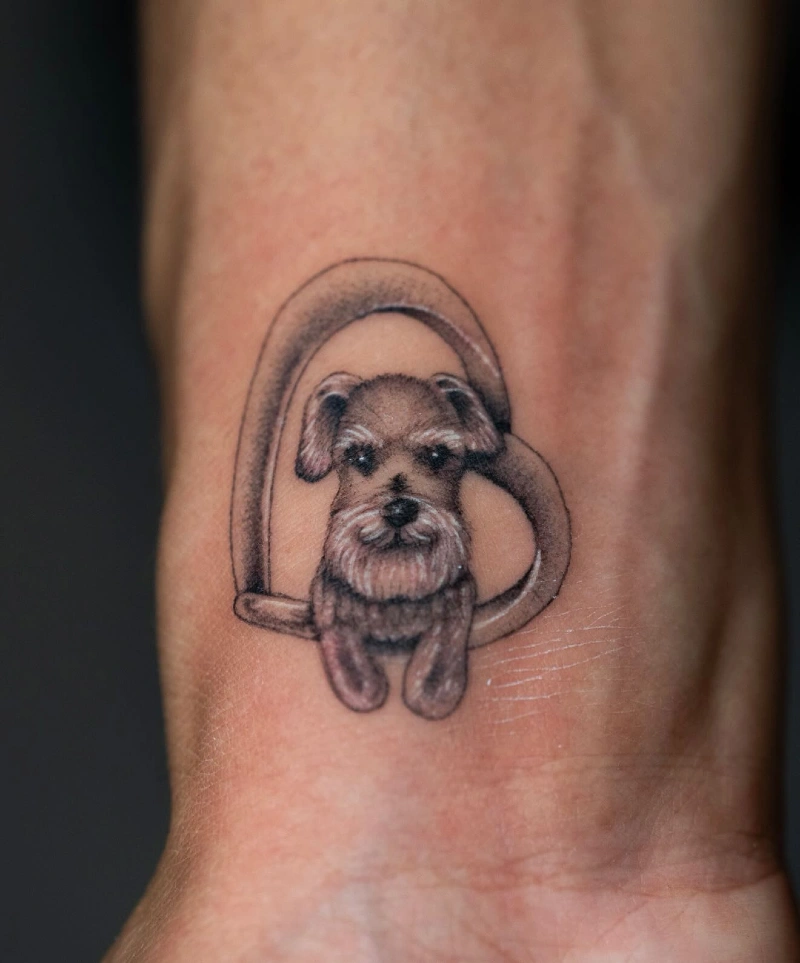
Tiny black and grey dog sits at the center of a rounded heart shaped loop on the inner wrist. Soft shading defines the floppy ears, bright eyes, wiry muzzle, and small front paws, while the open frame keeps the design light.
The heart feels less like decoration and more like a protective shape around the dog.
Use a front facing photo where the dog is sitting still and looking toward the camera. Keep the loop broad and clean so it frames the portrait without crowding the ears or blending into the fine facial shading.
Why this setup works
- Centered portrait: The balanced pose makes the small dog easy to recognize.
- Open heart frame: The curved outline adds meaning while preserving breathing room.
- Compact placement: The wrist suits a small design that feels personal and easy to glance at.
10. French Bulldog Ear Outline With a Handwritten Name
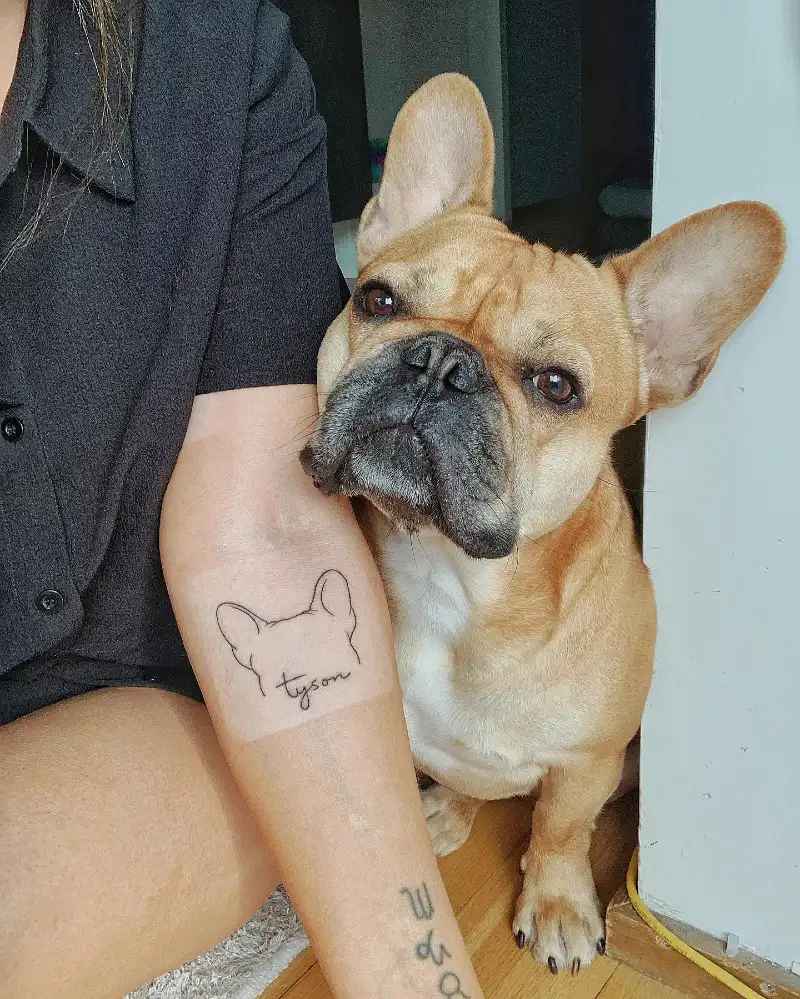
Clean black outline traces the French bulldog’s broad head and tall bat ears on the inner forearm. The handwritten name “tyson” flows beneath the silhouette, while the real tan dog sits beside the tattoo and shows how closely the ear shape matches.
A recognizable outline and familiar name can capture personality with very little ink.
Use a straight on photo where both ears are fully visible and the head is not tilted. Ask the artist to copy the natural ear angles rather than using a generic breed template, then choose lettering that stays clear at this small scale.
Quick execution tips
- Budget version: Keep the design to one continuous outline and a short handwritten name.
- Safety note: Let fresh ink heal before allowing fur, paws, or collars to rub against the area.
- Pro move: Use your own handwriting or a loved one’s script for a stronger personal link.
11. Two Dog Portraits Framed With Leafy Branches and a Heart
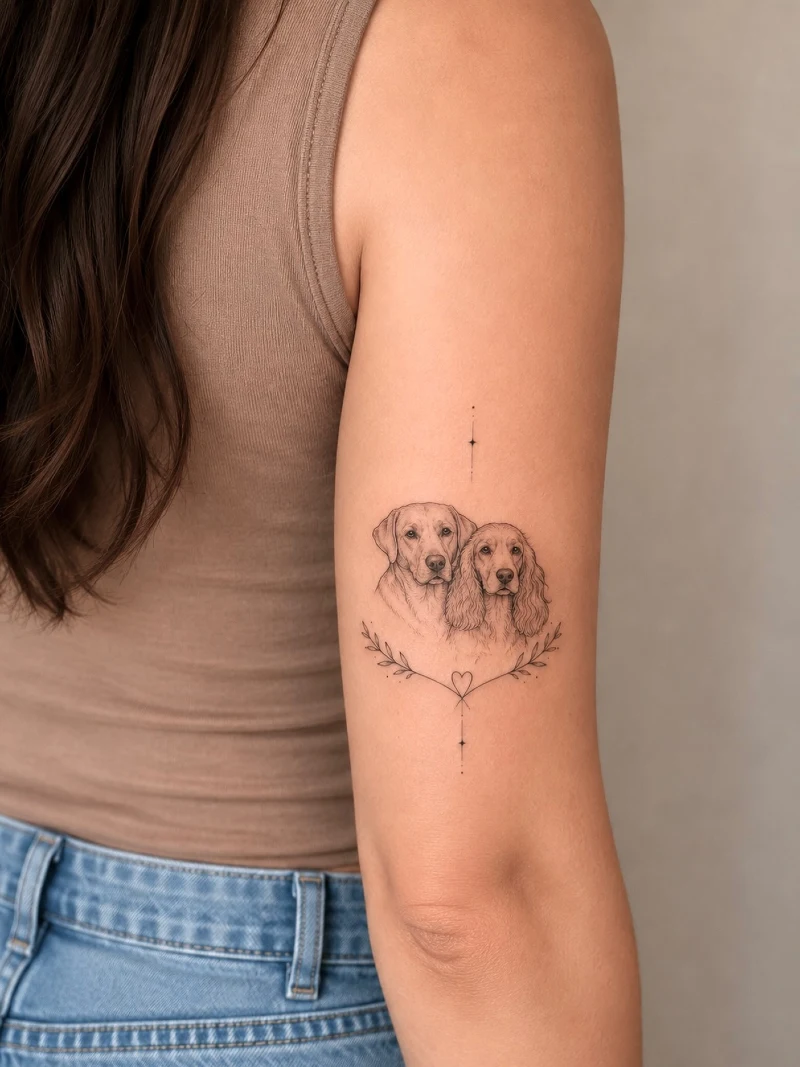
Grey tattoo shows two dogs posed side by side on the upper arm. Soft fur shading separates the shorter coat from the long, wavy ears, while curved leafy branches meet beneath them in a small open heart.
Matching composition lets each dog keep its own look while still reading as one family portrait.
Use photos taken from similar angles so the heads align without forcing one dog to appear smaller. Ask the artist to preserve the coat contrast, then keep the leaves and star details light so they support the portraits instead of competing with them.
12. Heart Locket With a Dog Portrait and Paw Impression
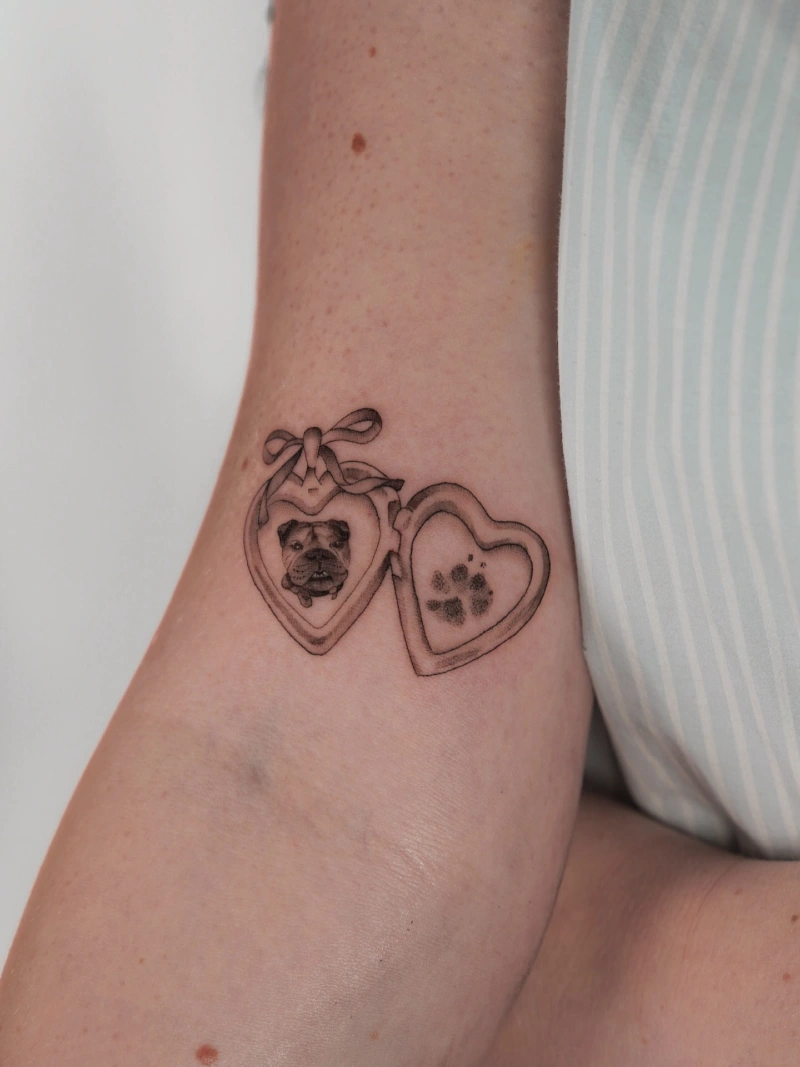
Open heart shaped locket tied with a soft ribbon bow. One side holds a tiny dog portrait, while the other carries a textured paw impression that feels like a private keepsake tucked inside jewelry.
The locket design pairs the dog’s face with a physical mark of their presence.
Use a clear front facing photo for the portrait and a scanned paw impression for the second panel. Keep both heart sections broad enough for the small details to breathe, then ask for light shading around the ribbon so the keepsake shape stays crisp.
Why this setup works
- Dog portrait: The face gives the tattoo a clear personal identity.
- Paw impression: The uneven print adds texture and a direct link to the dog.
- Open locket: The jewelry shape frames both memories as parts of one story.
13. Dog Silhouette With a Heart Shaped Tail
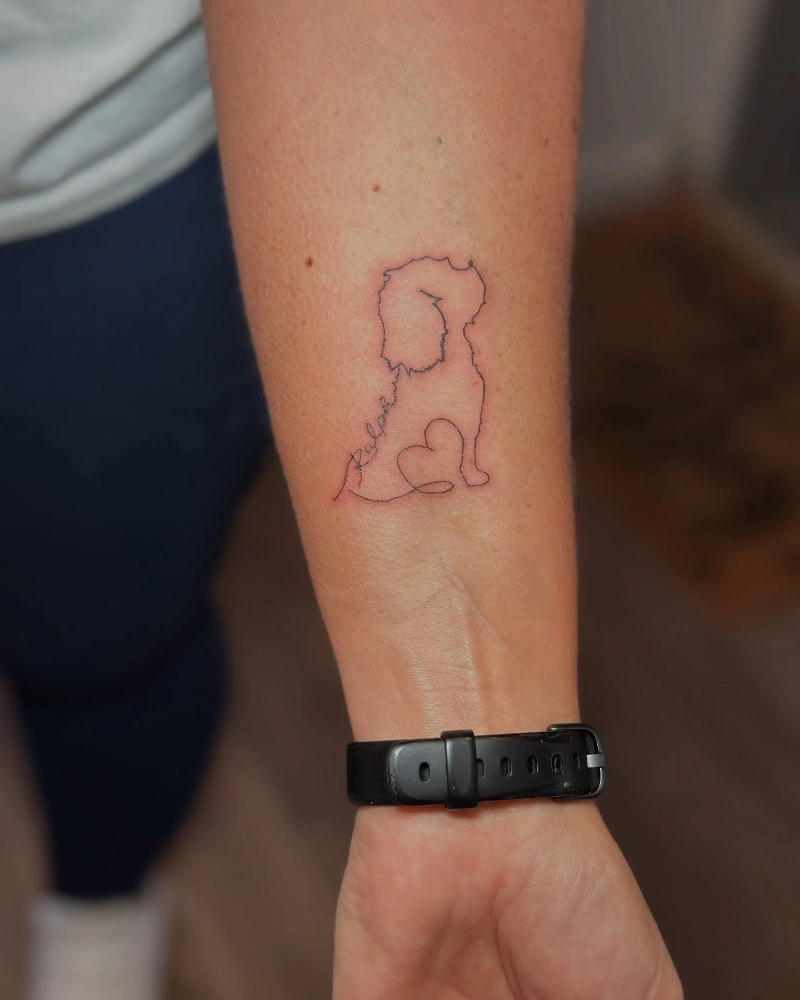
Slim black outline shows a fluffy dog sitting in profile on the inner forearm. The tail curves into a soft heart near the paws, while a handwritten name follows the lower line and adds a personal touch.
The heart grows naturally from the pose, so the meaning feels built into the dog’s shape.
Choose a side view that clearly shows the coat texture, chest, back, and seated stance. Ask the artist to keep the line loose around fluffy areas, then use a short name or word so the script does not crowd the silhouette.
14. Dog Ear Outline With a Handwritten Name
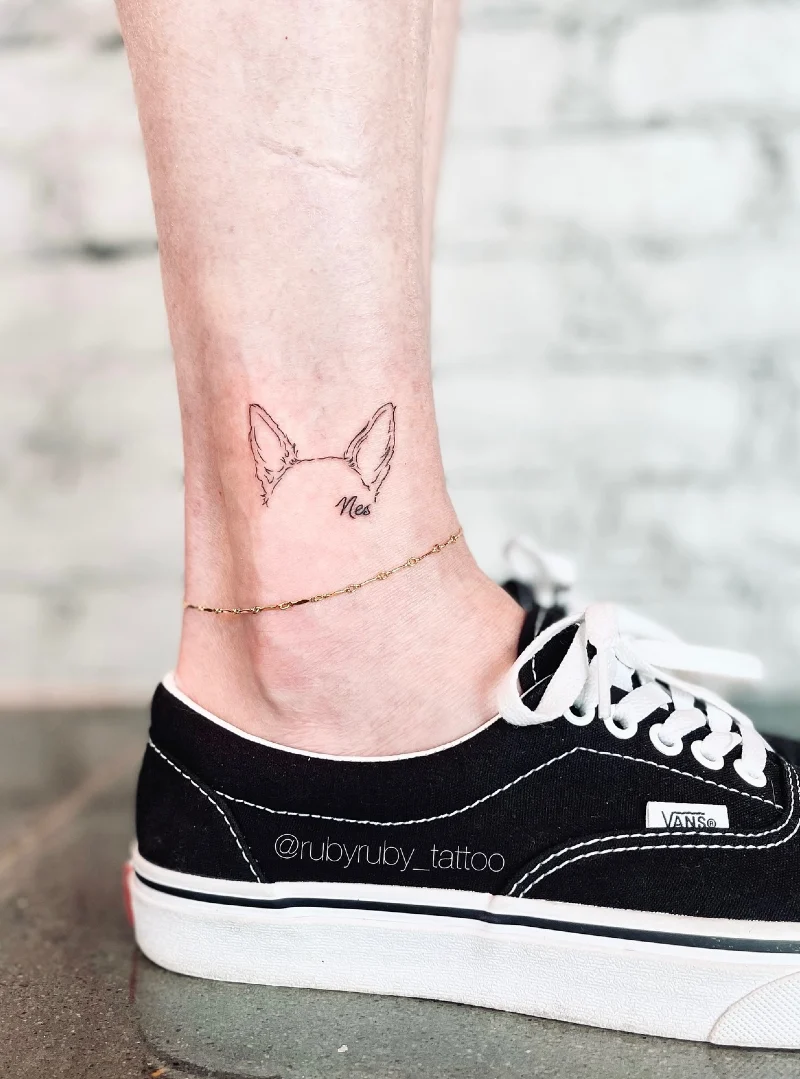
Delicate black line tattoo captures just the tall pointed ears and the top of a dog’s head on the outer ankle. A short handwritten name sits beneath the right ear, turning a few simple lines into a design that feels instantly familiar.
Sometimes one unmistakable feature is all it takes to recognize your best friend.
Pick a photo where your dog’s ears are standing naturally and the head is facing forward. Keep the outline light and uncluttered so the ear shape stays the focal point, then pair it with a meaningful name or nickname in your own handwriting for an extra personal touch.
15. Realistic Dog Portrait Wrapped in Detailed Flowers
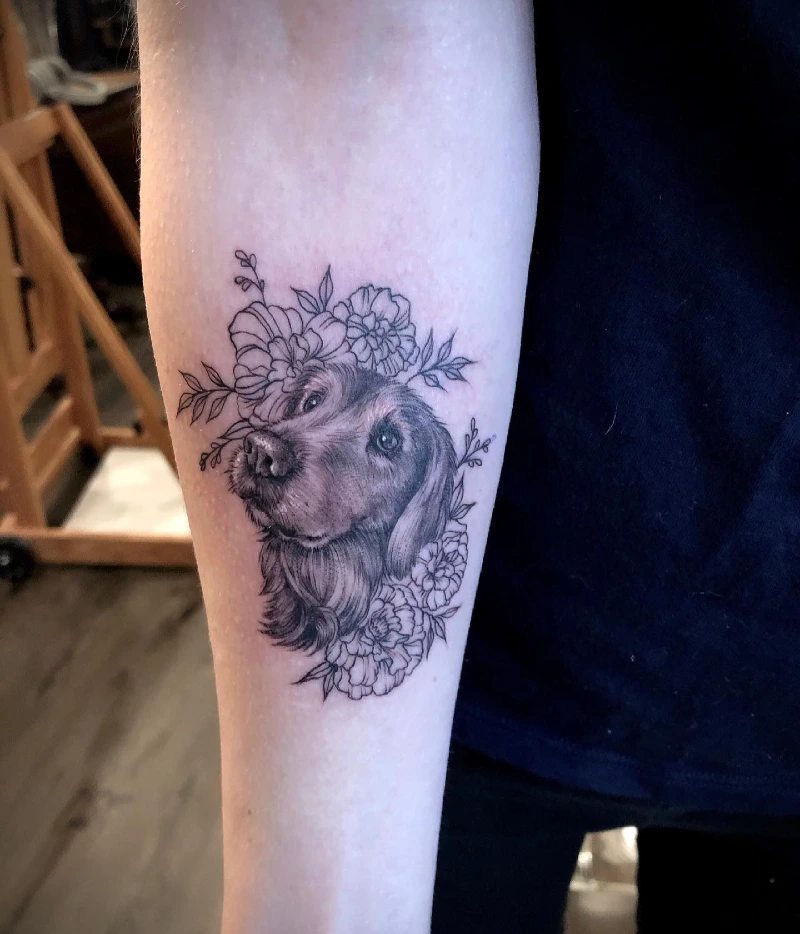
Black and grey portrait shows a long haired dog looking upward with bright eyes and a softly shaded muzzle. Layered flowers and slender leaves frame the face, while fine lines through the fur add a silky texture and gentle depth.
The floral border turns the portrait into a rich memorial without hiding the dog’s expression.
Choose flowers tied to a birth month, season, or shared memory so every part of the design carries meaning. Leave small gaps between petals, fur, and leaves to keep the detailed linework clear once the tattoo heals.
Quick execution tips
- Budget version: Use two larger flowers and fewer leaves instead of a full botanical frame.
- Safety note: Give the portrait enough size so the eyes, nose, and fine fur strokes do not blur together.
- Pro move: Match the flower curves to the dog’s head angle for a more natural flow along the arm.
16. Script Name Surrounded By Three Tiny Paw Outlines
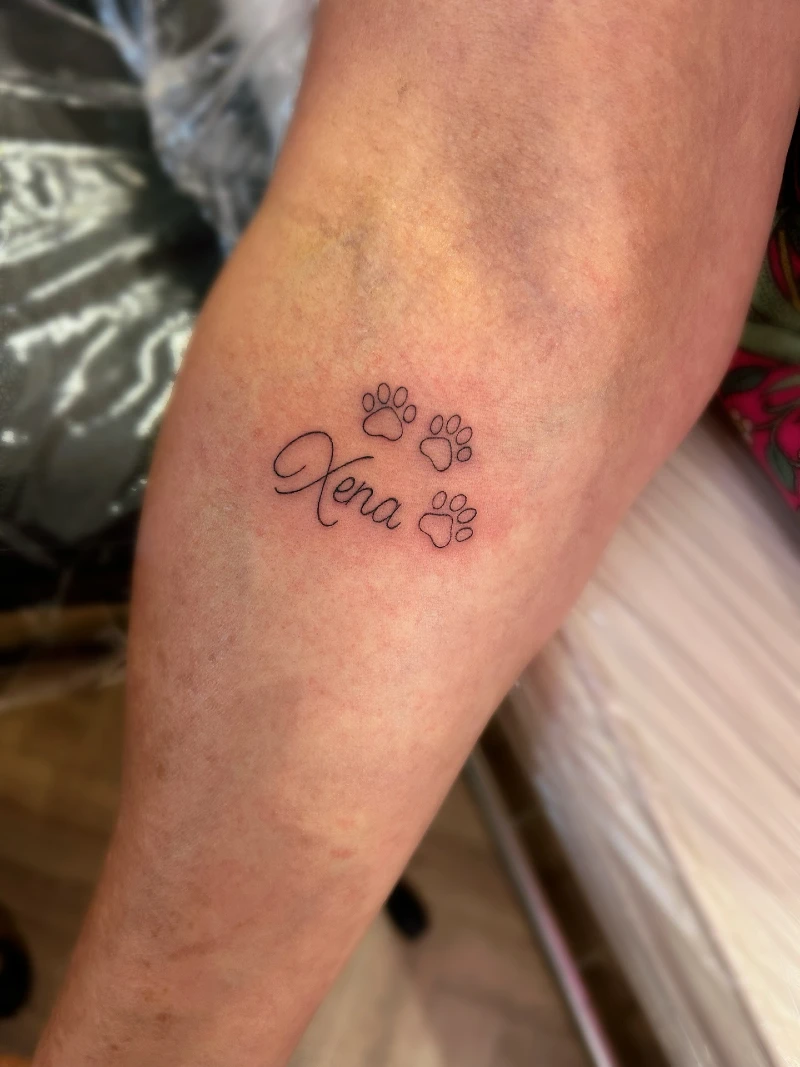
Fine black tattoo pairs the name “Xena” in flowing script with three small paw outlines. The open pads and light linework create a clean, gentle tribute that sits neatly on the inner forearm.
Repeating the paw motif gives a familiar name more movement and personality.
Use your dog’s everyday name, nickname, or a handwritten sample to make the lettering feel personal. Keep the paw outlines spaced apart and slightly varied in angle so they feel playful rather than arranged like a rigid stamp.
17. Heart shaped perfume bottle with a dog portrait
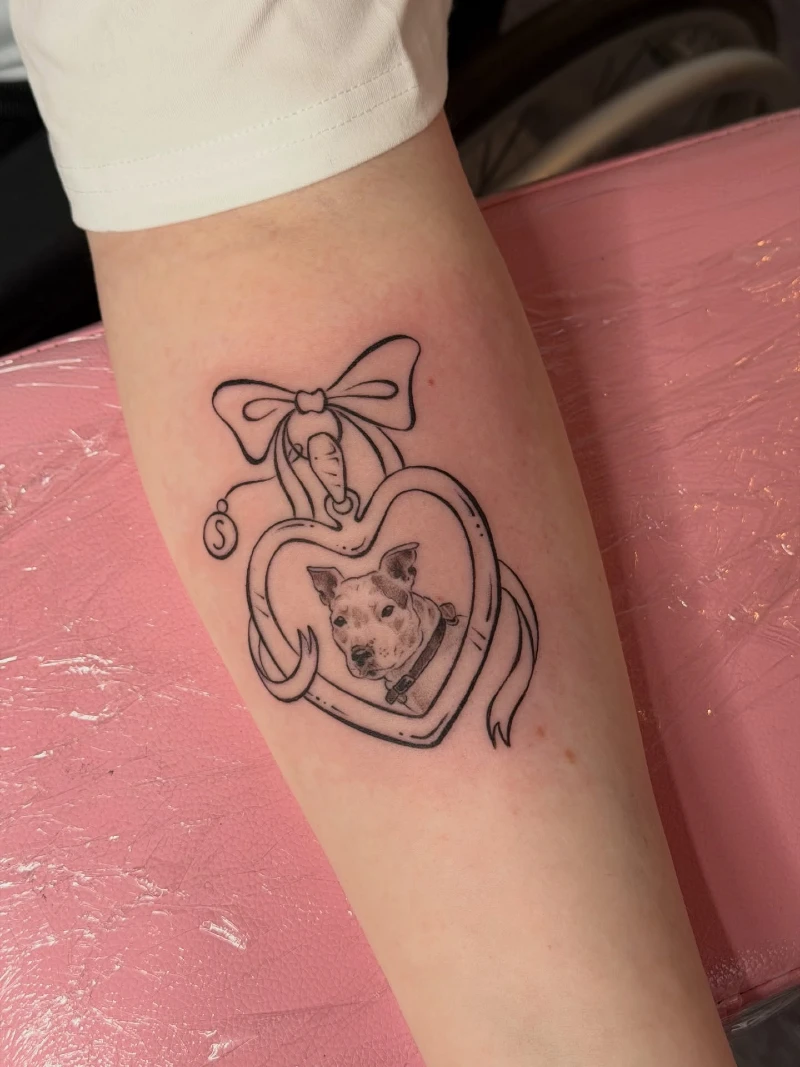
Tattoo frames the dog’s face inside a heart shaped perfume bottle tied with a large ribbon. Fine line details add a hanging initial charm, a tiny carrot ornament, a collar, and flowing ribbon ends around the portrait.
The bottle turns a pet portrait into a playful keepsake filled with personal symbols.
Choose two or three small objects linked to your dog’s habits, nickname, or favorite treat. Keep those details spaced around the main portrait so the face remains easy to read and the story feels rich without becoming crowded.
18. Real Paw Impression With Soft Fur Texture
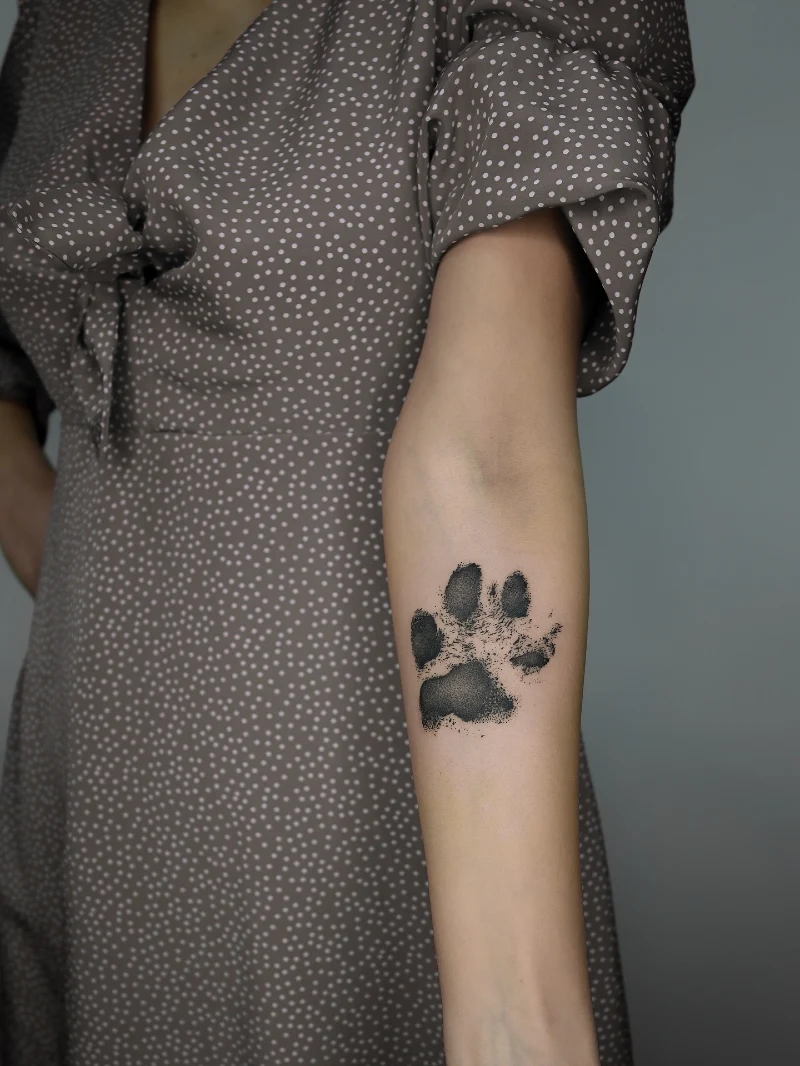
Bold black paw impression sits on the inner forearm with four uneven toe pads and a broad central pad. Fine broken marks between the pads suggest wispy fur, giving the design the raw look of a real print rather than a polished icon.
The scattered texture preserves the messy little details that make one dog’s paw different from every other.
Use a clean ink impression or high contrast photo taken directly from your dog’s paw. Keep the rough edges intact, since smoothing them too much can remove the natural pressure marks and fur pattern that make the tattoo personal.
Why this setup works
- True print shape: The uneven pads retain the dog’s actual proportions.
- Broken texture: Fine gaps mimic fur and prevent the black ink from feeling too heavy.
- Forearm placement: The flat area gives the wider paw enough room to stay clear.