
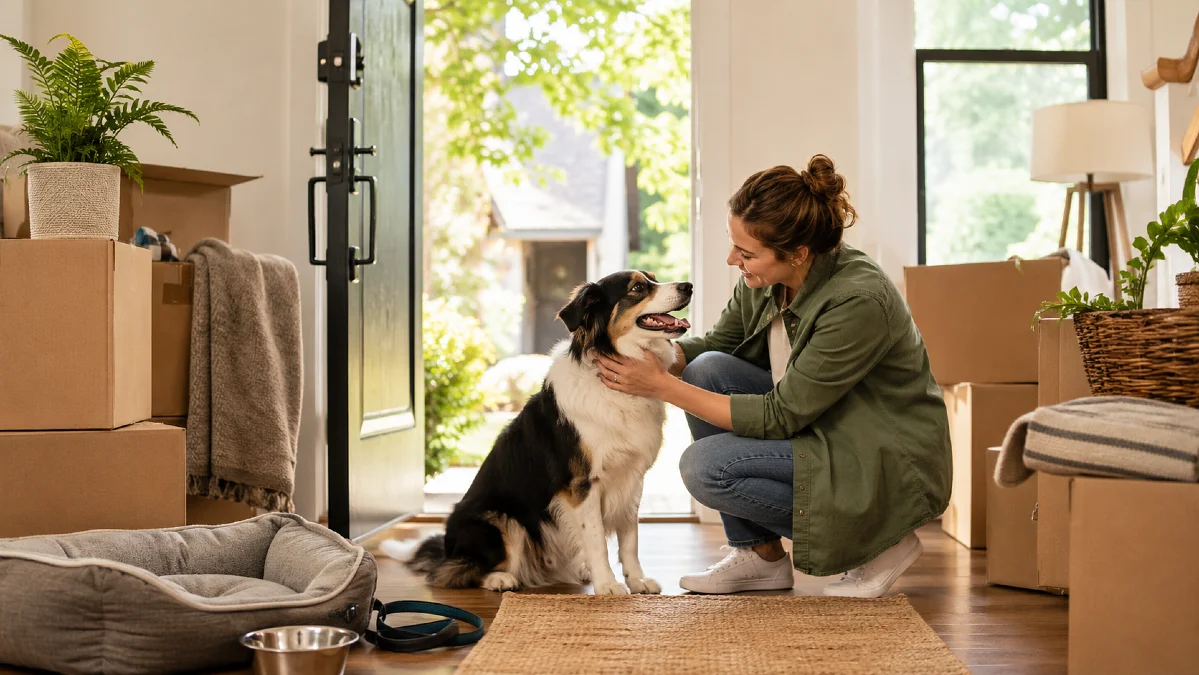
Moving is one of the most stressful life events for humans. Your dog experiences that same chaos without knowing why their world is in boxes. Dogs thrive on routine and knowing their exact territory.
When you uproot them quickly, it often triggers severe panic. They might destroy furniture or try to escape through an open door. About 33 percent of owners say dog stress is their absolute biggest fear during relocation.
You can fix this with a vet approved plan. This guide shows you how to move to a new home with a dog without trauma. You will learn exact tips for moving with a dog to keep them safe and calm.
1. The Month Before: Preparation and Desensitization
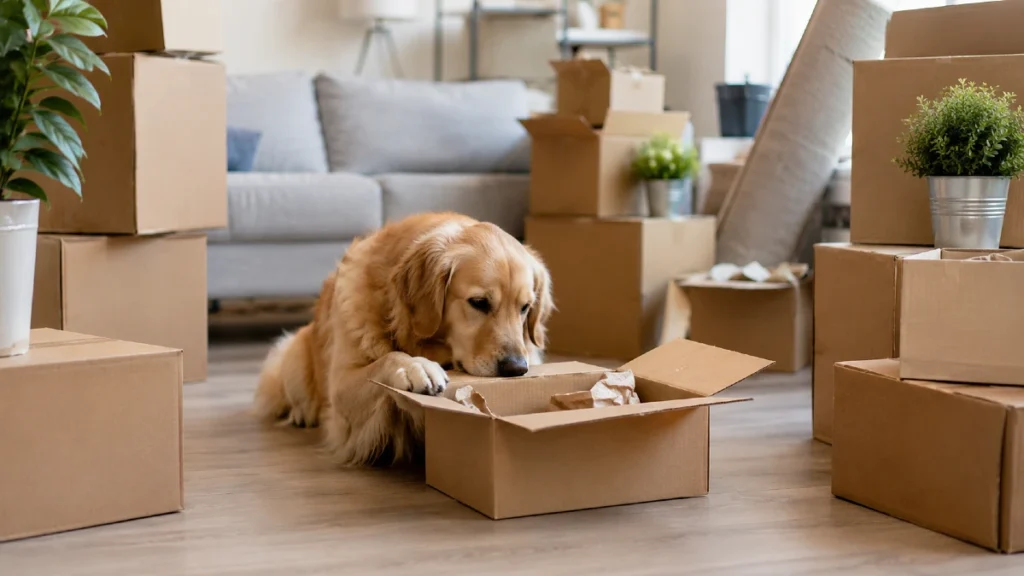
Dogs know something is happening long before the moving truck arrives. They sense the changing energy in the house. You must prepare them early so they do not panic when the big day comes.
Here is a timeline to help you find dog moving anxiety solutions. Follow these steps to build their confidence early.
The 4-Week Moving Countdown
Box Introduction
Bring out empty boxes early. Reward your dog with a favorite homemade treat when they sniff the cardboard to create a positive association.
Routine Maintenance
Maintain strict feeding and walking routines. Consistency keeps them grounded while the house and environment changes around them.
Logistics & Tags
Schedule a vet visit for updated tags and microchip details. Make sure your contact info is current for the new address.
Calming Tools
Ask your vet about calming aids like pheromone sprays or prescriptions if needed. These tools can take the edge off during moving day.
| Pre Move Item | Action Required | Why It Matters |
| Microchip | Update address and phone number | Crucial if they escape the new house |
| ID Tags | Engrave new address | Immediate identification for neighbors |
| Records | Print physical copies | Digital files can get lost in the shuffle |
Leaving boxes out a month early and hiding treats inside them is a great trick. Dogs stop fearing the boxes and start seeing them as a fun game. With the prep work done, it is time to tackle the most dangerous part of the process.
2. Moving Day: Keeping Your Dog Calm and Secure
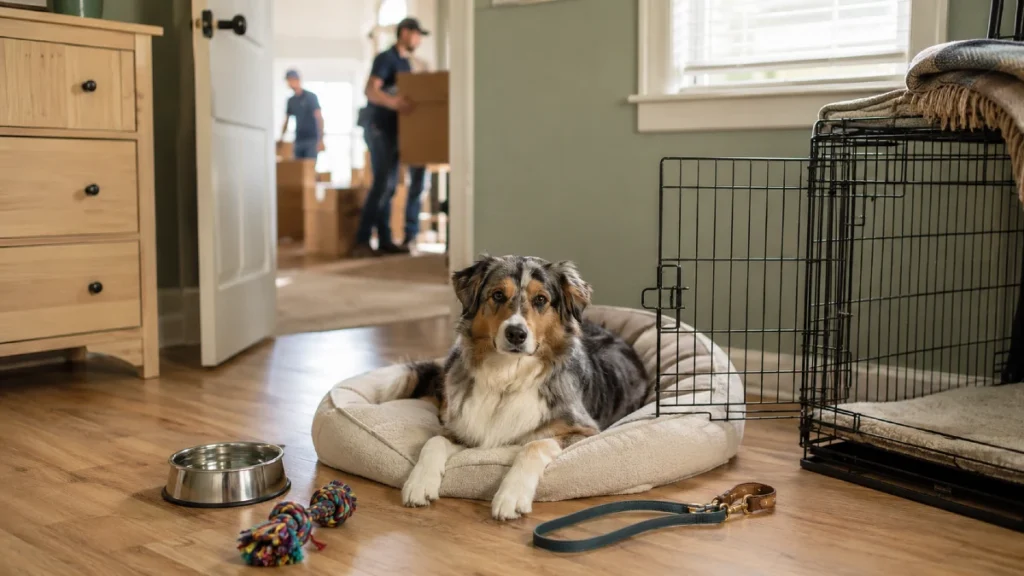
Moving day brings open doors, heavy lifting, and loud strangers. This chaos is terrifying for animals who do not know what is happening. You must physically secure them before the movers even arrive.
The Safe Room Strategy
Create a safe room in the old house using a spare bedroom or bathroom. Put their crate, unwashed bedding, and water bowl inside. Tape a large sign on the door saying “DOG INSIDE DO NOT OPEN” to prevent accidental escapes.
Here are more tips for moving with a dog on the big day. These steps keep them out of harm’s way.
- Tire them out early. Exercise the dog vigorously before the truck pulls up.
- Consider doggy daycare. Sending them to a trusted sitter off site is often the safest choice.
- Prioritize transport safety. Keep the air conditioning running if they must wait in the car.
The American Veterinary Medical Association warns that temperatures inside a vehicle rise 20 degrees in just 10 minutes. Never leave your dog alone in a parked car during a summer move.
| Moving Day Survival Kit | Items to Pack |
| Food | Regular kibble, bottled water, travel bowls |
| Comfort | Unwashed blanket, favorite chew toy, homemade treats |
| Safety | Leash, harness, updated tags, medication |
Once the truck is loaded and you arrive at the new property, your dog’s real adjustment begins. Knowing how to keep dogs calm during a move transitions right into how you introduce them to the new space.
3. The First 24 Hours in Your New Home
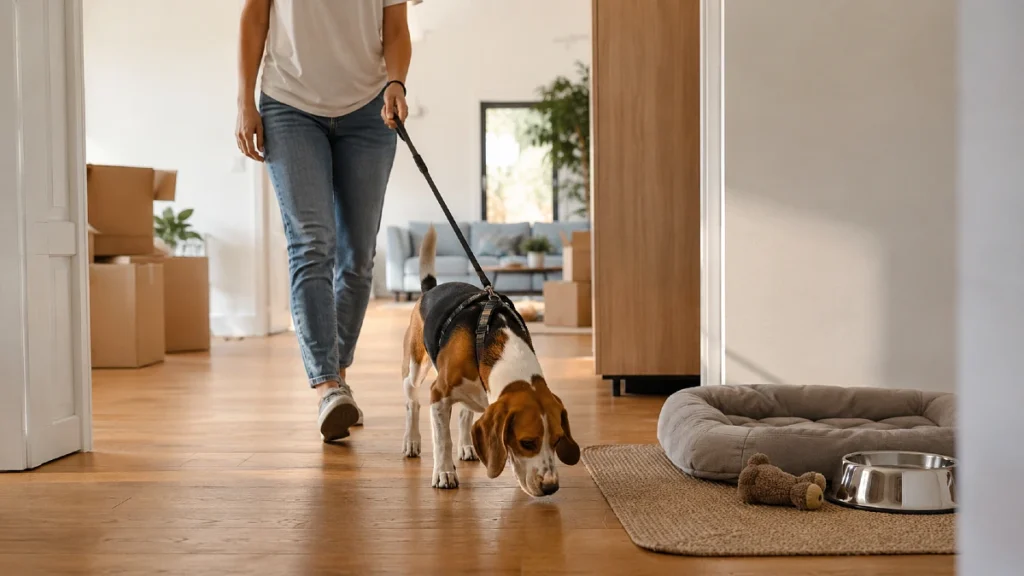
Many owners make the mistake of opening the front door and letting their dog run wild inside. This sudden freedom in an unknown place spikes their stress levels. You need to control their introduction to the space.
The Leash Tour
Walk them through the new house on a leash first. Let them sniff each room while you stay right beside them for comfort. After the tour, establish the potty routine immediately by taking them directly to their new bathroom spot in the yard.
Set up their new home base room immediately with their old unwashed bed. Scent is a dog’s strongest sense. Washing all their bedding before a big move is a huge mistake. Dogs will pace the floors all night if everything smells like harsh laundry soap instead of home.
Do not change their diet during this week because digestive stress combined with environmental stress causes issues. Getting through the first night is a victory, but true comfort takes time. This is the secret to how to move to a new home with a dog without trauma.
4. How to Pet Proof Your New Home and Yard
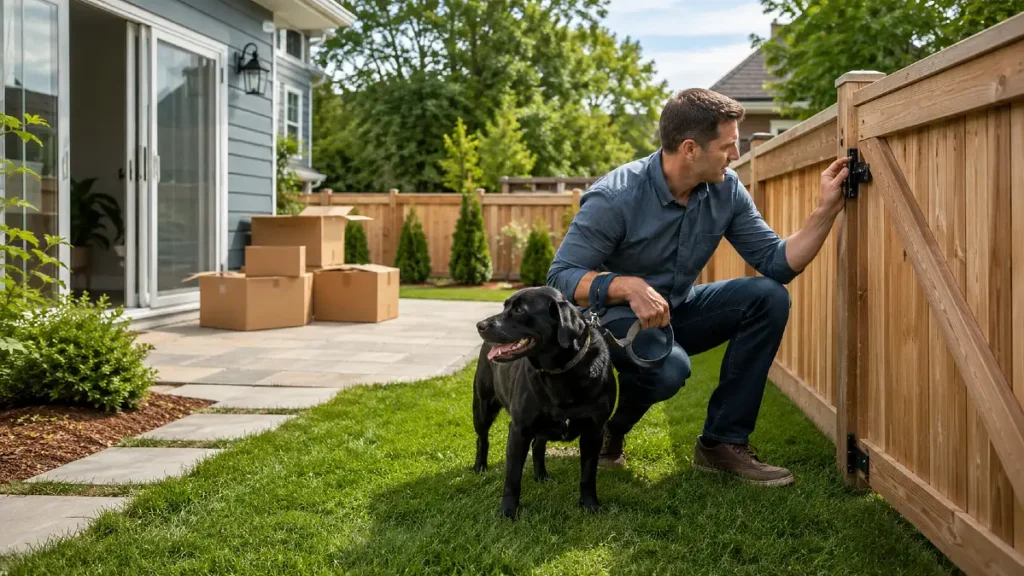
New homes hide dangers that your old house did not have. Broken fence boards or toxic yard plants can cause a disaster on day one. You must inspect everything before your dog steps foot on the grass.
A quick visual check is never enough to ensure complete safety. A loose gate latch can easily lead to a lost pet. You need to physically walk the fence line and pull on the boards to check their strength.
Inside the house, look for pest control traps left by previous owners. Check inside the lower cabinets and behind the appliances for hidden poisons. Dogs explore new spaces with their noses and mouths so you must think like them.
Here is a quick checklist to pet proof your new space. Check these items carefully before you bring your dog inside the property. Doing this work early prevents expensive vet bills later.
4 Crucial Pet Safety Sweeps
Inspect the fence line
Push on every board to test the strength of the wood. Test all gate latches to ensure they lock tightly when closed.
Check the yard plants
Identify and remove toxic flowers like lilies or azaleas from the garden. Do this before letting your pet roam freely outside.
Clean the bare floors
Sweep up loose nails, sharp glass, or packaging staples left behind. Movers often drop dangerous items without noticing them.
Secure kitchen trash
Buy heavy garbage cans with locking lids for the new kitchen. This prevents dangerous food scavenging while you are unpacking boxes.
5. Long Term Acclimation and the 3 3 3 Rule
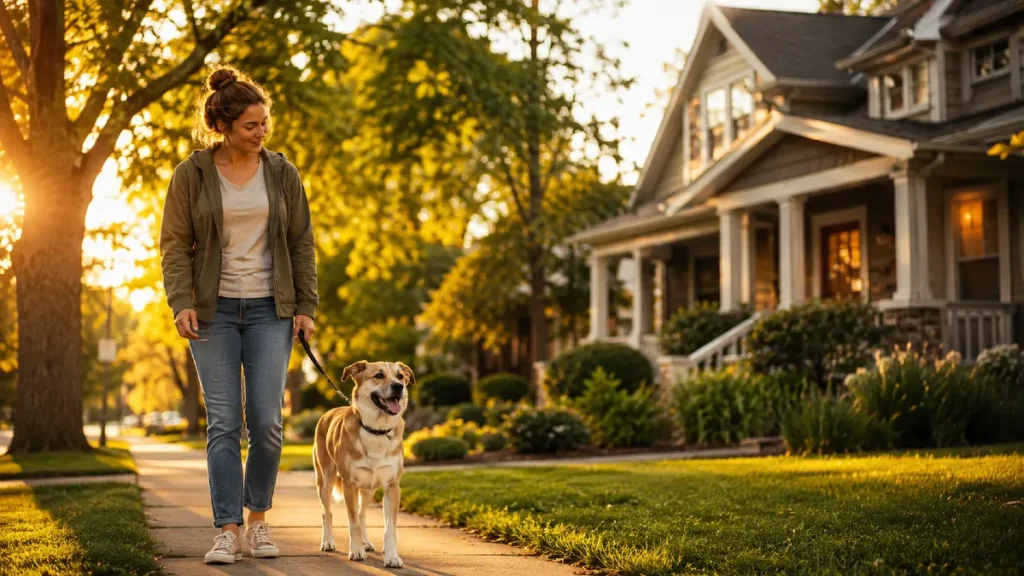
True acclimation happens in stages. Rescue organizations use the 3, 3, 3 rule to set realistic expectations for dogs entering a new environment. This timeline helps you find the right dog moving anxiety solutions at every stage.
| Timeframe | What to Expect | How to Help |
| 3 Days | Feeling overwhelmed and scared | Keep their world small and quiet |
| 3 Weeks | Learning the new routine | Stick to strict feeding schedules |
| 3 Months | Feeling fully at home | Explore the wider neighborhood |
Expect some behavioral regression during the first few weeks. Perfectly trained dogs might have potty accidents, act clingy, or wake up crying at night. Do not punish them for these mistakes.
Punishing indoor accidents during a move only increases their anxiety. Use enzymatic cleaners to remove the scent instead so they do not repeat the mistake.
Use short daily walks to help an anxious dog adjust to a busy new street. Praise and consistency will help your pet realize this new place is safe. Patience and routine will eventually win out.