
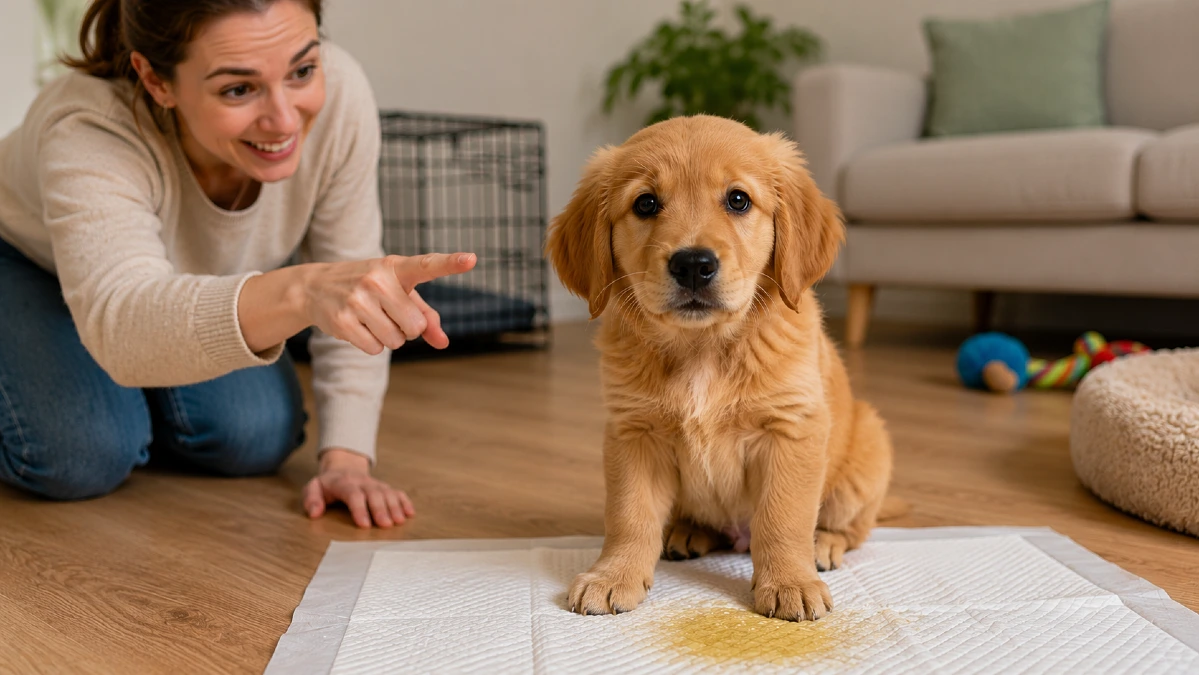
Bringing home a new puppy is magical. That magic fades quickly when you step in a cold puddle on your living room rug at 3:00 AM. Sleep deprivation makes everything harder. Most owners wing the housebreaking process completely.
They just hope the dog will figure it out eventually. This leads to months of intense frustration. It creates ruined carpets and smelly furniture. It also sends confusing mixed signals to your dog.
You need a strict plan to fix this problem fast. We use an expert approved seven day protocol. This system relies on biology and rigid routine to establish permanent bathroom habits. Tracking their data makes this process incredibly simple.
The Science of Your Puppy’s Bladder (Why 7 Days Works)
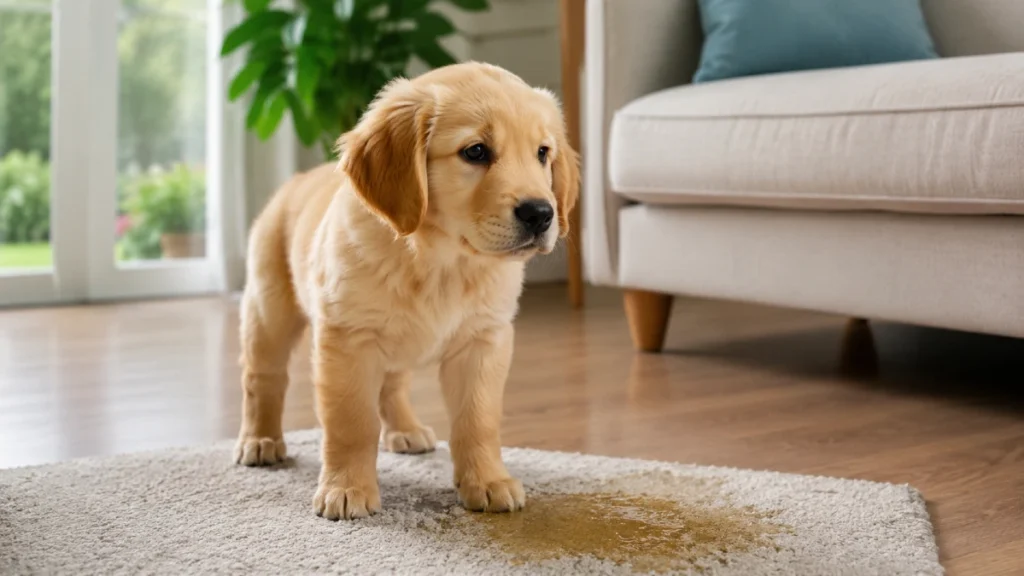
Before you get frustrated, you need to know about the hardware you are working with. Puppies literally lack the physical muscle control to hold their pee. Their bodies are still growing rapidly. You must stop expecting them to act like fully grown adult dogs.
Veterinarians use a simple biological rule for bladder capacity. Take the puppy’s age in months and add one. That number equals the absolute maximum hours they can hold it. A two month old puppy maxes out at three hours between bathroom breaks. This is a biological limit you cannot train away.
7 days does not mean your dog becomes perfectly trained for life. It means establishing an unbreakable routine where the puppy learns the expectation. You are simply teaching them where the bathroom is located.
Learning their body language is your absolute best defense. Watch closely for subtle physical signs of an impending bathroom accident. These signs include pacing in circles near the door. Sudden floor sniffing is another huge red flag.
A dropped head or walking away from playtime also means trouble. Predicting these physical tells is the secret to this entire method. Catching them early will help you stop puppy pee accidents completely. You must act the second you see these warning signs.
Essential Gear for Your 7 Day Protocol
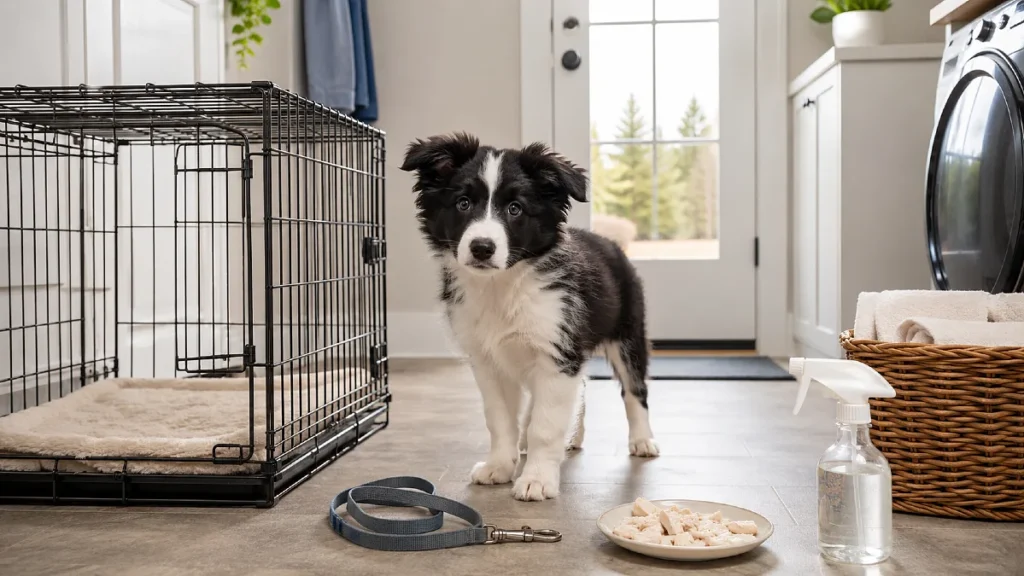
You cannot do a hard job without the right tools. Proper equipment prevents silly mistakes. It also speeds up the learning process significantly.
- Crate with a divider panel. A crate acts exactly like a human bedroom for your dog. Dogs instinctively avoid soiling their personal sleeping quarters. Proper crate sizing is the single most important tool you have. You must shrink the inside space heavily. The puppy should only have room to stand up and turn around.
- Enzyme based cleaners. Standard household cleaners fail to remove dog pee pheromones completely. Normal soap leaves behind a chemical scent your dog can still smell. That hidden scent invites them to pee in that spot again. Enzyme cleaners use safe bacteria that eats pee smells permanently.
- High value treats. You need special treats used only for potty successes. Pieces of plain boiled chicken work perfectly for this. Do not use their normal dry food.
- A simple flat leash. You need this leash even for quick backyard trips. Keeping a leash attached indoors prevents them from wandering off.
Using a crate correctly speeds up everything you do. This is exactly why crate training a puppy is mandatory for quick results. Keep the leash attached to the dog indoors at all times. This prevents them from hiding behind a couch to pee.
The 7 Day Puppy Potty Training Schedule
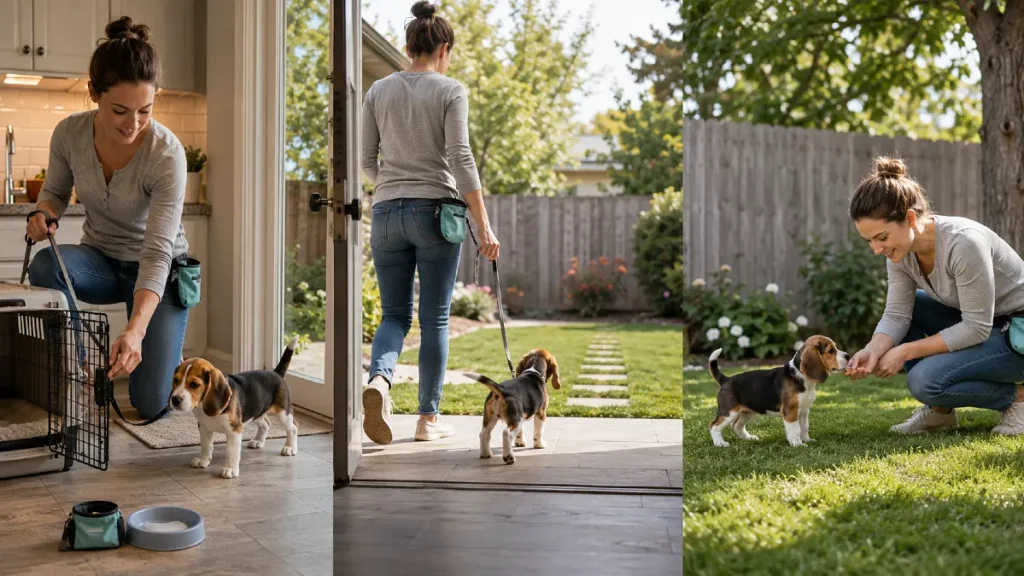
You need to clear your calendar as much as possible for the next week. Consistency makes or breaks this entire training process. This puppy potty training schedule requires your full attention from morning until night.
The 7-Day Puppy Potty Training Schedule
The Observation Phase
- Keep the puppy tethered to you indoors at all times (tie the leash to your belt loop).
- Take them outside every 30 to 45 minutes on the dot.
- Stand in the exact same yard spot every single time.
- Wait quietly for them to finish going to the bathroom.
- Praise them heavily and give a chicken treat immediately after they finish.
Crate Integration
- Start using short crate sessions (30 to 60 minutes after playtime) to build bladder muscle control.
- Take them straight from the crate out to the yard spot. Do not let their feet touch the floor on the way.
- Stretch the time between outdoor potty breaks to 60 minutes.
- If they do not pee outside within five minutes, put them back in the crate for 10 minutes.
- Try taking them outside again after the 10 minutes pass.
Stretching the Window
- Move the time between routine potty breaks to 90 minute intervals.
- Give the puppy slightly more freedom in the house right after they pee. Let them drag the leash on the floor.
- Watch closely for the puppy to self initiate the process (heading for the back door on their own).
- Reward this door movement with massive verbal praise.
- Take them outside immediately to reinforce this good choice.
Generalization
- Introduce a hanging bell or specific door cue at your main exit.
- Gently ring the bell with their paw every single time you go outside.
- Say a command word like “outside” or “potty” when the bell rings.
- Keep rewarding every successful outdoor bathroom trip with high value treats.
Follow these exact steps to learn how to potty train a puppy in 7 days.
Days 1 to 2: The Observation Phase
- Keep the puppy tethered to you indoors at all times. The SPCA calls this the umbilical cord technique. Tie the leash to your belt loop.
- Take them outside every 30 to 45 minutes on the dot.
- Stand in the exact same yard spot every single time.
- Wait quietly for them to finish going to the bathroom.
- Praise them heavily and give a chicken treat immediately after they finish going.
Days 3 to 4: Crate Integration
- Start using short crate sessions to build physical bladder muscle control. Put them in the crate for 30 to 60 minutes after playtime.
- Take them straight from the crate out to the yard spot. Do not let their feet touch the floor on the way.
- Stretch the time between outdoor potty breaks to 60 minutes.
- Watch their behavior closely when outside. Put them back in the crate for 10 minutes if they do not pee outside within five minutes.
- Try taking them outside again after 10 minutes pass.
Days 5 to 6: Stretching the Window
- Move the time between routine potty breaks to 90 minute intervals.
- Give the puppy slightly more freedom in the house right after they pee. Let them drag the leash on the floor.
- Watch closely for the puppy to self initiate the process. They might start heading for the back door on their own.
- Reward this door movement with massive verbal praise.
- Take them outside immediately to reinforce this good choice.
Day 7: Generalization
- Introduce a hanging bell or specific door cue at your main exit.
- Gently ring the bell with their paw every single time you go outside.
- Say a command word like “outside” or “potty” when the bell rings.
- Keep rewarding every successful outdoor bathroom trip with high value treats.
Day seven means they finally grasp the daily routine. But remember they are still tiny babies who need constant supervision. You have built a foundation of trust and expectation. Now you just need to maintain it.
2026 Tech: Why Data Beats Guesswork
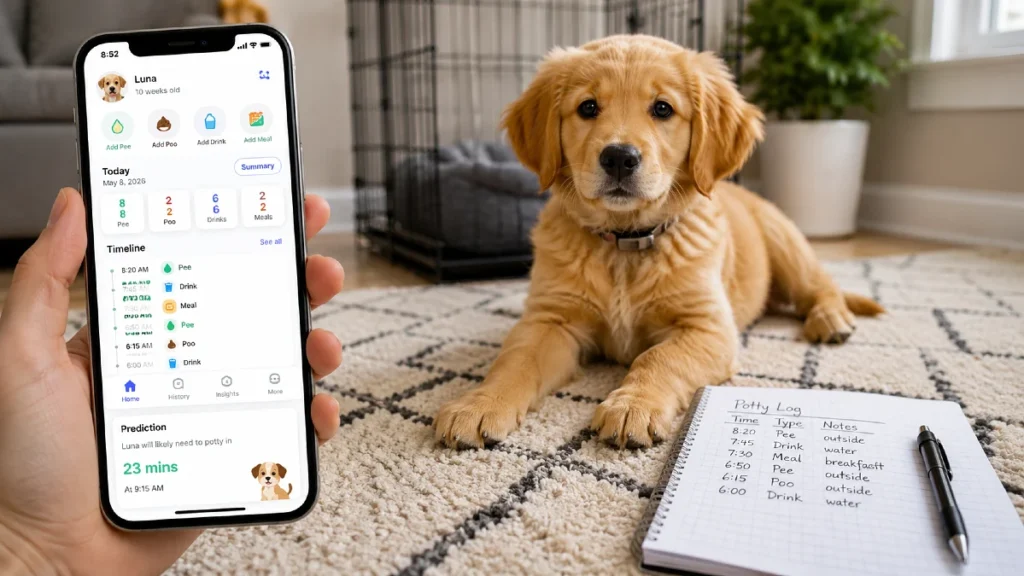
Old school clicker training is perfectly fine. Modern predictive tracking is much better and faster. Generic schedules are great starting points for new owners. But every single dog has a unique digestion system.
Logging your data removes all the frustrating mystery. You can use modern potty training apps to log daily water intake. You log their meals and playtime. You also log every single bathroom accident. The app calculates exactly how long it takes food to pass through your specific dog.
You will start identifying the puppy’s vulnerable windows very easily. For example, you might learn they always pee exactly 22 minutes after drinking a bowl of water.
Apps like Puppy Potty Trainer or Dogo map out these predictive elimination patterns for you automatically. They send a helpful push notification to your phone right before the dog needs to go outside.
Pick just one app and stick to it for the full seven days. Your puppy potty training schedule becomes an exact science instead of a stressful guessing game. Technology does the heavy lifting for your tired brain.
The Night Shift: Surviving 2:00 AM Potty Breaks
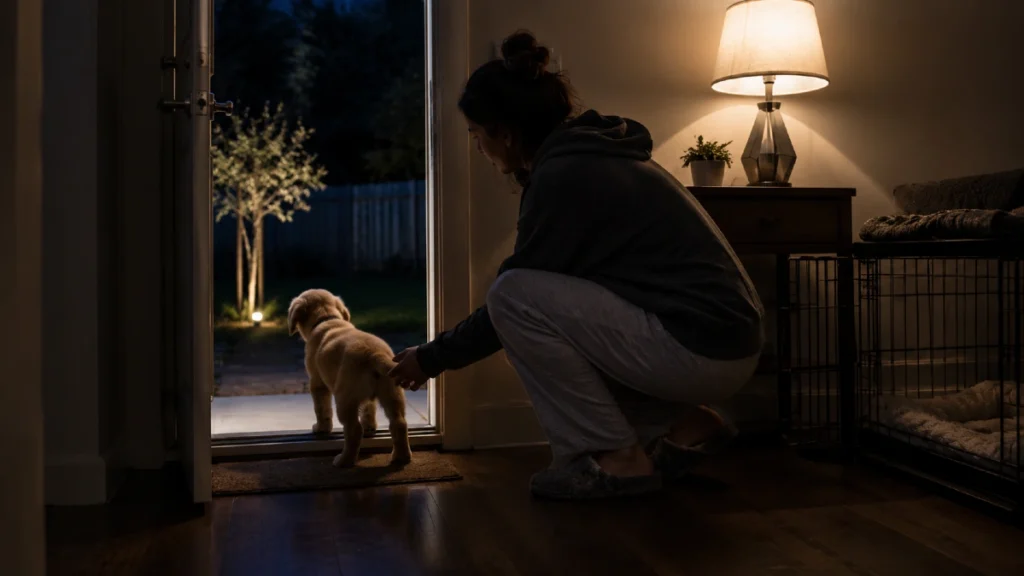
Sleep deprivation makes tired puppy owners miserable and cranky. You can survive the night shift with a few very simple rules. Most 8 to 12 week old puppies require at least one or two middle of the night breaks.
Cut off all water two full hours before bedtime. This ensures their bladder is mostly empty when they go to sleep. Take them out one final time right before your head hits the pillow.
Keep nighttime trips strictly business every single time. There should be absolutely no talking and no playing. Keep the house lights very low so the puppy stays sleepy. Nighttime outings should last no longer than five minutes total.
Set an alarm to wake up first. You want to wake up before the puppy starts whining in the crate. Waking them up teaches them that you control the schedule completely.
Crate training a puppy correctly means they never learn to cry for your attention. Carry them outside, let them pee, and put them right back in the crate silently.
Troubleshooting Accidents (What Not to Do)
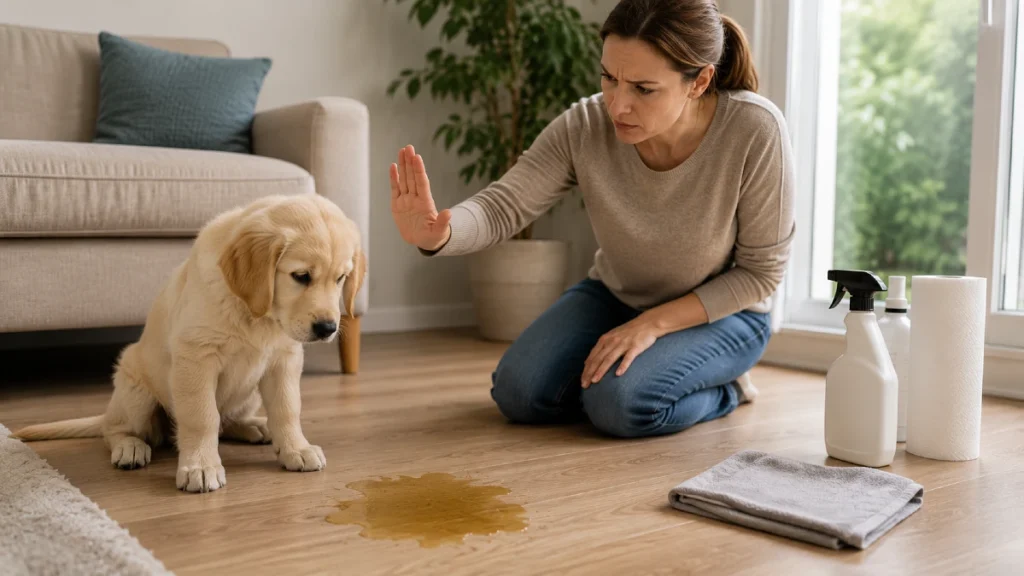
Accidents are your fault, not the puppy’s fault. Say this to yourself gently but firmly every time it happens. You either missed the subtle warning signs or you waited too long.
Never rub a puppy’s nose in their mess. The American Kennel Club strongly warns about the severe psychological damage of this old myth.
According to the SPCA, punishing a dog for indoor accidents simply teaches them to hide from you. They will just sneak behind the living room sofa next time they need to go.
Interrupt them safely if you catch them mid stream. Make a sharp and neutral “Ah!” sound loudly. This startles them just enough to stop the pee flow temporarily. Pick them up immediately and carry them directly outside to finish. Give them a massive treat reward when they finish in the grass.
If you find a puddle or mess after the fact, just clean it up. The training moment has passed entirely. Dogs have a very short memory for their past actions. Just grab your enzyme cleaner and wipe it up thoroughly. Stay positive and pay much closer attention next time to stop puppy pee accidents.
Trainer Tip: Keep a small glass jar of treats sitting outside right by the main potty spot. You will never forget to reward them if the treats are already waiting out there.