

Recognizing the final stages of a loyal companion is one of the most heartbreaking but necessary responsibilities of pet ownership. You are likely watching their every move closely right now.
This guide clears up the confusion between normal aging and actual signs a dog is dying. You will learn clear vet backed behavioral signs of the dying process. We will also cover actionable steps to keep your dog comfortable during their final transition.
It is normal to feel overwhelmed when wondering how dogs behave before death. Having the right information helps you make the best choices for your pet. You can provide peace and dignity in their final days.
What Are the 7 Common Signs a Dog is Dying?

One of the most distressing changes owners witness is a sudden refusal of favorite foods. Veterinary data shows that a sudden and sustained refusal to eat is one of the strongest indicators of declining quality of life.
Because dogs instinctively hide their physical pain you will often notice these behavioral shifts first. You might see extreme lethargy where a normally active breed like a Golden Retriever named Cooper struggles to even lift his head. This physical exhaustion is a natural part of the body shutting down.
Cognitive dysfunction and confusion frequently occur in the final stages of life according to networks like Lap of Love. Sara noticed her senior dog pacing aimlessly around the living room and staring at blank walls. This mental fog is a common part of end of life symptoms in dogs.
You might notice several symptoms overlapping as your dog declines. Here are the most common signs to watch for right now:
Behavioral Changes to Watch in Senior Pets
Loss of appetite and refusing favorite treats.
Extreme lethargy and sleeping most of the day.
Social withdrawal or unusually clingy behavior.
Loss of muscle control causing accidents indoors.
Noticeable changes in breathing patterns.
It is very important to watch for changes in breathing as the body slows down. You must differentiate between normal heavy panting and agonal breathing which looks like sudden gasping. Call your vet immediately if you notice gasping to get the right medical advice.
Why Does The Rally Phenomenon Happen?
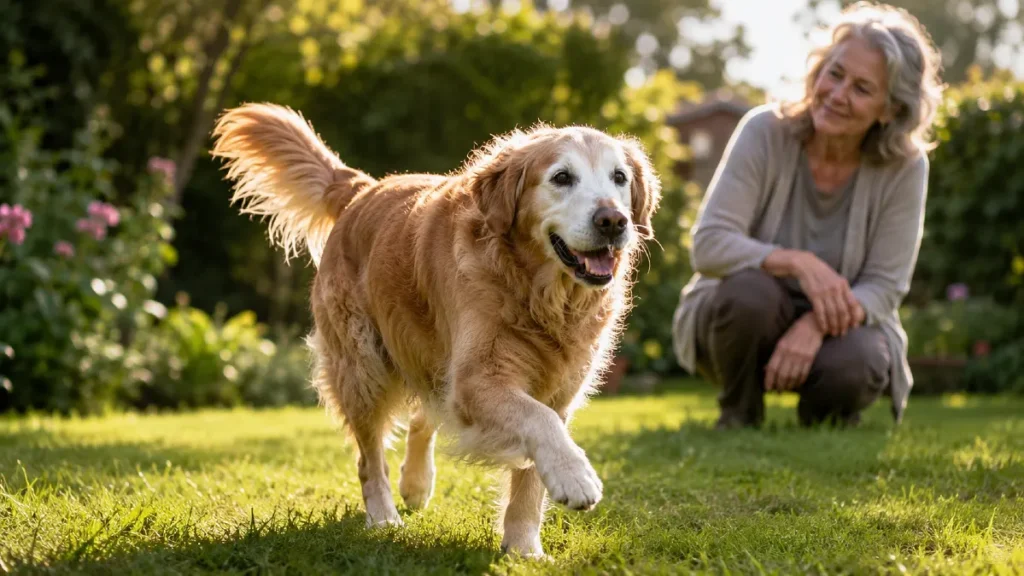
Many owners are surprised when their dying pet suddenly acts like a puppy again. This sudden burst of energy is known as the rally phenomenon. It often tricks people into thinking a miraculous medical recovery is happening.
Veterinary hospice workers frequently see this temporary rally occur 24 to 48 hours before a significant physical decline. It happens neurologically because the brain releases a final surge of hormones and energy reserves. This biological response provides a brief window of clarity and strength.
You should enjoy this time rather than viewing it as a permanent cure. Spend quality moments together and take lots of photos. Knowing how dogs behave before death helps you appreciate this end of life behavior without false hope.
How to Evaluate Quality of Life With the HHHHHMM Scale
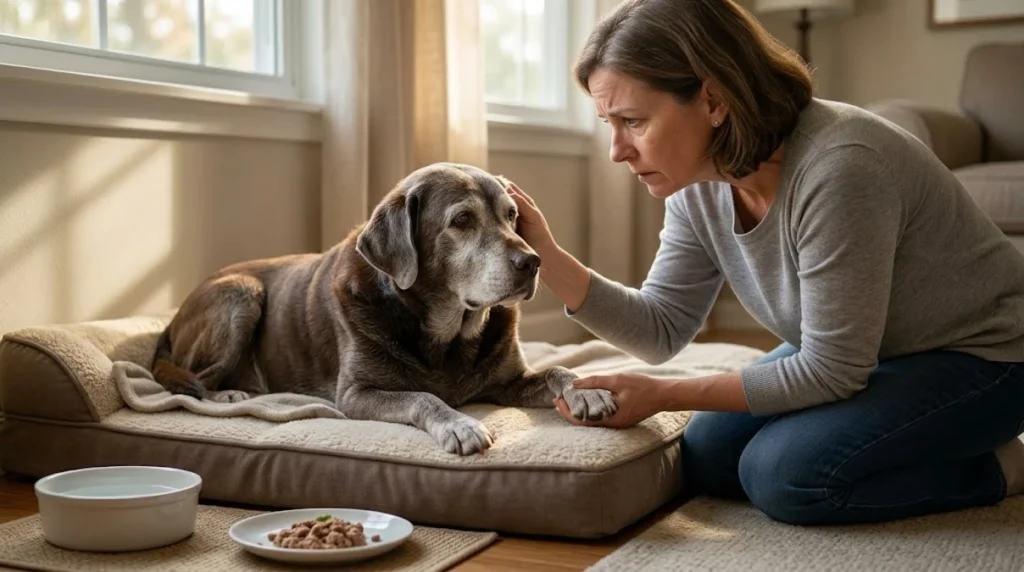
You might struggle to know objectively if your pet is suffering or just slowing down. Veterinary oncologist Dr Alice Villalobos developed the widely used HHHHHMM Quality of Life Scale to solve this problem. This tool helps you objectively measure your pet’s daily wellbeing without relying solely on emotion.
You rank each category on a scale from 1 to 10 based on your daily observations. A total score above 35 generally indicates an acceptable quality of life. This clear scoring system helps you discuss care options logically with your vet.
A clear assessment helps you track daily changes. Here is the criteria to guide you through the process:
Quality of Life Assessment
Hurt
Is the pain successfully managed with medication?
Hunger
Is your dog eating enough voluntarily or with help?
Hydration
Is your dog drinking enough water to stay healthy?
Hygiene
Can your dog stay clean especially after losing muscle control?
Happiness
Does your dog show joy and interest in family members?
Mobility
Can your dog get up and move around without severe pain?
More Good Days
Are the positive moments outnumbering the painful ones?
Use an interactive online Quality of Life calculator to track these scores daily. Keeping a consistent record helps you spot gradual declines you might otherwise miss. Knowing this data helps you comfort a dying dog with the right level of care.
What to Do When Your Dog is Dying
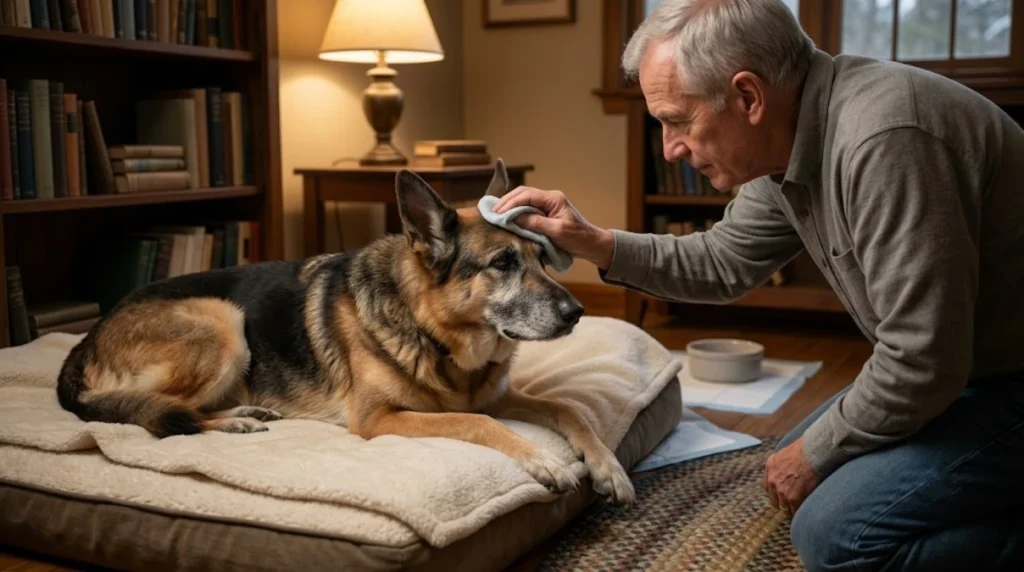
It is incredibly hard to watch your best friend decline in their final days. However there are many practical palliative care steps you can take to make them feel safe. Setting up a quiet bed away from loud noises is the best first step.
You should offer high value liquid nutrition if they cannot chew solid food anymore. Using absorbent pads provides dignity if they lose control of their bladder.
Environmental modifications like keeping the home temperature regulated make a massive difference. Removing physical obstacles to the water bowl helps them drink without struggling. These small changes help you comfort a dying dog and reduce their daily stress.
Always consult a vet for proper pain management and anxiety medication. You can use veterinary telehealth services for late night advice when regular clinics are closed. Asking a professional about palliative care for dogs is the safest way to ensure they do not suffer.
How to Help Your Family Handle the Final Days
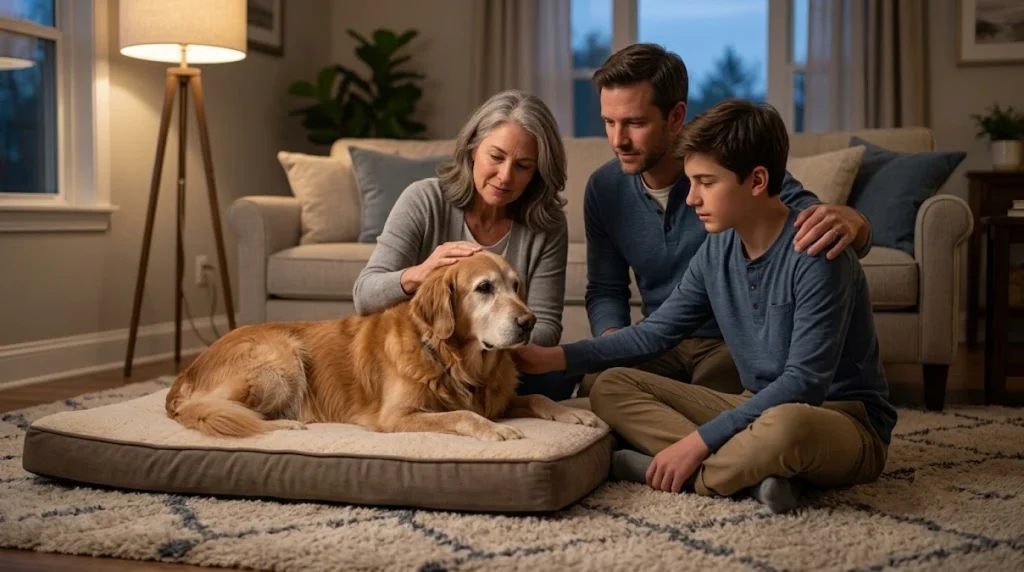
Watching your dog decline affects everyone in your home deeply. Kids and other pets often sense the sadness and act differently during this stressful time. You must guide them gently to prevent extra anxiety in the house.
Because animals smell chemical changes they often know their friend is dying before we do. You might notice your other dogs refusing to leave the sick dog alone. Giving surviving pets a chance to sniff the passing dog helps them process the loss.
Be very honest with your kids using simple and clear words about death. Avoid saying the dog went to sleep so young children do not fear bedtime. Read a book about pet loss together tonight to start the conversation gently.
What Are the Best Comfort Foods for a Dying Dog?

A dying dog often turns away from their regular dry kibble. Their digestive system slows down and makes heavy meals very hard to process. Offering highly appealing and easy to digest foods keeps their energy up.
You can create simple homemade recipes that are gentle on their failing stomach. Soft grain free options mixed with probiotic yogurt often tempt a dog to eat again. These vet approved choices give them comfort when nothing else works.
Keep portions very small and warm the food slightly to increase the smell. Try offering liquid bone broth or pureed pumpkin if they refuse solid bites. Call your vet today to ask for an appetite stimulant if they reject everything.
It is very easy to confuse normal senior dog behavior with active dying. This simple comparison helps you see the difference clearly. Use this chart to evaluate your pet today.
| Behavior Focus | Normal Senior Aging | Active End of Life Sign |
| Eating Habits | Eats much slower but still finishes meals | Refuses all food and water completely |
| Energy Levels | Sleeps more often during the afternoon | Cannot stand up or lift their head |
| Bathroom Habits | Has occasional indoor accidents at night | Shows complete loss of bowel control |
| Breathing | Pants heavily after taking a short walk | Gasps heavily while resting quietly |