
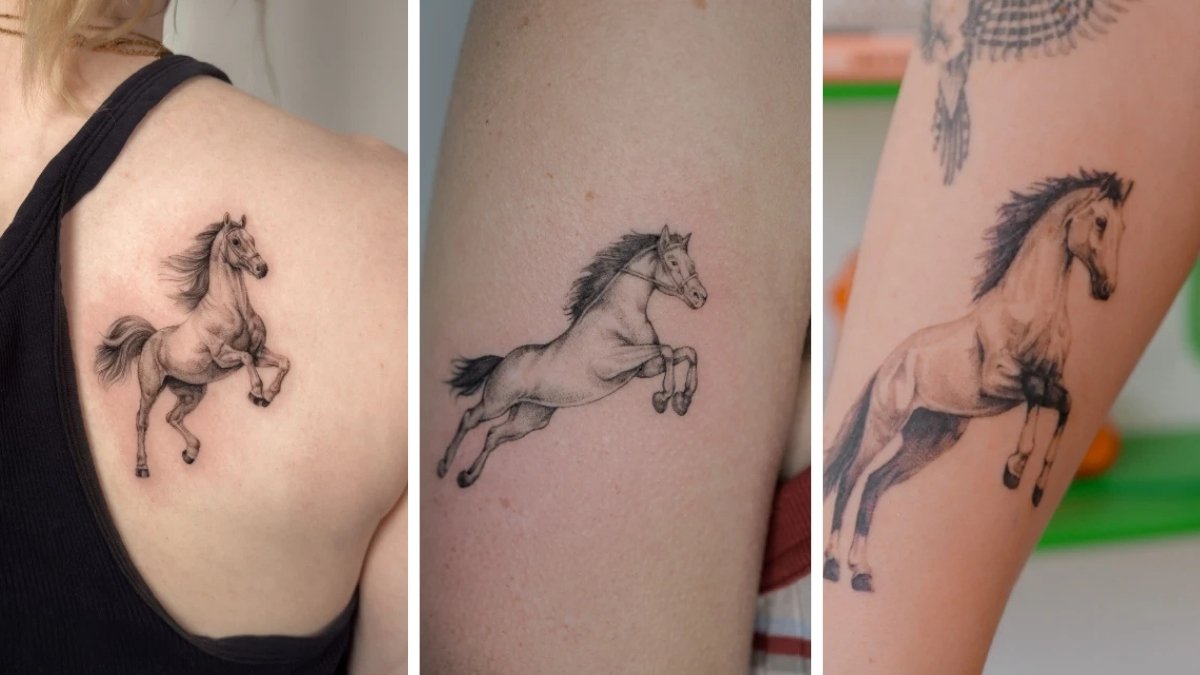
A galloping horse caught mid-jump brings a rush of kinetic energy to your personal canvas. Crisp linework mimics the snap of leather reins. Soft shading echoes the muscular tension of a clearing stride.
Translating equestrian movement into ink builds a constant reminder of freedom and focus. Fine-line designs look striking on the delicate real estate of an inner wrist. Broader spaces like the outer thigh or shoulder blade ground larger, heavy-shaded pieces.
Capturing Momentum Body Canvas Styling Tricks
Deciding where a dynamic jumping horse lives on your body changes its entire impact. A horizontal leap flows naturally across a collarbone or forearm.
Contrast sharp, dark silhouettes with soft, sweeping manes to build visual balance. Smaller pieces thrive as minimalist focal points, while layered scenes add depth across larger muscle groups.
1. Fine Line Arm Placement Precision
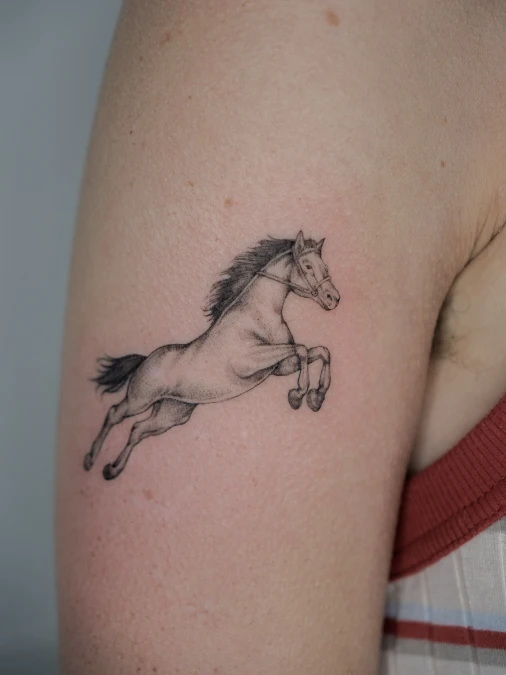
A delicate fine-line tattoo of a horse clearing a jump sits perfectly on the upper bicep, captured in crisp black and grey tones. Soft shading builds the horse’s musculature and flowing mane, while tiny dots of stippling define its form. The composition flows upward with the muscle, accented by the wearer’s striped ribbed shirt fabric.
Minimalist fine-line work relies on precise muscle contouring for maximum impact.
This style is great for riders who want a subtle nod to their passion. Placing the dynamic jump over a visible muscle group like the bicep adds visual movement. The thin lines ensure the piece looks elegant and won’t overwhelm smaller frames.
2. Rearing Power Back Tattoo Design
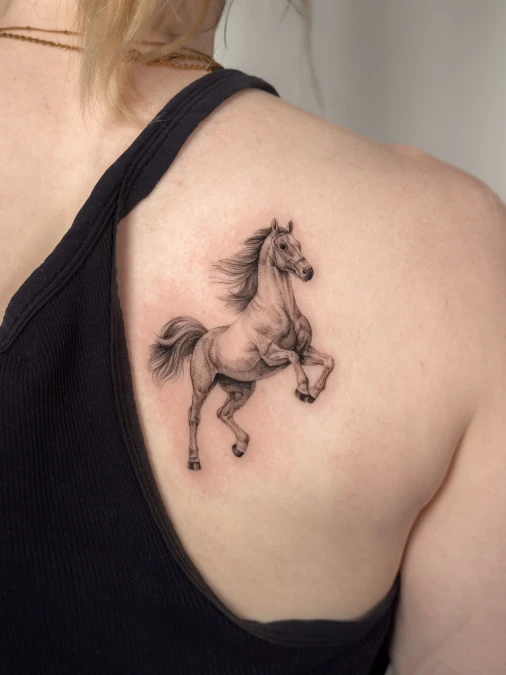
A detailed black ink tattoo captures a horse mid-rear. Intricate shading defines the animal’s musculature and its windswept, energetic mane. Soft lighting highlights the textured black ribbed tank top strap against the smooth skin.
Positioning energetic forms like a rearing horse centrally on a broad canvas maximizes visual drama.
Why Rearing Pose Placement Excels
This dynamic design placement is excellent for riders who want a concealable yet impactful statement of freedom. Placing the dramatic, rearing pose centrally on the back uses the natural curvature for maximum power. This detailed singular piece commands attention when revealed by open-backed tops or scoop-neck dresses.
3. Synchronized Micro Realism Contrast Pair
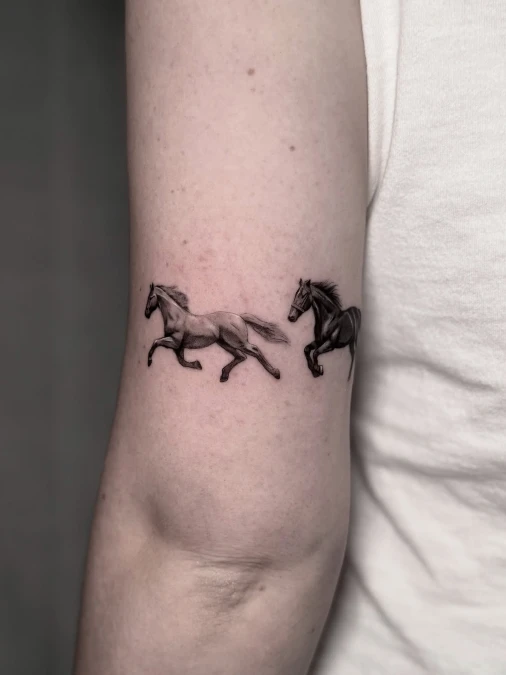
Two miniature, hyper-realistic horses are frozen mid-powerful gallop across a smooth forearm canvas. One is rendered in soft light grey with intricate shading defining every muscle and strand of flowing tail. The second, positioned slightly behind, is a deep, defined charcoal black, creating a dramatic color contrast that maximizes depth and realism.
Layering high-contrast tones in micro-realism achieves incredible depth in a tiny space.
This advanced pairing uses value contrast—the range between light grey and deep black—to prevent the highly detailed animals from blending together. The synchronized motion keeps the design dynamic and focused, much like layering dark, textured accents in a light-filled neutral room.
Why This Realistic Pair Works
- Light Grey Contrast Horse: The light grey horse provides the high-detail contrast point for the darker, heavier animal.
- Deep Charcoal Shadow Horse: A deep charcoal black horse builds substantial shadow and weight, giving the pair visual ground.
- Hyper Fine-line Stippling: Hyper fine-line stippling creates photographic muscle definition that looks true to life.
4. Winged Pegasus Shoulder Blade Placement
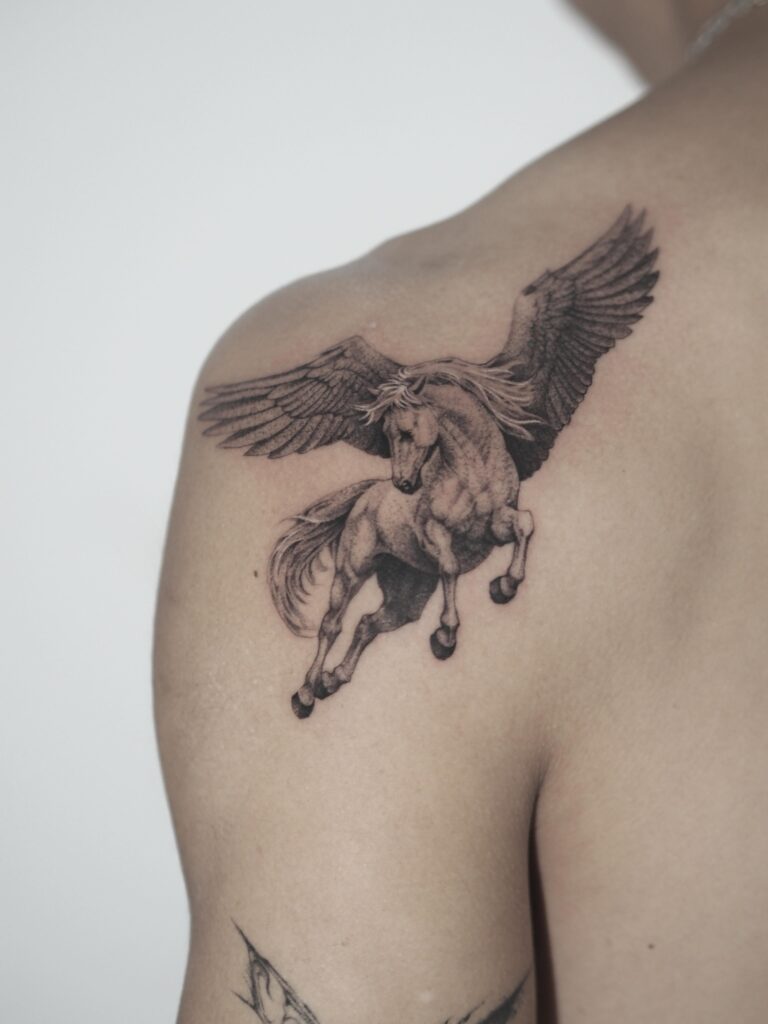
A winged horse takes flight across the upper shoulder blade in deep charcoal ink. Intricate feather textures on the broad wings contrast with the soft stippled shading of the muscular body. Natural skin tones peek through the negative space to create a crisp and airy feel.
Treating a broad shoulder like a blank gallery wall gives large designs room to breathe.
Flat placements like the scapula act as a solid base for heavy detailed ink. Grounding your body art here works exactly like anchoring a living room with an oversized statement rug. You gain maximum visual impact without distorting the delicate wing tips around a curved limb.
Quick Styling Tips
- Budget version: Scale down the overall wingspan to fit a smaller canvas like the inner forearm.
- Renter tip: Test out this expansive layout using high-quality temporary ink transfers before committing.
- Pro move: Match the upper angle of the wings to the natural slope of your shoulder for organic flow.
5. Sequential Motion Storyline Ink
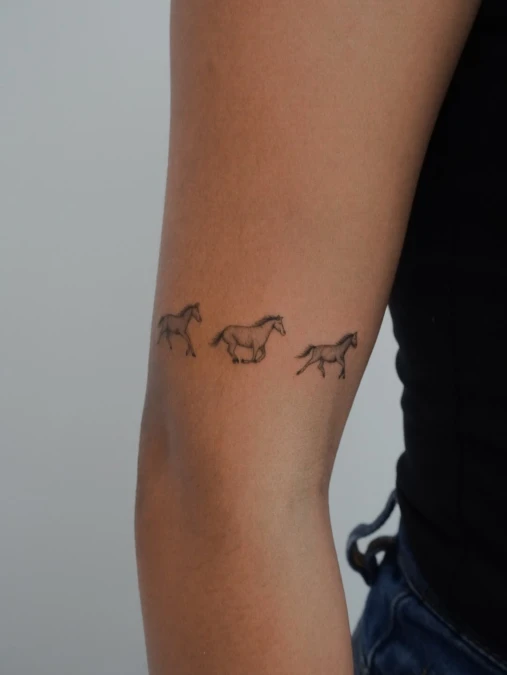
Three tiny horses walk and gallop in a crisp horizontal line across the smooth canvas of a tricep. Fine-line black ink creates a soft progression of movement against the warm skin. This minimal arrangement echoes the intentional spacing found in quiet luxury design where breathing room matters most.
Repeating a single motif in different stages builds immediate visual rhythm without adding heavy weight.
Grouping small art pieces in a linear sequence builds structure on wider areas like a broad arm or a large blank wall. Applying the [Rule of Three Decor Formula] establishes a clear focal point that grounds the surrounding space. Maintaining equal distance between each figure prevents the delicate design from feeling cluttered.
6. Classic Rodeo Bronc Outer Forearm Design
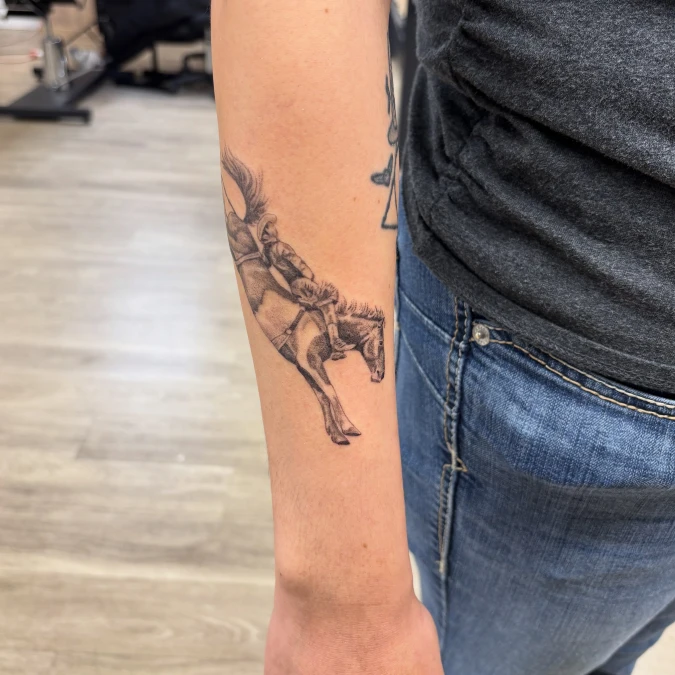
A cowboy gripping a plunging bronco rushes vertically down the outer forearm. Heavy grey shading etches rugged grit into the horse’s muscular coat and the rider’s western gear. Worn blue denim and a soft charcoal shirt frame this high-action blackwork against warm skin tones.
Anchoring an elongated, action-heavy motif along a straight bone builds sharp structural flow.
Vertical designs naturally flatter the long lines of a limb. Zoning your forearm with distinct vertical pieces acts exactly like creating spatial room zones in a wide studio layout—it gives heavy, clustered details a defined place to live. This layout technique leaves enough crisp negative space around the edges to keep a dense, masculine sleeve from feeling cramped.
7. Moody Maximalist Scenic Sleeve Foundation
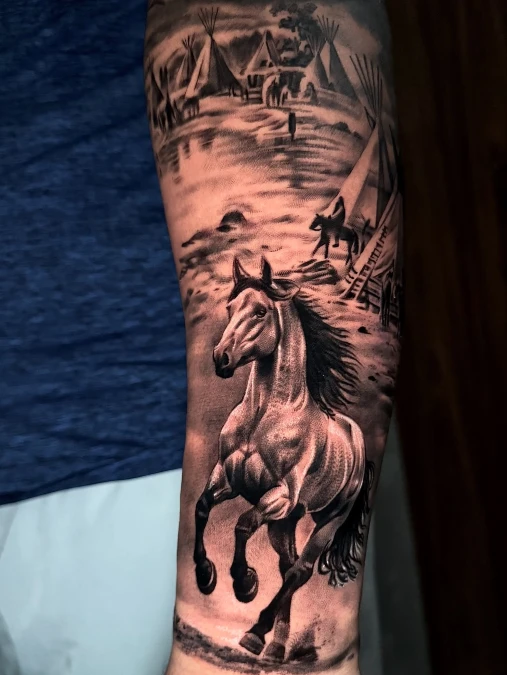
Dense blackwork builds a dark, sweeping landscape across the entire lower arm. A powerful horse breaks through the foreground, backed by intricately shaded teepees and textured water reflections. Heavy ink saturation grounds the dynamic scene against the warm skin.
Treating a wide limb like a dark feature wall anchors complex, layered storytelling.
Sweeping traditional sleeves demand ample space to prevent muddying the background details. This dense layout flatters large frames by utilizing the full surface area of a broader forearm. Building a heavy scenic foundation acts exactly like layering moody maximalist room decor—you need strong base notes to push the lighter details forward.
Why This Works
Foreground contrast: Deep charcoal shading pushes the central horse into sharp relief.
Wrap placement: Extending the landscape around the forearm creates an immersive, continuous view.
Structural weight: Heavy black ink ensures the intricate background remains legible over time.
8. Dramatic Pegasus Chiaroscuro Sleeve Art
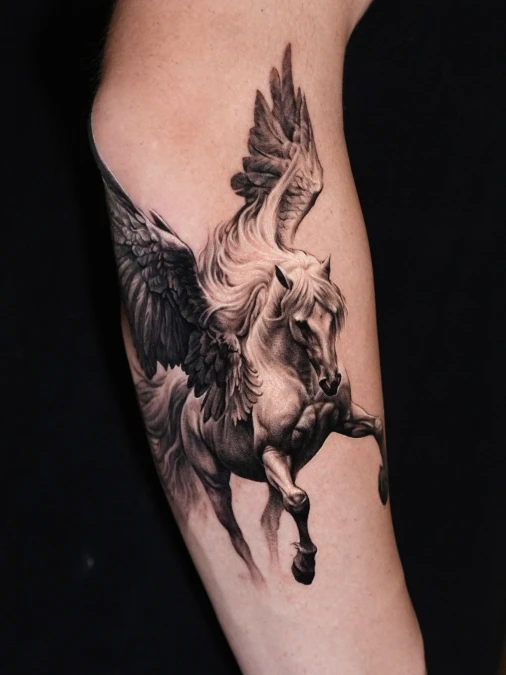
High Contrast Lighting For Bold Statements
Deep inky charcoal wings frame the bright negative space of a galloping Pegasus on this lower arm. Crisp stippling gives the flowing mane a soft wind-blown texture. Strategic skin breaks create a glowing three-dimensional finish that mimics dramatic spotlighting.
Heavy blackwork framing a bright center creates an immediate striking focal point.
High contrast ink works brilliantly for larger frames because the broad scale carries visual weight effortlessly. Planning a dense moody maximalist sleeve requires heavy anchor points just like grounding a dark room with rich textiles. Apply the [Shadow and Light Decor Formula] by pushing your darkest shading to the outer edges to pull focus directly inward.
9. Minimalist Line Art Forearm Jump
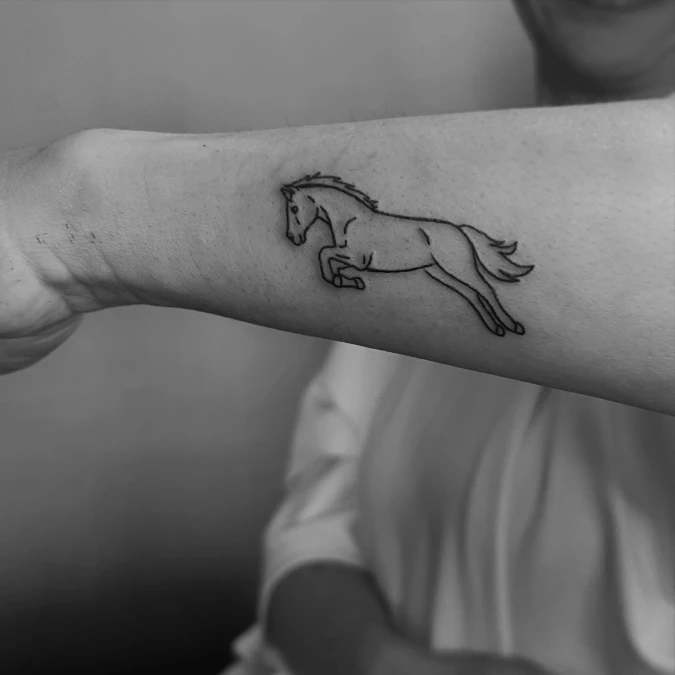
Crisp black ink traces the bare silhouette of a leaping horse along the inner arm. Unshaded skin fills the interior shape to establish an airy and uncluttered visual. Soft natural lighting highlights the delicate curve of the animal’s sketched mane.
Stripping an energetic motif down to its structural frame works exactly like executing a minimalist interior—every remaining line must carry serious weight.
This bare-bones technique caters strongly to individuals seeking the understated feel of quiet luxury styling without heavy pigment. Grounding the horizontal leap across the forearm utilizes the straight bone structure as an architectural base. Rely on the [Negative Space Decor Formula] by intentionally leaving the design hollow to let the surrounding canvas breathe.
Why This Minimalist Strategy Works
Element 1: Sharp black borders build a distinct boundary that keeps the high-motion subject feeling highly organized.
Element 2: Intentional negative space prevents the artwork from reading as a dark, heavy mass on a bare arm.
10. Micro Silhouette Tricep Placement
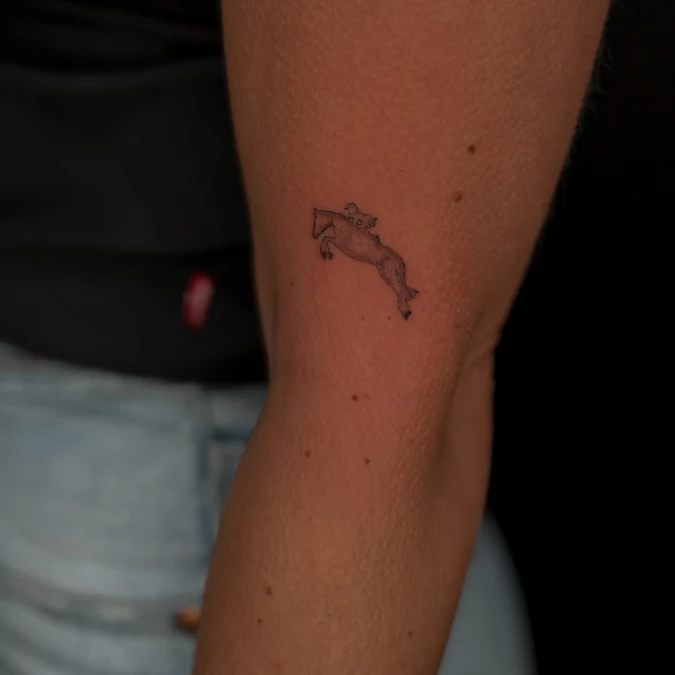
A tiny blackwork silhouette catches a horse and rider mid-jump right above the elbow crease. Razor-thin ink rests delicately against the warm canvas of the lower tricep. Soft shadows play across the skin to emphasize the crisp, barely-there linework.
Scaling high-action art down to microscopic proportions delivers an immediate dose of quiet luxury.
Placing a miniature scene on the back of the arm builds a hidden focal point that feels incredibly intentional. This minimalist approach flatters large frames by adding character without introducing heavy, clustered blocks of color. Apply the [Quiet Corner Decor Formula] by choosing an out-of-the-way spot to let small details shine independently.
Quick Styling Tips
- Budget version: Keep the design to a single-needle outline to cut down on expensive hourly shading rates.
- Renter tip: Draw this exact scale onto your arm using a fine-tip liquid liner to test the sightlines in your mirror.
- Pro move: Position the leaping horse slightly off-center from the tricep muscle for a more organic, fluid layout.
11. Soft Shaded Rearing Horse
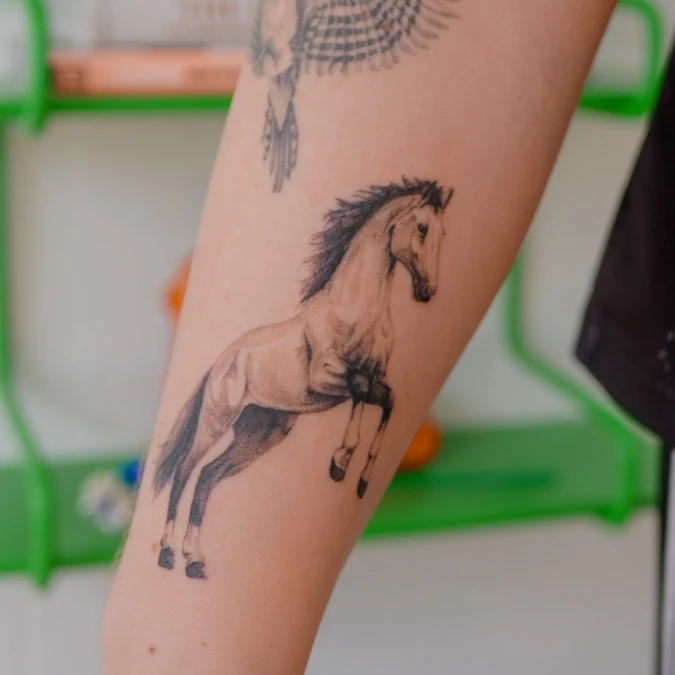
Deep charcoal shading builds a heavy, textured mane that contrasts against the soft, airy grey body of this rearing horse. Smooth gradients create realistic muscle tone along the lower forearm canvas. Warm natural light catches the crisp black hoof details to ground the dynamic upward motion.
Anchoring airy shading with solid black accents applies the High-Low Contrast Decor Formula to a compact canvas.
Grounding a light-bodied design with dark extremities works exactly like adding heavy iron hardware to a breezy, sunlit kitchen. This specific shading technique visually stabilizes the high-energy pose so it never feels chaotic.
12. Rearing Pegasus Upper Arm Composition
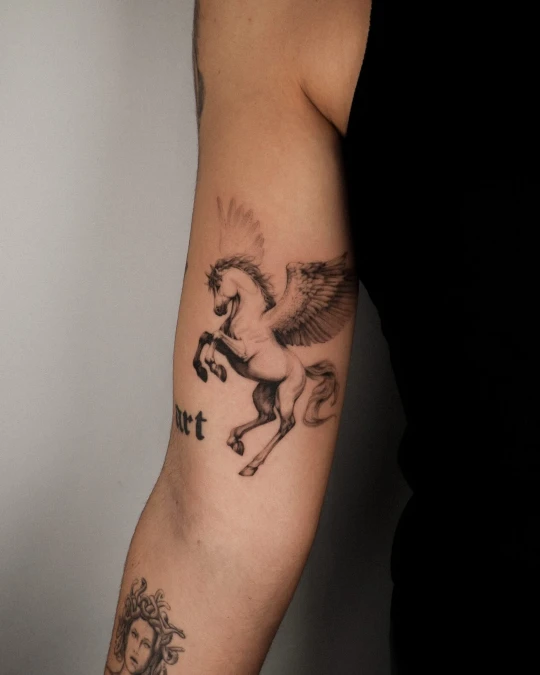
Deep black shading builds the grounded, muscular stance of a winged Pegasus on the back of the upper arm. Crisp, airy stippling details the expansive feathered wings, bringing heavy textural contrast against the smooth skin. Soft natural light catches the delicate mane and defined hooves resting just above dark gothic lettering.
Balancing heavy mythological motifs with open skin applies the Spatial Room Zoning Decor Formula directly to your body canvas.
Giving an intricate piece like this a dedicated zone on a broad tricep prevents the details from feeling crowded. This layout strategy echoes quiet luxury interiors, where large statement pieces need generous breathing room to truly anchor a space. You secure high visual impact without muddying the surrounding area.
Why This Rearing Design Works
Element 1: Crisp wing textures introduce a light, airy feel that offsets the heavy black body shading
Element 2: Vertical placement actively mirrors your natural bone structure to elongate the shape of the limb
Element 3: Generous negative space acts like a blank gallery wall to give the intricate artwork room to breathe
13. Liquid Chrome Rearing Horse
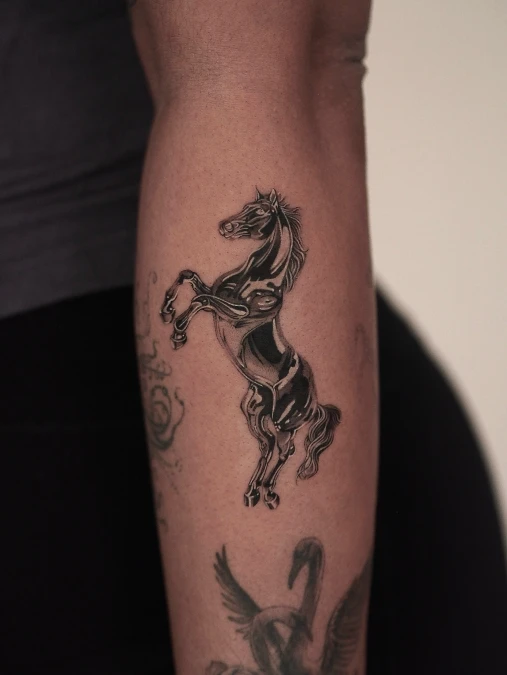
Heavy black ink mimics the sleek reflection of polished metal on this rearing forearm piece. Crisp skin breaks carve sharp highlights into the muscular chest and arched neck to build an almost liquid texture. Soft natural light catches the high-contrast shading against the warm skin of the lower arm.
Treating bold ink like high-shine hardware adds immediate industrial weight to a soft canvas.
Liquid chrome shading functions exactly like mounting a dark metallic fixture in a bright, quiet luxury space. You establish a heavy focal point that grounds the surrounding empty zones. This dense application flatters larger masculine frames by offering substantial visual structure without requiring a full sleeve.
Quick Styling Tips
- Budget version: Scale the motif down to a minimal silhouette to save on heavy saturation time
- Renter tip: Test the sightlines by sketching the thick outline in washable marker before committing to the final placement
- Pro move: Anchor this metallic style with sharp geometric linework to merge fluid motion with rigid architectural boundaries
14. Scenic Golden Horse Forearm Panel
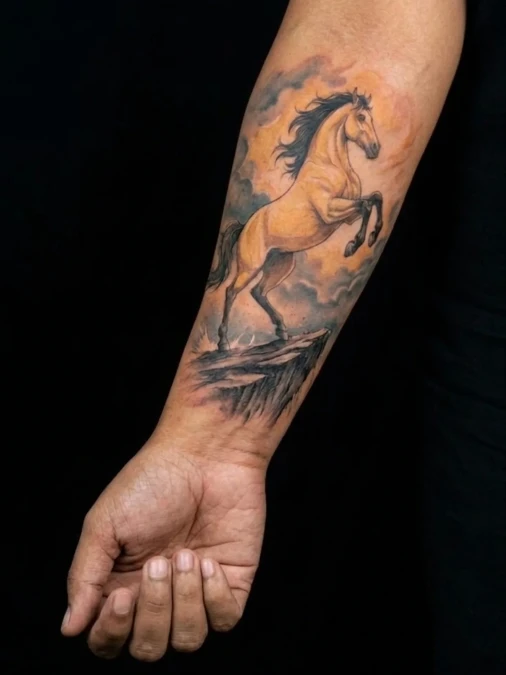
Warm golden ink washes across a rearing horse set against a stormy, textured sky. Deep charcoal shading carves rugged lines into the rocky cliff face right above the wrist. Soft fading at the top edges blends the rich sunset tones directly into the natural skin of the inner forearm.
Anchoring a colorful panel with heavy, dark groundwork applies the Earth Tone Layering Formula directly to your body art.
Dense traditional sleeves require strong structural bases to keep the brighter upper colors from feeling ungrounded. Positioning a heavy visual anchor like a black cliff at the narrowest point of the arm visually balances the wider upper muscles. This deliberate layout naturally flatters large frames by drawing the eye upward toward sharp, tailored apparel silhouettes.
15. Textured Rearing Horse Forearm Ink
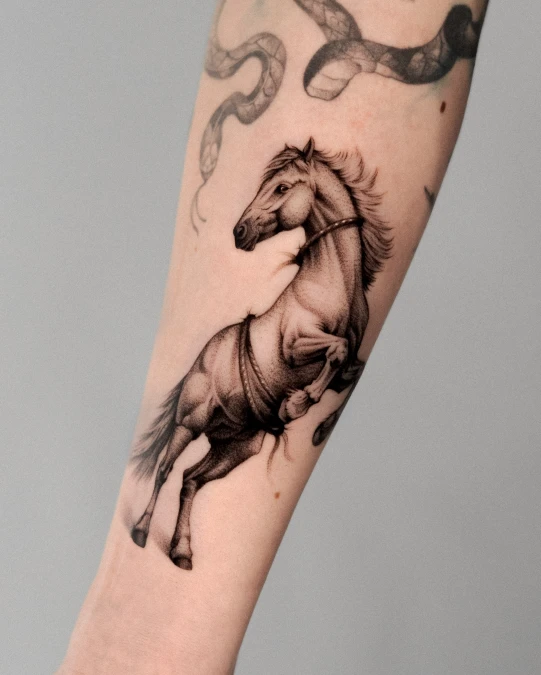
Dense stippling gives this rearing horse an incredibly tactile, plush finish along the inner forearm. Dark, heavy ropes cross the muscular chest, contrasting heavily against the softer, faded snake ink resting just above it. Crisp black outlines hold the dynamic upward motion firmly in place against warm skin.
Layering fresh, high-contrast ink near older, faded pieces builds a grounded, lived-in body canvas.
Mixing different tattoo opacities works exactly like blending vintage and modern textiles in a quiet luxury space. This specific placement on the forearm allows the heavy chest shading to anchor the design without feeling blocky. You gain a highly structured look that flatters larger frames effortlessly.
Quick Styling Tips
- Budget version: Focus solely on the bold outline and skip the extensive micro-stippling for a faster session
- Renter tip: Sketch this placement next to your existing tattoos using a temporary ink marker to check the visual balance
- Pro move: Match the rope details to the geometric patterns of a traditional sleeve to bridge different tattoo styles together
16. Moody Maximalist Rearing Back Piece
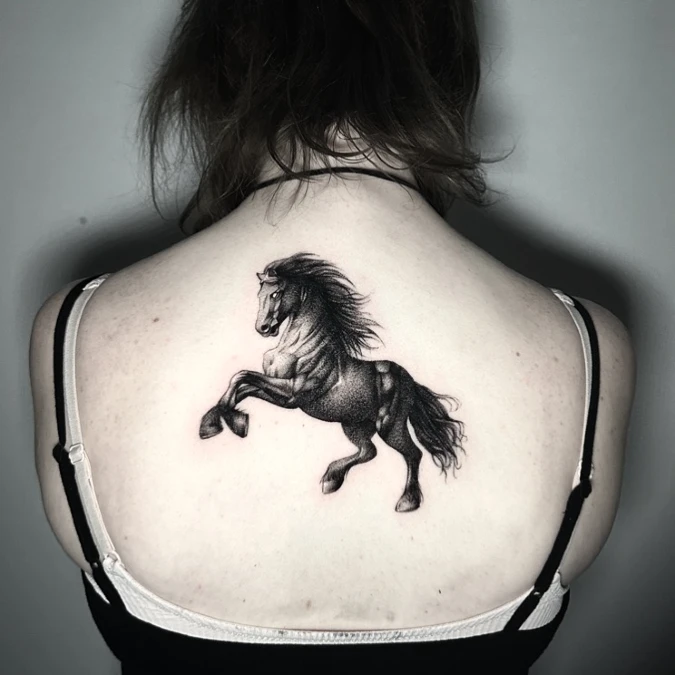
Deep, heavily saturated black ink builds the imposing muscular structure of a rearing horse directly between the shoulder blades. Thick stippling creates a dense, velvety texture across the animal’s coat and sharply detailed mane. Stark skin breaks highlight the sheer physical power of the pose against the smooth upper back canvas.
Centering a visually heavy, high-contrast design on a broad canvas instantly establishes a commanding focal point.
This dense shading technique works exceptionally well for large frames needing a grounded, bold statement. Positioning this dark artwork centrally acts exactly like dropping a massive velvet sofa in the middle of a moody maximalist living room.
Why This Saturated Layout Works
Element 1: Heavy pigment saturation ensures the intricate muscle details hold their bold shape against daily wear.
Element 2: Central spinal placement leverages your natural physical symmetry to keep the dramatic rearing motion completely balanced.
Element 3: Leaving the surrounding skin entirely bare acts like negative space in an art gallery, pushing all focus directly onto the dark ink.
17. Symmetrical Front Facing Pegasus Design
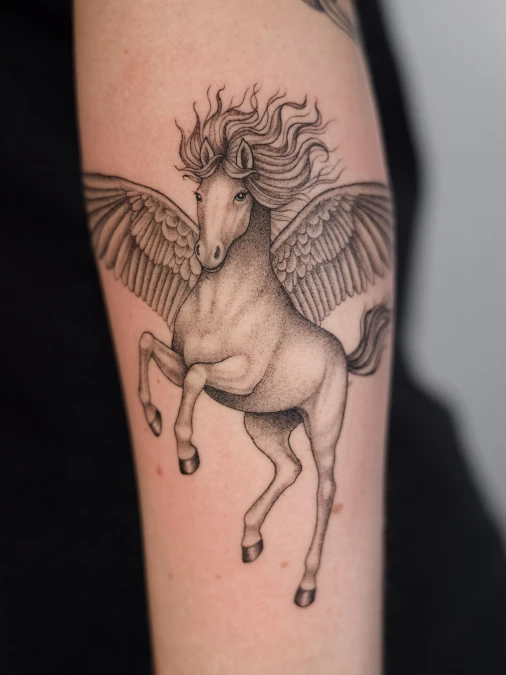
Soft stippling builds a front-facing winged horse across the smooth forearm. The fluted feathers spread outward in precise symmetry to form a crisp silhouette. Warm skin tones peek through the airy shading on the muscular chest and flowing mane.
Centering a highly symmetrical motif builds an immediate sense of structural calm on your body canvas.
Grounding an open-winged piece on the flat plane of the arm mimics spatial room zoning. You establish a clear visual boundary that keeps intricate details highly organized. This centered layout anchors the eye and channels a quiet luxury vibe without feeling heavy or cluttered.
Quick Styling Tips
- Budget version: Leave the inner feathers completely unshaded to save on expensive needle time
- Renter tip: Trace this exact wing span with a washable liner to test the horizontal fit in your mirror
- Pro move: Align the front hooves with your natural wrist tendons to emphasize fluid vertical movement