
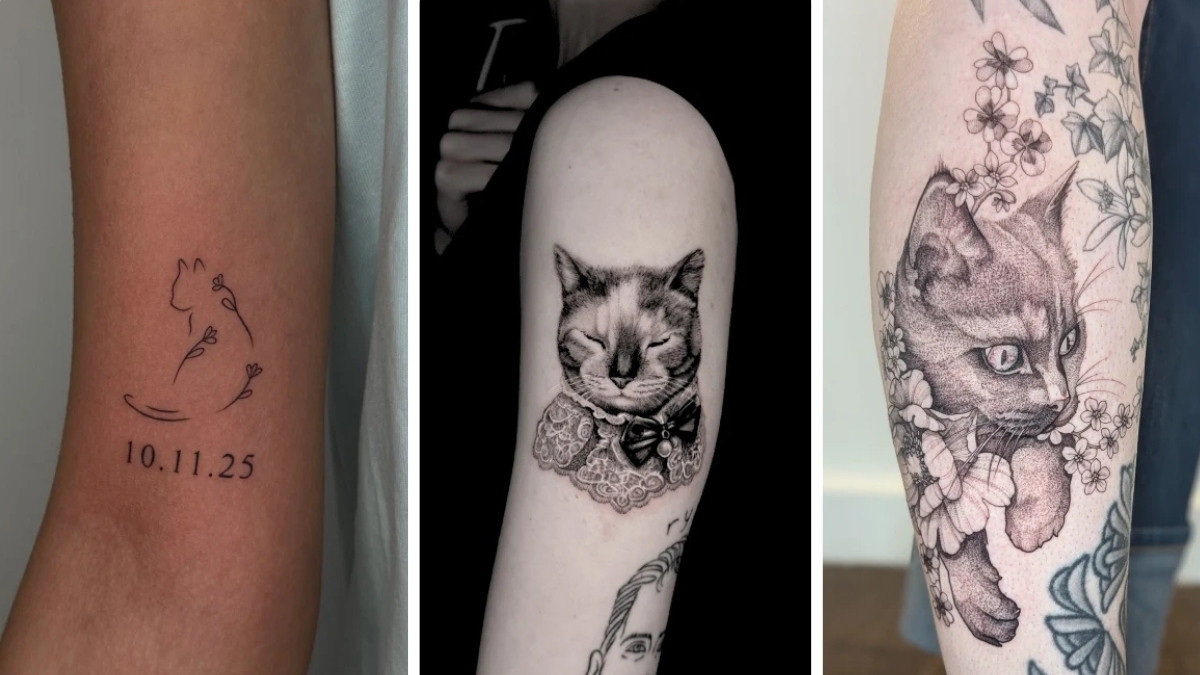
Keeping a piece of your feline friend close feels deeply grounding. Soft shading and crisp black ink mirror the quiet comfort they brought to your daily life. Wearing their memory on your skin builds a permanent tribute out of grief.
Memorial ink offers a tangible way to hold onto that bond. Minimalist paw prints work well for first-timers needing a gentle start. Detailed portraits anchor larger areas like forearms or calves. These pieces suit anyone wanting a daily visual reminder of their companion.
Planning Placement Finding The Right Canvas
Body placement dictates how a piece wears over the years. Flat surface areas handle intricate fur details much better than bending joints.
Small tributes fit neatly on wrists for private daily viewing. Larger designs require broader spaces to let the heavy line work breathe.
1. The Delicate Dotwork Portrait Wreath
Why This Works on Skin
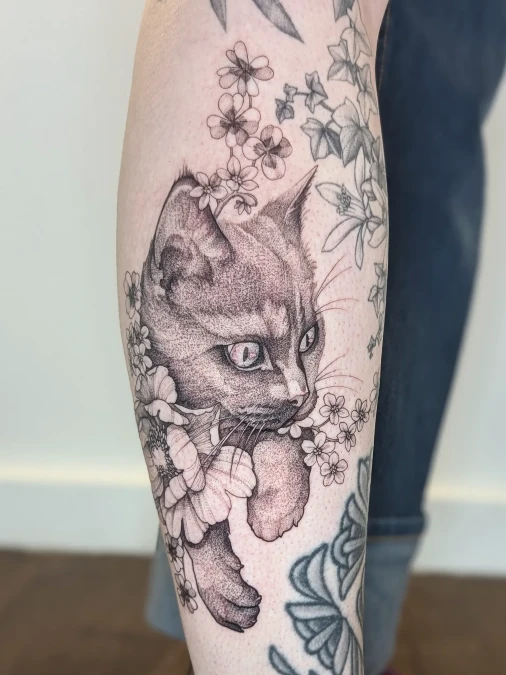
The tattoo uses intricate stippling and dotwork, creating a soft, almost plush fur texture for the cat’s face. Bright, open floral outlines surround the dense portrait, offering sharp, crisp visual contrast. Cool black ink grounds the composition against the warm skin tone, making the details pop near a blurry white wall and faded denim.
Balance heavy portrait saturation with airy floral outlines to prevent the overall piece from feeling dense or heavy on smaller limbs.
Opt for dotwork over solid packing for fur details. It prevents blurring as the ink migrates. This formula—a detailed central figure anchored by open line work—scales well for forearms or calves, ensuring the design doesn’t clutter the space.
2. Dated Minimal Line Art Tribute
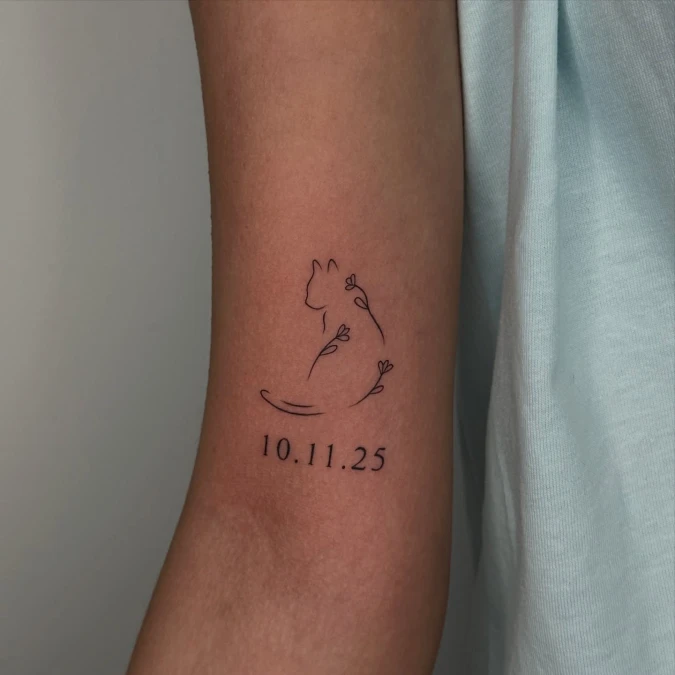
Crisp black single-line art forms a simple, seated cat silhouette, subtly incorporating tiny floral sprigs along its back. Below this delicate graphic, a clean serif font spells out the date “10.11.25” in precise, uniform numbers. The minimalist design sits neatly on a smooth section of skin, near a soft, light blue fabric, bathed in gentle indoor light.
Combine a generic silhouette with a specific date to anchor a deeply personal memory in clean, quiet design.
This delicate style suits small, flat areas like the inner upper arm, especially for first-time ink receivers or those with restrictive dress codes. Use the formula: Simplified Icon + Meaningful Date in a thin, legible font for an understated memorial.
3. The Ornate Framed Tabby Portrait
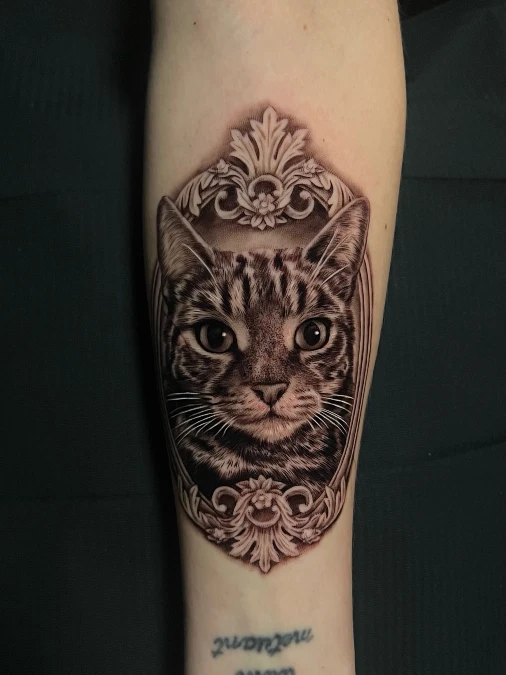
Rich, dark charcoal ink builds deep dimension across the tabby cat’s striped fur. A sculpted, baroque-style border wraps the realistic portrait in architectural detail. Crisp white highlights catch the light on the stiff whiskers and glassy eyes against the soft skin tone.
Encase hyper-realistic pet details within a rigid structural frame to ground heavy shading on an open canvas.
This bold layout anchors heavily on long, vertical spaces like the outer calf or forearm. You need ample room for the intricate filigree to read clearly without crowding the central feline figure. Try this formula: High-Contrast Subject + Structured Border = A classic, gallery-wall-inspired memorial.
Why This Works
Element 1: Deep black saturation creates a plush, realistic fur texture that stands out instantly.
Element 2: The vintage-inspired scrollwork border acts as a visual boundary to keep the dense shading contained.
Element 3: Stark white ink strokes inject lifelike energy directly into the fine whiskers and pupils.
4. The Soft Vignette Profile Portrait
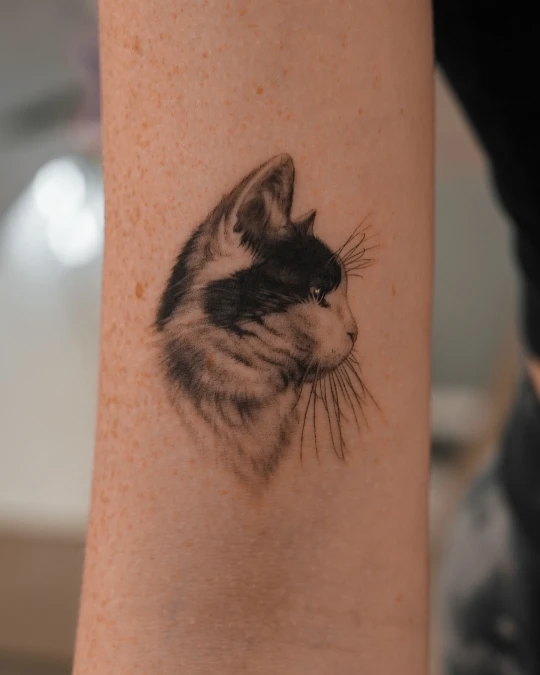
Deep black shading creates a striking mask across the upper half of the cat’s face. Soft, wispy strokes fade gently into the warm, freckled skin to form a bottomless vignette. Long, crisp whiskers stretch outward, breaking up the dense saturation with delicate, airy lines.
Fade heavy realism into bare skin to prevent dense black ink from looking like a harsh sticker.
This frameless technique thrives on flat, open canvases like the inner forearm. Skipping a hard border allows the piece to breathe and age naturally with your body. Try this placement formula: High-contrast subject + soft feathered edges = a grounded but breathable tribute.
Quick Styling Tips
- Budget version: Shrink the overall scale down to a micro-portrait to cut hours off the artist’s chair time while keeping the detail.
- Renter tip: Commission the artist to draw the portrait first, and test the exact placement using a custom temporary tattoo before committing to the needle.
- Pro move: Add a subtle wash of white ink to the tips of the whiskers to keep them sharp against tanned or freckled skin over time.
5. The Formal Lace Collar Portrait
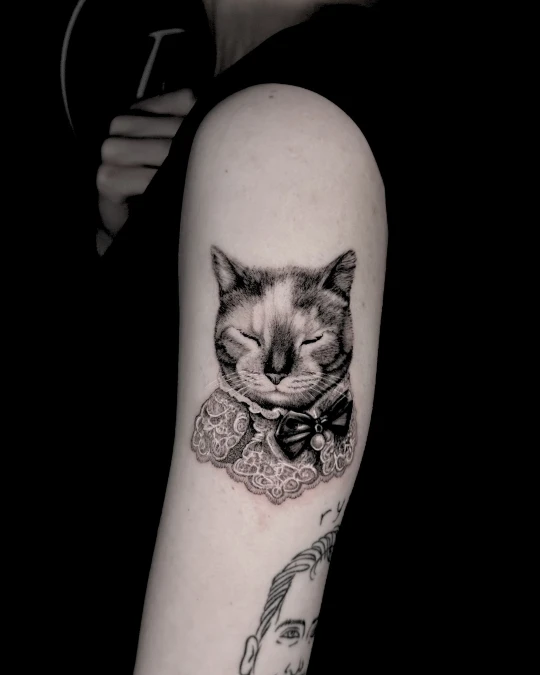
Soft grey shading builds a peaceful, sleeping feline face with closed eyes. Intricate white and grey ink weaves a crisp lace collar beneath a dark, heavy satin bow. The dense black knot grounds the delicate, airy linework of the vintage neckline against pale skin.
Anchor airy, delicate textures with a single heavy focal point to keep the design visually grounded.
This highly detailed composition needs a broad, steady canvas like the upper arm to hold the fine lace patterns. Tight spaces will blur the delicate netting over time. Try this layout formula: Soft Subject + Intricate Clothing + Heavy Dark Anchor.
Quick Styling Tips
- Budget version: Swap the intricate lace collar for a simple, solid-line ribbon to save hours of expensive needlework.
- Renter tip: Order a temporary custom transfer of the design to test how the dark bow sits on your arm before booking your session.
- Pro move: Ask your artist to drop subtle white highlights into the pearl bell and satin bow to make the textures pop against the matte fur.
6. The Ginkgo And Realism Blend
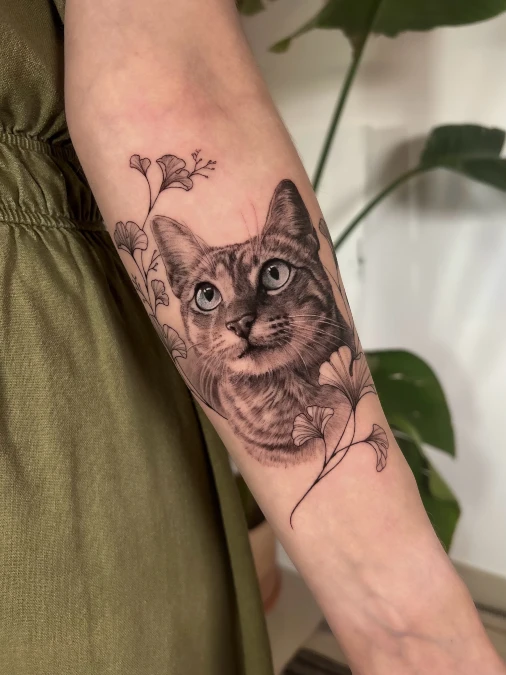
Deep, textured shading brings the alert tabby portrait to life against bare skin. Thin, crisp black lines form delicate ginkgo leaves framing the dense central face. Soft natural light highlights the sharp contrast between heavy fur details and airy plant stems.
Frame heavily shaded realism with open botanical outlines to stop the overall design from feeling muddy.
This high-contrast approach shines on long, flat canvases like the inner forearm. Keeping the outer foliage light allows the tattoo to breathe as the ink ages. Try this layering formula: Grounded Central Subject + Open Negative Space = A highly readable memorial.
7. The Framed Realism Window
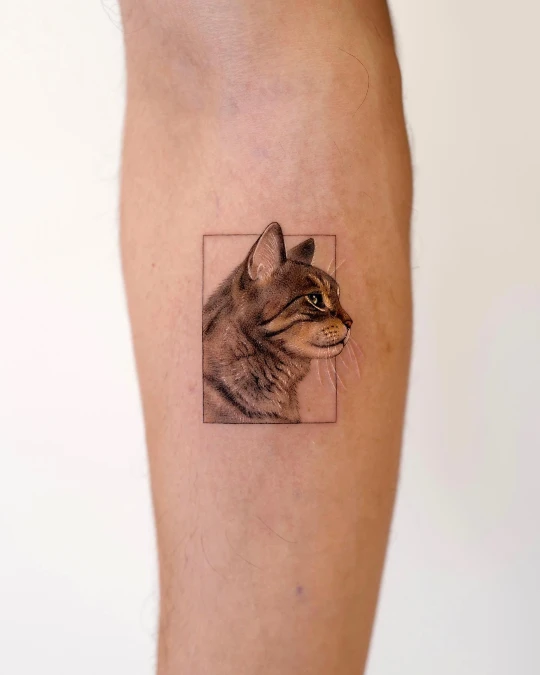
Rich brown and amber inks build a highly realistic, warm feline profile. A stark, crisp fine-line rectangle borders the back of the head, acting like a literal picture frame. Long white whiskers break past the rigid boundary, creating an airy 3D effect on bare skin.
Contain heavy color realism within a strict geometric border to keep the design feeling intentional rather than floating.
Applying a sharp border acts exactly like framing a dense oil painting in a minimalist living room. Rigid lines provide architectural structure for organic fur shapes. Framed layouts work exceptionally well on long flat canvases like calves or outer arms where straight lines will not warp over joints.
Why This Works
Element 1: Crisp fine-line boundaries act as structural walls to contain heavy, saturated brown pigments.
Element 2: White ink whiskers overlapping the black frame create instant depth and break up visual weight.
Element 3: Leaving unshaded negative space outside the box acts as breathing room to keep focus locked on the central portrait.
8. The Dark Floral Anchor Portrait
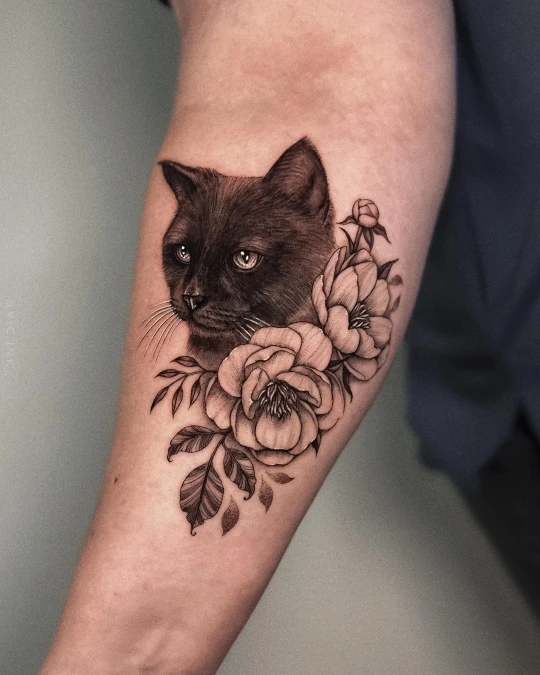
Deep black ink saturates the plush fur of the central feline face, creating a heavy visual weight. Crisp white whiskers break through the dense shading to add airy contrast. Soft, open-petaled floral elements wrap around the dark focal point, offering a light, breathable border against warm skin.
Anchor heavily saturated focal points with airy open borders to keep the design visually balanced.
Black cat portraits require dense packing of dark ink to achieve a realistic velvety look. Surrounding heavy subjects with lighter botanical line work acts like placing a chunky dark velvet sofa in a bright sunroom. Broad canvases like forearms handle high-contrast layouts well by giving open floral elements room to breathe without crowding the dark center.
Quick Styling Tips
- Budget version: Swap hyper-realistic floral shading for single-line botanical outlines to reduce needle time.
- Renter tip: Test a temporary print of a heavily saturated piece on your arm first to ensure bold visual weight suits your daily wardrobe.
- Pro move: Request stark white ink highlights in the eyes and whiskers to maintain sharp contrast against dark fur over time.
9. The Watercolor Floral Arch Portrait
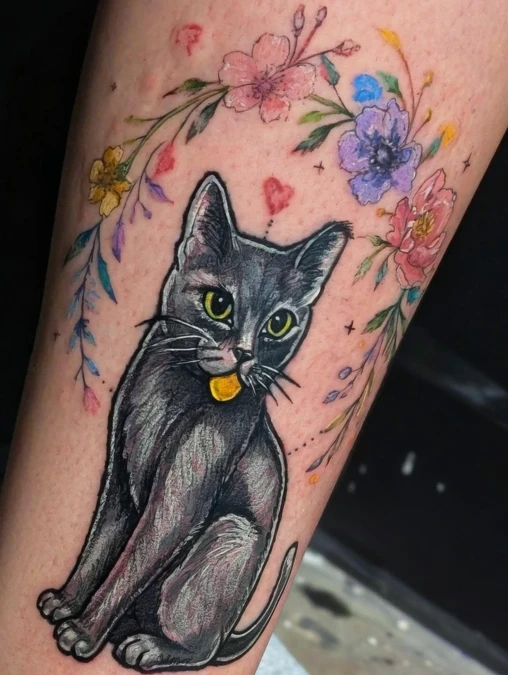
Heavy charcoal and grey tones define the seated cat. Vibrant pink, purple, and yellow watercolor blooms form a soft archway overhead. A tiny red heart floats above the feline face.
Frame heavy, dark subjects with soft, colorful botanical arches to prevent visual heaviness.
Bright watercolor accents act like lively throw pillows on a dark charcoal sofa. Broad, flat areas like calves or forearms anchor high-contrast designs easily. Surrounding dense shading with airy blooms keeps the composition feeling cheerful and breathable.
Why This Works
Element 1: Colorful watercolor florals inject bright energy into a monochrome portrait.
Element 2: A curved botanical arch provides a natural boundary without relying on harsh geometric lines.
Element 3: The bright yellow bell draws the eye directly to the center of the piece.
10. The Pink Heart Framed Portrait
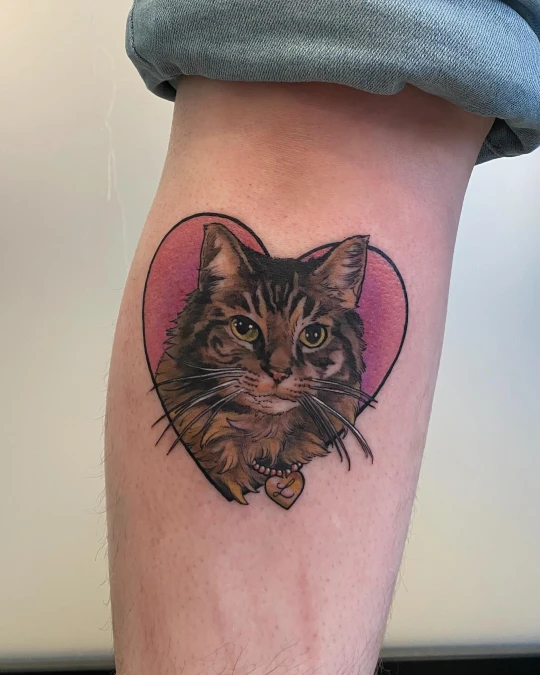
Deep brown inks mix with sharp black strokes to form a fluffy feline face. Warm pink pigment fills a vibrant heart border, anchoring the soft portrait against pale skin. Small gold collar tags stamped with an initial add a highly personal focal point below the chin.
Contain highly detailed realism inside a bold colorful shape to anchor visual weight on an open canvas
Geometric framing works exceptionally well on broad body areas like calves or thighs. Placing dense fur textures over a bright solid background acts like hanging a woven tapestry on a painted accent wall. High contrast keeps the central subject readable from a distance.
Quick Styling Tips
- Budget version: Choose a simple black outline for the heart instead of packing solid pink ink to cut down session time.
- Renter tip: Test a temporary decal of the design to see how the pink tone sits against your natural skin color.
- Pro move: Request crisp white highlights in the eyes and on the gold tag to keep the portrait looking glossy and fresh.
11. The Softly Shaded Back Profile
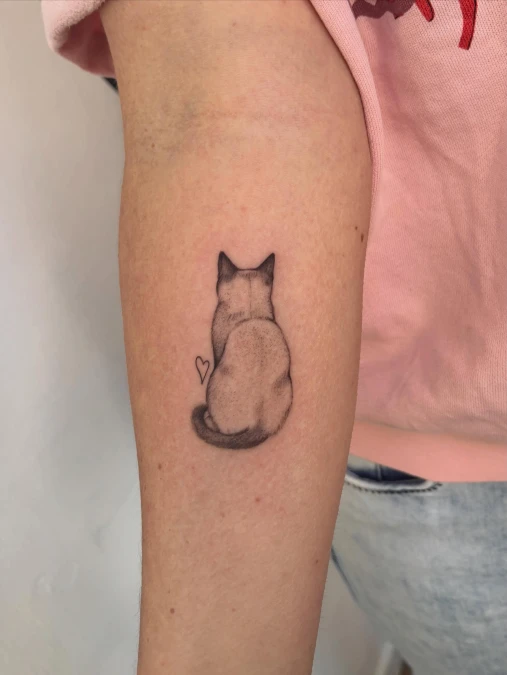
Gentle stippling builds a delicate shadow across the seated feline form. Crisp dark ink defines the pointed ears and curled tail on bare skin. A tiny hollow heart floats beside the quiet figure.
Balance subtle shading with a tiny line-art symbol to keep minimal ink feeling grounded.
Fine dot-work creates soft volume without requiring painful heavy black saturation. Outer forearms provide smooth canvases for modest designs requiring straight alignment. Placing the cat facing away adds a peaceful mood to the memorial.
12. The Split Profile Color Realism
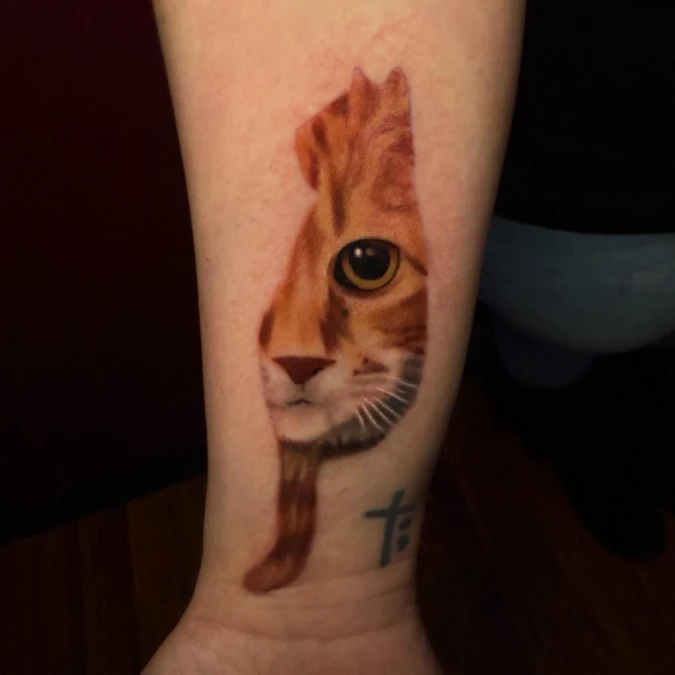
Vibrant orange and deep amber inks build a highly realistic half-face tabby portrait. Sharp white whiskers sweep across the lower edge. Warm skin tones provide a natural background for the partial silhouette.
Anchor a partial realism portrait on a narrow canvas to maximize detail without overcrowding.
Vertical placements demand tall and narrow designs. A split face allows the artist to pack incredible fur detail into a smaller space. Try placing a half-portrait on the inner wrist or ankle.
Why This Works
Element 1: Rich orange pigments create a plush texture against bare skin.
Element 2: Cropping the feline face vertically saves valuable space on narrow limbs.
Element 3: Stark white ink on the whiskers pops brightly against the dense color packing.
13. The Linear Gallery Wall Layout
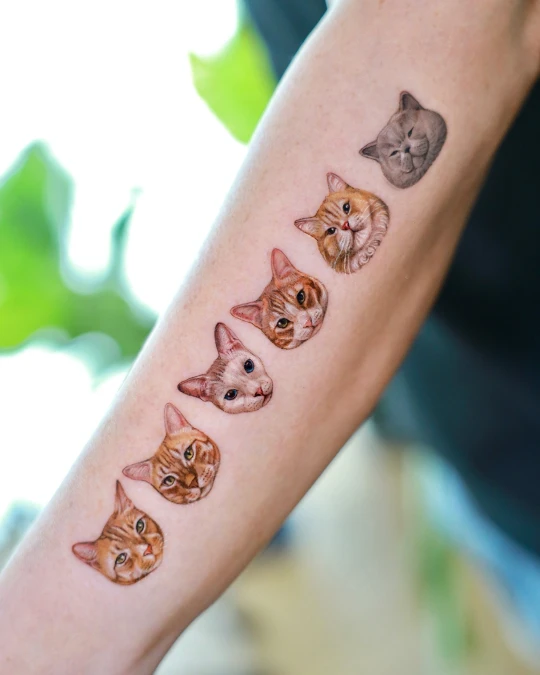
Six crisp micro-realism feline faces float diagonally down a pale forearm. Warm ginger, cool grey, and soft creamy inks capture fluffy fur patterns without requiring heavy outlines. Gentle spacing between each portrait keeps the colorful collection feeling light and airy.
Treat multiple memorials like a hallway gallery wall by spacing them evenly along a clear diagonal sightline.
Grouping small pieces requires strict alignment to look intentional rather than cluttered. Long outer arms provide a flat canvas to ground multiple portraits over time. Creating a linear flow lets you add new faces later while keeping the layout unified.
Why The Grouping Works
Element 1: Removing rigid borders around each face keeps the skin feeling open and light.
Element 2: Diagonal placement follows natural muscle lines to create a dynamic visual flow.
Element 3: Micro-realism scaling allows several detailed portraits to fit cleanly on a single limb.
14. The Micro Realism Black Seated Cat
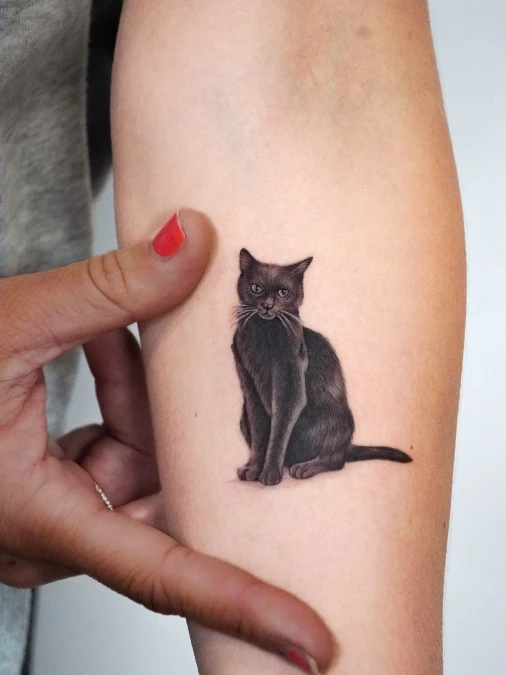
Deep charcoal ink packs tightly into a tiny, seated feline silhouette. Bright white whiskers provide sharp contrast against dark fur. Soft shading grounds the small figure on pale bare skin.
Scale down heavy color realism to keep dark ink from overpowering small canvas areas.
Tiny details require a steady hand and a very flat placement area. Inner biceps offer a smooth surface free from major joint movement. Shrinking a dense design mimics placing a small, dark accent pillow on a light armchair to create a focused focal point.
15. The Fine Line Botanical And Initial Portrait
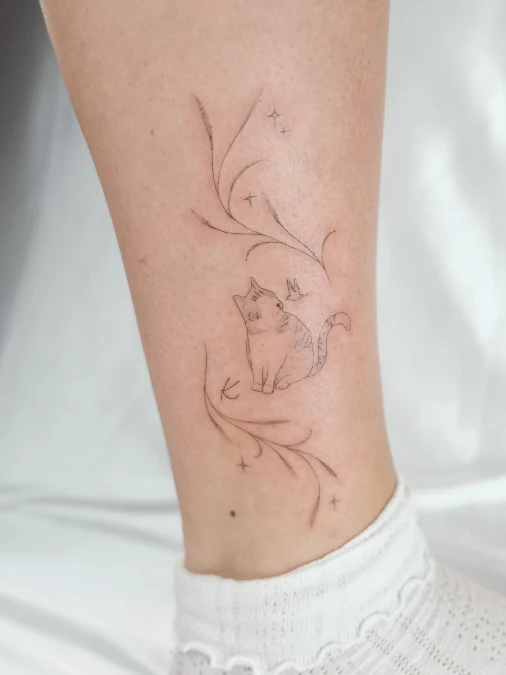
Soft, wispy ink outlines a tiny, seated cat looking up at a delicate bird. Ethereal botanical stems frame the central figure with gentle, sweeping curves. Sparse stars and a single crisp initial ground the airy composition on bare skin.
Frame small focal points with flowing vertical elements to elongate the design area visually.
Minimalist linework functions like light sheer curtains in a small sunroom. Keeping ink sparse allows natural skin tones to act as open negative space. Heavy shading is completely absent. Tall ankle placements require vertical framing to follow leg muscles organically.
Quick Styling Tips
- Budget version: Strip away the surrounding ivy to cut needle time down significantly.
- Renter tip: Custom temporary tattoos let you test how sweeping lines wrap around your ankle bone.
- Pro move: Choosing a dark brown ink softens the overall contrast against pale skin tones.
16. The Floral Framed Color Realism
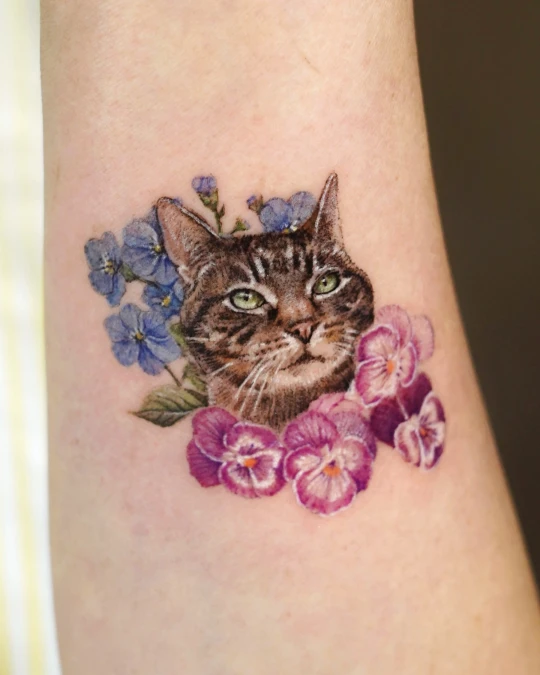
Rich brown pigment builds a dense tabby face. Bright green eyes pop against the dark fur. Soft pink and periwinkle blooms hug the central figure tightly, bringing vivid energy to pale skin.
Balance heavily saturated focal points with vibrant pastel accents to lighten the overall mood.
Pairing colorful botanicals with dense ink works exactly like setting fresh flowers next to a heavy wooden antique. Broad arm areas provide plenty of flat surface area for intricate coloring. Bright framing prevents dark memorials from feeling cold.
17. The Stacked Dual Portrait
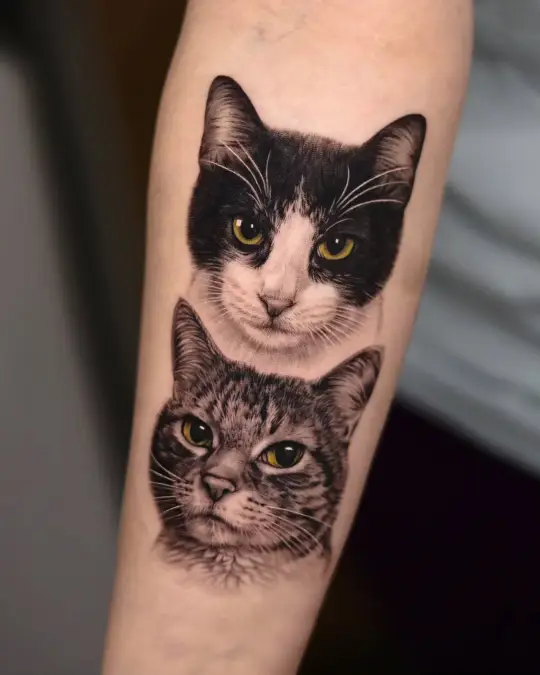
Dense black and grey ink creates two highly realistic feline faces stacked vertically. Sharp white ink highlights define the whiskers and glassy, intense eyes. Soft shading at the edges blends the portraits into the natural skin tone, keeping the composition grounded without needing a heavy frame.
Stack multiple portraits vertically to maximize visual impact on a long, narrow limb without crowding.
Stacking faces mimics a classic gallery-wall layout by aligning subjects along a single vertical axis. This placement works well for forearms or calves, where the space is tall and flat. Stacking prevents the designs from feeling cluttered or random.
Quick Styling Tips
- Budget version: Opt for single-needle stippling instead of heavy color packing to reduce the time spent in the artist’s chair.
- Renter tip: Order a temporary custom transfer to test the vertical alignment on your arm before making a permanent choice.
- Pro move: Ask your artist to use consistent white ink intensity in the eyes of both cats to tie the two separate portraits together visually.
18. The Fine Line Botanical Portrait
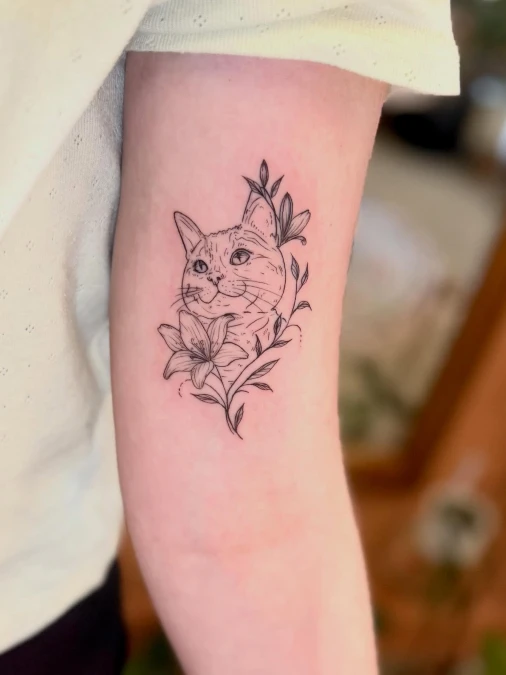
Crisp, delicate linework traces a seated cat surrounded by soft, open lily petals. Fine, airy strokes build form and depth without relying on heavy black saturation or thick shading. The composition sits light and clean against a warm, neutral skin tone.
Use sparse, consistent line weights to keep detailed botanical compositions feeling light and intentional.
This delicate style suits smaller, flatter canvas areas like the inner bicep or upper forearm where fine lines remain legible over time. A balanced ratio of open space to ink prevents the piece from looking crowded or muddy as it heals. The formula—single focal point plus surrounding foliage—creates a balanced, airy layout.
Why This Works
Element 1: Precise, thin line work creates a crisp silhouette that maintains clarity against bare skin.
Element 2: Including a specific botanical element anchors the animal portrait in a natural, organic context.
Element 3: Strategic use of negative space allows the delicate drawing to breathe and stand out clearly.
19. Detailed Portrait Against Existing Ink
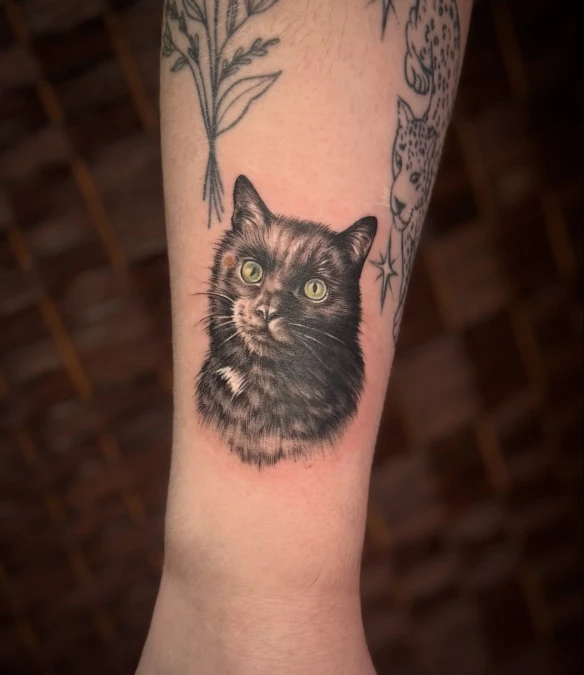
High Contrast Fur Realism
Deep black and charcoal tones create a soft, velvety texture across the cat’s face. Piercing green eyes catch the light, contrasting sharply with the darker fur surrounding them. The portrait sits near other existing tattoos, showing how a new memorial fits into a larger collection.
Use deep saturation for black fur to ensure features remain distinct and readable over time.
High-contrast realism requires careful shading to avoid a muddy look. This style works well for dark-furred cats where light highlights are crucial for depth. Placing a detailed piece near other work requires matching the shading style to keep the arm composition cohesive.