
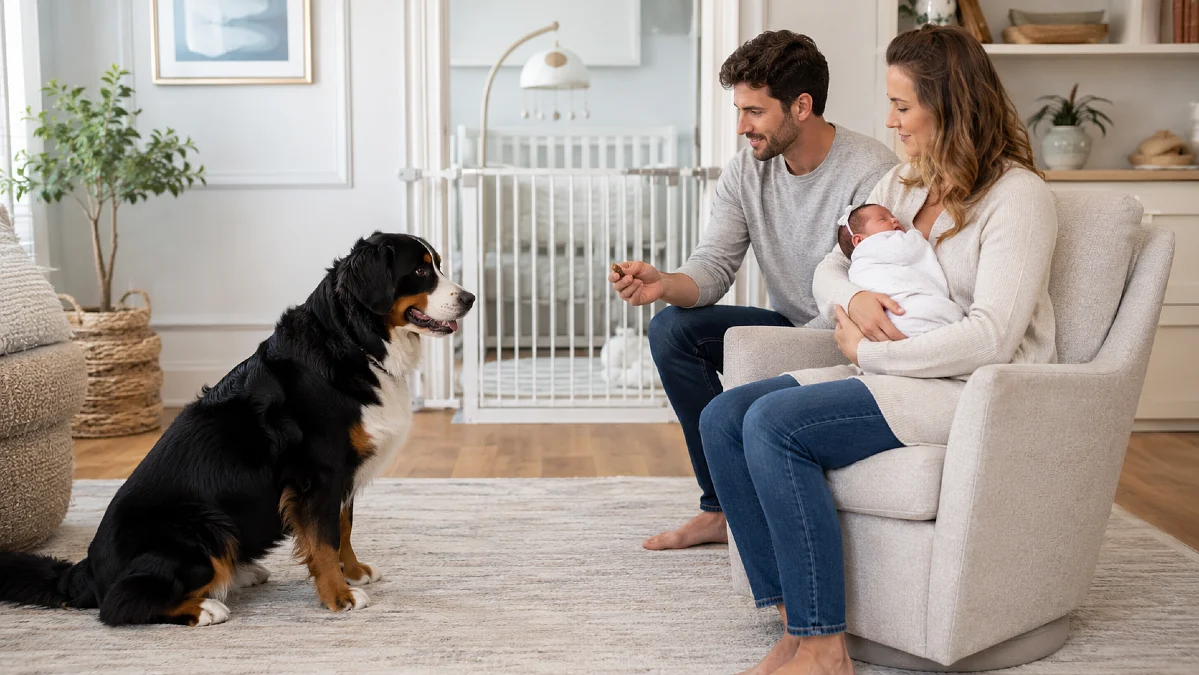
Bringing a newborn home is a magical milestone. But if you already have a furry firstborn, it can cause major anxiety.
Dogs thrive on routine. A new baby brings unpredictable sounds and new smells. Your dog suddenly gets less attention. This sudden change can trigger stress and jealousy. It often leads to behavioral issues.
You need a solid plan. You will learn a clear method to prepare dog for new baby. We will cover everything from early training to the first meeting. This guide will show you how to introduce new baby to dog safely.
Why Does Baby and Dog Safety Matter?
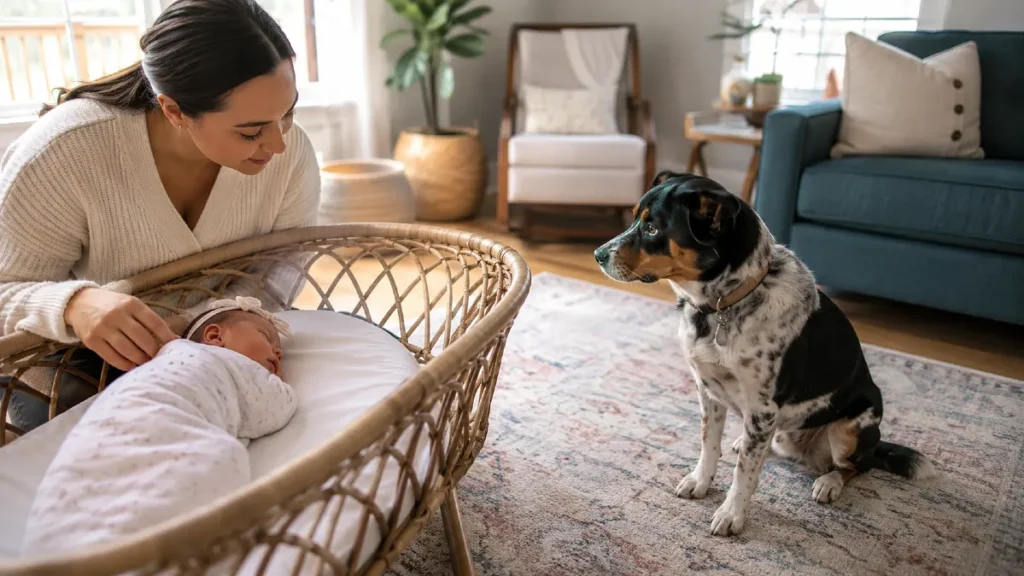
Many parents think their friendly dog would never bite. This is a dangerous myth. Over 80 percent of dog bites to children happen in the child own home. These bites usually come from a familiar dog.
Children under 5 years old face the highest risk for severe injuries. More than half of pediatric dog bites are unprovoked. Sometimes an innocent toddler behavior triggers the bite. A child might hug the dog or startle a sleeping pet. A clumsy toddler might fall on the dog.
You must take baby and dog safety seriously from day one. Friendly dogs still have animal instincts. They react when they feel scared or trapped.
| Risk Factor | The Reality |
| Location | 80 percent of bites happen at home. |
| Dog Type | Most bites involve a familiar family pet. |
| Age Group | Children ages 0 to 4 are at highest risk. |
Phase 1: 4 Ways to Prepare Your Dog for a New Baby
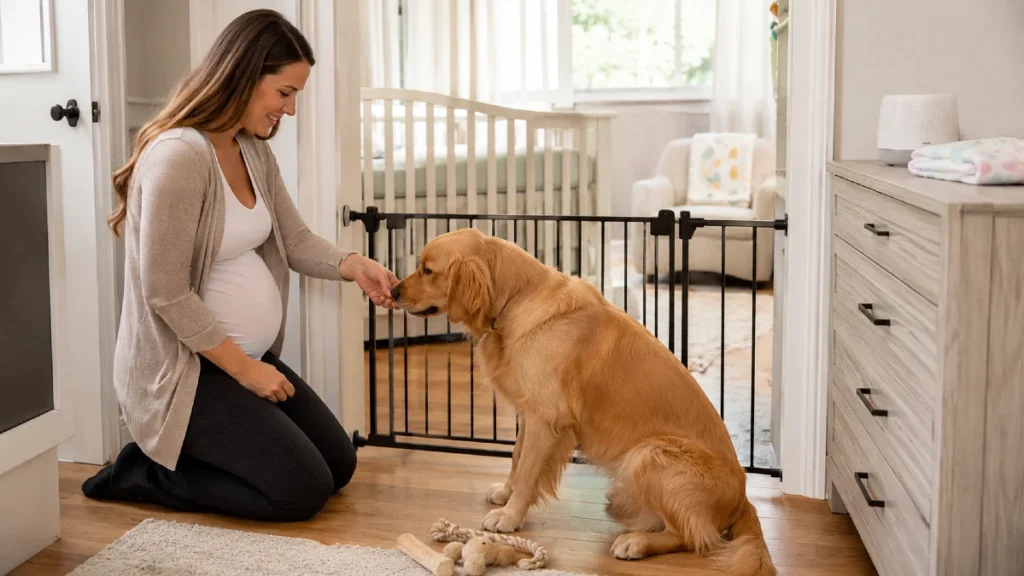
Start your training three to four months before the baby arrives. Early action gives your dog plenty of time to adjust. You want to prepare dog for new baby long before the chaos begins. Waiting until the last minute will stress everyone out.
First, change their reaction to baby noises. Babies are loud. Use a white noise machine or YouTube playlists of baby sounds. Play the audio of babies crying at a low volume during meal times. Gradually increase the volume over a few weeks. This builds a positive link between baby sounds and food.
Second, shift your daily schedule early. Slowly adjust feeding and walking times. Your dog must get used to unpredictability. Babies do not follow a set schedule. Your dog needs to learn flexibility now. Vary their walk times by an hour each day.
Third, establish strict boundaries in the house. Set up sturdy baby gates early. Teach the dog that the nursery is a boundary zone. They should not cross the threshold without permission. Start practicing this rule immediately.
The ASPCA advises using positive reinforcement for all new rules. Reward your dog when they respect the new boundaries. Treat them when they stay calm around baby sounds. Give them a piece of boiled chicken when they sit nicely outside the nursery.
Decrease the amount of constant attention you give the dog. You will be busy when the newborn arrives. Teach them to enjoy independent play with safe chew toys. When you are running on two hours of sleep, you do not want a dog guarding the crib. Do the hard work now.
| Supply Item | Purpose for Training |
| Sturdy Baby Gates | Keep dog out of the nursery space. |
| White Noise Machine | Play baby sounds to desensitize the dog. |
| High Value Treats | Reward calm behavior around boundaries. |
Phase 2: The Hospital Scent Swap
Dogs process the world through smell. Their nose is their primary tool for gathering information. Before they ever see your baby, they need to smell them. This step is crucial for success.
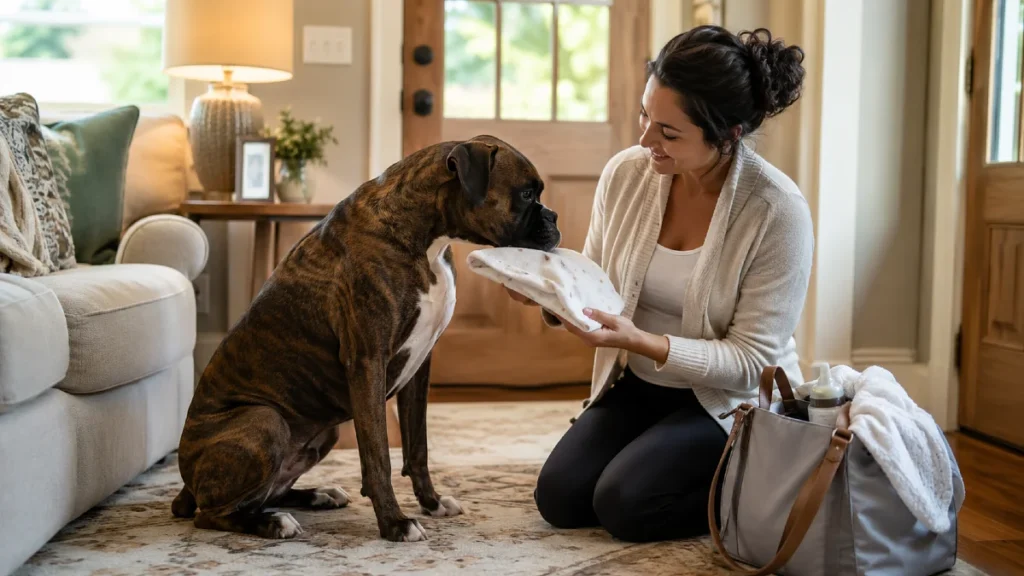
This action prepares your dog meeting baby for the first time. Have your partner bring an item from the hospital before the baby comes home. Use a blanket or onesie the baby has worn. The item should have the unwashed scent of the newborn.
Let the dog sniff the item while you hold it securely. Reward them with high value treats for calm behavior. Hot dogs or small pieces of cheese work perfectly here. Create a positive connection between the new smell and tasty food. Praise them softly when they sniff gently.
Safety Warning: Do not let the dog play with the blanket. They cannot bite it. They cannot sleep on it. The blanket is not a toy. It belongs to the baby. The dog must learn to respect the scent from a distance. If they try to grab the blanket, pull it away. Try again when they settle down.
Repeat this scent swap a few times if possible. Once you finish the scent swap, you are ready for the main event.
Phase 3: 4 Steps to Introduce a New Baby to Your Dog Safely
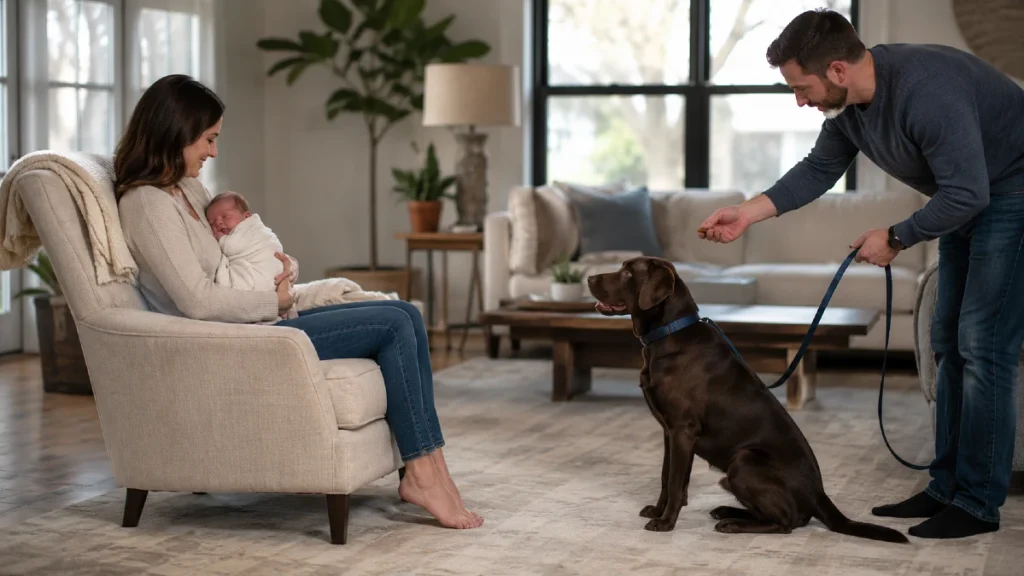
The hospital stay is the time for scent training. The homecoming is the time for action. Here is the exact process to introduce new baby to dog safely. Order matters here. Do not skip any of these steps.
Safely Introducing Your Dog to the Newborn
Mom Enters First Alone
Mom should enter the house first without the baby. Enthusiastically greet the dog and get their excited energy out. The dog missed you while you were at the hospital. Let them celebrate before bringing the newborn inside. Spend a few minutes just petting them.
Put the Dog on a Leash
Put the dog on a leash before the baby comes through the door. This gives you physical control. You can stop any sudden jumps or rough movements. Keep the leash loose if the dog is calm.
Sit Calmly with the Baby
Have the person holding the baby sit calmly in a quiet room. Allow the leashed dog to observe from a distance. Do not rush this step. Let the dog look from across the room.
Toss Treats for Calm Behavior
Toss high value treats to the dog for simply looking at the baby. Reward them for staying calm and quiet. Do not force physical interaction. Let the dog meeting baby for the first time be entirely hands off. They do not need to lick the baby.
What should you do if the dog growls? Do not panic. Do not punish the growl. Punishing a growl teaches the dog to bite without warning. A growl is simply communication.
Calmly remove the dog from the room. Try again later with more distance. Give your dog time to process the new arrival. They might just need a nap in a quiet space.
Phase 4: Long Term Rules for Coexistence
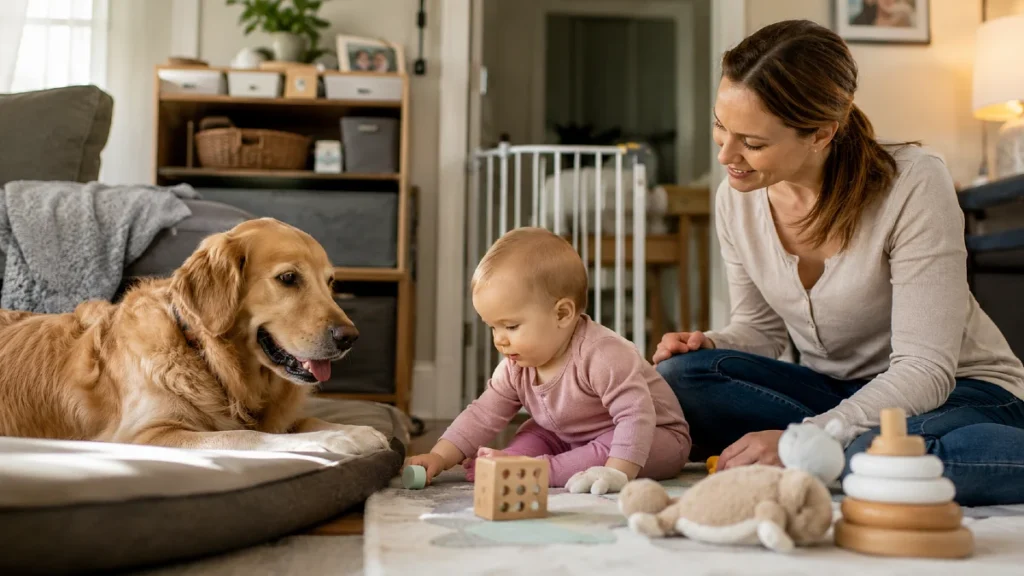
The first meeting is just the beginning. You need strict rules to maintain baby and dog safety over the years.
Active Supervision: Never leave a baby or small child alone with a dog. This rule applies even if the baby is sleeping peacefully. Dogs can confuse sudden movements or sounds with toys or prey.
A waking baby might startle a sleeping dog. You must always watch them together. If you leave the room, take the baby or take the dog.
Respect the dog space: Do not let the dog sleep on the baby equipment. Keep them out of the cot or stroller. Set this rule early and stick to it. Dogs often get aggressive over their toys or food. Keep baby toys and dog toys completely separate. Pick up dog toys when the baby starts crawling.
Create a Safe Haven: Ensure the dog has a crate or designated room. They need a quiet place to retreat when they feel overwhelmed. Never let the child enter that space. The dog needs to know they have an escape route. When the dog goes to their safe haven, leave them alone.
Consistent boundaries prevent accidents. Your dog will feel more secure when they know exactly what you expect from them.
| Safety Rule | What to Do | What to Avoid |
| Supervision | Watch them at all times. | Never leave them alone together. |
| Sleep Space | Keep dog in their own bed. | Do not let dog sleep in the cot. |
| Safe Haven | Give dog a private room. | Do not let baby enter dog area. |
Conclusion
Bringing a baby home changes everything. Preparing your dog requires early routine changes and scent training. You must use leashed introductions and strict supervision. Taking these steps protects your child and helps your dog adjust.
Share this article with other expecting parents who have pets. Proper preparation saves lives and keeps dogs in their homes.