
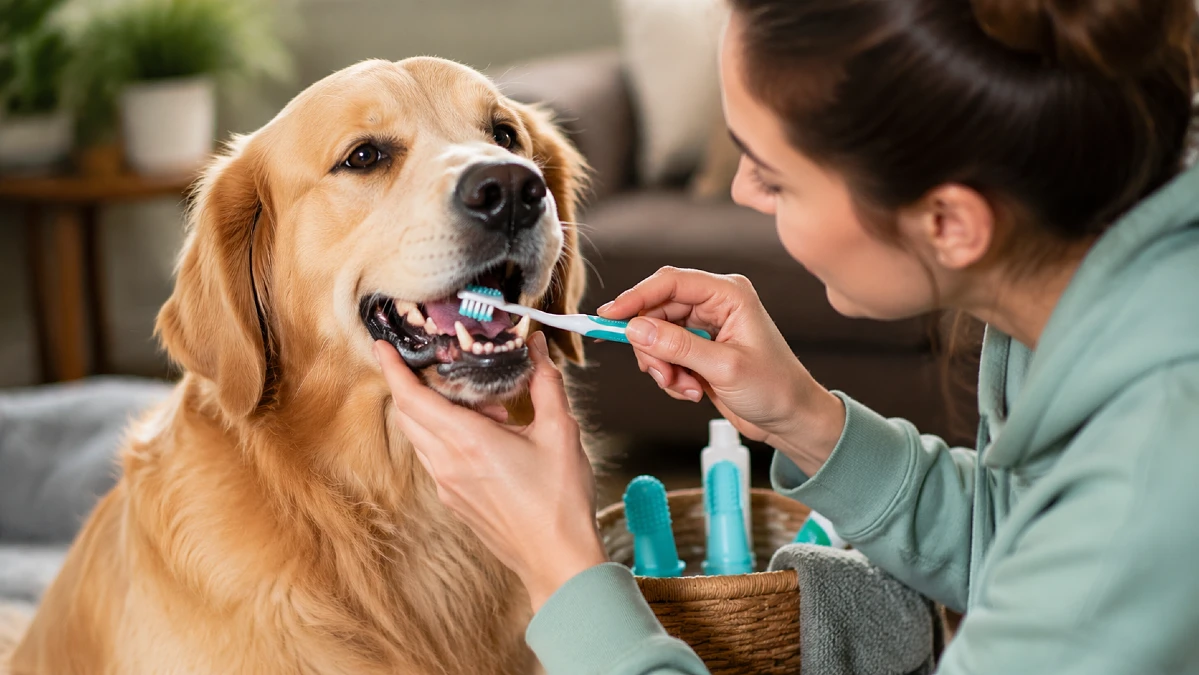
8 PM hits and your Golden Retriever Cooper runs away. He hides under the bed the second he sees a toothbrush. You probably feel intense frustration when your dog refuses oral care.
Over 50 percent of dogs suffer from severe dental disease today. Forcing a plastic brush into a panicked mouth ruins your bond and risks physical injury. Traditional pinning methods fail because they create intense fear.
You need a better way to clean those canines. We will show you the exact cooperative care chin rest method to fix this problem. You will learn how to brush your dog’s teeth safely. If your dog hates teeth brushed what to do is right here.
Why Your Dog Hates Having Their Teeth Brushed
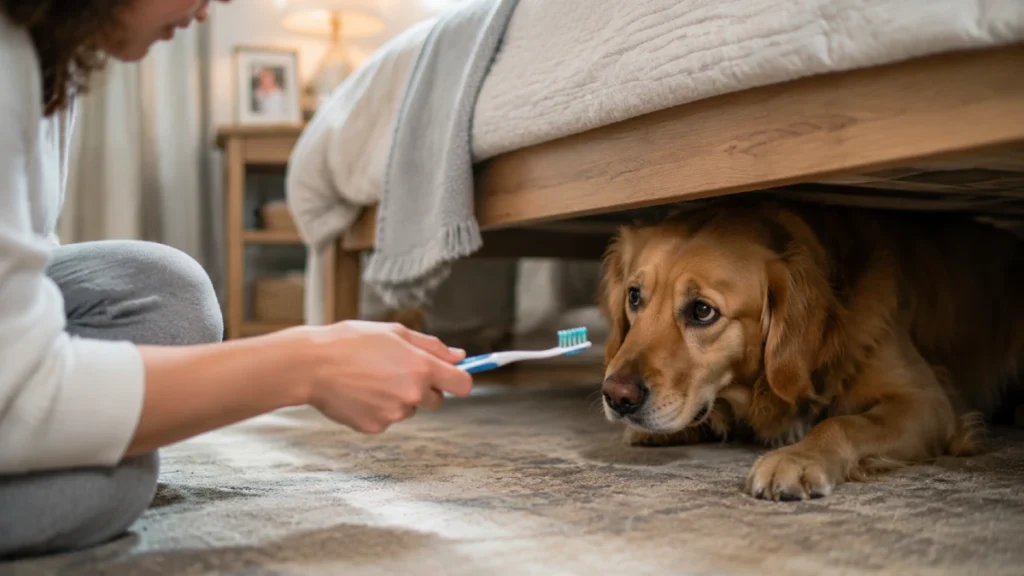
Your dog views their mouth as a vital tool for survival. A sudden touch around the snout triggers natural defensive instincts immediately. Past trauma from forced handling makes this sensitivity much worse.
The strong minty smell of human toothpaste causes instant panic for dogs. Hard plastic bristles scraping against sensitive gums hurt them deeply. We must change our tools and our approach entirely to fix this problem.
A 2025 Journal of Small Animal Practice study proved this behavioral link clearly. The research showed 50.5 percent of dogs face periodontal disease overall. The average age for these affected pets is 10.8 years old.
These suffering dogs act fearful and stressed rather than simply aggressive. You need fear free dog teeth brushing to rebuild their trust. This gentle approach creates a safe environment for everyone involved.
Essential Supplies for Fear Free Brushing
Human dental tools are the absolute enemy of canine cooperative care. You need specialized pet tools to shift your training mindset. Having the right equipment makes the process safe and stress free.
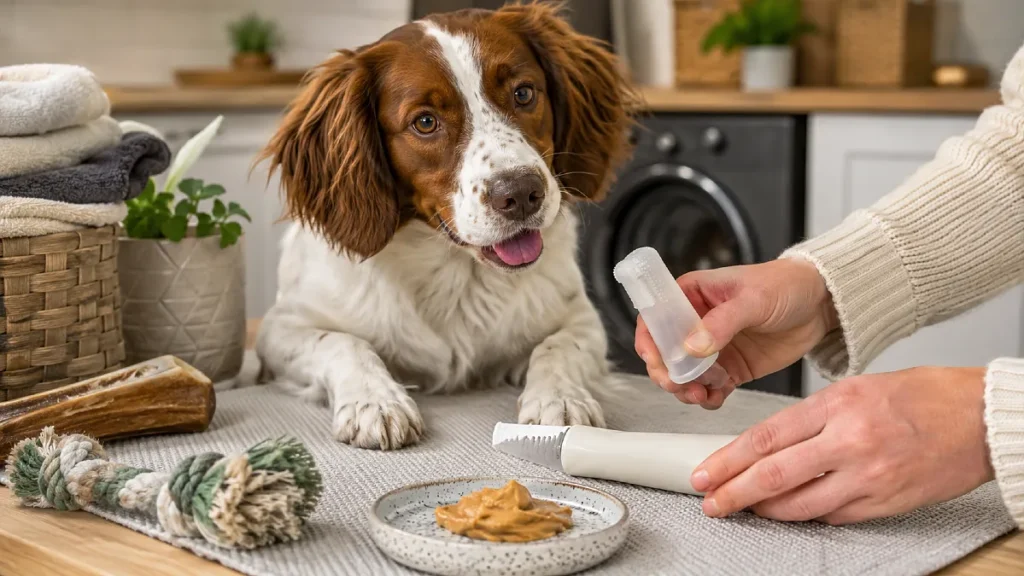
Enzymatic dog safe toothpaste is your mandatory first step here. Human toothpaste contains ingredients that are highly toxic to pets. Enzymatic pet paste does half the work chemically to break down plaque.
You should pair this with finger brushes or ultra soft pet toothbrushes. High value lickable rewards like natural peanut butter make the experience highly positive. Make sure you have all supplies ready before calling your dog over.
| Item Type | Safe Option | Unsafe Option |
| Toothpaste | Enzymatic dog paste | Human mint paste |
| Brushes | Soft pet finger brush | Hard human brush |
| Rewards | Natural peanut butter | Nothing |
Learning how to brush your dog’s teeth starts with proper preparation. Good tools make the daily habit much easier to maintain.
The 5 Step Chin Rest Method for Anxious Dogs
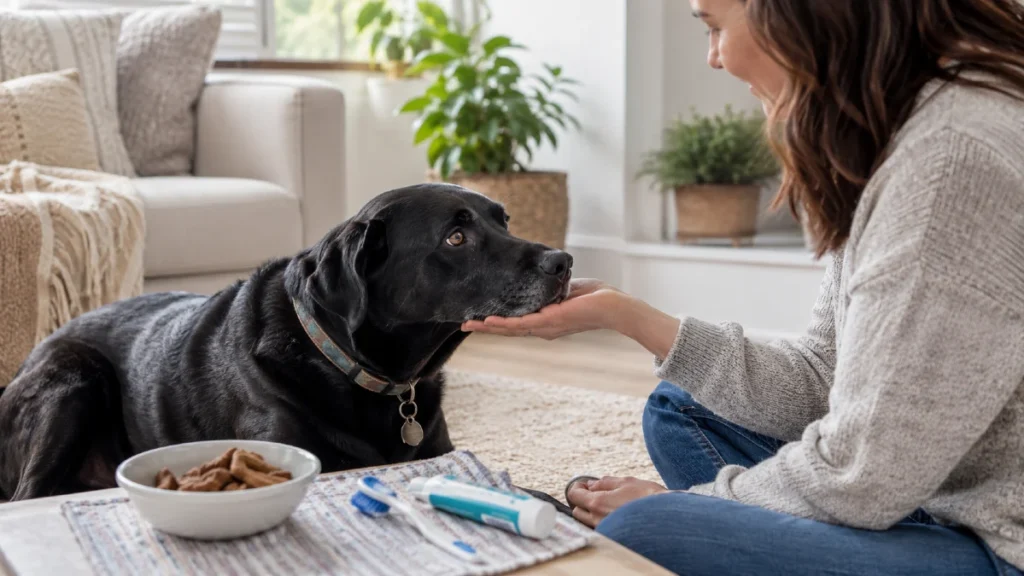
Professional animal trainers use the chin rest as a foundational behavior. This gives your dog a choice to participate actively. Having a choice drastically lowers their fear and builds deep trust.
The AVMA notes most dental disease occurs unseen below the gumline. This hidden danger requires gentle and daily consistency for long term health. We will break this process down into five clear steps.
You must stop the training session while your dog is still happy. Do not wait for them to squirm away in frustration. Patience is absolutely non negotiable for lasting success with fear free dog teeth brushing.
The Dental Training Puzzle
Train a neutral chin rest
Hold your flat palm out and reward your dog for resting their head on it. Keep these initial sessions very short to build basic trust.
Touch the outside lips
Gently stroke the outside of their mouth while they rest on your hand. Give them high value treats immediately to create positive feelings.
Lift the lips slowly
Gently raise the side lip without opening the jaw at all. Reward them heavily for staying still during this totally strange sensation.
Introduce paste on a finger
Smear tasty enzymatic toothpaste on your bare finger. Let them lick it while you gently rub their exposed front teeth.
Transition to the brush
Apply the paste to an ultra soft brush and touch the teeth briefly. Build up the actual brushing time very slowly over several weeks.
Moving through these steps might take weeks rather than days. Mastering how to brush your dog’s teeth requires extreme patience. Rushing will ruin the progress you have built.
Vet Approved Alternatives If Brushing Fails

Some senior dogs or rescues may never accept a toothbrush safely. You might try your best but still face complete resistance. We have highly valid secondary defenses for their oral care.
You can use VOHC approved dental chews to reduce tartar mechanically. Tasteless water additives fight bad bacteria passively every time they drink. Dental wipes work well for dogs that tolerate a finger but hate a brush.
These alternative products help significantly with daily maintenance. They do not replace professional veterinary cleanings done under general anesthesia. You still need your vet to check for deep tooth decay.
Please avoid anesthesia free dentistry entirely. A recent 2025 JAVMA study confirmed this practice provides no medical benefit. It fails to control true periodontal disease and only cleans the visible surfaces.
| Alternative Type | How It Works | Best For |
| Dental Chews | Scrapes tartar mechanically | Food motivated dogs |
| Water Additives | Fights bacteria passively | Dogs who hate touch |
| Dental Wipes | Cleans the tooth surface | Dogs fine with fingers |
Finding a safe alternative to brushing dogs teeth is better than doing nothing. Check the Veterinary Oral Health Council list for proven products.
How to Build a Daily Dental Routine
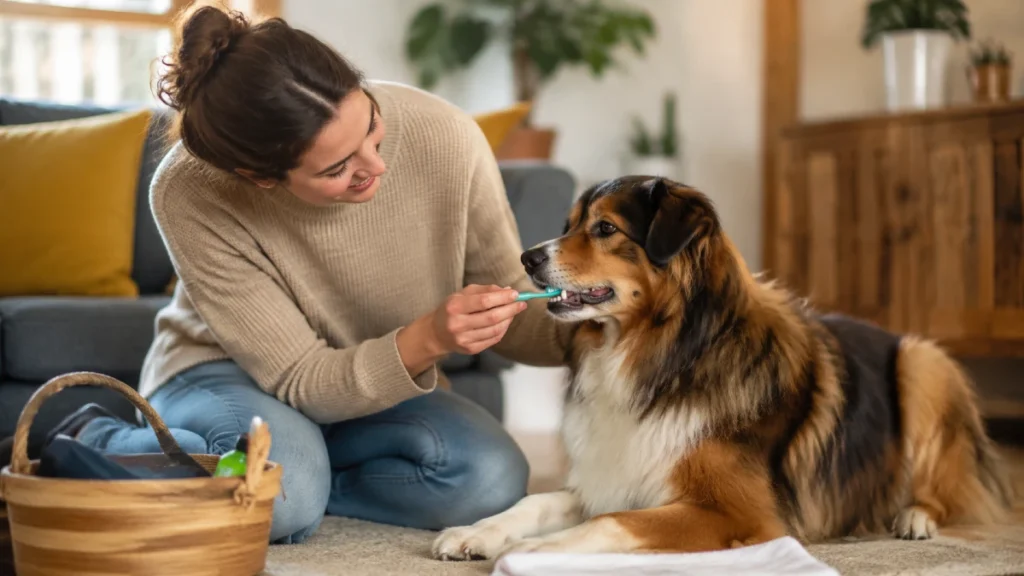
You need consistency to keep plaque away for good. Making dental care a daily habit prevents massive vet bills later. The best way is linking brushing to an existing daily event.
Brush right after their evening meal or before bed. Your dog will learn to expect the session at this specific time. Consistency removes the surprise and drastically lowers their anxiety.
Start with just ten seconds per session. You can increase the time slowly as they become more comfortable. A short daily session works much better than a long weekly struggle.
| Frequency | Action Required | Result |
| Daily | Brush with enzymatic paste | Best plaque control |
| Weekly | Check gums for redness | Early problem detection |
| Yearly | Professional vet exam | Deep cleaning |
Creating a solid schedule ensures you never forget their oral care.
Conclusion
Forcing a brush into a panicked mouth creates more behavioral setbacks. You must remember that patience is your most powerful training tool.
Slow desensitization permanently fixes the dreaded toothbrushing struggle for good.