
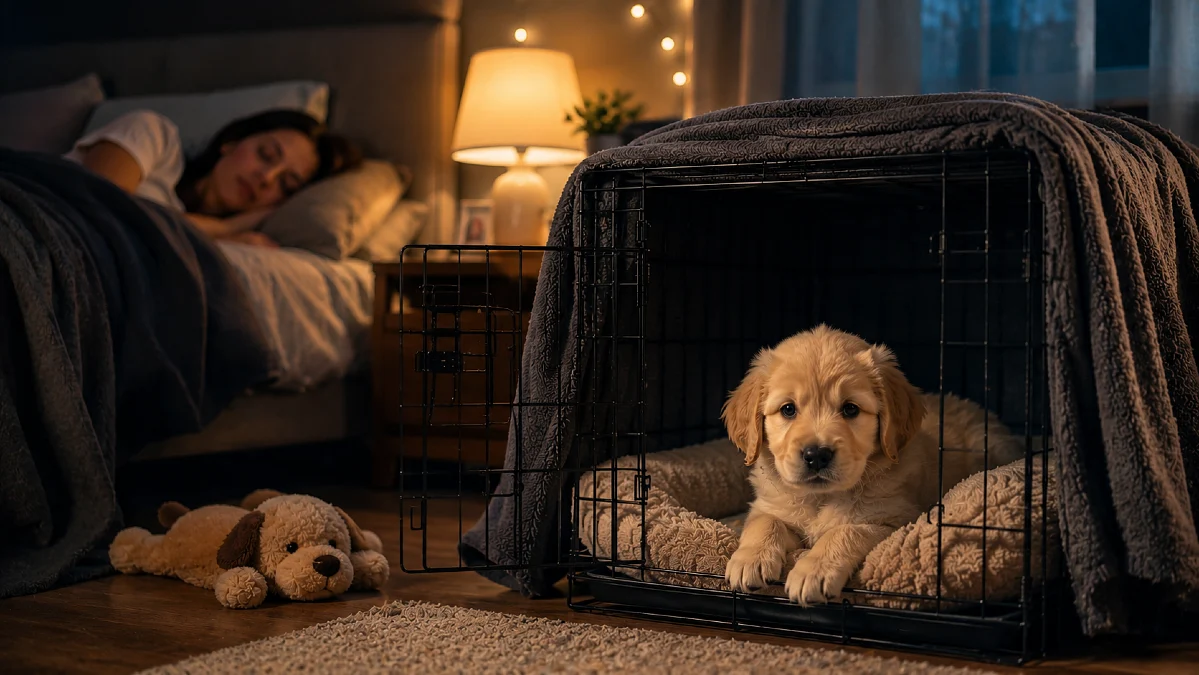
Bringing home a new puppy is a joyous occasion until the lights go out and the desperate whimpering begins. You are exhausted and sleep deprived while wondering if you are traumatizing your dog. Meanwhile you desperately need to get some sleep yourself.
Every minute of a puppy crying at night in crate feels like an absolute eternity. We will break down exactly why your puppy is stressed and give you a humane method to stop the noise.
You will learn to crate train a puppy without crying and get your sleep back within 3 to 10 days.
Why Do Puppies Cry in the Crate at Night?
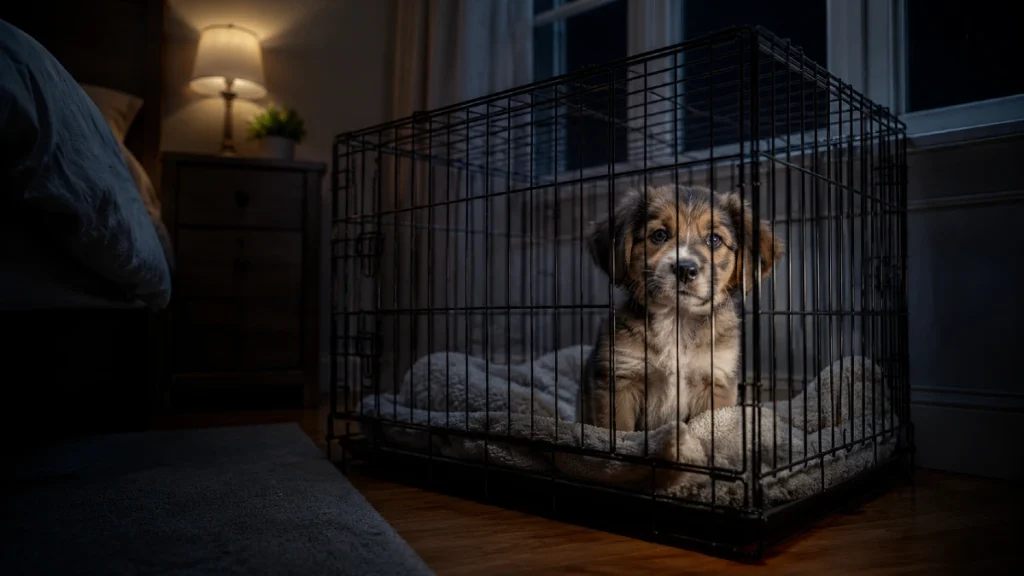
The puppy is not being stubborn because they are simply terrified of being alone. Your home is full of new smells and strange noises. They do not know you will protect them yet.
They just left the warmth of their mother and littermates. Dogs are social animals so sudden isolation triggers severe panic. Wild dogs rely on their pack for basic survival.
Then there are very real biological needs to consider. Puppies around 8 to 10 weeks old physically cannot hold their bladders for more than 2 to 3 hours. Many owners think their puppy is acting out until they realize the dog actually needed a bathroom break.
Once you realize the why the how becomes much easier to handle. You can effectively stop puppy whining in crate when you address these root causes. The adjustment period typically takes 3 to 10 days but biological bladder limits persist a bit longer.
3 Steps to Set Up a Stress Free Crate Environment
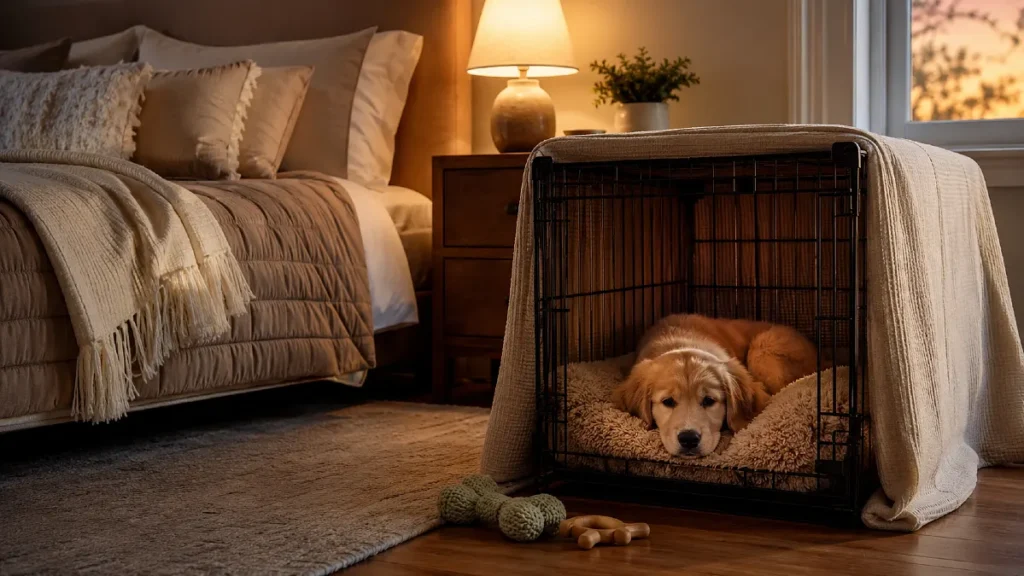
The physical setup dictates the mood of your puppy every single night. A comfortable space makes a huge difference in their anxiety levels. You want to recreate a cozy den instinct.
You need these specific items for a perfect crate setup:
- A crate just big enough to stand and turn around
- A breathable crate cover
- Soft bedding inside
The American Kennel Club advises proper crate sizing to prevent bathroom accidents. A large cage makes them feel exposed and vulnerable. If it is too large they will use one corner as a bathroom.
Keep the crate in your bedroom for the first few weeks to ease isolation anxiety. Hearing your breathing helps calm their nervous system. Moving the dog into your bedroom helps crate train a puppy without crying almost immediately.
The Bulletproof Nighttime Crate Training Schedule
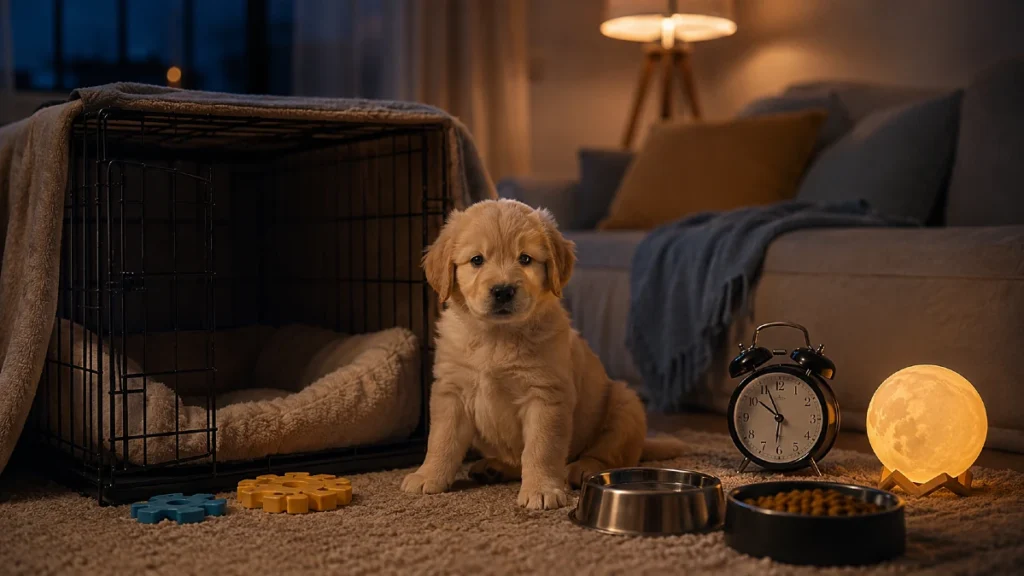
Good nights start with good evenings and clear boundaries. Setting up a routine is the most important thing you can do for sleep. Cut off food and water 1 to 2 hours before bedtime.
You need to drain their physical and mental energy before they sleep. Mental stimulation tires them out faster than physical running. Take a short walk or use a puzzle toy 30 minutes before bed.
Make sure to take one final structured potty trip right before they go inside. A 2020 sleep study noted that most puppies do not sleep an average of 7 hours straight. They usually reach this milestone when they hit 16 weeks of age.
A strict nighttime crate training schedule trains their internal body clock. Consistency over a 5 day stretch is the true magic bullet. Stick to the routine every single night without making exceptions.
| Time Before Bed | Action Required | Purpose |
| 2 Hours | Remove food and water | Prevents full bladders at night |
| 30 Minutes | Walk or puzzle toy | Drains mental energy |
| 5 Minutes | Final potty break | Ensures an empty bladder |
How to Handle Middle of the Night Potty Breaks
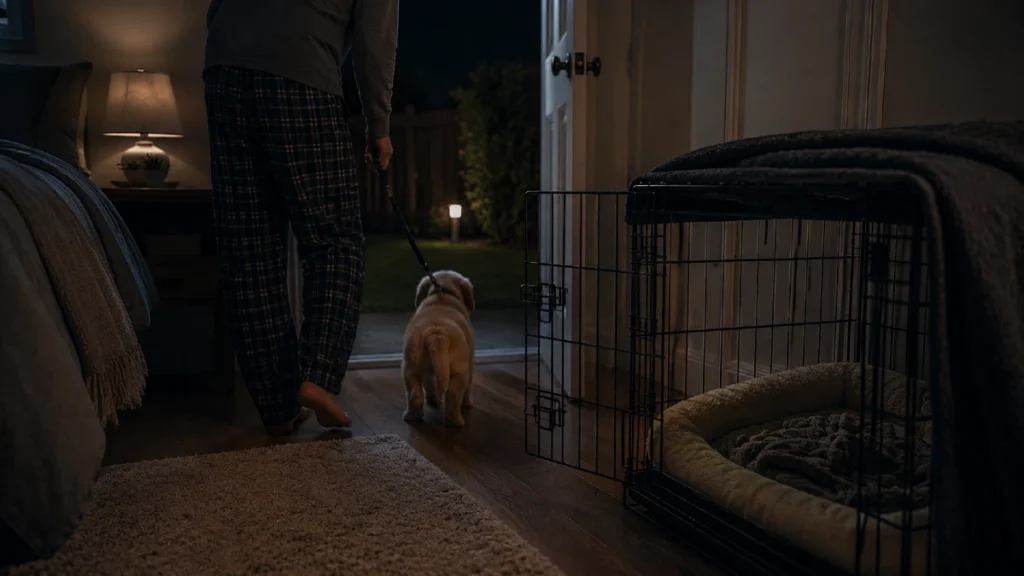
You will definitely be waking up at night during the first few weeks. Setting the right expectations saves you a lot of frustration. Set an alarm to wake them up before they cry.
Usually this is every 3 hours for young pups. Waiting for them to cry teaches them that making noise gets your attention. Your alarm puts you in complete control of the schedule.
The bladder capacity math is very simple to figure out. Take their age in months and add 1 to get the hours they can hold it.
| Puppy Age | Calculation Method | Maximum Hold Time |
| 2 Months | 2 plus 1 | 3 Hours |
| 3 Months | 3 plus 1 | 4 Hours |
| 4 Months | 4 plus 1 | 5 Hours |
Follow the 3 step boring protocol during these mandatory bathroom breaks:
- Use absolutely no lights
- Do no talking or playing
- Put them right back into the crate immediately
Set alarms to wake the puppy yourself before they make noise. This prevents a puppy crying at night in crate from waking the whole house.
3 Comfort Items to Ease the Transition
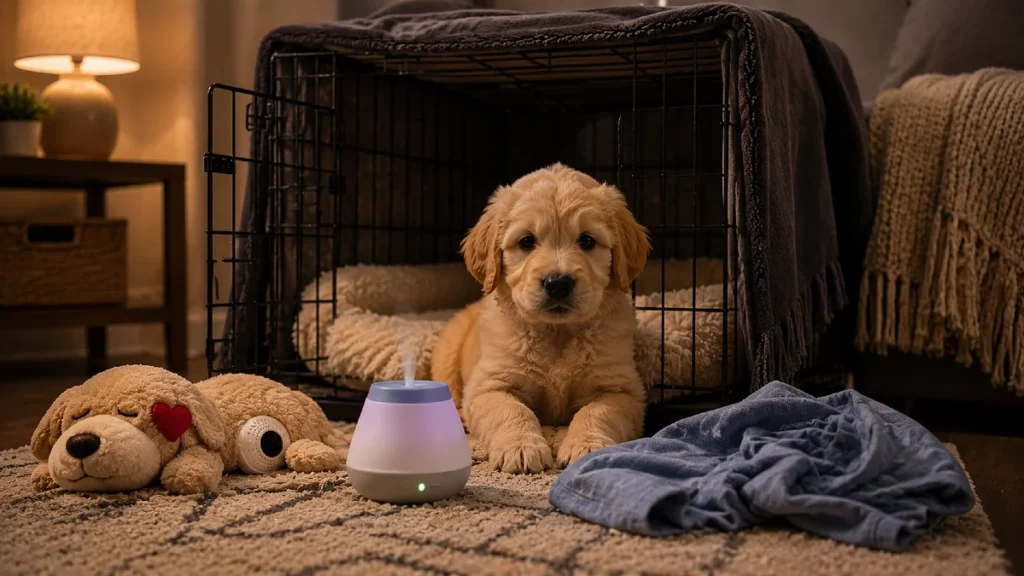
Let us look at some effective sleep hacks for dogs. The right items make the space feel safe and inviting. Heartbeat toys like the Snuggle Puppy mimic a sleeping littermate.
Dog Appeasing Pheromone diffusers like Adaptil are also great options. Synthetic pheromones mimic the hormone released by a nursing mother dog. This helps promote natural calming during the night.
You can also add items that smell like you for extra comfort. An old shirt works perfectly for daytime positive association alongside Kong toys or Lickimats. Using a heartbeat toy often brings instant results.
These tools really help stop puppy whining in crate quickly and safely. Just warn your family against putting anything in the crate that can be chewed and swallowed.
Should You Let Them Cry It Out?
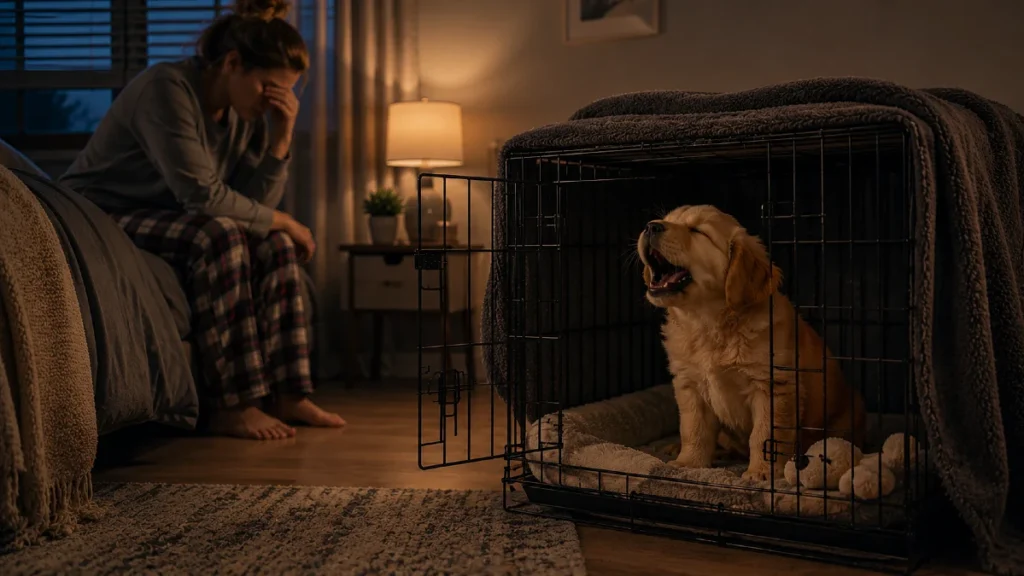
This is the most debated topic in dog training today. Let us address it directly with professional expert advice. There is a big difference between mild settling whimpers and intense panic.
Modern Certified Professional Dog Trainers advise against the cry it out method for severe distress. Letting a puppy scream for hours is outdated advice that damages trust. A whimper sounds like a soft question while panic sounds like a desperate plea for survival.
| Behavior Type | Sounds Made | Action to Take |
| Settling Whimpers | Soft and intermittent whining | Allow 2 to 5 minutes |
| Panic Crying | Howling and heavy panting | Step in calmly to reset |
Follow the 2 to 5 minute rule instead. Allow them a few minutes to self soothe before taking action. But you must step in if the crying escalates into howling or scratching.
Many owners learn this the hard way before switching to a gentler approach. If they panic you need to step in calmly and quietly. Let them out for a boring bathroom break and reset the situation. This is how you successfully crate train a puppy without crying over the long run.