
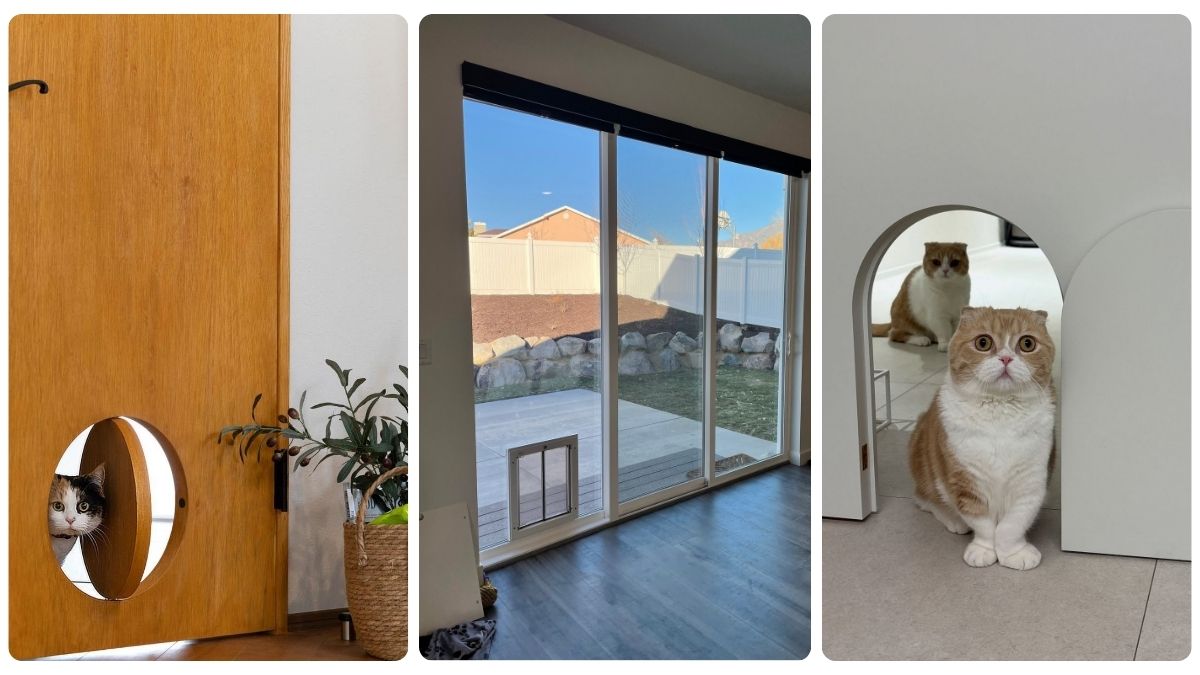
Your home feels complete until a plastic pet portal ruins the entryway. Cutting a hole into a solid wood door or crisp drywall feels like a permanent mistake. Most pet owners sacrifice their home style for the sake of convenience, tolerating ugly plastic flaps that ruin the flow of a thoughtful interior design.
Living with a messy litter box or a blocked hallway creates constant daily friction. Every pet parent deserves a functional home that does not compromise on personal style or architectural integrity.
Smart integration solves this layout dilemma without sacrificing your design aesthetic. These creative, stylish DIY pet doors blend into walls, windows, and main entryways effortlessly.
Seamless Integration: Pet Access That Complements Your Style
Blending utility with high design requires looking at your walls and doors as architectural features rather than obstacles. A well-placed pet opening can actually enhance a room when treated with the same respect as a custom molding or trim detail.
Focus on matching the existing hardware and paint finishes already present in your space. This consistency tricks the eye into seeing the new addition as an original feature of the home rather than an afterthought.
- Texture: Frame the opening with smooth wood trim to contrast against textured plaster or drywall.
- Scale: Keep the opening proportional to your cat, ensuring it remains as discreet and low-profile as possible.
- Color Anchor: Paint the interior tunnel of a wall pass-through the same shade as your baseboards for a unified look.
- Renter Tip: Use a pre-hung interior door for your DIY cutouts, storing the original pristine door safely in a closet until move-out day.
1. Fluted White Molding Pet Pass-Through Set in Sage Green Drywall
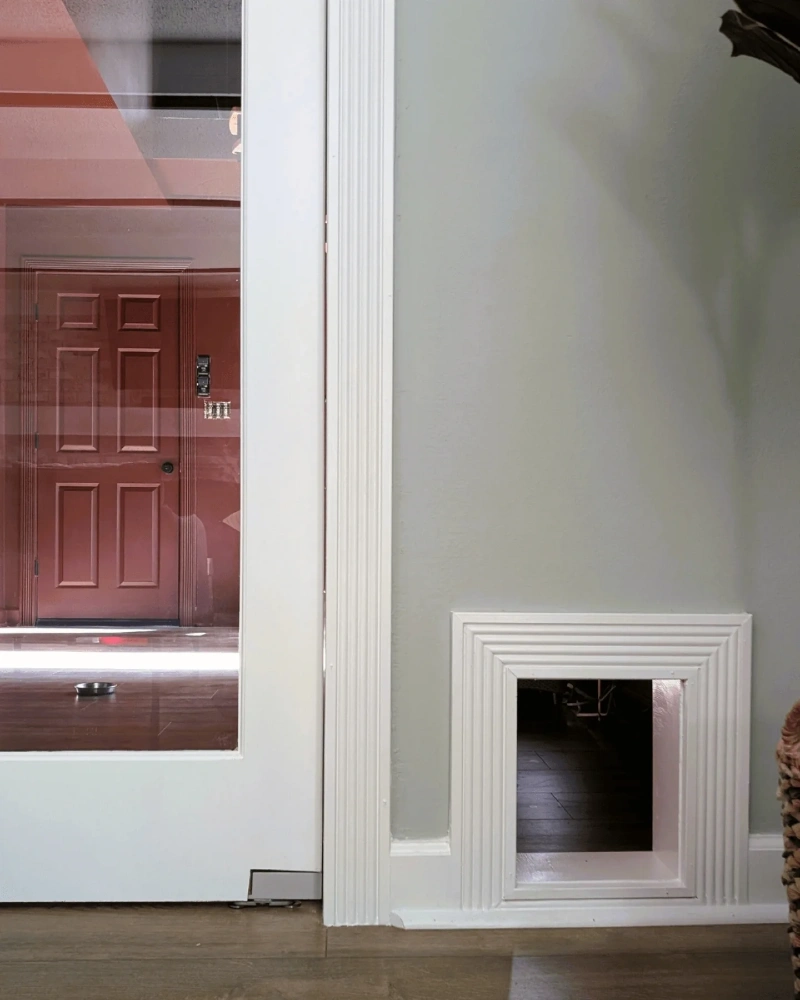
A crisp white fluted casing frames this rectangular opening cut straight into a soft sage green wall. Positioned low to the ground right beside a glass interior door, the miniature portal mimics the existing millwork and architectural lines of the room.
Light filters through from the adjoining space, showcasing a smooth, painted interior tunnel that keeps the pass-through looking clean and intentional.
Matching your pet door casing to your existing baseboard trim entirely disguises its utilitarian purpose.
Using identical architectural molding scales down the grandeur of your main door frames into a playful, custom feature.
This tactic establishes instant visual harmony because the eye registers the fluted trim as structural detailing rather than an awkward afterthought. It provides a permanent, draft-free entryway solution that respects the sophisticated character of a traditional home layout.
2. Glass-Paneled Exterior Door with Integrated Clear Pet Flap
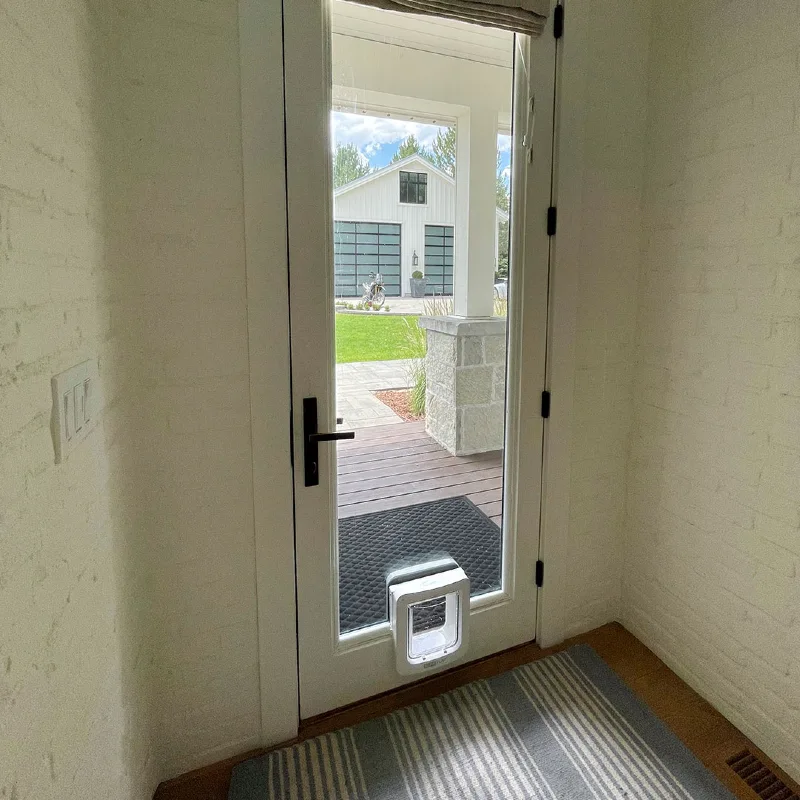
A white-framed utility flap sits directly within the lower portion of a full-glass exterior door. Natural afternoon light floods the mudroom entryway, illuminating the rough texture of the painted white brick walls and a striped floor rug.
The clean lines of the modern black hardware anchor the glass pane while providing easy outdoor access.
Mounting a pet door directly into a glass pane maintains your backyard views while keeping the entryway feeling light and airy.
Choosing an in-glass installation avoids the need to cut into solid timber door stiles or structural exterior brickwork. It preserves the clean architecture of modern farmhouse designs by keeping the utility element confined to an existing window pane. This setup keeps your sightlines open to the landscape while giving your cat total independence.
3. Miniature Arched Wooden Door with Window Cutout and Black Latch
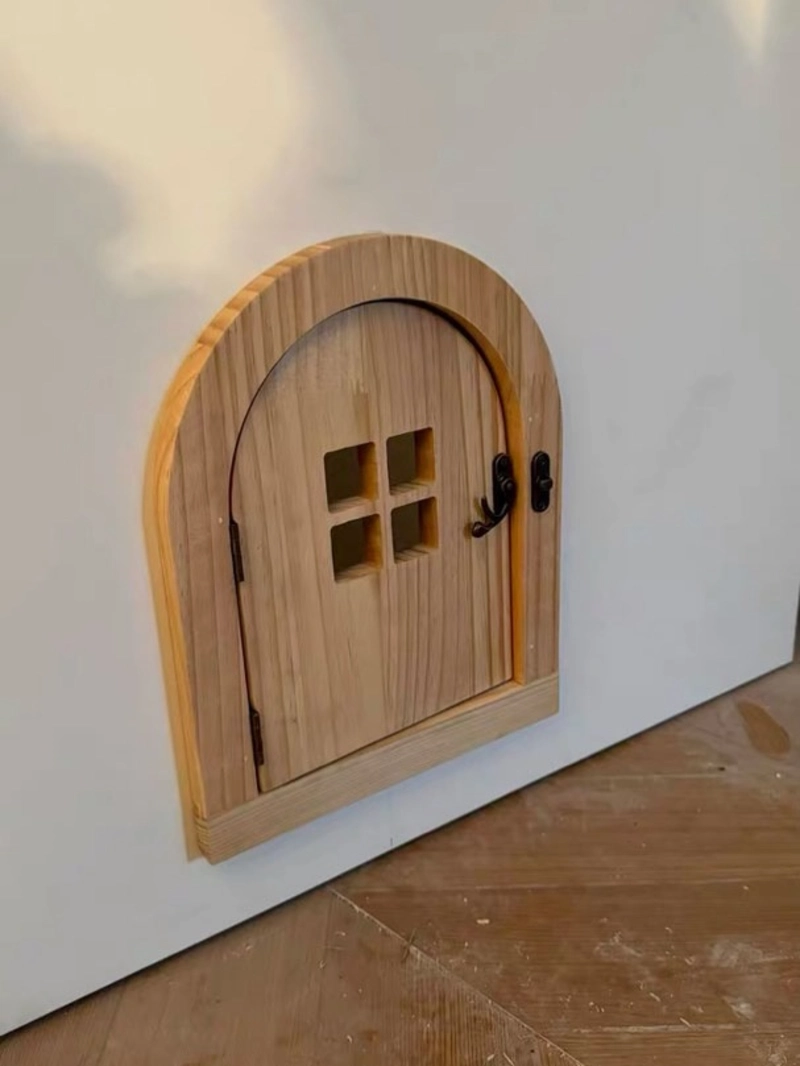
A tiny, arched door crafted from raw pine wood sits flush against a smooth white baseboard panel. This whimsical design features a delicate four-pane window grid cut directly into the center of the wood grain. Miniature black metal hinges and a functional hook-and-eye latch complete the fairytale look, mimicking a historic cottage entrance.
Embracing narrative details turns an architectural necessity into a charming conversation piece.
This storybook design leans into playful storybook details rather than hiding the cat opening entirely. Soft, golden light catches the raw wood grain, adding warmth to an otherwise bare white wall expanse. It proves that utility features can inject personality and handcrafted character into modern or minimalist interiors.
Why This Works
- Shape: An arched silhouette softens the harsh rectangular lines common in modern interior design.
- Hardware: Tiny black iron latches ground the light wood tones while offering a functional way to close off the room when needed.
- Texture: Raw, unpainted pine introduces a rustic, tactile element that contrasts beautifully against smooth drywall.
4. Window Sash Pet Door Inset Opening Into Outdoor Wire Catio
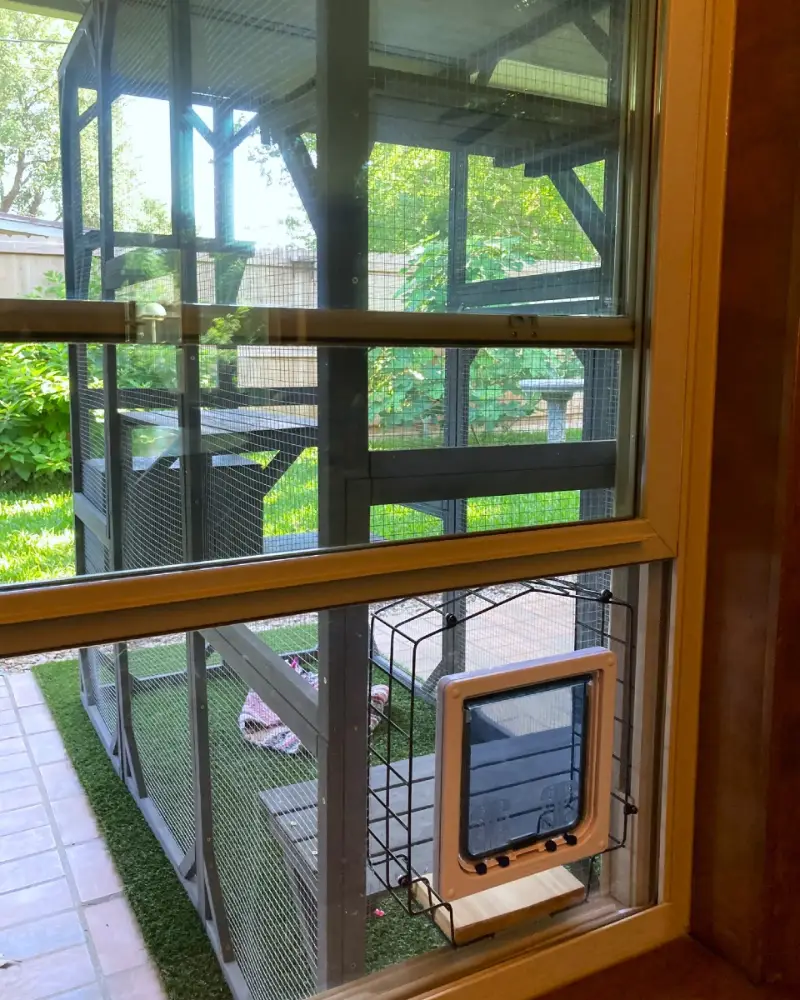
A specialized window-mount cat flap sits within the lower opening of a double-hung glass window. The white-framed plastic door connects directly to an enclosed wire tunnel, creating a secure bridge out to a large charcoal-gray outdoor catio tower.
Diffused daylight illuminates the grass patio layout and wooden climbing ledges waiting just beyond the clear pane.
Utilizing a window sash insert provides an instant outdoor escape route without modifying structural walls or entry doors.
This clever window installation bridges the gap between indoor comfort and safe outdoor exploration. Keeping the structural frame within the window track allows for effortless removal if you ever need to adjust the room layout or move homes. The clear glass insert preserves the natural light streaming into your living space while keeping the weather firmly outside.
5. Circular Pivoting Wood Panel Inset in Golden Oak Interior Door
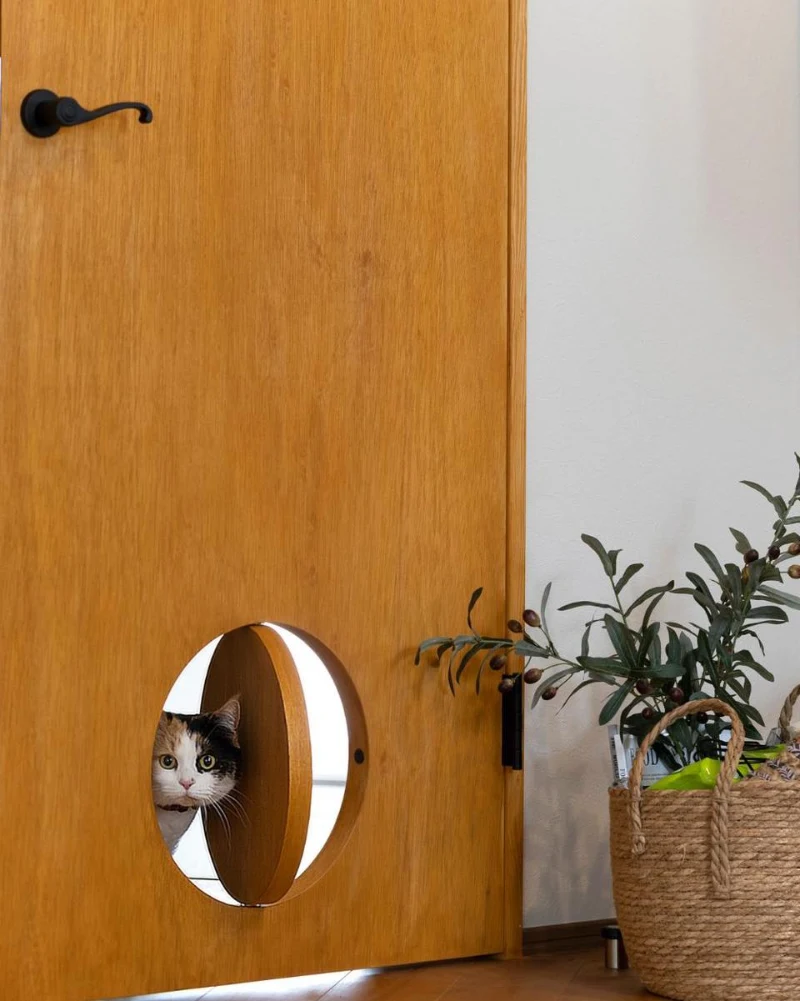
A calico cat peeks through a perfectly circular opening cut directly into a warm, golden-toned oak door. The center wood cutout pivots smoothly on a hidden vertical axis, creating a sleek, minimalist alternative to traditional plastic flaps. Matte black hardware balances the rich timber grain, while a woven storage basket filled with olive branches rests against the crisp white wall nearby.
An integrated pivoting wood disk maintains the exact material texture of your door for a completely integrated layout.
This clever architectural approach keeps the door looking cohesive because the cutout utilizes the original wood grain from the door itself.
When closed, the flush design almost disappears into the lower half of the entryway structure. It provides a quiet, mechanical solution that completely eliminates noisy plastic flapping sounds in quiet hallways.
Quick Decorating Tips
- Budget version: Cut a standard round opening with a jigsaw and sand the raw interior edges smooth before sealing with a matching wood stain.
- Renter tip: Swap out the entire primary door for a cheap hollow-core option to modify, storing the original landlord-owned door safely away.
- Pro move: Install a hidden magnetic catch at the base of the pivoting circle to ensure it snaps back perfectly flush after every use.
6. Built-In Arched Wall Pass-Through with Wrapped Baseboard Molding
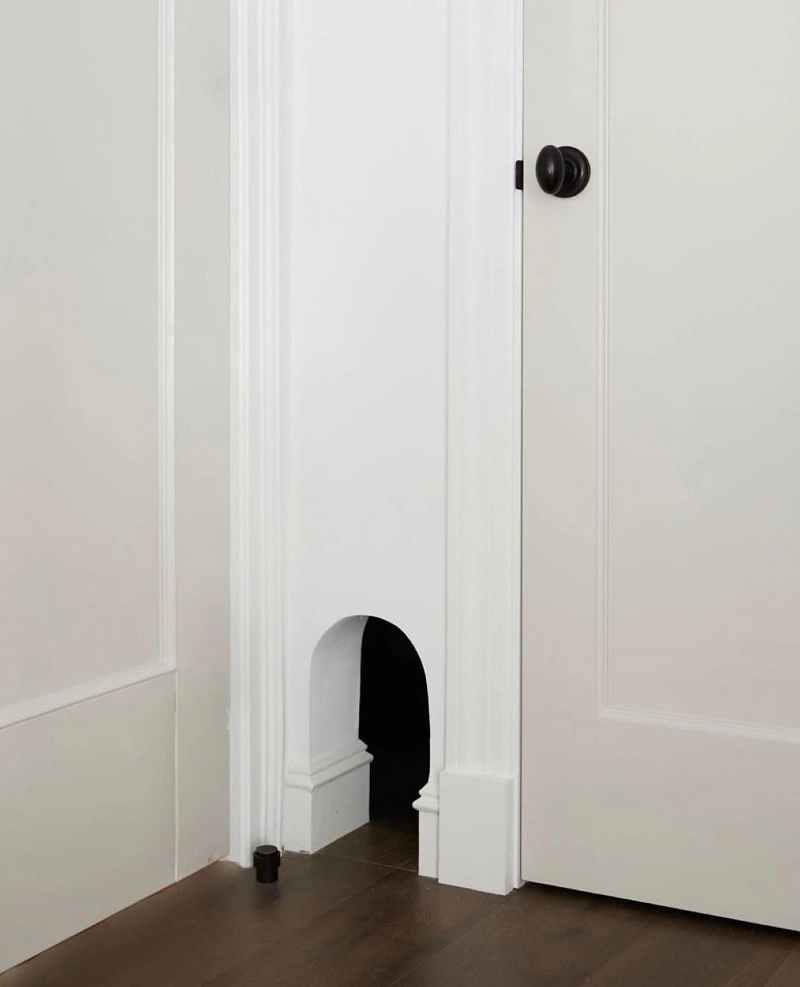
A smooth arched opening is cut directly into a narrow section of white wall trim right beside an interior doorway.
The custom baseboard molding seamlessly wraps into the interior curve of the cutout, grounding the passage to match the adjacent plinth blocks and door casing. A matte black door knob on a crisp white paneled door provides a high-contrast accent against the dark wood floors below.
Wrapping the existing baseboard profile into the opening makes the pass-through feel like an architectural feature built during the home’s original construction.
This seamless execution relies on continuing the exact lines of your wall trim into the tunnel itself. By doing so, you avoid a raw drywall edge and create a finished, premium look that enhances your hallway layout. This technique elevates a basic cat door into a subtle, custom element that fully respects the classical proportions of the house.
7. Multi-Pane Sliding Glass Patio Door with Integrated Dual-Flap Pet Entry
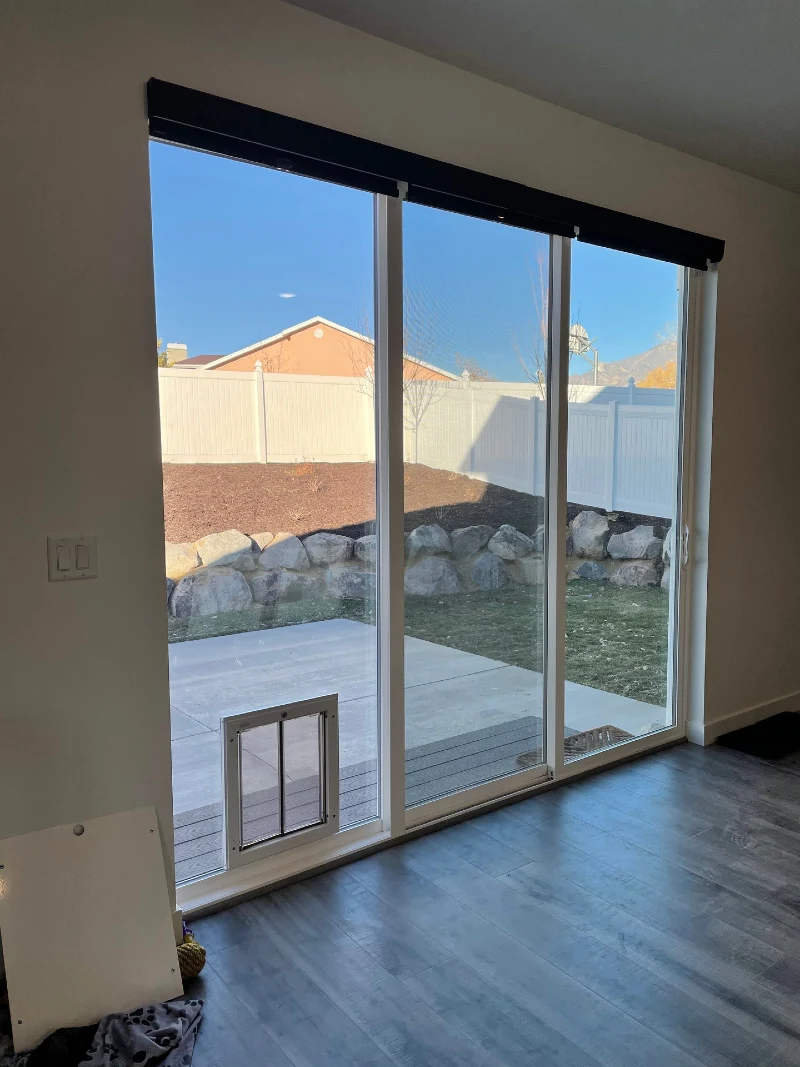
A sturdy white-framed pet door is built directly into the lower left section of a massive, three-pane sliding glass door system.
Crisp afternoon sunlight streams across the gray wood-plank flooring, offering a clear view of a concrete patio, stone retaining wall, and white backyard fence. The minimalist black roller shade mounted above anchors the top of the window frame without disrupting the open feel of the room.
In-glass patio installations maximize outdoor utility while preserving panoramic backyard views and natural room lighting.
Integrating the pet access panel right into the existing glass unit keeps the clean lines of a modern living space completely intact. It eliminates the need to cut messy holes through insulated exterior walls or structural framing. This setup ensures your home remains tightly sealed against drafts while granting your cat constant, independent access to the terrace.
8. Sliding Glass Deck Door with In-Glass White Pet Portal
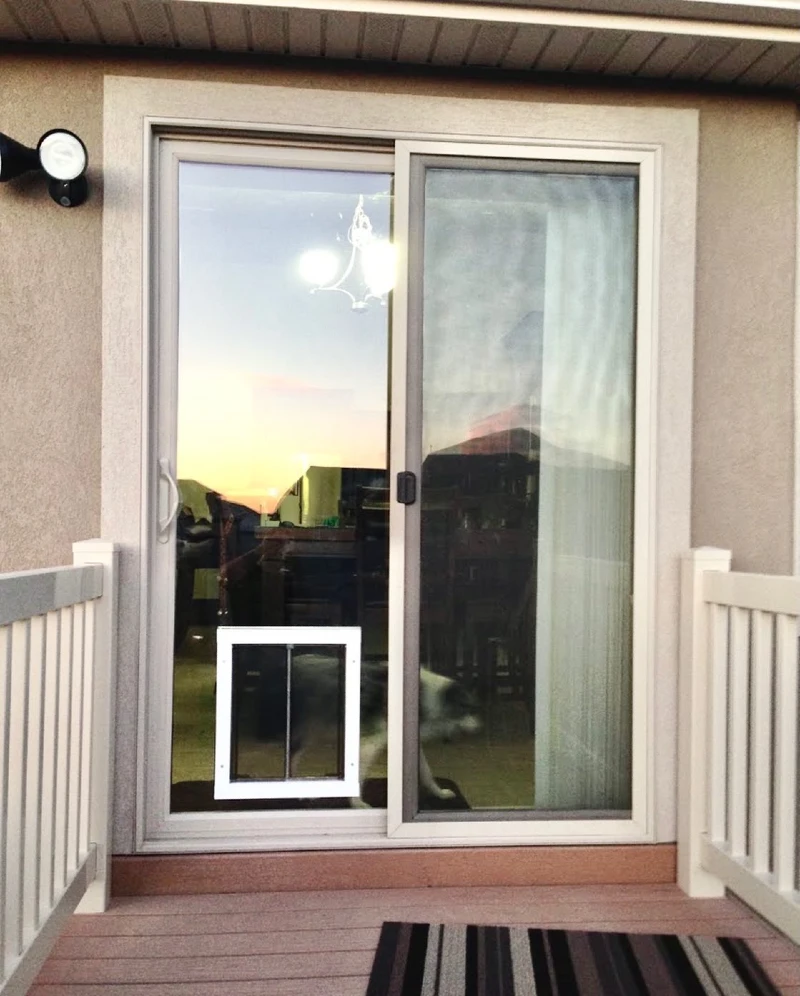
A white-framed pet entryway sits securely within the glass of a sliding patio door viewed from an outdoor residential deck.
The warm glow of an indoor chandelier reflects off the upper pane, contrasting with the soft dusk light settling over the wooden floorboards and striped outdoor mat. White deck railings flank the doorway structure, while a blurry pet moves across the threshold inside.
Installing a pet entrance directly inside existing patio glass preserves the clean profile of your exterior siding.
This smart placement avoids altering the stucco or wood siding surrounding your backyard deck area. It allows the main screen door to function normally while providing an airtight seal against seasonal weather changes. The clean white frame coordinates with the door vinyl, creating a unified architectural layout.
Why This Works
- Integrated Track Placement: Fitting the unit within the glass keeps the low-profile sliding mechanics fully functional.
- Visual Alignment: The crisp white trim of the pet portal mirrors the primary frame colors for a cohesive look.
- Preserved Siding: Leaving the exterior walls untouched prevents water leaks and costly structural repairs down the road.
9. Grid-Pane Window Sash with Built-In White Pet Door Above a Plush Cat Tree
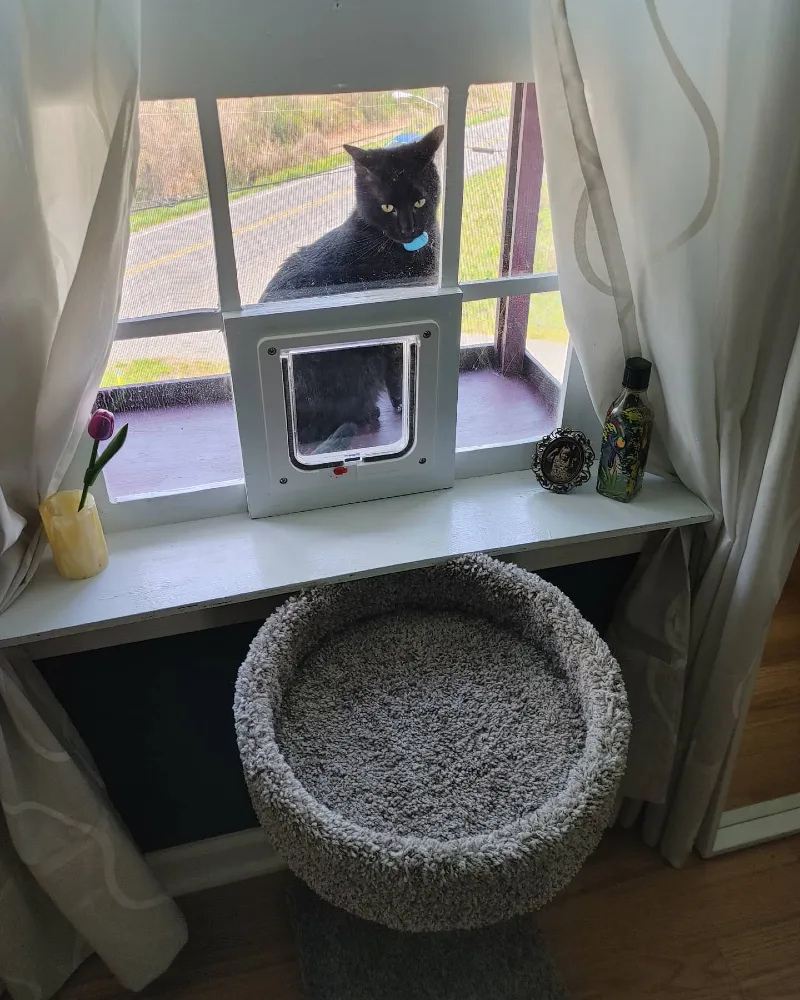
A sleek white cat door is integrated into the lower center pane of a classic grid window frame. Outside, a black cat stands on a deep purple window ledge under soft, filtered daylight.
Inside, a round, high-pile gray plush cat tree perch sits directly underneath the interior sill, flanked by airy cream curtains, a miniature picture frame, and a decorative painted glass bottle.
Placing a plush landing perch right below a window-mounted pet entrance ensures a comfortable transition for your cat.
This clever arrangement utilizes vertical room space efficiently without obstructing the layout of your floor pathways.
Keeping the entry point aligned with a heavy cat tree allows your pet to leap straight to window level securely. It creates a cozy resting zone that doubles as a functional stepping stool into the outdoor breeze.
10. Flush White Arched Doorway with Recessed Metallic Pull Ring
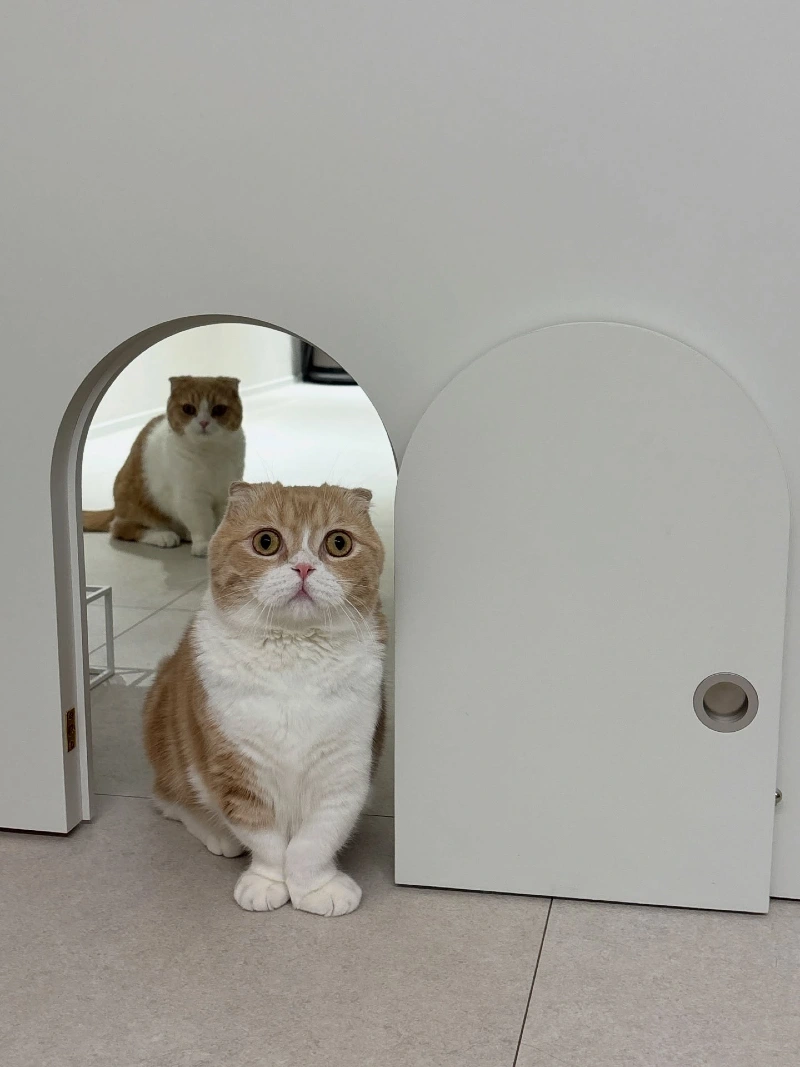
Two orange-and-white Scottish Fold cats sit on a matte beige tiled floor next to an open, miniature arched door set into a matching white wall partition. The custom-fit arched panel swings completely open on tiny brass hinges to reveal a spacious hallway path behind it. A sleek, circular silver flush-pull handle keeps the design completely flat against the vertical surface when closed.
Choosing a flush-mount panel painted the exact shade of your partition wall lets the utility feature blend seamlessly into a minimalist interior layout.
This clever approach hides the doorway mechanics by removing any protruding knobs or decorative frames that cast harsh shadows.
It keeps the hallway lines perfectly clean while granting your pets full access between living zones. Painting the inner frame edge the same uniform color completes the hidden, high-end look effortlessly.
Quick Decorating Tips
- Budget version: Cut an arch from your existing wall partition with a drywall saw, frame the inner tunnel with flexible sanding strips, and mount the original piece back on standard cabinet hinges.
- Renter tip: Mount a lightweight faux-wall panel made of foam board or thin plywood in front of an open doorway to house the miniature arch without harming the property.
- Pro move: Embed a soft magnetic strip inside the inner frame rabbet to hold the arched door firmly flush against drafts without vibrating.
11. Circular Cutout in Flat-Panel White Cabinet Door with Pull-Out Pet Feeding Drawer
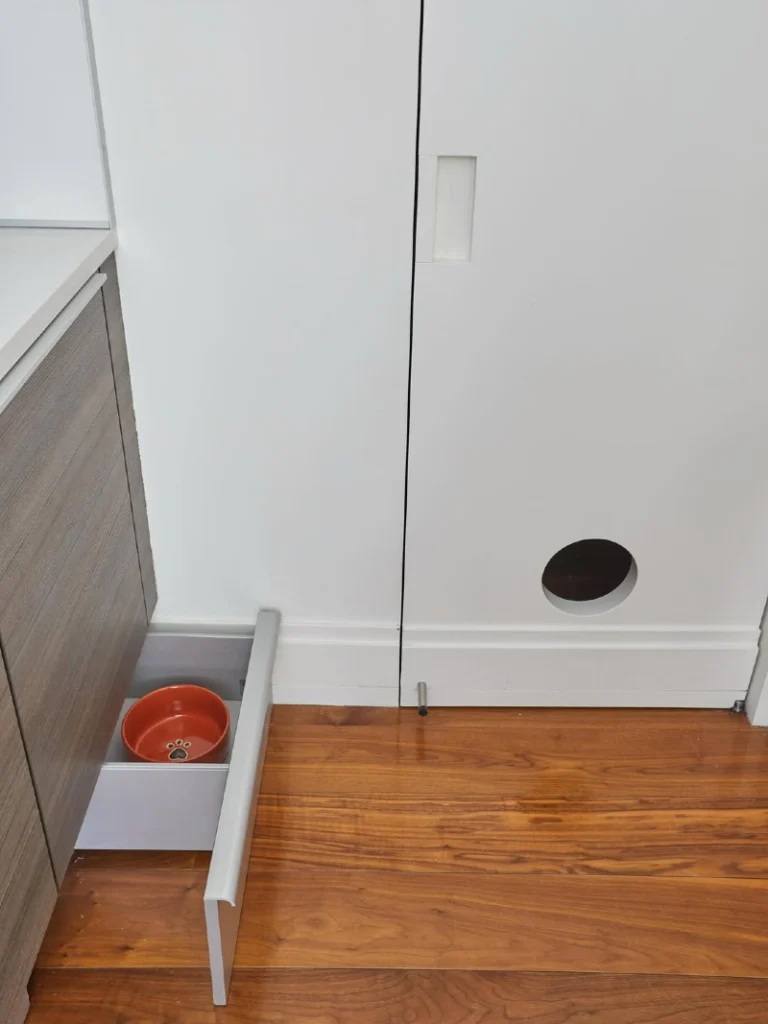
A precise circular opening is cut neatly into the bottom of a smooth white cabinet panel with an integrated rectangular pocket pull handle.
Right beside this built-in portal, a low-profile gray wooden cabinet features an open bottom drawer holding a glossy terracotta-colored pet food bowl with a black paw print motif. Richly grained cherry wood flooring grounds the utility corner, reflecting soft daytime light.
Hiding a cat pass-through inside kitchen or mudroom cabinetry keeps pet accessories completely tucked away from sight.
Integrating a low-profile feeding drawer right next to a hidden cat portal creates an efficient, organized pet station. This structural design keeps food bowls off the main walkway floor, eliminating accidental spills and tripping hazards. The uniform white cabinetry profile maintains a crisp minimalist look throughout your functional living space.
12. Miniature White Sliding Barn Door on Matte Black Track Set in Six-Panel Entry Door
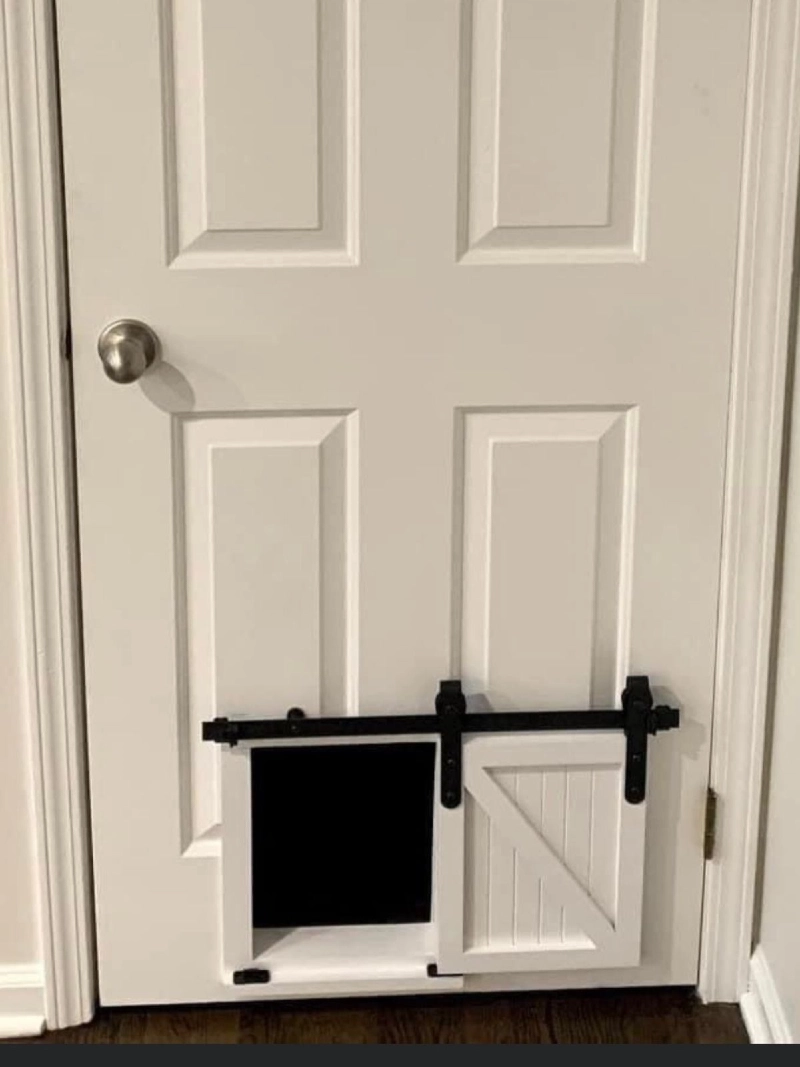
A diminutive white barn door with a traditional Z-brace design slides along a sleek matte black hardware track. This custom feature covers a neat square opening cut directly into the bottom of a classic six-panel interior door. Crisp white trim frames the baseboards and entry structure, while dark hardwood flooring grounds the entire setup.
Adding a sliding miniature barn door provides a functional way to close off pet access without using rigid plastic locks.
Utilizing a track system keeps the small barrier flush against the primary door surface to prevent tripping hazards in high-traffic hallways.
Matching the miniature door paint to the primary door color ensures the addition feels integrated rather than cluttered. Heavy iron hardware brings an authentic rustic accent that balances the clean white panels.
13. Cat-Shaped Trim Pass-Through on Pale Sage Green Paneled Door
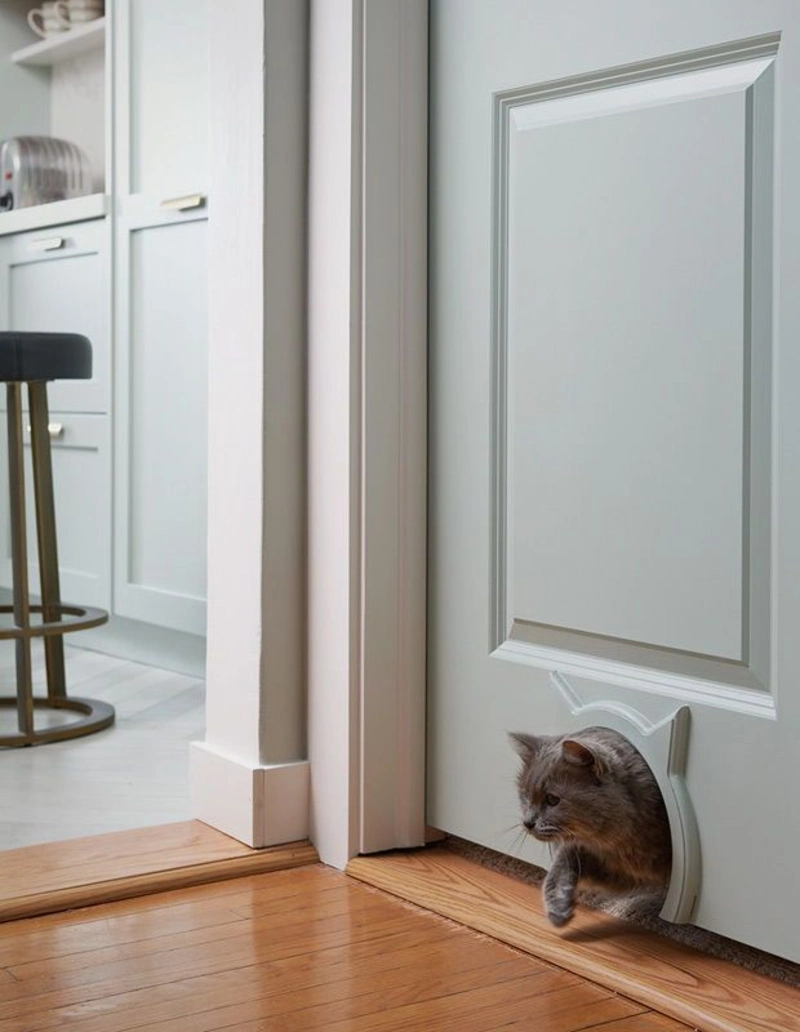
A fluffy gray cat steps through a cat-eared plastic frame installed at the base of a pale sage green paneled door. Warm oak wood flooring transitions to a light tile threshold in the background kitchen area, where muted sage cabinetry and a brass-legged barstool sit under soft, diffused light. The crisp white door frame and substantial plinth block anchor the entryway lines.
Color-matching your cat door frame to the primary door panel prevents the plastic utility insert from disrupting a sophisticated color palette.
Using a molded cat-shaped portal adds a subtle touch of personality without completely overwhelming the traditional architecture of the paneled door.
This playful silhouette functions beautifully in transitions between busy utility zones like kitchens or laundry rooms and quiet living spaces. It provides a reliable open passage that keeps doors closed to manage noise and drafts.
Why This Works
- Cohesive Paint Choice: Selecting a frame finish that mirrors the pale sage green woodwork minimizes any jarring visual contrast.
- Playful Silhouette: The subtle cat-ear outline injects a touch of whimsy into an otherwise formal, classic panel design.
- Low-Profile Placement: Cutting directly into the bottom rail preserves the structural integrity and upper aesthetics of the raised panels.
14. Raised-Panel Dark Oak Pet Entry with Classical Cap Trim Casing
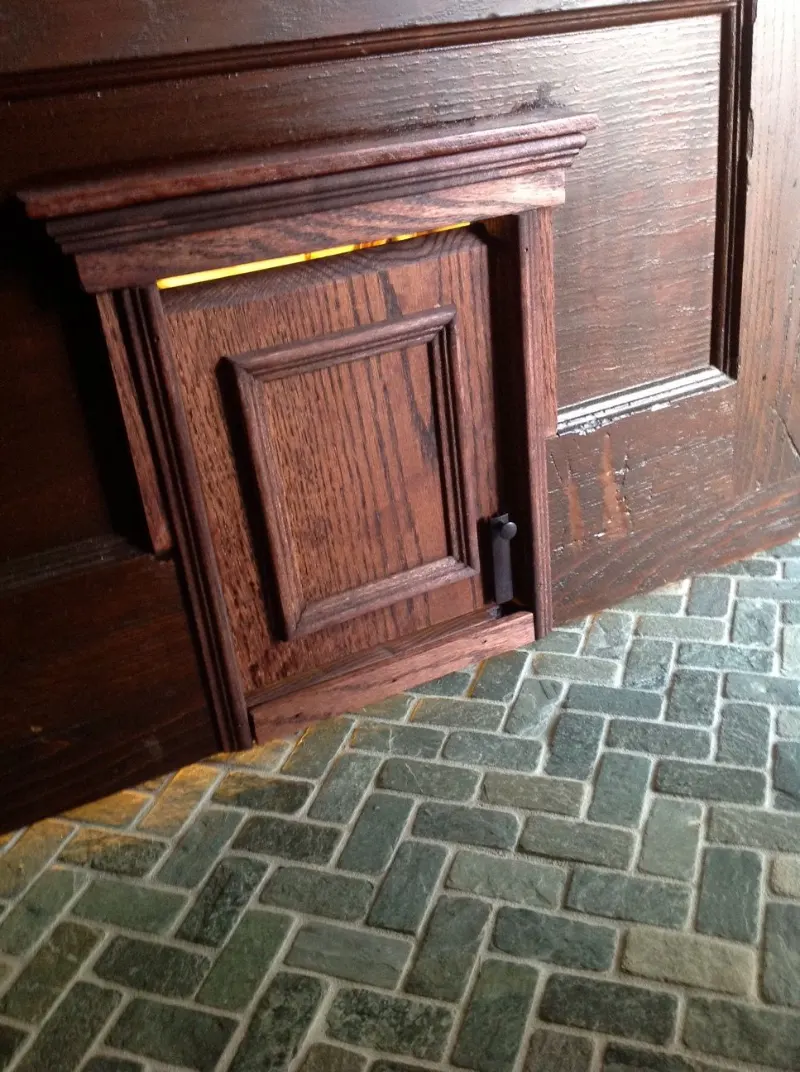
A miniature raised-panel wood door with a small black latch knob is integrated into a matching dark-stained oak entryway. Heavy, traditional crown molding frames the top of the tiny flap, which mimics the dense texture of the primary structural paneling. Warm golden light glows through the upper seam, casting reflections across a weathered green slate herringbone tile floor.
Custom-crafting a pet door from the exact timber species and stain of your historic woodwork preserves its vintage architectural character.
Replicating old-world craftsmanship ensures that your pet installations do not break the historic style of a traditional space.
This design path handles structural access elegantly by hiding the opening within the lower wainscoting or heavy door rails. It delivers a grounded, high-end finish that coordinates beautifully with rustic stone or slate materials.
15. Pivoting Raised Panel Integrated into a Forest Green Six-Panel Interior Door
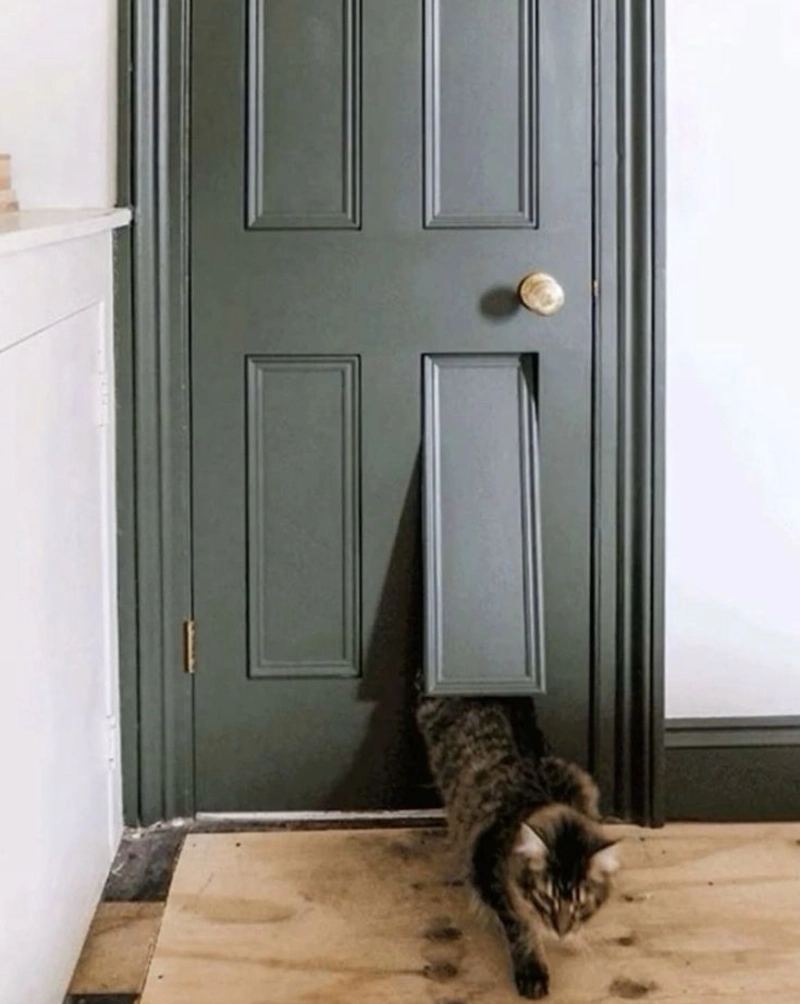
A fluffy, long-haired tabby cat emerges from a vertical rectangular flap that precisely replicates the raised panels of a deep forest green door.
The custom hidden panel hinges smoothly from its top seam, matching the surrounding dark moldings and a gleaming brass door knob. Diffused daylight hits the raw plywood subfloor, highlighting the clever architectural camouflage of the opening.
Hinging an entire structural panel from the door itself allows you to create a completely invisible pet entry point.
This ingenious technique eliminates the need for plastic frames by turning an existing design element into a moving part. Painting the entire assembly a single, moody tone like forest green masks the seams from a distance. It offers an elegant solution for formal spaces like offices or dining rooms where utility items must remain hidden.
Quick Decorating Tips
- Budget version: Use a sharp utility knife to carefully detach a single hollow-core panel section and reinstall it using spring-loaded cabinet hinges.
- Renter tip: Store your landlord’s intact paneled door safely away and modify a secondhand door painted to match the surrounding trim precisely.
- Pro move: Attach a slim metal counterweight or a magnetic catch behind the bottom edge to ensure the heavy panel closes flush every single time.
16. Slatted Wood Flap Inset in Natural Vertical Timber Plank Wall
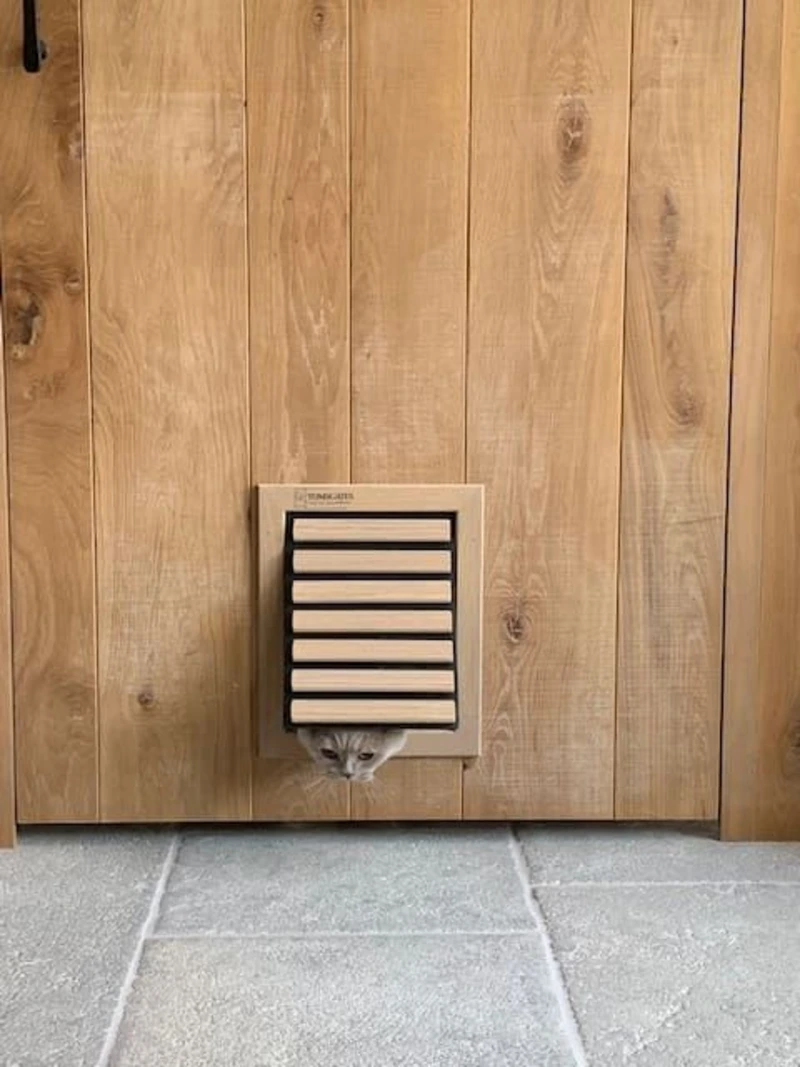
A soft gray cat pokes its head from beneath a custom pet door featuring horizontal timber slats. The square opening is built flush into a wall constructed from wide vertical light oak planks with rich grain and rustic knots. Textured gray stone tiles run along the floor, catching the cool daytime light.
Using horizontal slats on the pet flap creates a clever directional contrast against vertical wall panels.
This design strategy helps the utility fixture feel completely native to the woodwork. Matching the exact stain of the surrounding timber prevents the flap from disrupting the organic texture of the space. It proves that functional elements can reinforce a cozy, rustic cabin feel when built with matching natural materials.
17. Miniature Wood Panel Door with White Trim Set in Hallway Drywall
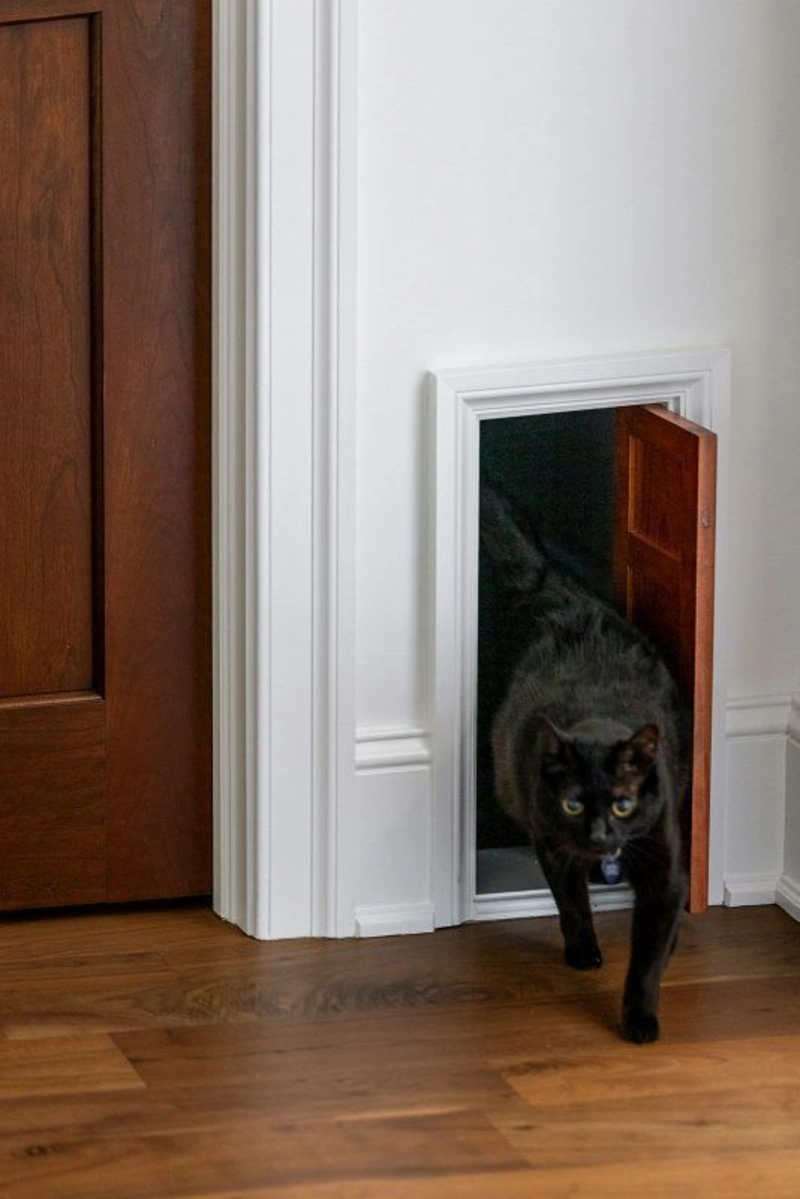
A sleek black cat strides through a small rectangular opening cut directly into a white hallway wall. The tiny pass-through features a miniature paneled door finished in a warm walnut stain that swings open on small interior hinges. This custom opening is framed with crisp white molding that mirrors the heavy, multi-stepped trim of the adjacent primary wood door.
Building a true swinging miniature door panel lets you completely close off the pet opening to block unwanted drafts or light.
Matching the scale and profile of your primary baseboards creates a polished look that feels completely intentional.
The rich walnut stain provides a grounded contrast against the bright white walls, mirroring the material of your main room doors. This configuration offers an elegant architectural solution that keeps your utility entry looking clean and sophisticated.
18. Arched Light Wood Plank Miniature Door Set in Textured Cream Plaster Wall
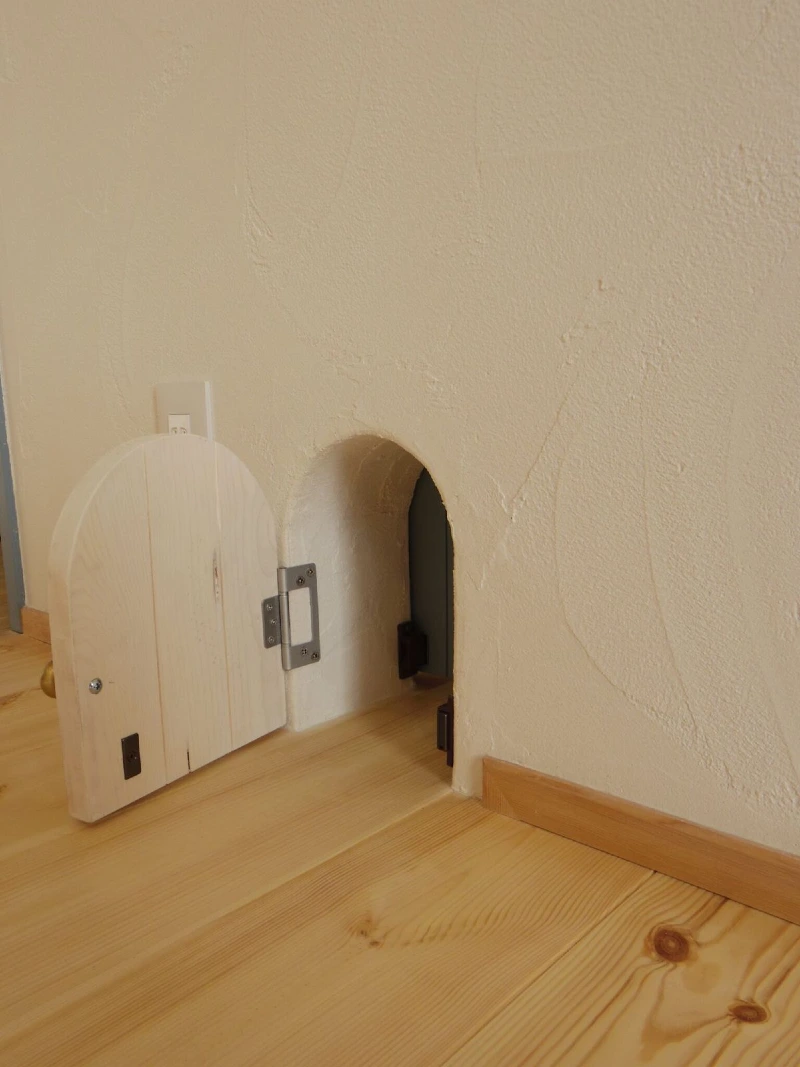
A small, arched opening is cut directly into a textured cream plaster wall just above a light pine plank floor.
This miniature door made from vertical light wood boards swings completely open on heavy silver hinges, revealing a smooth plaster tunnel. A low-profile natural wood baseboard trims the bottom of the wall, matching the warm tones and visible knots of the floorboards.
Installing an arched panel made of raw, light wood adds a soft storybook element to hand-textured plaster walls.
Leaving the miniature door unstained highlights the organic grain and coordinates directly with pale wood flooring styles.
The open arch creates a gentle shadow line that gives the wall layout a sense of depth and architectural interest. It functions as a whimsical yet highly practical pass-through that keeps heavy structural doors open or closed as needed.
Why This Works
- Plaster Integration: Cutting directly into the stucco wall without a bulky exterior trim piece keeps the focus on the clean, arched shape.
- Plank Coordination: Using the same light wood species for the miniature door as the primary flooring unifies the lower third of the room.
- Heavy Hardware: Sturdy metal hinges ground the playful, miniature scale with a dose of real-world functionality and texture.